Henan Retop Industrial Co., Ltd

Position: Home > News

Aluminum Batten Cladding vs. Wooden Cladding:Which Handles Moisture Better?

Date:2026-06-12
View: 0 Point

Moisture resistance of exterior wall panels is critical to building longevity, experience and O&M costs. Humid environments are prone to mold, mildew, and deformation. This article compares the moisture resistance and durability of aluminum slats and wood facade panels to provide a reference for material selection in humid areas.
Understanding Moisture Challenges in Exterior Cladding

The Main Hazards of Humid Environment

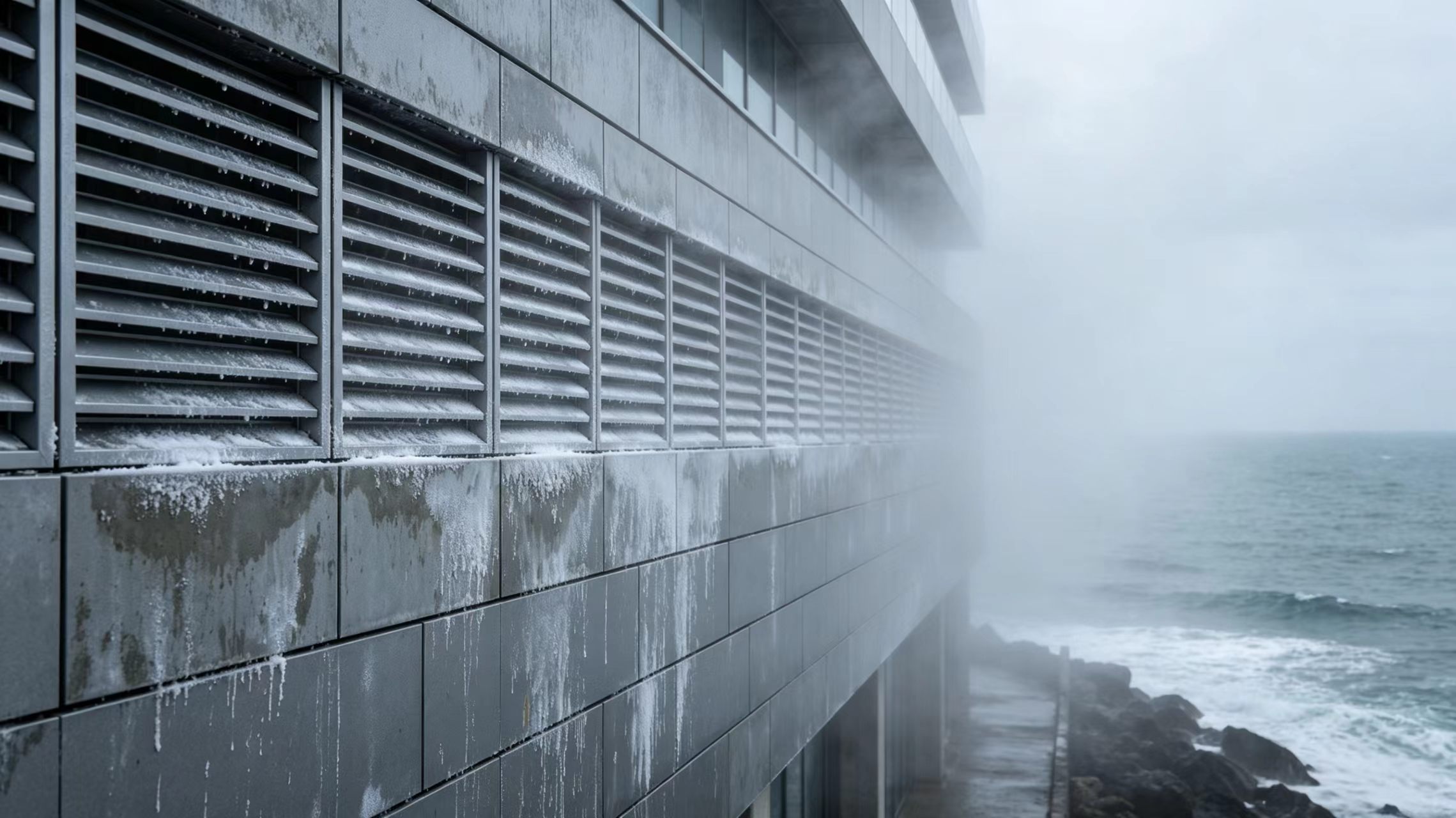
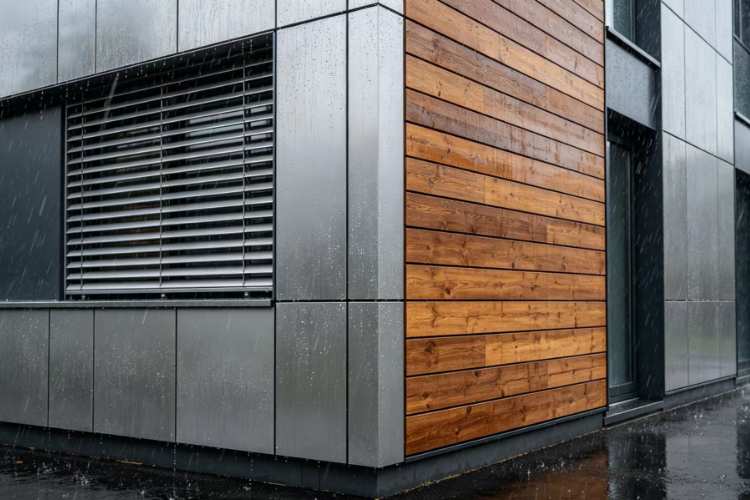
The exterior wall of the building is exposed to the natural environment for a long time, rain, fog, high humidity, day and night temperature difference condensation water and other moisture, is the core factor that destroys the structure of the exterior wall. Moisture will not only stay on the surface of the plate, but also penetrate the gaps in the plate, the wall sandwich, and continue to erode the external wall and the internal insulation, sealing structure.
Long-term moisture will cause a series of chain problems, including mold and rotting panels, wall insulation layer failure, finish falling off, and when serious, it will also affect the structural stability of the building wall, significantly reducing the overall service life of the building.

Common Causes of Moisture Failure of External Walls

Moisture failure of the exterior wall is not a single factor, first of all, rain and wind pressure brings a lot of water infiltration, easy to invade the wall from the plate splicing gaps, sealing damage. Secondly, the temperature difference between day and night produced by the interlayer condensation, long-term accumulation in the interior of the wall is difficult to discharge.
At the same time, drainage, ventilation design is unreasonable will cause moisture retention, with the humid environment of the metal electrochemical reaction, will further exacerbate the aging of the exterior wall panels and accessories damage, all kinds of problems in the coastal, rainy areas will be more prominent.

The Core Role of Aluminum Profiles

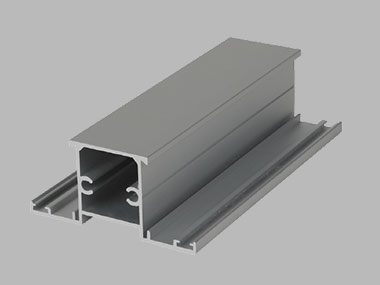
Aluminum profiles come with a natural oxidation protective layer, with basic corrosion resistance, non-absorbent properties, from the root of the material to avoid the problem of moisture deformation and decay. Distinguished from materials such as wood and cement, aluminum will not produce biological aging problems due to moisture.
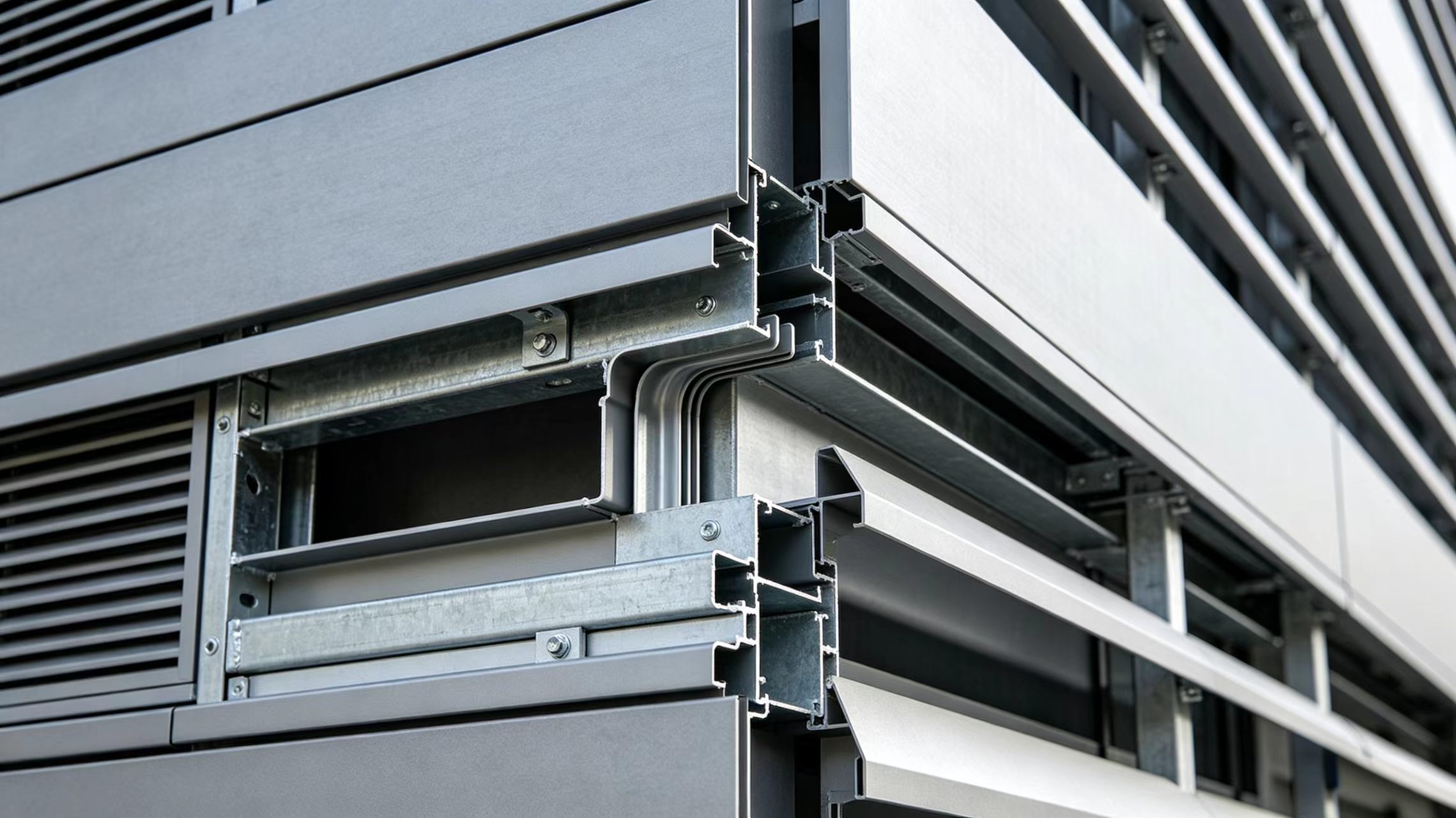
The finely engineered aluminum façade system, together with drainage channels, ventilation cavities, heat-insulating partitions and other structures, can quickly channel water and accelerate air circulation, effectively eliminating moisture retention and adapting to all types of humid climatic scenarios.

What Is Aluminum Batten Cladding?

Product Definition and Core Structure

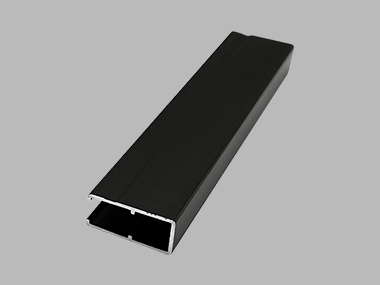
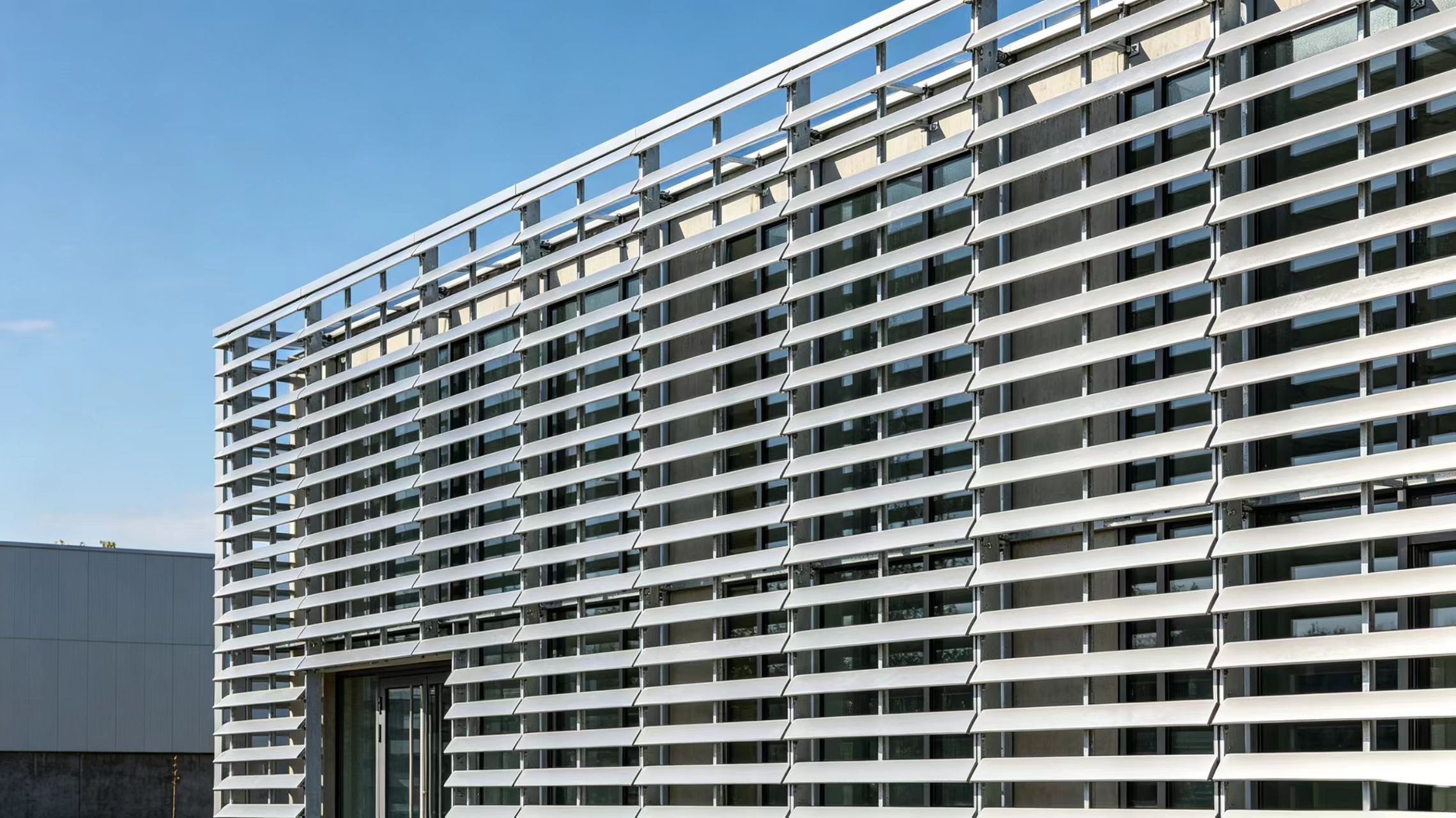
Aluminum slat facade panel is the mainstream facade decoration and protection system for modern buildings. It consists of long extruded aluminum profiles as the core substrate, which can be installed horizontally, vertically or diagonally, with regular gaps between the panels, taking into account both the decorative and practical aspects.
The panels are surface treated by high-temperature powder coating, PVDF fluorocarbon, anodic oxidation, etc., and can be customized to imitate wood grain finish, with concealed installation accessories, the overall appearance of the overall neat and clean without exposed fixtures, and suitable for all kinds of modern architectural styles.

Product Development and Application Advantages

Aluminum slat panel is the upgraded product of traditional wood slat, which perfectly solves the pain point of easy deformation, easy rotting and cumbersome maintenance of wood panels, and is suitable for the harsh environments of high humidity, strong ultraviolet rays, and coastal salt spray, etc. The panel is lightweight, strong, and can be customized to imitate wood grain finish.
The panel is light weight, high strength, fire retardant and recyclable, with extremely high design flexibility, and can be used for building exterior walls, indoor backdrops, ceilings, partitions and other scenarios, and is widely used in residential, commercial venues, public buildings and other projects.

Core Performance Characteristics

Aluminum slat exterior wall panel material stability is extremely strong, not affected by changes in temperature and humidity, there will be no water absorption and expansion, dry cracking and contraction problems. Surface protective coating can resist ultraviolet rays, water vapor, salt erosion, long-term use is not easy to fade, corrosion.
At the same time, the gap structure of the board splicing can realize air convection, actively discharge the wall sandwich moisture, further enhance the moisture-proof ability of the exterior wall, to achieve both value and performance.

What Is Wooden Cladding?

Product Definition and Development History

Wood siding, also known as wood hanging board, wood siding, is a building facade enclosure structure based on solid wood panels, shingles, and wood strips, which has become a classic building decoration material by virtue of its natural warm texture.
Wood siding has a long history of application, from the early purely functional rainproof enclosure, gradually developed into both decorative and practical building components, modern anti-corrosion, heat-modified treatment, a small increase in outdoor suitability.

Commonly Used Materials and Styles

Outdoor wood wall panels are mostly made of wood with excellent corrosion resistance, and the mainstream categories include western red cedar, Siberian larch, Douglas fir, etc. There are obvious differences in the density, moisture resistance and insect resistance of different woods.
The style design is very rich, can make flat joint, lap joint, enterprise mouth, V-shaped groove and other kinds of modeling, at the same time, after carbonization, pharmaceutical soaking and other modification treatment of the wood, can to a certain extent enhance the ability of moisture resistance and corrosion resistance, suitable for outdoor scenes.

Core Functions and Application Characteristics

Wooden exterior wall panels have good thermal insulation, sound absorption and noise reduction properties, natural and environmentally friendly materials, outstanding low-carbon properties, and can be adapted to a variety of architectural styles such as rustic, light luxury, modern, etc., with a strong sense of decorative atmosphere.
However, limited by the material properties, wood exterior panels are extremely sensitive to environmental humidity, easy to use in humid areas with various types of aging problems, the need for continuous maintenance, long-term use of relatively higher costs.

How Moisture Affects Aluminum and Wood Differently
Destructive Mechanism of Moisture on Wood Facade Panels

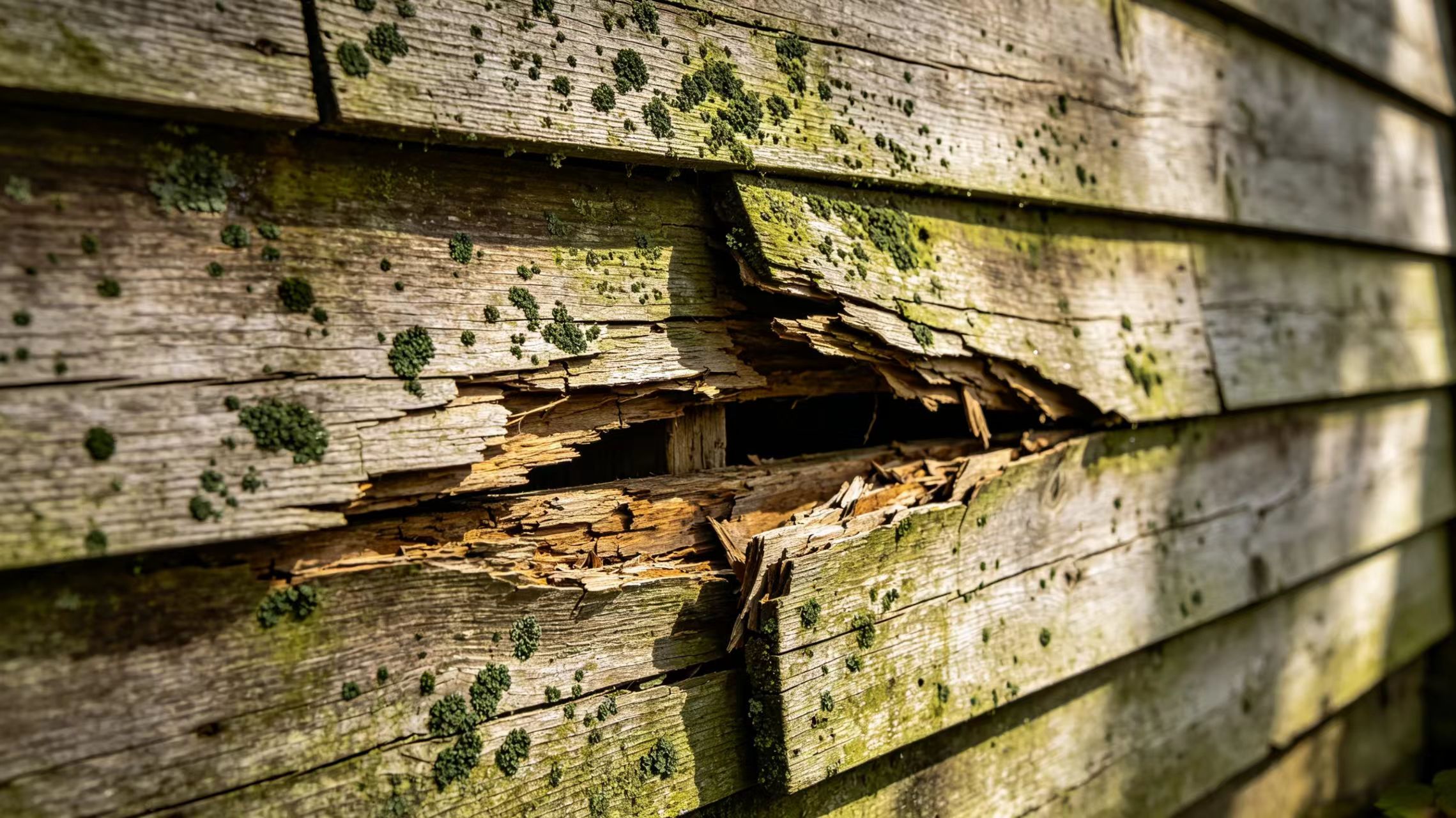
Wood is a porous, hygroscopic and hydrophilic material, which will rapidly absorb water in high humidity and rainy environments, showing obvious expansion, and then rapidly contract when the air dries. Repeated cycles of drying and wetting will directly lead to warping, cracking and loose joints.
When the moisture content of wood exceeds 16% for a long period of time, it will breed mold and decay bacteria, causing the board to rot and deteriorate, while the humid environment will attract termites and other insect pests, further destroying the structure of the board and significantly shortening its service life.

The Impact of Moisture on Aluminum Siding Performance

Aluminum profile is dense non-porous material, completely non-absorbent, no water storage, no matter how the environmental humidity changes, there will be no expansion, contraction, deformation and other problems, dimensional stability has always remained stable.
Aluminum surface with self-healing oxide film, with professional protective coating, can resist water vapor, salt spray corrosion, will not breed mold, rot, only in extreme high salt spray environment, need to do a good job of exclusive anti-corrosion protection can be.

Selection of Building Materials

The difference in the moisture-proof nature of the two materials directly determines the applicable scene. Wooden exterior wall panels are more suitable for dry, well-ventilated indoor or outdoor dry areas, focusing on decorative effect.
Aluminum slats are preferred for the construction of exterior walls in humid, rainy and coastal areas due to their excellent moisture-proof stability, which can effectively reduce the risk of failure in the later stage and reduce the investment in operation and maintenance.

Moisture Resistance Comparison

Moisture-proof Shortcomings of Wooden Facade Panels

The core defects of wooden facade panels is the lack of innate moisture resistance, even after anticorrosion, paint sealing treatment, the surface protective layer aging damage, water vapor will still invade the interior of the panel, triggering deformation, mildew, rot.
Under the humid environment, the panel joints will produce gaps due to moisture deformation, forming a vicious cycle of water vapor infiltration, which not only destroys the aesthetics of the façade, but also continues to damage the wall grass-roots level and thermal insulation structure.

Moisture-proof Advantage of Aluminum Slat Panel

Aluminum slat facade panels eliminate the problem of water absorption and moisture from the material, and the high-performance protective coating on the surface layer doubly blocks water vapor, ultraviolet rays, and pollutants, so that the structure and appearance of the panel can remain intact in a long-term humid environment.
Its permeable slat structure with ventilated cavity design can actively realize water vapor channeling to avoid moisture stagnation inside the wall, moisture resistance performance with strong stability and durability.

The Engineering Value of the Difference

High-quality moisture-proof exterior wall materials can effectively maintain the integrity of the building envelope, ensure stable thermal and acoustic insulation performance, reduce wall defects, and lower the probability of rework and repair.
Under the demand for green building compliance and long-term value preservation of buildings, the moisture-proof advantage of aluminum exterior wall panels can better match the long-term use and low-carbon operation and maintenance needs of modern buildings.

Maintenance Requirements in Moist Environments

Wet Environment Wood Siding Maintenance Points

Wooden facade panels in humid areas require high-frequency maintenance, at least two comprehensive inspections per year, timely cleaning of the surface of the panel leaves, silt and other easy to store water debris, to avoid the local long-term humidity breeding mold.
At the same time every 2-5 years need to re-paint closed paint, anticorrosion paint, repair cracking, peeling of the finish, rot, insect damage to the timely replacement of panels, the overall maintenance process is cumbersome, the cost is high.

Humid Environment Aluminum Siding Maintenance Points

Aluminum slat panel belongs to low maintenance building materials, no need to frequently brush protective materials, daily only need to regularly clean up the surface with water, neutral detergent dust, salt stains can be, the operation is simple and convenient.
After the installation of the product, you only need to occasionally check the firmness of the fixtures, normal use for decades without special maintenance, almost no late operation and maintenance costs, suitable for all kinds of humid and harsh environments.

Summary of the Difference in Maintenance Costs

From the point of view of long-term operation and maintenance, the comprehensive use of wood siding costs remain high. Under the continuous influence of humid environment, the board is very easy to appear mold, cracking, rotting and other problems, not only need to regularly invest in material costs to do anticorrosion, sealing treatment, but also need to spend a lot of labor costs to carry out inspection, maintenance and replacement work, all kinds of costs accumulated year by year, significantly increase the burden of building operation and maintenance in the later stage.
In contrast, the whole life cycle cost advantage of aluminum wall panels is very prominent. The panel has excellent moisture resistance and corrosion resistance, no need to do frequent protection treatment, daily only need simple cleaning can maintain good condition, almost no continuous maintenance investment. With an extremely long service life and low failure rate, aluminum facade panels are far more cost-effective than wood facade panels in the long term.

Durability and Lifespan Under Moisture Exposure
Service Life and Wear and Tear Factors of Wood Facade Panels

In a humid, rainy, coastal environment, even if you do a good job of routine maintenance, the service life of wood siding is only 15-30 years, when the maintenance is not in place, about 15 years there will be a large area of deterioration and damage, need to be replaced as a whole.
Moisture-induced deformation, decay, insect damage is the core cause of loss, while poor ventilation, construction details defects, will further accelerate the aging of the panel, the service life of the stability of the poor.

Aluminum Exterior Wall Panel Durability and Service Life

High-performance aluminum slat exterior panels are suitable for humid and harsh environments, with stable material properties and protective coatings, the service life under normal working conditions can reach 40-50 years, and high-quality products can even reach 80 years.
Long-term use of the product will not appear deformation, corrosion, discoloration problems, structure and appearance of the strong stability, perfectly suited to the needs of long-term use of the building, durability far more than wood panels.

Engineering Significance of Service Life Difference

The service life of facade panels directly determines the frequency of building renovation and replacement. Long-lasting and durable building materials can significantly reduce the construction of facade remodeling, effectively reduce the output of construction waste, and reduce environmental pollution and waste of resources during construction.
Compared with wood panels, which are easy to wear and tear and have a short cycle, the long service life of aluminum facade panels perfectly fits the core design concept of low-carbon and energy-saving, long-lasting and durable for modern buildings, and is more suitable for the development trend of green buildings.

Sustainability Considerations in Wet Climates

Core Sustainability Criteria for Building Materials

In humid climate, the sustainability of building materials is not only based on environmental attributes, but also on durability, low-maintenance, recyclability, and low-carbon performance in long-term use, so as to minimize the waste of resources caused by the replacement of materials.
At the same time, building materials need to be climate-adaptable, able to withstand high humidity, salt spray, temperature difference and other environmental erosion, and reduce the carbon emissions and operation and maintenance consumption of the whole life cycle.

Sustainability Advantages of Aluminum Wall Panels

Aluminum can be recycled indefinitely, recycling production requires only 5% of the energy consumption of virgin aluminum, with outstanding low-carbon attributes, and more than 70% of the world's aluminum is still being recycled, which perfectly fits the concept of circular economy.
With environmentally friendly protective coatings, there is no harmful VOC emission, and the long service life reduces the frequency of material replacement, significantly reducing resource consumption and environmental pressure throughout the life cycle of the building.

Sustainability Limitations of Wood Facade Panels

Although compliant solid wood panels are renewable resources, their short service life and frequent replacement in wet environments will result in excessive consumption of wood resources and generate a large amount of construction waste in the long term.
At the same time, the chemicals used in the wood preservation and sealing process have certain environmental hazards, coupled with the need for high-frequency maintenance and renovation, which will continue to generate consumables and construction losses, further increasing the project's environmental operation and maintenance costs, which is not in line with the concept of low-carbon and long-term building development.

Cost Analysis: Initial Investment vs. Long-Term Value

Upfront Investment Cost of Both Panels

Aluminum slat exterior wall panel preliminary procurement, customization, installation costs are slightly higher than wood exterior wall panels, especially customized version, high-end coating products, the preliminary investment is relatively higher.
Wooden facade panel base material procurement price is friendly, the construction process is mature and simple, low threshold for landing, the overall pre-investment is controllable, cost-effective and outstanding, is the more commonly used in decorative projects with limited budget facade materials.

Long-term Use of Comprehensive Cost Differences

Wooden facade panels of economic shortcomings are mainly concentrated in the hidden costs of the whole life cycle. In the humid environment for a long time, panels continue to appear mold, cracking, decay and other diseases, the need to repeatedly carry out cleaning, anticorrosion painting, local repair and other maintenance work. 10 to 20 years of long-term use cycle, maintenance, renovation, the overall replacement costs continue to accumulate, and ultimately the total cost of the initial procurement and construction will be far more than the initial investment, the overall economy is poor.
Aluminum exterior wall panels have outstanding long-term cost advantages, relying on excellent moisture and corrosion resistance, basically no frequent maintenance and renovation, significantly reducing the continuous investment in labor and materials. At the same time, aluminum has a high recycling residual value, building renovation and demolition can still realize the value of recycling, multiple advantages, its full life cycle cost-effective than wood facade panels.

Cost Selection Suggestions for Different Scenarios

For decorative projects with short life cycle, dry climate and limited budget, wood facade panels have the advantages of low initial cost and convenient construction, which can meet the basic decorative and protective needs, and is a cost-effective and suitable choice.
For rainy and humid environments, coastal salt spray environments, and building projects that require long-term stable use, aluminum facade panels, with extremely low operation and maintenance costs and long service life, have a full-cycle comprehensive value far exceeding that of wood panels, making them a more cost-effective and preferred option.

Which Cladding Is Better for Moisture-Prone Projects?
Why Moisture Is a Major Threat to Cladding

Selection of materials for humid and rainy areas should prioritize the material's moisture stability, corrosion and aging resistance, as well as low maintenance and long service life, to avoid the problem of moisture damage to the exterior wall from the source.
At the same time with the scientific wall ventilation and drainage structure design, with the adaptability of the exterior wall enclosure system, all-round enhancement of the building facade moisture resistance and weather resistance and overall stability.

Common Cladding Options and Their Moisture Performance

Wood, fiber cement panels are easy to absorb water deformation, mildew, moisture resistance is poor; plastic composite panels are easy to be affected by temperature and humidity aging deformation; stone, ceramic tiles, high self-weight, high construction costs.
Aluminum slat panel has multiple core advantages such as light weight, high structural strength, excellent moisture and corrosion resistance, and easy operation and maintenance, etc. The comprehensive adaptability is outstanding, and it is the best decorative and protective panel for the exterior wall with good cost performance and practicability under the complicated working conditions such as high humidity, rainy, and coastal conditions.

The Role of Aluminum Profiles in Modern Cladding

The ventilation and drainage structure of aluminum slat panel can actively resolve the threat of moisture, and is suitable for coastal, rainforest, rainy cities and other types of high humidity scenarios, as well as residential, commercial, cultural and tourism and other types of buildings.
At the same time, its flexible design can reproduce the natural warm texture of wooden facades, with rich visual expression, which can simultaneously meet the multiple needs of architectural decoration and aesthetics, practical protection and long-term stable use.

Conclusion

In terms of comprehensive moisture-proof performance, durability, maintenance costs and long-term value, aluminum slat facade panels are the optimal facade material for humid environments. Wooden facade panels have a superior texture, but they have obvious shortcomings in terms of moisture resistance and are only suitable for dry conditions. Aluminum panels, with the advantages of non-absorption, non-deformation, no high-frequency maintenance, and long service life, can effectively cope with moisture erosion and significantly reduce building operation and maintenance costs, which is in line with the long-term development needs of modern green buildings.

 
Henan Retop Industrial Co., Ltd. Will Be There Whenever Wherever Whatever You Need
You Are Welcome to : phone call, Message, Wechat, Email& Seaching us, etc.
Email: sales@retop-industry.com
Whatsapp/Phone: 0086-15537183797
Share us:
Related products

Serie 12 Shower Door Aluminium Profile

Serie 12 Shower Door Aluminium Profile

Material:6063/6082/6061 Aluminium
Temper:T5/T6
Thickness:0.4mm-1.5mm/Customized
Sliding Window Series

Sliding Window Series

Material:6063/6082/6061 Aluminium
Temper:T5/T6
Thickness:0.4mm-1.5mm/Customized
Ecuador Anodized Door Aluminium Profile

Ecuador Anodized Door Aluminium Profile

Material: 6063/6082/6061 Aluminium
Temper:T5/T6
Thickness:0.4mm-1.5mm/Customized