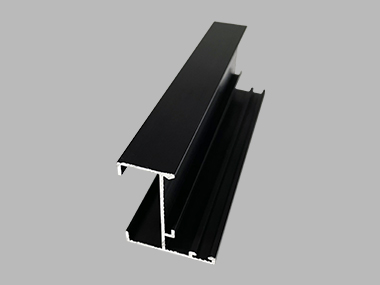
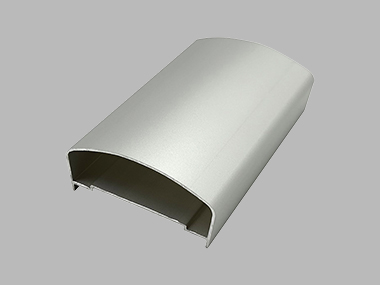
The global new energy photovoltaic industry is in a stage of rapid expansion, and the demand for structural profiles such as frames and brackets for various types of household rooftop distributed power stations and large-scale ground-based centralized photovoltaic power stations has soared. Aluminum extrusion profiles have become an irreplaceable core structural material in the photovoltaic industry by virtue of their lightweight, high strength, long-lasting anti-corrosion, and recyclable advantages, and they are suitable for all kinds of outdoor photovoltaic construction scenarios.
Why Aluminum Is Ideal for Solar Panel Applications
Lightweight and High-strength Characteristics
The low density of pure aluminum reduces the weight of the PV components, reducing logistics and pre-project costs. No reinforcement is required for roof mounted PV, and one person can handle long-sized profiles, reducing the difficulty of overhead work and construction costs. The heat-treated and reinforced aluminum profiles are rigid enough to withstand wind, snow, hail and other external forces for a long period of time, ensuring the stable use of the PV system for more than 25 years. Its lightweight design does not reduce the load-bearing capacity, and can meet the international wind pressure standards for high-power modules and tracking brackets.
Natural Corrosion Resistance with Anodizing
Aluminum substrate surface can self-generate dense oxide film, which has certain anti-rust ability. Through 10-25 micron anodic oxidation treatment, it can effectively isolate ultraviolet rays, rain and dust erosion. In the coastal salt spray, industrial corrosion, desert sand and other harsh environments, the profile is not easy to pitting corrosion, long-term maintenance of the integrity of the appearance of the substrate does not rust. Steel photovoltaic components are easy to oxidize and rust, and need to be painted regularly with anticorrosion layer, with high operation and maintenance costs. Anodized aluminum profiles can be maintenance-free for the whole cycle, without the need to overhaul the corroded components, reducing the later operation and maintenance costs.
Excellent Thermal and Electrical Conductivity
Aluminum has excellent thermal conductivity, which can quickly channel the excess heat of PV cells, alleviate the power degradation caused by high temperature, and stabilize power generation efficiency. Constant temperature operation of the modules can improve annual power generation and power plant revenue, and shorten the investment recovery cycle of PV projects. Aluminum conductivity to meet the PV power station grounding standards, one-piece profile with its own conductive structure, without additional accessories to simplify construction. The design reduces the use of connectors and minimizes the risk of wear and tear, contact short circuits and electrical fires, thus enhancing the safety of the system in all-weather operation.
Extrusion Flexibility
Hot extrusion process can be molded into a drainage channel, T-slot, sealing slot composite cross-section profiles, the finished product does not need to be milled, welded finishing, factory can be used directly supporting the assembly. Manufacturers can customize the cross-section structure according to the size of photovoltaic panels and site conditions, which is suitable for batch assembly in the automated assembly line of the module factory, and for the rhythm of large-scale mass production. Standardized photovoltaic aluminum profiles can be produced on a large scale, reducing tooling and processing costs to meet the demand for high-volume supply. The integrated quick-fit structure realizes modular splicing, reduces auxiliary materials and processes, and shortens the construction cycle.
Infinite Recycling
Retired photovoltaic aluminum can be recycled by smelting and regeneration, with no loss of performance of the recycled material and energy consumption of only 5% of virgin aluminum. Closed-loop recycling of aluminum can significantly reduce the carbon emissions of the whole life cycle of PV and help the industry become carbon neutral. The global PV aluminum recycling industry chain is perfect, and the aluminum recycling rate of decommissioned power stations is more than 95%, with a higher recycling efficiency than other materials. Recycled aluminum can be processed into PV frame brackets, reducing aluminum consumption, which is in line with the direction of green development of PV.
Aluminum Extrusions Used in Solar Panel Frames
Photovoltaic Frame Profile Molding Process
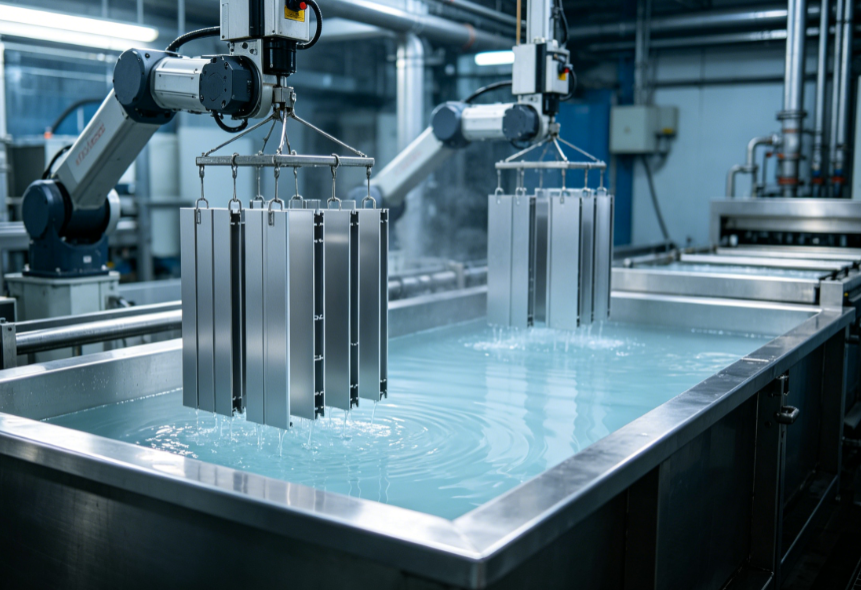
Aluminum rods are heated and extruded through a mold, simultaneously forming drainage, sealing and mounting slots, eliminating the need for secondary processing. The profiles are water-cooled, straightened and heat-treated to stabilize the organization and control the tolerance, which is suitable for automated assembly in PV factories. Heat-treated profiles are protected by anodic oxidation, and the film thickness is adjusted according to the corrosion level, which strengthens the UV and salt spray resistance. Standardized processing procedures and fully automated assembly lines enhance shipping efficiency and ensure the delivery of large-volume PV orders.
Mainstream Alloy Grades
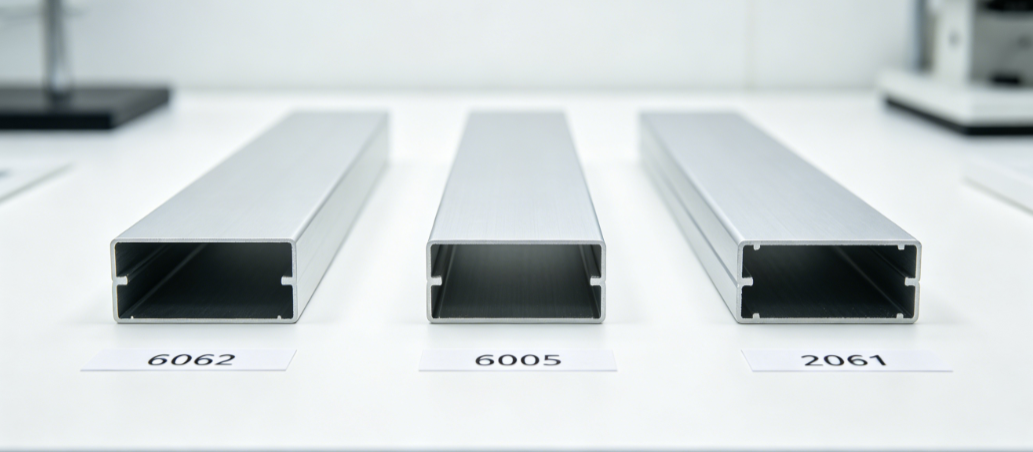
6063-T5 is the mainstream alloy for PV frames, with good extrudability and oxidized plate surface, good anti-corrosion, controllable cost, and suitable for outdoor working conditions. All kinds of conventional distributed PV module frame are prioritized to use this cost-effective alloy. 6061-T6 heat treatment tensile strength, structural toughness greatly improved, suitable for large snowstorms and regions, ultra-high-power photovoltaic panels thickened frame processing use. 6005-T5, 6082-T6 high-strength aluminum alloy bearing capacity is stronger, more used in the sea floating photovoltaic, plateau mountain photovoltaic frames, to resist the damage of the extreme deformation of the external forces.
Comprehensive Performance Advantages of Aluminum Frame
Lightweight aluminum profile wrapped PV modules, solid structure and no significant weight gain, suitable for container transportation. Its low dead weight reduces glass breakage and module scrap during transportation, improving factory yields. The dense oxide layer isolates the aluminum from water vapor and dust, preventing rusting of the frame and moisture failure of the battery. The profile slot with adhesive strip realizes full circumference sealing to resist outdoor erosion, guaranteeing the service life of the module of more than 25 years.
Aluminum Mounting Systems for Solar Installations
Mainstream Classification of Photovoltaic Aluminum Bracket
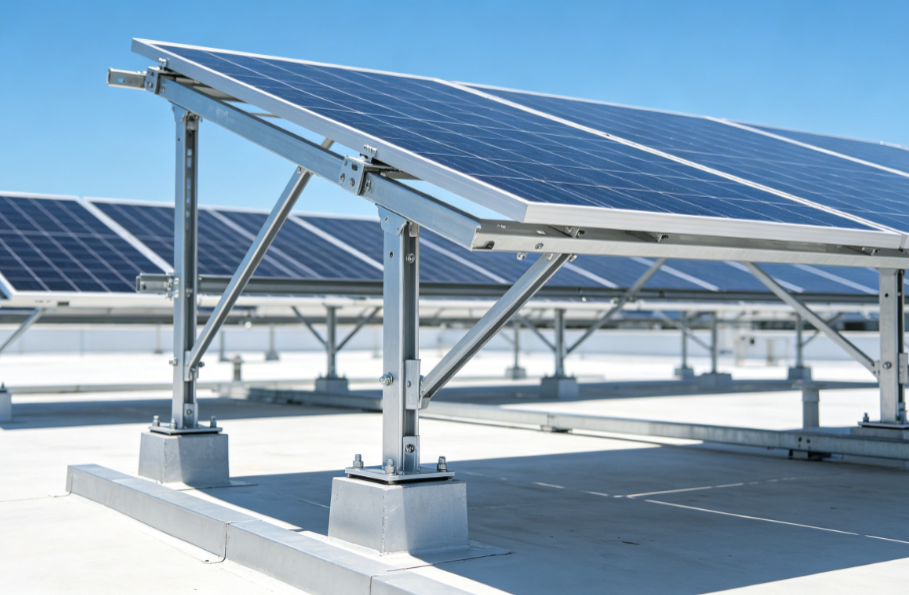
Aluminum roof mounts for PV are divided into flat fixed type and tilt adjustable type, both of which are made of lightweight aluminum to reduce the load bearing of the roof. The ballasted non-penetrating design eliminates the need for perforation to damage waterproofing, and is suitable for a wide range of roof PV modifications, and does not damage the building structure when dismantled. Ground mounts are mainly divided into fixed and single-axis tracking types, and their load-bearing structures are processed with customized extruded aluminum profiles. For high humidity and corrosive environments such as water, agricultural photovoltaic complementary, park carport, etc., high corrosion-resistant aluminum is used to build the support structure to adapt to special working conditions.
Commonly Used Aluminum Profile Alloy for Photovoltaic Support
6005-T5 aluminum alloy combines extruding performance and structural load-bearing capacity, with the best overall suitability, and is the most widely used PV special material for PV rails and load-bearing beams. As the preferred choice for inland ground-mounted power plants and household roof mounts, it balances cost, productivity and outdoor stability. Thickened 6061-T6 profiles are used in coastal salt spray and blizzard high load areas to enhance bending and shear resistance and resistance to extreme weather. Deep-water floating PV and large-scale intelligent tracking PV main beams are equipped with 6082-T6 high-strength aluminum, which enhances the rigidity of large-span racking and prevents long-term deformation under stress.
Aluminum PV Racking Core Advantages Over Steel
Aluminum profiles are lightweight, and a single vehicle can carry more components, reducing transportation costs and saving money upfront. Convenient on-site handling, no need for large-scale machinery, the construction period for the same installed size is 30% shorter than that of steel frames. Aluminum native oxide film with anodic oxidation double protection, seaside rainy and high humidity sites for long-term open-air use will not rust, no need for later anticorrosion paint maintenance operations. The hot-dip galvanized steel frame will rust quickly after the coating is worn out, and it needs to be regularly repainted and replaced with damaged components, which results in high operation and maintenance costs over the years, and low cost performance for the whole cycle of use.
Key Benefits of Using Aluminum Extrusions in Solar Projects
Lightweight Design Cuts Full-chain Costs
Low density of aluminum profiles reduces freight pressure and increases the volume of a single shipment to dilute freight costs. No need to reinforce the load-bearing roof, saving building materials and labor, reducing initial investment. Aluminum profiles are easy to connect and can be installed by a single person, which improves construction efficiency and reduces the number of workers. In the later operation and maintenance, it is easy to dismantle and install the aluminum profiles, which continuously reduces the cost of full-cycle operation and maintenance.
Long-term Anti-corrosion Lowers Station Maintenance Costs
The anodic oxidation layer covers the inner and outer walls of the profile, which is resistant to corrosion by wind, sand, rain and sea salt, with strong adhesion and stable durability. There is no need for anti-corrosion maintenance during the 25-year life cycle of the PV, eliminating the need for consumables and overhead construction and operation and maintenance expenses. Aluminum profiles have no corrosion seepage, do not pollute the roof, vegetation, and do not corrode the PV electrical fittings. The yellowish-brown water flow generated by the rusting of the steel frame adheres to the glass, blocking the light transmission, and will accumulate year by year, leading to a continuous decline in power generation efficiency.
One-piece Molding Simplifies Assembly
The profile is a factory integrated design with its own adjustable slots, drainage holes and quick-fit snap fasteners, which can be assembled on site without secondary processing. Its multi-functional integrated cross-section reduces the types of outsourced hardware, simplifies the stock preparation process, and reduces the difficulty of inventory management in the PV supporting supply chain. The standardized PV aluminum profiles are suitable for fully automatic production lines, which can realize efficient mass production and assembly, and undertake large-volume orders at home and abroad. The modularized quick-assembly structure reduces the construction threshold, allowing ordinary personnel to start with simple training, reducing reliance on professional technicians and accelerating project progress.
Recycling Fits the Positioning of New Energy Green Development
Retired PV aluminum components can be directly smelted after dismantling, and the performance of recycled aluminum can reach the standard of virgin aluminum, which can be reprocessed into PV frames and brackets. The energy consumption of recycled aluminum smelting is much lower than that of primary aluminum, significantly reducing carbon emissions from the industrial chain and helping enterprises achieve low-carbon production requirements. PV end-of-life components are easy to sort, aluminum recycling rate far exceeds that of steel and plastic, and the industry chain is mature. Aluminum closed-loop model reduces mineral extraction, fits the low-carbon attribute of PV, and helps the industry achieve the carbon neutral goal.
Outstanding Economic Cost Performance in the Whole Life Cycle
The unit price of aluminum is higher than that of carbon steel, but its comprehensive cost of use is more advantageous from the whole life cycle accounting. Within the 25-year PV cycle, aluminum is maintenance-free and low post-investment, resulting in less overall project capital and faster payback. Aluminum profiles are structurally stable, reducing the loss of maintenance downtime due to corrosion and fracture, and collapse under stress. In large-scale centralized PV, the light weight of aluminum further reduces logistics and labor costs and improves project returns.
Aluminum Alloy Choices for Solar Panel Systems
Alloy Selection Criteria for Different Application Scenarios
Conventional household and industrial/commercial PV module frames are made of 6063-T5 alloy, which is highly versatile, taking into account the appearance, anti-corrosion and cost. This alloy is preferred for projects without extreme disaster plains in mainland China, with sufficient stock and fast delivery, without delaying construction. High wind pressure, blizzard, coastal salt spray corrosion site bracket frame, preferably 6005-T5, 6061-T6 high-strength heat-treated aluminum alloy profiles. High-power double-sided photovoltaic panels, single-axis tracking bracket, floating photovoltaic platform on water, with 6082-T6 thickened profiles, to strengthen the overall bending and impact resistance structural load-bearing capacity.
Alloy Material Core Performance Differentiation Points
6063 aluminum, magnesium and silicon ratio is balanced, smooth extrusion molding, oxidation texture is beautiful, suitable for the appearance of high demand for photovoltaic frame. Moderate strength, only for inland conventional small and medium-sized photovoltaic projects, can not be used for large-span high load-bearing beam. 6005, 6061, 6082 series have higher content of magnesium and silicon, with T5/T6 heat treatment, the strength is much better than conventional 6063 aluminum. Under the same load-bearing conditions, the wall thickness of the profile can be reduced, further reducing the overall weight of the bracket, which is suitable for large ground power stations, intelligent tracking brackets and other high-load professional photovoltaic scenarios.
Surface Treatment Process to Match Outdoor PV Needs
For inland conventional non-polluting PV sites, the standard anodizing process of 10-15 microns can meet the needs of sun and rain for constant anticorrosion and wear-resistant use. The hardness of the oxide film is high, scratch-resistant, and the components are not easy to be scratched and damaged during loading and unloading and on-site construction, and the long-term outdoor protection performance is stable and not invalid. Coastal, chemical industrial zone, high corrosion sites, using 20 micron thickened anodic oxidation process, the sea high-end photovoltaic superimposed fluorocarbon powder coating double protection process. Double protection to block salt spray acidic media erosion of the substrate, to prevent profile pitting, edge cracking aging, suitable for PV ultra-long outdoor service conditions.
Design Considerations for Solar Aluminum Extrusions
Structural Strength and Load Adaptation Design
The profile design follows the IEC international standard, calculates the wind pressure and snow pressure and other loads, and optimizes the wall thickness and reinforcement to improve the bending resistance. Simulation is used to simulate the deformation of various working conditions and control the deflection parameters to ensure the long-term stability of the force. The cross-section design takes into account the load-bearing performance and material cost, and streamlines the aluminum material under the premise of meeting the standard mechanical load, so as to control the production cost of a single piece of profile from the source. The hollow and closed cross-section with built-in reinforcement structure balances the need for lightweight weight reduction with structural rigidity, and is suitable for the construction of photovoltaic projects in all types of climates and load ratings around the world.
Optimized Design of Multifunctional Integrated Sections
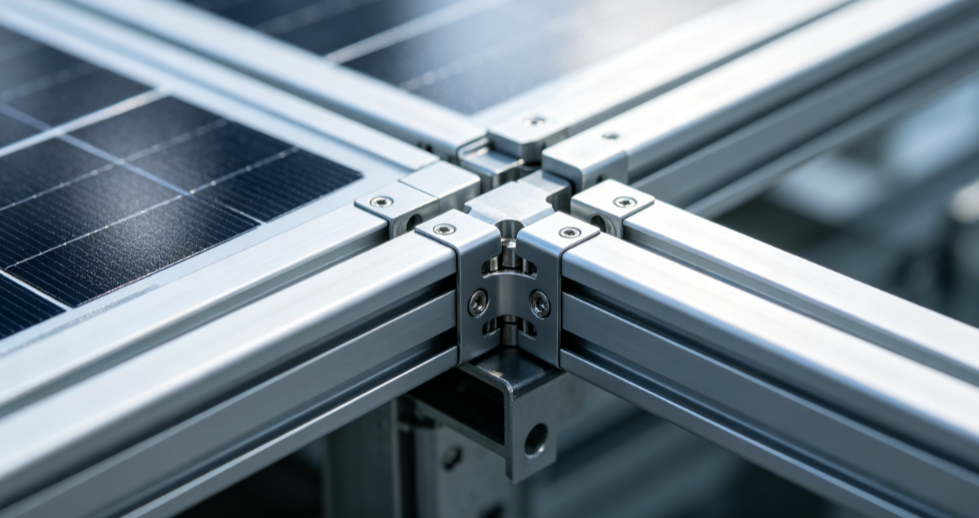
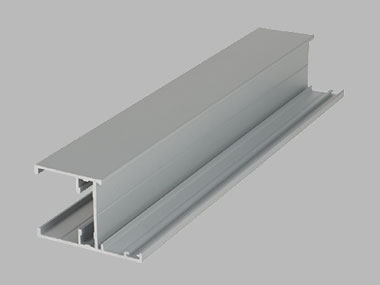
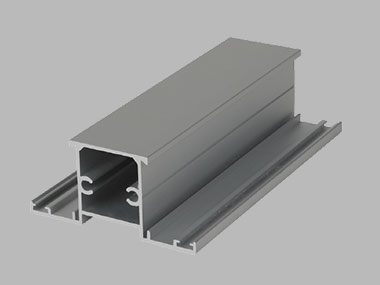
The profile is molded into an adjustable T-shaped mounting groove, and the fixture can be freely aligned to adjust the pitch, making it compatible with all sizes of PV modules available on the market. Built-in drainage slots in the cross-section allow for quick drainage of water, avoiding corrosion of the sealant and slowing down cell aging. The side of the profile has a built-in wiring channel, which can hide and store PV cables and slow down the aging process by isolating them from UV rays. The end of the profile adopts a one-piece waterproof snap structure, which reduces the cost of auxiliary materials and purchasing.
Thermal Expansion and Contraction Adaptable Structure Design
Outdoor photovoltaic temperature difference can reach -40 ℃ to 85 ℃, aluminum thermal expansion coefficient is large, the four seasons temperature deformation is easy to produce internal compression stress damage structure. The long-size guide rail splicing leaves a standard expansion gap, with a sliding movable fixture, to release deformation stress independently, avoiding the profile arching and pulling the PV glass. The sealing groove reserves elastic deformation margin to adapt to the hot and cold expansion and contraction of the profile, and the weather-resistant adhesive strip synchronizes the deformation to prevent glue removal and water seepage. Extra-long guide rails are spliced with movable joints to disperse the expansion and contraction, avoiding the deformation of profiles leading to hidden glass cracks and damages.
Anti-corrosion and Surface Technology Adaptive Design
Rounded chamfer design avoids the thin film layer of anodized corners, eliminates the weak point of anti-corrosion, and improves the overall uniformity of protection. Flatten the base surface to enhance the adhesion of the oxidized film, so that the protective layer is not easy to fall off in pieces under outdoor vibration and friction of wind and sand. Optimize the cross-section structure of highly corrosive sites, reduce the dead space of low-lying water, reduce the probability of corrosion by sea salt and pollutant deposition, and extend the service life of profiles. Aluminum and steel assembly points are equipped with insulating gaskets to isolate the direct contact of dissimilar metals, prevent electrochemical corrosion under water vapor environment, and protect the profile substrate intact.
Manufacturing and Dimensional Tolerance Control
Optimize the cross-section design to fit the extrusion process, control the width/thickness ratio and complexity, prolong the die life and increase the yield of mass production. Strictly control the minimum wall thickness and tongue ratio parameters to avoid production defects. Compatible with automated assembly lines, profile length and slot tolerance control to 0.1-0.3mm high-precision range, suitable for fully automated mechanized assembly. Unified standardized common cross-section reduces the cost of customized mold development, facilitates manufacturers' batch scheduling and stocking, and shortens the delivery cycle of photovoltaic project orders.
Challenges and Solutions in Solar Aluminum Applications
Long-term Corrosion in Extreme Environment
Seaside salt spray and factory acidic exhaust gas long-term erosion of the surface layer of the profile, resulting in the gradual failure of the conventional thin oxide film, profile whitening and pitting corrosion pits. 10 microns or less of simple oxidation of aluminum insufficient protection, outdoor use for five years that is, the substrate corrosion, seriously shorten the service life of the photovoltaic system. Highly corrosive sites using thickened anodic oxidation, photovoltaic supporting the use of double-layer protection, isolation of corrosive media contact aluminum substrate. During construction, insulating gaskets are added to isolate aluminum and steel parts, blocking the conductive medium and eliminating electrochemical corrosion.
High Load Pressure Brought by Large-size Modules
As the size of PV module increases, its self-weight and windward area also increase, which requires higher rigidity of the frame and stent. Conventional thin-walled 6063 profiles do not have enough load-bearing capacity and are prone to deformation and cracking under high winds and vibrations, which may lead to component dislodging in bad weather. The project adopts 6005-T5 and 6061-T6 high-strength profiles, with additional reinforcement in the cross-section to improve bending and impact resistance. The structural design is optimized through simulation, which significantly improves the load-bearing and compression resistance under the premise of limited weight gain.
Structural Stress Damage Caused by Temperature Changes
Seasonal changes in heat and cold cause aluminum to expand and contract, and rigid installation will continue to pull the PV glass and sealant, resulting in hidden cracks in the glass. When the sealant is degummed and water enters, the cells are dampened and the power generation efficiency declines, shortening the life of the module. PV bracket supporting sliding adjustable fixture, frame splicing reserved expansion and contraction gap, independent release of temperature differences generated by the internal expansion and contraction of the extrusion stress. Matching with high elasticity weatherproof sealant and wider sealing groove, adapting to the normalized micro-deformation of aluminum, long-term maintenance of module sealing and waterproof performance, to prevent water seepage failures.
Risk of Raw Material Price and Supply Chain Fluctuation
Aluminum ingot commodity market prices fluctuate frequently, high-end 6 series photovoltaic aluminum bar stage of the shortage of supplies, directly pushing up the overall processing production costs of photovoltaic profiles. Small and medium-sized aluminum processing plant stocking capital pressure, prone to price increases, capacity extension problems, directly delaying the construction progress of the PV project site. Industry popularization of compliant recycled aluminum instead of virgin aluminum production, recycled aluminum mechanics anti-corrosion up to standard, lower procurement costs, effectively suppressing the fluctuations in the factory price of profiles. Photovoltaic investors and aluminum companies signed a long-term supply agreement, locking the unit price of raw material procurement, to avoid the rise and fall of aluminum prices brought about by the risk of project cost fluctuations.
Long-term Vibration Fatigue Deformation
Outdoor photovoltaic perennial wind, profile splicing point and fixture to withstand the alternating load, easy to cause fatigue deformation, screws loose. High-frequency wind vibration can also cause cracks in the profiles, and the clamps can fall off, jeopardizing the structural safety of the PV system. Optimize the stress structure of the internal bars of the profiles to improve fatigue resistance, and support self-locking anti-loosening bolts and positioning buckles to reduce fastener loosening faults in the later operation and maintenance. The high-frequency motion parts of the tracking bracket are uniformly made of high-toughness 6061-T6 aluminum, which improves the comprehensive durability of the material to withstand reciprocating deformation and alternating loads.
Future Trends in Aluminum Extrusions for Solar Energy
Low-carbon Recycled Aluminum Profiles are Fully Popularized
Global photovoltaic carbon neutral policy landing advancement, clean energy electrolytic aluminum, high proportion of recycled aluminum billet gradually batch application of photovoltaic frame, stent main material production. Renewable aluminum smelting energy consumption is much lower than virgin electrolytic aluminum, significantly reducing carbon emissions from the entire chain of photovoltaic components, in line with the new energy and low-carbon development of the industry's rigid standards. Upstream and downstream aluminum enterprises to build a closed-loop recycling system, decommissioned power station aluminum unified smelting reproduction, finished products back to the PV supporting production and processing areas. Low-carbon recycled aluminum will become a large photovoltaic bidding rigid selection criteria, the next five years will continue to steadily increase the proportion of market applications.
New-Gen Light High-Strength Aluminum Alloy Development
Domestic research institutions to improve the new 6-series alloy, in order to enhance the strength of the same time to reduce the consumption of photovoltaic aluminum, cost savings. The alloy is suitable for a new generation of high-power photovoltaic modules, in line with product iteration needs. Lightweight aluminum-lithium composite alloy pilot landing in the field of photovoltaic, mostly used in large-scale intelligent tracking bracket, compared with the traditional 6 series aluminum weight reduction of up to about 10%. The new material optimizes anti-fatigue, thermal conductivity, corrosion-resistant multi-dimensional performance, perfectly adapted to outdoor temperature fluctuations, high-frequency wind disturbances of the photovoltaic all-weather working conditions.
Intelligent Integrated Profile Becomes Mainstream
The new generation of photovoltaic aluminum profiles integrates sensing pre-embedded groove, heat dissipation cavity, and quick-fit connection structure, and one-time extrusion molding does not require secondary slotting and transformation processing. Multi-functional integrated profile reduces the use of external accessories, simplifies on-site wiring, heat dissipation assembly process, and compresses on-site construction time of photovoltaic projects. Relying on AI topology algorithm to optimize the cross-section force structure of profiles, the cross-sectional area of profiles is reduced under the same load bearing, realizing the ultimate lightweight upgrade of PV structures. Intelligent profiles are reserved for sensing installation, which can monitor deformation and wind pressure data in real time, and help remote digitalization and intelligent operation and maintenance control in PV parks.
Digital automatic production line with AI visual quality inspection, real-time correction of dimensional deviation, improve the qualification rate and reduce losses. Automated mold processing and continuous anodizing reduce labor and stabilize processing costs, and scale production further reduces total costs. Ultra-thin-wall high-precision extrusion process is fully mature, mass production of high-strength thin-wall photovoltaic profiles, reducing the consumption of aluminum resources from the raw material side. Flexible intelligent production line takes into account the niche customized profiles, standard general profiles mass production, to adapt to the PV segmented scene diversified, differentiated selection of customized demand.
Continuous Optimization of Application-Specialized Profiles
Water floating PV profiles are upgraded with seawater corrosion-resistant formulas and optimized buoyancy conduction cross-section, which are suitable for lake and sea surface PV with high humidity and high salt and long service environment. Special profiles for agricultural light complementary and photovoltaic carport take into account load-bearing, aesthetics, and corrosion-resistant performance, broadening the boundaries of aluminum photovoltaic supporting scenarios and enriching the application track. BIPV building photovoltaic integration profiles take into account both power generation and building facade decoration functions, suitable for urban commercial building photovoltaic renovation projects. The self-developed self-cleaning and UV-resistant surface coating extends the outdoor service life of the profile, reduces the frequency of manual cleaning and anticorrosion operation and maintenance, and lowers the pressure of power plant operation.
Conclusion
Comprehensive analysis of the whole article, aluminum extrusion profiles are suitable for all-climate PV site conditions, alloy categories, design plasticity, is the core structural materials for the photovoltaic industry. In the future, PV aluminum extrusion profiles will be iterated in the direction of low-carbon regeneration, intelligent integration, and ultimate lightweighting, continuing to reduce PV full-cycle costs and helping the global PV industry steadily reach the goal of green, low-carbon and carbon-neutral development.
Henan Retop Industrial Co., Ltd. Will Be There Whenever Wherever Whatever You Need

 Aluminum Alloy Choices for Solar Panel Systems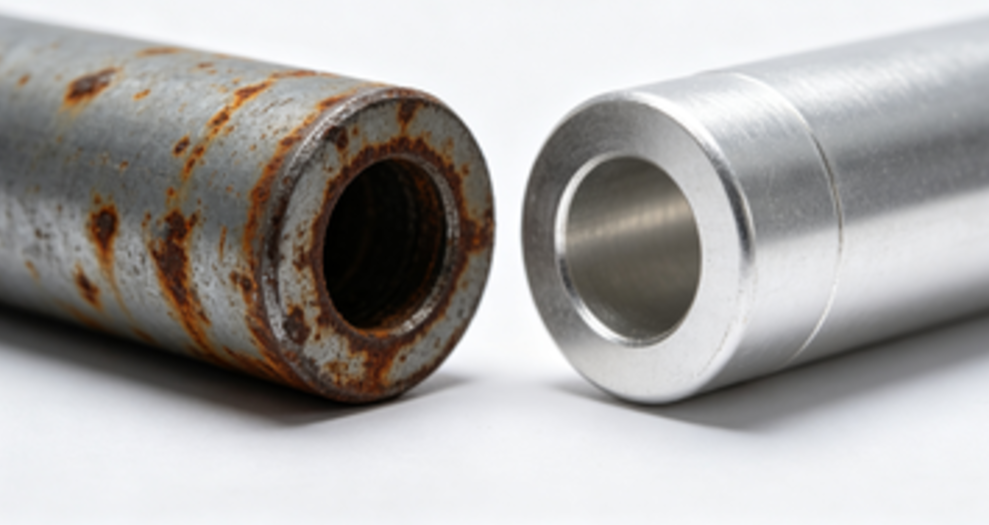
 Future Trends in Aluminum Extrusions for Solar Energy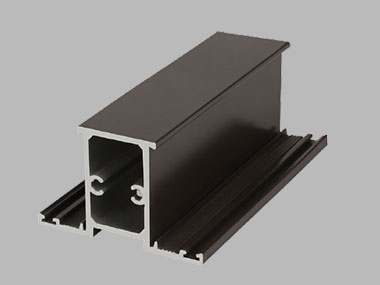
.jpg)