Why Recycled Aluminum Extrusions Are Popular in Carbon-Neutral Factory Projects
Date:2026-06-26
View: 2362 Point
Driven by dual-carbon policies, carbon-neutral factories are placing higher demands on building materials to be low-carbon, high-quality, and economical. Recycled aluminum profiles, due to their low-carbon, environmentally friendly, high-performance, and recyclable advantages, are gradually replacing virgin aluminum profiles and becoming a core material for green factory construction.
What Are Recycled Aluminum Extrusions
Production Process of Recycled Aluminum Extrusions
Processing Flow
The production of recycled aluminum extrusions is highly efficient and low in carbon emissions. Firstly, recycled aluminum scraps are pretreated through sorting, screening and crushing to remove surface impurities and foreign substances. Subsequently, the scrap materials are melted into pure molten aluminum at a low temperature of approximately 660℃. Finally, various finished aluminum extrusions with different specifications are produced through alloy proportioning, ingot forming and precision extrusion processes. Different from the production of traditional primary aluminum, the recycled aluminum production process eliminates high-energy-consuming procedures including bauxite mining and high-temperature electrolysis. It simplifies the industrial production chain, avoids the pain points of high energy consumption, high carbon emissions and severe pollution, and significantly reduces energy and carbon consumption, delivering prominent green environmental advantages.
Quality Characteristics
Aluminum metal supports infinite cyclic regeneration without performance loss after repeated processing and remelting. With the support of modern advanced metallurgical technologies, recycled aluminum extrusions achieve the same quality as primary aluminum extrusions, with their overall performance, structural strength and durability fully meeting high-standard industrial application requirements. The production of recycled aluminum consumes only 5% of the energy required for primary aluminum manufacturing and reduces greenhouse gas emissions by about 95%. Under the background of global carbon neutrality strategies, its superior low-carbon performance has become a core highlight for green material selection in modern factory construction.
Carbon Emission Pain Points of Primary Aluminum Production
High-Carbon Production Characteristics of Primary Aluminum
The production of traditional primary aluminum involves multiple complex procedures such as bauxite mining, refining and high-temperature electrolysis, featuring high energy consumption, severe pollution and extremely high carbon emissions. The global average carbon emission of primary aluminum reaches 8-15 kg of CO₂ equivalent per kilogram, and the emission value will be further increased for products smelted by coal-fired equipment, resulting in huge ecological and environmental pressure. The high energy consumption and high carbon footprint of primary aluminum are inconsistent with the low-carbon operation standards of carbon-neutral factories. Long-term and large-scale application of primary aluminum will increase the overall carbon footprint of factories, hinder carbon neutrality certification and restrict the green transformation and upgrading of enterprises.
Carbon Emission Optimization Effect of Recycled Aluminum
Recycled aluminum manufacturing abandons the high-energy electrolysis smelting process of primary aluminum, consuming merely 5% of the energy of primary aluminum production. Its carbon emissions are drastically reduced to 0.5-1 kg of CO₂ equivalent per kilogram, realizing a qualitative breakthrough in low-carbon production. Through process optimization, precise alloy deployment and refined smelting control, high-end recycled aluminum extrusions achieve even lower carbon emissions. They fully adapt to the low-carbon construction needs of zero-carbon factories, green buildings and new energy projects, and are recognized as one of the most cost-effective low-carbon metal building materials in the industry.
Countries around the world have successively introduced carbon emission reduction laws and regulations to strictly control industrial carbon emissions. Recycled aluminum serves as an efficient solution for the manufacturing and construction industries to reduce Scope 3 carbon emissions, helping factories pass EPD environmental product declaration, EU Carbon Border Adjustment Mechanism (CBAM) and other compliance audits. The low-carbon attributes of recycled aluminum extrusions conform to the green procurement standards of downstream industries. They help enterprises improve their green supply chain system, enhance brand core competitiveness, and support the expansion of high-end green market business.
Energy Saving, Cost Reduction and Stable Supply Chain
Recycled aluminum adopts low-temperature melting and lightweight production modes, effectively reducing power and energy consumption in the extrusion process. Many mainstream manufacturers deploy clean energy such as wind power, solar power and hydropower for production, further cutting carbon costs and realizing dual optimization of energy consumption and carbon emissions. The mature and stable waste aluminum recycling supply chain ensures sufficient supply and uniform quality of recycled aluminum products. With the same performance as primary aluminum extrusions, recycled products enable carbon-neutral factories to reduce construction and operation costs while ensuring project quality, achieving a perfect balance between economic benefits and green environmental value.
Environmental Benefits Beyond Carbon Reduction
Reduction of Waste Accumulation
Hazards of Waste Aluminum Accumulation
Aluminum metal has stable chemical properties and a natural degradation cycle of hundreds of years. Direct landfill of waste aluminum will occupy land resources for a long time and slowly release greenhouse gases such as methane, exacerbating the greenhouse effect and ecological environmental pollution. Unrecycled waste aluminum generated from industrial production and building renovation will increase enterprise disposal costs, cause serious resource waste and environmental pollution, and hinder the sustainable development of green industries.
Waste Reduction Value of Closed-Loop Recycling
Benefiting from the infinite cyclic regeneration characteristics of aluminum, all scrapped aluminum extrusions and industrial production offcuts can be recycled, remelted and reshaped for market reuse. This drastically reduces the total amount of industrial solid waste landfilled, relieves waste disposal pressure and realizes efficient reuse of waste resources. The recycling rate of construction and industrial aluminum products exceeds 90%, forming a stable and efficient closed-loop resource circulation system. It maximizes the renewable value of waste aluminum, realizes waste recycling and utilization, and provides an optimal solution for industrial solid waste reduction and circular economy development.
Reduction of Pollution Emissions
Optimization of Air Pollution Control
Traditional primary aluminum smelting involves complex processes and causes severe pollution. Recycled aluminum only produces a small amount of emissions during the smelting stage, and the treated exhaust gas causes far less pollution than primary aluminum production, with prominent environmental protection advantages. Even with a small amount of additives used for alloy composition adjustment in recycled aluminum production, its overall air pollutant discharge, exhaust toxicity and pollution concentration are much lower than those of primary aluminum smelting. It effectively reduces the damage of industrial production to the atmospheric environment and meets green production standards.
Water Resource Conservation Benefits
The whole process of bauxite mining and refining for primary aluminum consumes massive water resources, belonging to a typical high-water-consumption and high-pollution industrial sector. In contrast, recycled aluminum production only involves simple smelting and processing without water washing and refining procedures, resulting in extremely low water consumption and significant industrial water conservation effects. Large-scale application of recycled aluminum extrusions in the industrial field can greatly reduce the overall water consumption of the industry. It also avoids water pollution risks caused by ore washing and refining, protects water environment resources, and achieves dual benefits of water saving and pollution control.
Performance Advantages of Recycled Aluminum Extrusions
Mechanical Properties
Compliance with Core Performance Indicators
The unique physical properties of aluminum ensure no performance loss or quality attenuation after multiple recycling cycles. The core mechanical indicators of recycled aluminum extrusions, including tensile strength, hardness, ductility and toughness, strictly comply with international authoritative industry standards such as ASTM and EN755, with standardized and stable product quality. Its key service performances such as strength-to-weight ratio, fatigue resistance, acid and alkali corrosion resistance, and aging resistance are no different from those of new primary aluminum extrusions. It can completely replace primary aluminum extrusions in industrial, construction, new energy and other scenarios without any application defects.
Performance Upgrade Empowered by Advanced Technologies
The innovative Shear-Assisted Processing and Extrusion (ShAPE™) technology enables large-scale production of 100% pure recycled aluminum extrusions. Through precise impurity dispersion and homogenization treatment, it optimizes the internal structure of recycled aluminum extrusions for more stable performance, making the overall quality superior to ordinary primary aluminum products. In the production process, targeted alloy proportioning and process optimization can be carried out according to the stress resistance, corrosion resistance and precision requirements of different application scenarios. Custom high-performance extrusions can be produced to adapt to high-standard industrial applications and high-end construction scenarios with strong compatibility.
Machining Precision and Compatibility
Stable and Controllable Dimensional Precision
Relying on mature and modern extrusion production technologies, recycled aluminum extrusions can be processed into various complex special-shaped cross-section structures with ultra-high dimensional tolerance control precision, fully meeting the high-precision assembly requirements of precision industrial equipment and automated production lines for high-end precision scenarios. Mass-produced recycled aluminum extrusions feature high dimensional consistency and structural regularity. No dimensional deviation or structural defects occur due to the adoption of recycled raw materials, fully adapting to the strict standards of modern standardized construction and automated production with excellent stability.
Strong Secondary Processing Compatibility
Recycled aluminum extrusions have excellent surface compatibility and can smoothly undergo various anti-corrosion and beautification treatments such as anodizing, powder coating and electrophoretic coating. The finished surface achieves the same flatness, glossiness and corrosion resistance as primary aluminum extrusions, with outstanding appearance and durability. Meanwhile, the extrusions support precision welding, bending, cutting, drilling, tapping and other mechanical processing, with no deformation or cracking during processing. They are fully compatible with diverse processing scenarios including building construction, industrial equipment manufacturing and new energy supporting facilities, delivering high practicality.
Product Stability and Durability
High Batch Quality Consistency
Modern AI intelligent sorting, spectral precision detection and fully automatic alloy proportioning control technologies can accurately screen high-quality scraps and strictly control raw material impurities and component ratios. They completely eliminate quality differences and performance fluctuations between different production batches to ensure product stability. Compared with primary aluminum extrusions whose quality is easily affected by ore origin and ore layer fluctuations, recycled aluminum extrusions have better batch consistency and performance stability, providing reliable quality guarantee for bulk procurement and standardized construction of large-scale projects.
Long Service Life and Durability
Recycled aluminum extrusions fully inherit aluminum’s excellent weather resistance, corrosion resistance and aging resistance, resisting complex working conditions such as outdoor wind and rain exposure, alternating high and low temperatures, and industrial acid-base erosion. Their service life in outdoor and industrial scenarios can reach decades with superior durability. The products maintain stable performance for long-term service without frequent maintenance, rust removal or replacement, and have excellent wear and deformation resistance. They perfectly adapt to the long-term continuous operation of factories and long-term service of outdoor facilities, greatly reducing later operation and maintenance costs.
Applications in Carbon-Neutral Factory Construction
Application in Factory Building Structures
Enclosure and Curtain Wall Structures
Featuring light weight and high strength, recycled aluminum extrusions are ideal for building enclosure structures such as external curtain walls, daylighting windows and door and window frames of carbon-neutral factories. Compared with traditional steel materials, they effectively reduce the overall load-bearing pressure of buildings and improve structural safety. With excellent corrosion resistance, weather resistance, aging resistance and temperature deformation resistance, the extrusions can adapt to complex outdoor climatic environments for a long time. They significantly reduce the later maintenance, renovation and operation energy consumption of factory buildings, supporting long-term green operation of buildings.
Auxiliary Steel Structure Support for Factory Buildings
Recycled aluminum extrusions can perfectly replace traditional heavy steel in auxiliary building structures including internal partitions, ceiling frameworks, equipment maintenance channel frames and protective frames of factories. They realize lightweight, modular and green factory construction with more convenient and efficient construction. The low-carbon attribute of recycled aluminum extrusions comprehensively reduces the embodied carbon of the entire factory building. From the structural end, it helps factories meet carbon-neutral construction standards and obtain green building certifications, improving the green value of projects.
Supporting Facilities for Industrial Production Equipment
Equipment Frames and Racks
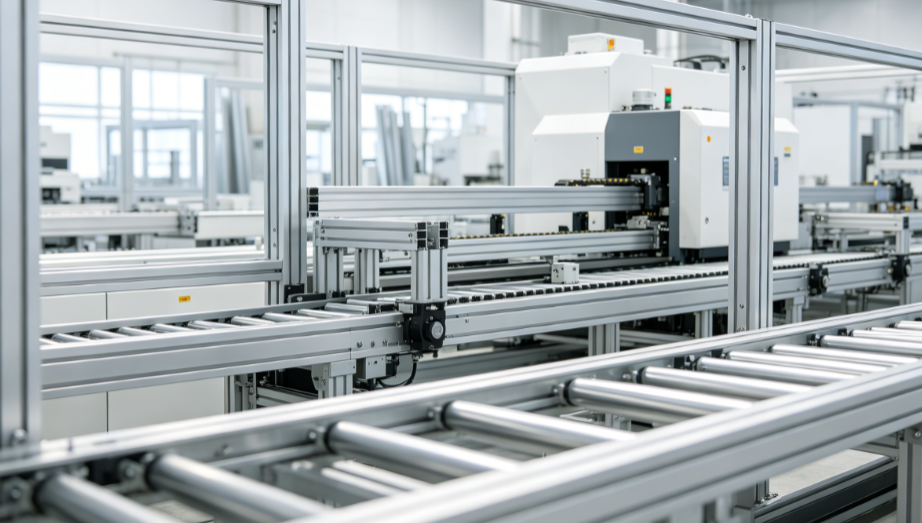
High-precision recycled aluminum extrusions can be used to build various automated production equipment, assembly line racks, operating platform frames and equipment protective frames. With high precision and modular design, they support rapid equipment assembly and commissioning to adapt to industrial production rhythms. Recycled aluminum extrusions have strong structural stability, excellent deformation resistance, vibration resistance and corrosion resistance, maintaining stable performance during long-term continuous operation. They perfectly adapt to the 24-hour high-intensity production scenarios of factories and extend the service life of production equipment.
New Energy Supporting Facilities
In the clean energy transformation of carbon-neutral factories, recycled aluminum extrusions are the preferred material for roof photovoltaic brackets, energy storage equipment frames, wind power supporting structures and other new energy facilities, balancing low-carbon environmental protection, structural strength and outdoor durability. Large-scale application of low-carbon recycled aluminum extrusions in new energy supporting facilities fully meets the clean energy upgrading needs of factories. It helps enterprises build a full-link green production system covering equipment and buildings, and consolidate the achievements of carbon-neutral construction.
Construction of Factory Supporting Facilities
Traffic and Protective Facilities in Factories
Recycled aluminum extrusions are cost-effective and eco-friendly for factory guardrails, pedestrian handrails, equipment isolation frames and maintenance protection facilities. The products release no pollutants and are fully recyclable, conforming to the green construction concept of factories with high safety and environmental performance. Featuring light weight, convenient transportation and simple installation processes without complex welding and anti-corrosion treatment, the extrusions support rapid construction of various factory supporting facilities, effectively shortening the project cycle and improving construction efficiency to save time and cost.
Intelligent Factory Supporting Facilities
Recycled aluminum extrusions can be flexibly processed into supporting components such as intelligent sensor brackets, monitoring equipment fixing frames and automatic terminal bases for smart factories. With high precision and strong adaptability, they fully meet the intelligent upgrading needs of zero-carbon factories and support digital transformation. The inherent low-carbon and environmental protection attributes of the extrusions will not affect the intelligent and digital upgrading of factories. They realize dual empowerment of green low-carbon construction and intelligent efficient production, helping build benchmark smart zero-carbon factories.
Cost Considerations and Long-Term ROI
Cost Comparison Between Primary Aluminum and Recycled Aluminum
Raw Material Procurement Cost Advantages
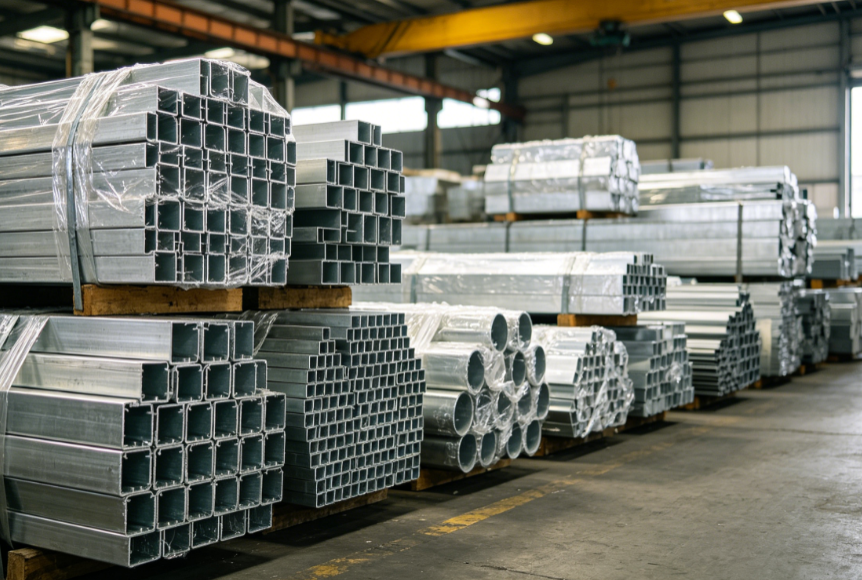
Recycled aluminum raw materials have prominent price advantages. Industry data shows that the market unit price of primary aluminum remains at 2.5-3.5 US dollars per kilogram, while high-quality recycled aluminum raw materials are only 0.2-0.5 US dollars per kilogram, forming a huge cost gap and delivering significant cost reduction effects. Benefiting from raw material price advantages, the overall procurement cost of finished recycled aluminum extrusions of the same specification and quality is 20%-25% lower than that of primary aluminum products. For large-scale factory construction projects, the total material cost savings are considerable, effectively reducing project investment pressure.
Market Price Stability Analysis
Supported by the increasingly improved national waste aluminum recycling, sorting and reproduction supply chain system, recycled aluminum extrusions have sufficient and stable supply. Their market price is not affected by bauxite mining and international ore price fluctuations, with strong price stability and low procurement risks. For high-end extrusions with high recycled content, large-scale centralized procurement by enterprises can further reduce unit production and procurement costs. The long-term procurement cost performance continues to improve, providing strong support for project cost reduction and efficiency improvement.
Cost Reduction in Construction and Production Links
Transportation and Infrastructure Cost Savings
The lightweight feature of recycled aluminum extrusions effectively reduces the material transportation weight in factory construction, cutting transportation times and fuel consumption to lower logistics costs. Meanwhile, it reduces the construction cost of building foundations and load-bearing structures, saving infrastructure investment. The lightweight structural design eliminates complex foundation reinforcement and load-bearing auxiliary procedures, greatly simplifying the overall factory infrastructure construction process. It shortens the construction cycle, reduces construction material and labor input, and saves infrastructure costs in an all-round way.
Improvement of Construction Labor Efficiency
Recycled aluminum extrusions feature high forming precision, standardized specifications and strong on-site adaptability, requiring no secondary cutting and trimming in large quantities. Convenient on-site assembly and installation effectively shorten the overall construction cycle and reduce labor costs, achieving dual effects of efficiency improvement and cost reduction. The low-temperature melting process in production reduces energy consumption and manufacturing costs for manufacturers, enabling more competitive factory prices and further benefiting end projects to improve overall economic benefits in the long run.
Long-Term Lifecycle Return on Investment
Reduced Maintenance and Replacement Costs
High-quality recycled aluminum extrusions have a service life of more than 50 years, with excellent corrosion resistance, wear resistance, aging resistance and deformation resistance in long-term service. They require no frequent maintenance, rust removal or replacement, greatly reducing long-term operation and maintenance costs of buildings and equipment. The products maintain stable performance with low failure rates, effectively avoiding economic losses such as production shutdowns, equipment maintenance and component replacement caused by damaged building components and production equipment, ensuring continuous and stable profitability of factories.
Carbon Cost Savings and Policy Dividends
The low embodied carbon advantage of recycled aluminum extrusions helps factories reduce full-link carbon emissions, effectively avoiding policy risks such as carbon tax collection, excess carbon quota expenditure and carbon emission penalty, lowering enterprise compliance costs. Meanwhile, local governments have launched a wealth of subsidy policies and tax incentives for green building materials, low-carbon factories and circular economy projects. Enterprises adopting recycled aluminum extrusions can apply for various special subsidies to further improve project return on investment.
Asset Appreciation and Residual Value Benefits
Large-scale application of recycled aluminum extrusions in factories supports the application for authoritative green certifications such as LEED, BREEAM and Green Factory Certification. After certification, the fixed asset value of enterprises can increase by about 10%, delivering significant asset appreciation effects. After reaching the end of service life, the extrusions still retain high recycling residual value, and additional benefits can be obtained through manufacturer recycling and waste material sales. It improves the full-lifecycle profit system of projects and maximizes long-term investment returns.
How to Choose a Reliable Recycled Aluminum Extrusion Supplier
Audit Enterprise Quality Management System
Basic System Certification Requirements
Reliable suppliers must hold valid ISO9001 quality management system certification. Standardized management processes ensure stable dimensional precision, mechanical properties and batch quality of products, meeting the needs of large-scale engineering procurement. Manufacturers with ISO14001 environmental management certification have more standardized production processes and strict environmental control, ensuring the low-carbon attributes of products and fully conforming to the material selection standards of carbon-neutral factories.
Professional Testing Capacity Support
High-quality manufacturers are equipped with full-automatic spectrum analyzers, mechanical performance detectors and other professional equipment to test alloy composition, hardness, strength and other core parameters of each batch of extrusions and strictly control product quality. For high-end customized extrusion projects, suppliers shall provide special test reports and quality certificates to fully meet the acceptance and certification requirements of high-standard carbon-neutral factory projects.
Evaluate Technical Strength and Supply Capacity
Customized Production Technical Level
Priority shall be given to suppliers with independent mold R&D, design and customized extrusion production capabilities, which can quickly develop various special-shaped and high-precision cross-section extrusions according to project needs to adapt to diverse construction scenarios. Meanwhile, enterprises shall be proficient in anodizing, powder coating, electrophoresis and other surface treatment processes to meet the dual high standards of structural performance, corrosion resistance and appearance decoration of extrusions.
Production Capacity and Delivery Guarantee Capacity
Before cooperation, it is necessary to verify the supplier’s production line scale, annual production capacity, warehousing reserve capacity and delivery performance records of previous large-scale engineering projects to avoid construction delays and supply interruptions. Stable large-scale production capacity and standardized production processes are the core guarantee for bulk material supply, on-time construction and smooth implementation of large-scale carbon-neutral factory projects.
Challenges and Common Misconceptions
Raw Material Mixing and Quality Control Challenges
The core difficulty in recycled aluminum extrusion production lies in the mixed composition of waste aluminum raw materials, which causes alloy composition fluctuations and excessive trace impurities after smelting. Without fine sorting and purification processes, the mechanical performance and stability of extrusions will be affected, failing to meet high-precision industrial application standards. Impurities such as paint and oil on the surface of waste aluminum increase the difficulty of smelting and purification. Restricted by equipment and technical conditions, small and medium-sized enterprises cannot completely remove impurities and homogenize components, resulting in unstable product quality and becoming a major technical barrier restricting the large-scale high-end application of recycled aluminum.
Deficiencies in Traceability Certification and Data Standardization
The recycled aluminum industry faces problems of inconsistent standards and imperfect data traceability systems. Many small and medium-sized manufacturers cannot accurately publicize the recycled raw material proportion, carbon footprint details and waste source information. Some enterprises falsely mark recycled content and obscure carbon emission data, leading to distorted carbon accounting data of end projects and failure in green certification. Compared with the mature quality inspection and certification system of primary aluminum, the audit traceability and qualification verification system of recycled aluminum are still being improved. Especially for recycled extrusions of niche alloys, limited raw material sources and scattered batches increase the difficulty of standardized management and compliance certification.
Market Cognition and Supply Chain Deficiencies
The recycled aluminum industry has a serious hierarchical supply chain structure, with high-end production capacity concentrated in leading enterprises and a large number of low-quality products flooding the market. This makes it difficult for end users to balance low-carbon performance and product quality, restricting its application in high-end carbon-neutral projects. The price of recycled aluminum fluctuates with the waste metal market, and customized extrusions have a long production cycle, putting forward higher requirements for supplier production capacity and delivery management. Insufficient production capacity and poor performance of small and medium-sized suppliers easily lead to supply delays and cost overruns.
Conclusion
With core advantages such as low-carbon eco-friendliness, superior performance, cost-effectiveness, and broad applicability, recycled aluminum profiles align with the green construction requirements of carbon-neutral factories; they help reduce project carbon footprints while enabling enterprises to cut costs and boost efficiency. Driven by "dual carbon" policies, these profiles are set to become a mainstream material choice for green industrial construction, facilitating the transition of factories toward carbon neutrality and sustainable development.
Henan Retop Industrial Co., Ltd. Will Be There Whenever Wherever Whatever You Need

 Environmental Benefits Beyond Carbon Reduction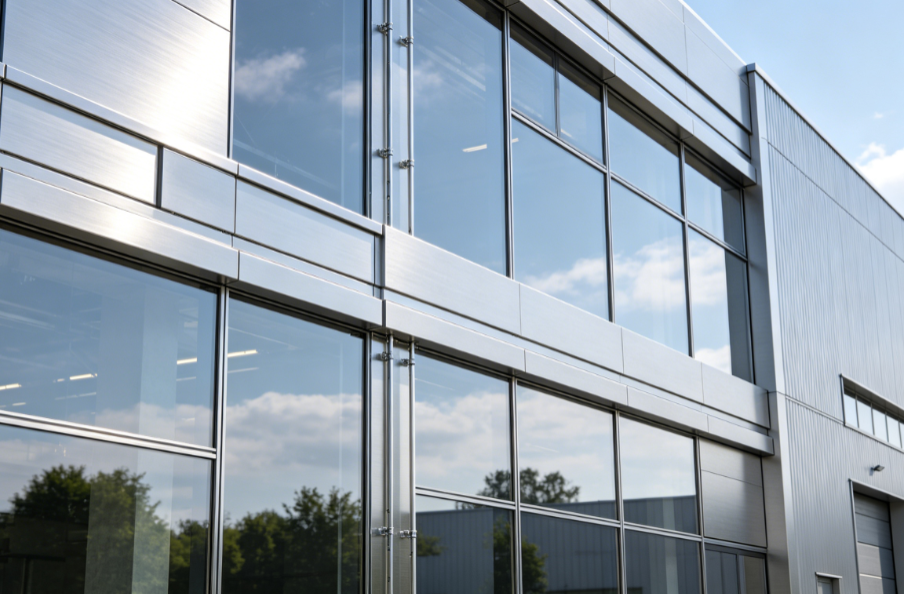
 Cost Considerations and Long-Term ROI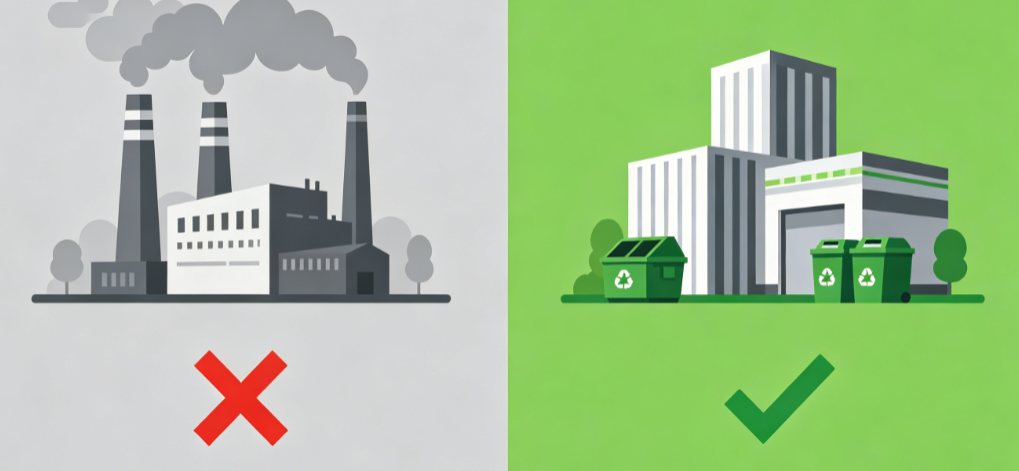
.jpg)