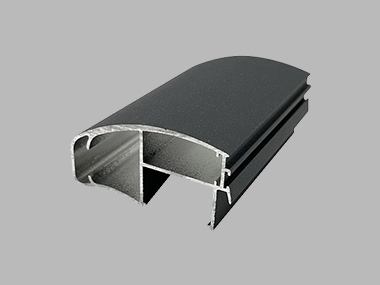
Why Lightweight Aluminum Extrusions Replace Iron Exhibition Booth Frames
Date:2026-06-26
View: 2417 Point
Exhibition booth frames directly determine exhibition costs, installation efficiency and brand presentation effects. Iron and wooden materials can no longer meet the demands of high-frequency and cross-regional exhibition participation. With core advantages including high reusability, light weight and environmental recyclability, lightweight aluminum extrusions have gradually replaced traditional iron exhibition booth frames.
Why Exhibition Booth Frame Materials Matter
Core Significance of Booth Frame Materials
In various exhibition and commercial scenarios, the booth serves as a core window for brand external display, undertaking vital functions of product exhibition and customer communication. A high-quality booth frame can stably support the overall layout and ensure the smooth progress of the entire exhibition. The selection of frame materials is not merely a hardware choice, but a core decision affecting the overall exhibition benefits. It comprehensively impacts booth safety, aesthetics, operational costs and long-term return on investment.
Iteration History of Booth Frame Materials
Early exhibition booths were mostly made of solid wood, density boards and other wooden materials, which feature excellent texture and high customizability to meet diverse personalized booth design needs. However, wooden materials have prominent drawbacks including heavy weight, vulnerability to damage and extremely low reusability in subsequent use. As the exhibition industry evolves towards high efficiency and sustainability, traditional wooden materials have been phased out. Lightweight and reusable aluminum profiles, with comprehensive superior performance, have become the mainstream core material for modern modular exhibition booths.
Aluminum Extrusions vs. Iron Frames
Weight and Portability
Under the same load-bearing specifications, aluminum profiles weigh only one-third of iron frames, delivering outstanding lightweight advantages. This greatly reduces human and material costs for booth transportation and handling. Aluminum profile booths support rapid assembly and disassembly as well as convenient transportation without the assistance of large-scale equipment. In contrast, iron frames are extremely heavy, difficult to handle, and prone to bumps and damages during disassembly and transportation.
Strength and Structural Stability
Iron materials feature higher absolute strength and rigidity, suitable for ultra-large load-bearing and long-term fixed display structures, and have advantages in static load-bearing scenarios. High-quality industrial aluminum profiles boast an excellent strength-to-weight ratio, fully meeting the load-bearing requirements of all types of exhibition booths. Meanwhile, they possess certain toughness to buffer minor on-site collisions, delivering stronger structural stability.
Corrosion Resistance and Durability
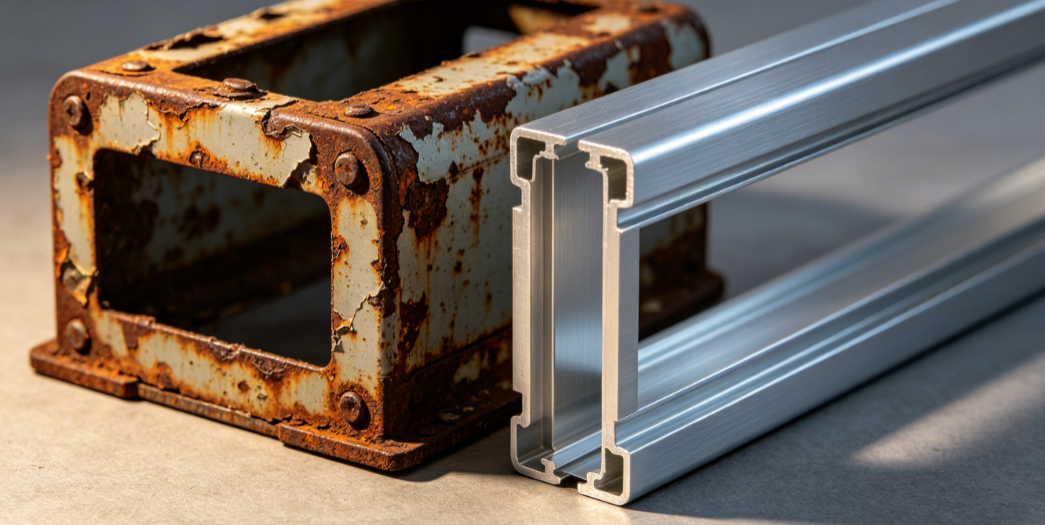
A natural oxide protective layer forms on the surface of aluminum profiles, enabling them to resist humid and temperature changes without additional treatment. They will not rust or deform after long-term use and maintain a good appearance for a long time. Iron frames are highly susceptible to oxidative rusting and require regular painting and galvanizing maintenance. Coatings easily peel off during transportation and disassembly, leading to continuous accumulation of subsequent maintenance costs and limited service life.
Assembly Efficiency and Reusability Flexibility
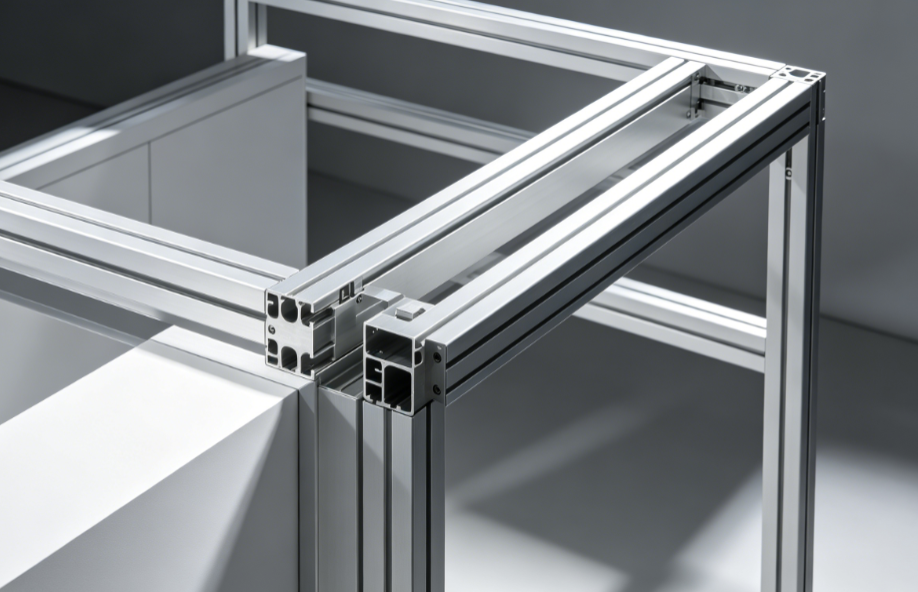
Adopting a chute modular design, aluminum profiles require no welding and can be quickly assembled and disassembled with simple accessories. The layout can be flexibly adjusted according to different booth specifications with extremely low renovation difficulty. Most iron frames adopt a welded fixed structure, whose disassembly requires professional cutting and welding equipment. The high cost of renovation and reusability makes them basically unable to adapt to multi-scenario and multi-specification exhibition needs.
Full-cycle Cost Difference
Iron materials have a lower unit price and lower initial investment for single erection, making them suitable for one-time fixed booth construction with apparent short-term book cost advantages. Although aluminum profiles have a higher initial procurement cost, they incur no subsequent maintenance or replacement fees and can be reused repeatedly. After multiple exhibitions, the overall total cost is far lower than that of iron frames with higher cost performance.
Environmental Protection and Low-carbon Attributes
Both materials are recyclable, but the lightweight advantage of aluminum profiles can greatly reduce transportation fuel consumption and carbon emissions with extremely low recycling energy consumption, conforming to the green exhibition development concept. Iron frames have heavy transportation weight and high carbon emissions, and their anti-corrosion treatment produces pollutants. The high energy consumption of iron recycling and reprocessing makes them far less environmentally friendly than aluminum profiles.
The Biggest Advantages of Lightweight Aluminum Extrusions
Greatly Reduced Logistics and Transportation Costs
Lighter than traditional materials such as steel and solid wood, aluminum profiles significantly cut down the transportation volume and weight of materials, effectively reducing core hidden expenses including freight and on-site handling fees. For enterprises participating in multiple exhibitions all year round, this solution saves substantial annual logistics costs, optimizes exhibition ROI continuously, and allows more budgets to be invested in core brand display links.
Improved Assembly and Disassembly Efficiency
Lightweight profiles are easy to operate without the need for large equipment such as forklifts and cranes, enabling a small number of staff to complete operations. It completely eliminates the reliance on professional equipment and massive labor for heavy materials. The time required for booth assembly and disassembly is greatly shortened, which compresses the exhibition preparation cycle, reduces site occupation duration, and avoids additional site fees caused by overtime occupancy.
Superior Strength-to-weight Ratio Ensures Safety
Lightweight design does not mean low performance. High-quality aluminum profiles have excellent load-bearing capacity, which can stably support large display boards, lighting equipment and multi-layer booth structures, fully meeting professional exhibition safety standards. The profile structure features uniform stress distribution and good buffering toughness, which can effectively resist minor on-site collisions and vibrations to ensure long-term stable and safe operation of the booth.
Optimized Warehousing and Turnover Efficiency
Fully disassembled lightweight modular aluminum profiles occupy little warehouse space with compact storage volume, greatly reducing corporate warehouse storage and management costs. Material transportation, inventory counting and assembly are more convenient, adapting to the operation rhythm of enterprises’ high-frequency and cross-city exhibition participation and significantly improving the turnover efficiency of exhibition materials.
Reduced Material Loss and Extended Service Life
Heavy materials are prone to dents, cracks, deformation and other damages during transportation and disassembly, resulting in high loss rates, shortened booth service life and increased replacement costs. Aluminum profiles have better toughness, excellent impact and wear resistance, coupled with anti-corrosion properties, which can maintain a complete state for a long time with stable performance after repeated use.
Empowering Green and Low-carbon Exhibition Participation
Material lightweighting effectively reduces transportation fuel consumption and carbon dioxide emissions, helping enterprises lower their exhibition carbon footprint and implement environmental protection development concepts. Aluminum profiles can be recycled and reused infinitely without material waste, conforming to corporate ESG development requirements and helping brands build a green and environmentally friendly public image.
Lower Overall Operational and Labor Costs
Lightweight materials eliminate the need for professional heavy equipment and a large construction workforce, greatly cutting labor expenses, especially for large exhibitions with high on-site labor charges. On-site adjustment, renovation and maintenance are simpler and more convenient, reducing rework labor costs caused by unexpected problems and comprehensively optimizing the overall exhibition operation budget.
Practical Application Value of Lightweight Aluminum Profiles
Enterprises of all sizes have achieved the core goals of improved exhibition efficiency and reduced costs after switching to aluminum profile booths. The profiles can flexibly adapt to booth specifications of different sizes and meet diverse exhibition needs. Whether for small simple booths or large island-style exhibition stands, lightweight aluminum profiles deliver optimal cost performance, bringing stable and long-term commercial value to corporate exhibition participation.
How Aluminum Extrusions Improve Exhibition Efficiency
Ultra-fast Assembly and Disassembly
Featuring a standardized chute modular design with universal accessories and simple assembly logic, aluminum profiles require no professional welding or cutting technology, allowing zero-basis construction personnel to operate quickly. It only takes a few hours to complete booth assembly with aluminum profiles, compared with several days required for traditional booths. This greatly shortens site occupation time and reserves sufficient time for booth layout and debugging.
Streamlined Logistics and Site Costs
Lightweight profiles greatly reduce freight weight and volume, directly cutting hidden costs such as logistics fees, on-site handling charges and overweight fines, controlling core exhibition expenses from the source. With durable materials and no need for large equipment assistance, the transportation process is smoother, effectively avoiding problems such as material damage and restricted equipment entry to ensure the on-time delivery of exhibitions.
Modular Reusability for Cost Reduction and Efficiency Improvement
One set of aluminum profile equipment can flexibly adjust the layout and specifications to adapt to different booth sizes and activity themes, eliminating the need for custom frame construction for each exhibition. It completely avoids the waste of one-time use and abandoned reconstruction of traditional booths, significantly saving time and capital costs for design, customization and material procurement.
Simplified Warehousing and Material Management
Disassembled aluminum profiles are compact and neatly stored with low warehouse occupancy, greatly reducing long-term corporate warehouse rental and material management costs. With corrosion resistance and high durability, the profiles require no complex maintenance during long-term storage and maintain stable conditions for direct use in each exhibition without pre-event inspection and renovation.
Reduced Maintenance and Operational Failures
Aluminum profiles feature stable performance with rare problems such as rust, deformation and cracking, leading to extremely low long-term failure rates and minimal routine maintenance needs. Structural failures rarely occur on-site during exhibitions, eliminating temporary repairs and ensuring the stable operation of the entire exhibition without damaging brand presentation effects.
Cost Analysis: Aluminum vs. Iron Booth Frames
Initial Raw Material and Processing Cost Comparison
Initial Costs of Iron Frames
Iron materials have low unit prices and simple basic welding processes, resulting in lower initial investment for single simple erection, suitable for one-time exhibition construction with limited budgets. However, personalized and modular renovation requires additional cutting and welding fees, which sharply increase the processing cost of complex booths and weaken the initial low-cost advantage.
Initial Costs of Aluminum Profiles
Aluminum profiles have higher costs for raw materials and precision extrusion processing, with an overall higher initial procurement price than iron frames due to obvious process premium for standardized profiles. Nevertheless, aluminum profiles require no secondary welding and polishing, and modular assembly saves a large amount of processing costs. The overall construction cost of complex booths is close to that of iron frames.
Labor Construction and Operational Costs
Iron frame construction requires professional welders, massive labor and heavy equipment, with a long construction cycle and high labor costs, accompanied by increased site overtime occupancy fees. Aluminum profile assembly is simple with low labor demand and fast construction speed, greatly reducing on-site labor costs and site occupation costs while improving operational efficiency.
Maintenance and Loss Costs
Iron frames are prone to rust, deformation and paint peeling, requiring derusting, repainting and repairing after each exhibition with continuous maintenance expenses, and damaged parts are difficult and costly to repair. Aluminum profiles are corrosion and wear resistant with almost no routine maintenance. Minor damages do not affect use, and accessories can be replaced conveniently at low cost, leading to extremely low long-term loss costs.
Reusability and Full-cycle Ownership Cost
Highly customized iron frames are difficult to renovate and reuse, mostly for one-time use. Repeated construction and procurement for multiple exhibitions result in extremely high cumulative costs. Aluminum profiles can be repeatedly renovated and reused, with one set of equipment adaptable to dozens of exhibitions. The short-term high investment is quickly amortized, making the full-cycle comprehensive cost far lower than iron frames.
Additional Hidden Cost Advantages
The environmental attributes of aluminum profiles qualify enterprises for preferential policies at some exhibition venues, and their lightweight structure reduces safety risks, indirectly cutting hidden expenditures such as insurance and compensation fees. Aluminum profile booths support standardized iterative upgrades to adapt to long-term corporate exhibition plans, eliminating frequent redesign and reconstruction and continuously saving R&D and customization costs.
Design Flexibility with Aluminum Extrusion Systems
Diversified Profile Specifications for Diverse Adaptation
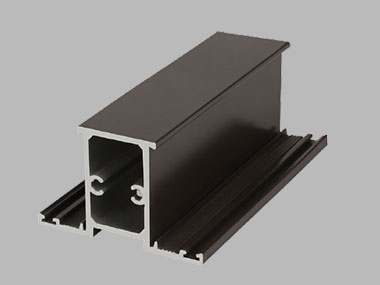
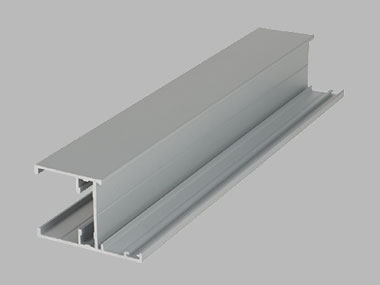
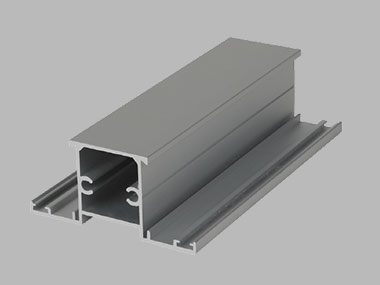
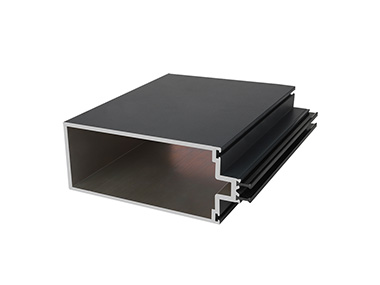
Aluminum profiles include hundreds of specifications such as square tubes, round tubes, angle fittings and channel beams, meeting structural load demands of different weights and balancing lightweight design and high strength. They can accurately match diverse design requirements including minimalist narrow-edge shapes, heavy-duty suspension structures and multi-layer booths, supporting the implementation of various creative booth solutions.
Seamless Integration of Full-category Accessories
Aluminum extrusion systems can be seamlessly matched with fabric screens, LED lighting, display cabinets, screens and other equipment with high fitting accuracy and no abrupt splicing traces. Built-in wire grooves and fixing structures enable hidden wiring and fixed accessories, creating a neat and sophisticated overall booth appearance and enhancing high-end texture.
Flexible Cutting and On-site Fine-tuning
Profiles can be precisely cut according to site dimensions and design requirements to adapt to irregular venues and special shapes with extremely low on-site adjustment difficulty. Equipped with adjustable connectors, they can quickly correct construction errors, perfectly adapting to site restrictions and temporary design adjustment needs.
Customizable Diverse Surface Finishes
Aluminum profiles support various surface treatments such as anodizing, powder spraying, wire drawing and wood grain transfer, enabling customized colors and textures to fit brand visual systems. They can realize multiple styles including bright luxury, matte minimalism and retro wood grain, serving as both structural supports and decorative elements to boost booth appearance and grade.
Full-size Scalability
Aluminum profiles are applicable to scenarios ranging from small desktop display stands to large double-layer booths with unified design language, ensuring consistent brand display style. Profiles and accessories can be flexibly increased or decreased according to exhibition scale with strong scalability, adapting to corporate brand upgrading and expanding exhibition scale.
Rapid Design Implementation and Iteration
Standardized profiles are equipped with mature CAD design libraries, enabling designers to quickly generate drawings, build models and verify structures, greatly shortening the design review cycle. Scheme modification requires no frame reconstruction with high iteration efficiency, effectively reducing time and capital losses caused by design rework and on-site rectification.
Sustainability Benefits of Aluminum Exhibition Booth Frames
Infinite Circular Recycling
Aluminum profiles can be recycled infinitely without quality loss, and the energy consumption of recycling is only 5% of that of primary aluminum production, achieving far higher resource utilization than traditional materials. A large number of aluminum profile products adopt recycled aluminum raw materials, and scrapped booths can be reprocessed and reused, completely eliminating one-time material waste.
Carbon Emission Reduction via Lightweight Design
The lightweight advantage of aluminum profiles greatly reduces transportation weight, effectively cutting fuel consumption and exhaust emissions, and continuously lowering corporate exhibition carbon footprints. The carbon emission reduction effect accumulates across multiple exhibitions, helping enterprises complete low-carbon environmental protection assessment indicators and conform to the green exhibition development trend.
Extended Service Life Reduces Material Consumption
With corrosion resistance, aging resistance and high durability, one set of aluminum profile equipment can be used for dozens of exhibitions, greatly reducing resource consumption from material replacement and iteration. It abandons the one-time construction and disposal model of traditional booths, reducing construction waste and material waste from the source.
Low-maintenance and Pollution-free Operation
Aluminum profiles require no frequent painting or anti-corrosion treatment, resulting in no chemical coating pollution during operation with clean and environmentally friendly maintenance processes and no pollutant discharge. Most surface treatments adopt low-VOC environmental protection processes with no harmful gas release, complying with indoor exhibition venue environmental safety standards.
Eco-friendly Disposal at End of Service Life
Scrapped aluminum profiles can be completely disassembled and classified for recycling without mixed material pollution, featuring simple, environmentally friendly and residue-free disposal processes. Compared with wooden and composite booths, it completely avoids pollution problems caused by mixed waste of glue and paint, with prominent environmental advantages in terminal disposal.
Qualification for Green Exhibition Certification
The environmental attributes of aluminum profiles help enterprises apply for green certifications such as LEED and ISO14001 and improve the environmental rating of exhibition projects. It is the preferred material for high-end green and international exhibitions, helping enterprises comply with exhibition environmental protection specifications.
Industries That Benefit Most from Aluminum Exhibition Booths
Technology, Electronics and Software Industry
The technology industry features high exhibition frequency and rapid product iteration, requiring flexible booth renovation and rapid implementation. The modular design of aluminum profiles can adapt to new product display needs. The minimalist and high-end metallic texture perfectly matches the innovative tone of technological products, enabling seamless integration of LED screens and intelligent equipment to create tech-style booths.
Automotive and Mobility Industry
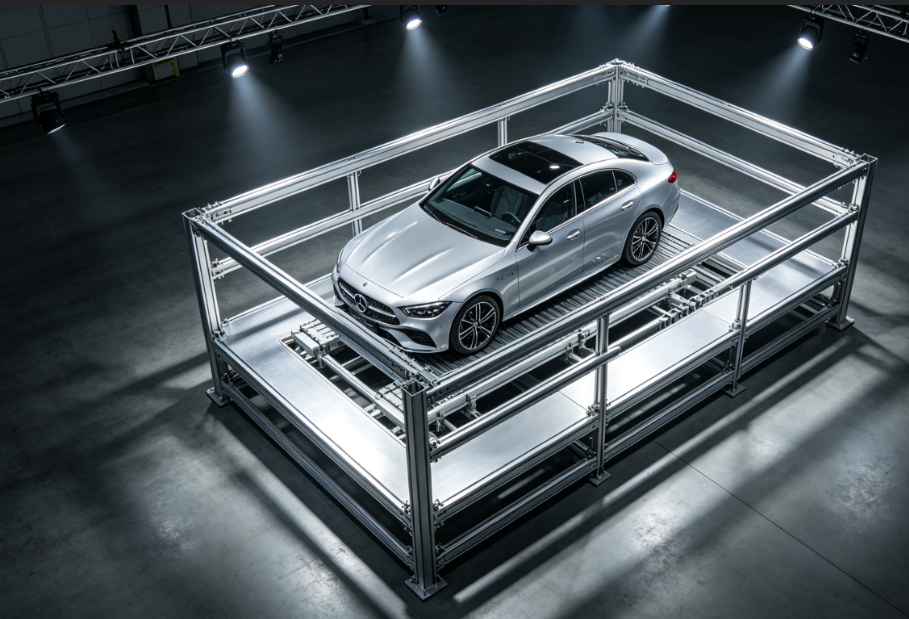
Auto exhibitions require high-strength frames to support large accessories and multi-layer display structures. Aluminum profiles have an excellent strength-to-weight ratio with stable load-bearing capacity and low transportation costs. With frequent and nationwide exhibition participation, auto enterprises can reuse aluminum profile booths repeatedly, greatly reducing long-term exhibition material and construction costs.
Healthcare and Pharmaceutical Industry
Medical exhibitions have strict requirements for booth cleanliness and sterility. Aluminum profiles feature smooth surfaces for easy cleaning with no corrosion or mildew, complying with industry hygiene standards. The construction process is efficient and dust-free, enabling rapid and compliant booth layout to meet the rigorous and standardized exhibition requirements of the medical industry.
Industrial Manufacturing and Machinery Industry
Industrial exhibits are heavy and bulky with high requirements for booth structural stability. The high strength of aluminum profiles fully meets the display needs of large equipment. Lightweight materials effectively reduce the high logistics and handling costs of industrial exhibitions, and the modular structure adapts to the display layout of different mechanical exhibits.
FMCG and Retail Industry
FMCG brands feature rapid new product iteration and frequent marketing activities, requiring rapid booth construction and flexible renovation. Aluminum profiles can efficiently adapt to short-term marketing exhibitions. With customizable appearance and easy-to-replace screens, it adapts to seasonal marketing and new product promotion scenarios, helping brands quickly capture exhibition traffic.
New Energy and Environmental Technology Industry
New energy enterprises advocate green and low-carbon concepts, and the cyclic reusable and low-carbon attributes of aluminum profiles are highly consistent with brand concepts. It can fully display the enterprise's environmental positioning, create an immersive green display scenario, and enhance brand professionalism and credibility.
How to Choose the Right Aluminum Extrusion for Exhibition Booths
Booth Specification and Structural Load Requirements
30-series and 40-series lightweight profiles are suitable for small standard booths, featuring portability, easy operation and controllable costs for simple display layouts. 80-series and 100-series heavy-duty profiles are required for large island booths and multi-layer structures to ensure the load-bearing safety of suspended equipment and multi-layer frames.
Alloy Material and Process Grade
6063-series profiles have excellent surface texture and strong corrosion resistance, serving as universal and cost-effective options for most conventional exhibition scenarios. 6061-series profiles feature higher strength and better stability, suitable for high-load and high-frequency professional exhibition booths with enhanced durability.
Balance of Weight and Portability
Profile selection should balance lightweight design and structural safety, prioritizing high-quality thin-walled reinforced profiles to reduce weight without compromising load-bearing performance. Avoid blindly selecting heavy-duty profiles to increase logistics costs or over-lightweight profiles leading to structural instability, and balance cost performance and safety.
Accessory and System Compatibility
Selected profiles shall match universal accessory systems to ensure seamless adaptation of display boards, lighting and connectors, avoiding scarce accessories and difficult replacement. Prioritize standardized mainstream profile systems with complete accessory libraries and high universality to reduce subsequent renovation and maintenance difficulty and costs.
Supplier Quality and Qualifications
Choose suppliers with exquisite craftsmanship and complete qualifications to ensure unified profile specifications and qualified alloy purity, avoiding potential safety hazards of inferior profiles. Prioritize manufacturers that can provide parameter reports, CAD drawings and environmental certifications to ensure compliant and usable profiles and complete after-sales services.
Budget and Long-term Cost Performance
Select profiles based on exhibition frequency and service life. Enterprises with high exhibition frequency should prioritize high-quality profiles to sacrifice short-term low prices for long-term stability. General economical profiles are applicable for low-frequency one-time exhibitions to balance short-term budget and usage needs and avoid resource waste.
Conclusion
In terms of comprehensive performance, cost, environmental protection and design, lightweight aluminum profiles are fully superior to traditional iron exhibition booth frames, serving as the optimal choice for efficient, low-cost and sustainable modern exhibition construction. Enterprises in all industries can select profiles accurately according to their booth specifications and usage frequency, leveraging the advantages of aluminum profiles to achieve dual goals of cost reduction, efficiency improvement and brand value upgrading in exhibition participation.
Henan Retop Industrial Co., Ltd. Will Be There Whenever Wherever Whatever You Need

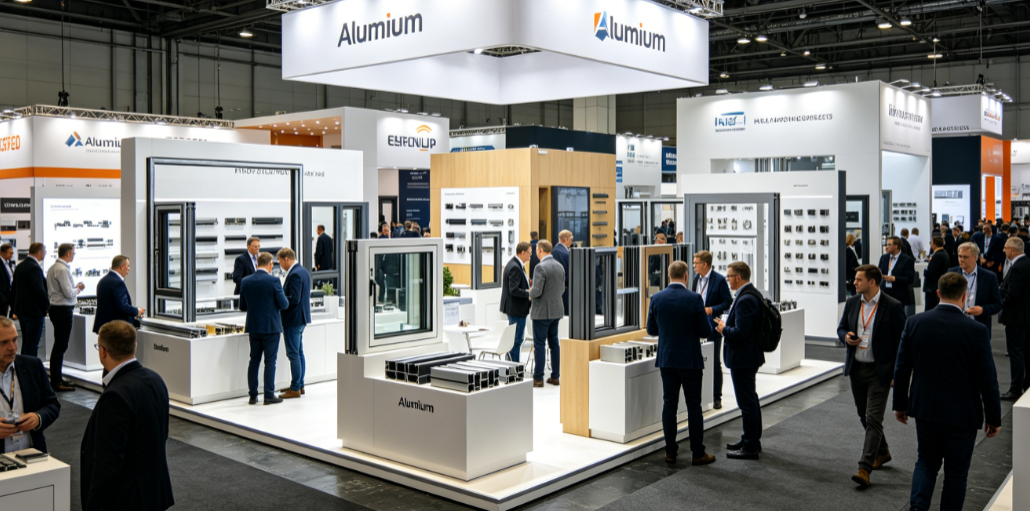
 How Aluminum Extrusions Improve Exhibition Efficiency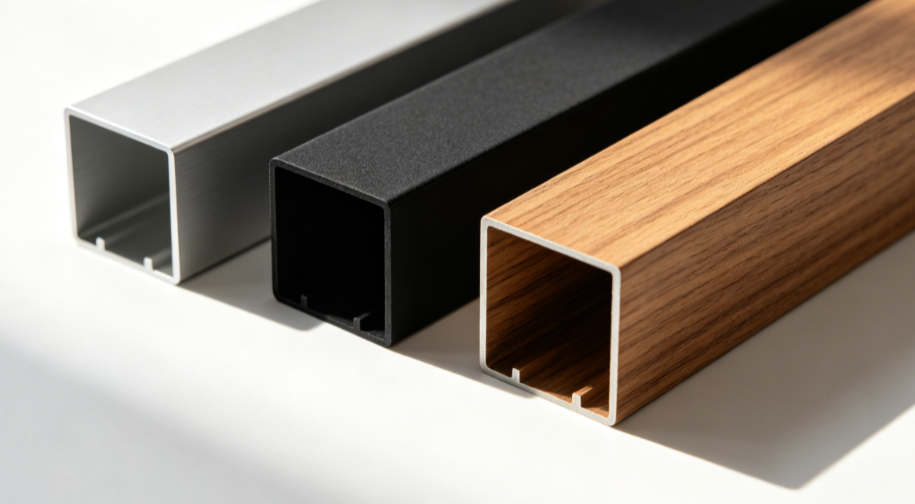
 Industries That Benefit Most from Aluminum Exhibition Booths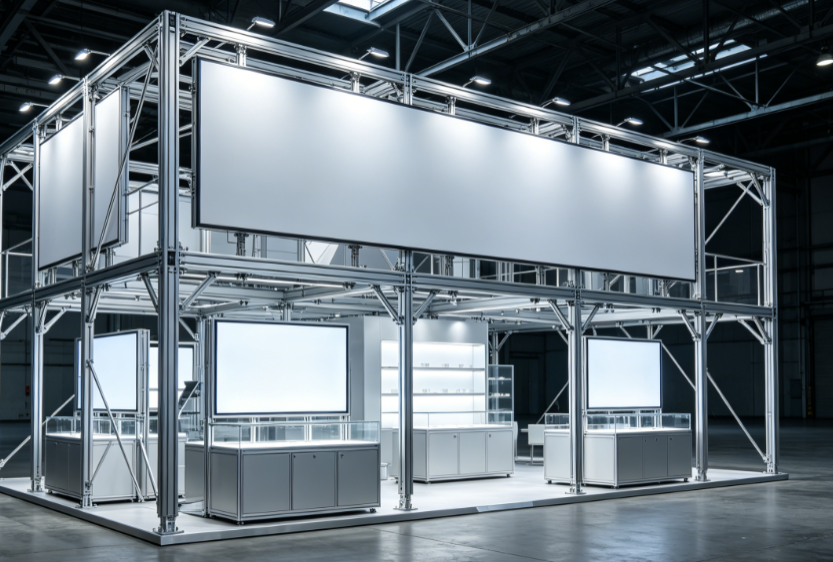
.jpg)