Henan Retop Industrial Co., Ltd

Position: Home > News

How are Aluminum Extrusions Used in the Solar Industry?

Date:2026-05-27
View: 0 Point

As the global clean energy transition accelerates, photovoltaic power generation has become the core track of new energy due to its zero-emission, renewable and wide application scenarios. High-quality structural components are crucial to the stable operation of PV systems. Aluminum extrusion profiles have gradually replaced traditional steel and plastics by virtue of their comprehensive performance advantages, and have now become the preferred core material in the PV industry, running through the entire cycle of equipment production, installation, and operation and maintenance.
What Are Aluminum Extrusions

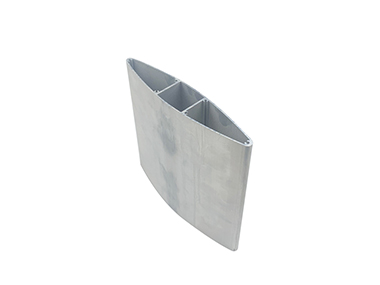
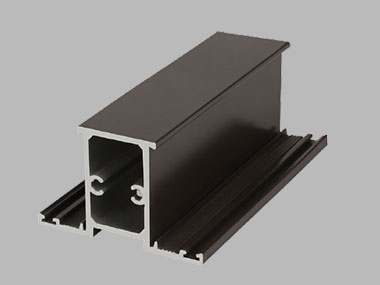
Aluminum extrusion is a well-established metal plastic forming process that uses aluminum alloy ingots as the raw material, which are heated and softened to enhance the material's ductility. With the help of high-pressure extrusion equipment, the aluminum material is forced into a customized precision die, extruding a fixed cross-section shape of the profile product.
The molding principle can be commonly compared to extruding toothpaste, and the opening pattern of the mold directly determines the appearance and structure of the profile. The entire process is easy to operate, with high molding precision, and is capable of mass-producing industrial aluminum profiles with uniform specifications, which is suitable for the standardized production needs of the photovoltaic industry.
The initial extruded aluminum profile has to go through a number of subsequent processing procedures, including cooling and shaping, stretching and straightening, precise cutting and other basic processes. This effectively corrects the deformation problems that occur during the molding process and ensures that the size of the profile is accurate and the appearance is smooth.
At the same time, the heat treatment process can be used to optimize the mechanical properties of the profiles and improve the hardness, toughness and stability of the aluminum. Aluminum profiles processed through a full set of procedures can fully meet the stringent quality standards for long-term outdoor service of photovoltaic equipment.

Why Aluminium Extrusions Are Ideal for Solar Panels

Lightweight and Strong

Solar aluminum extrusions have an excellent strength-to-weight ratio, with an overall weight much lower than that of traditional steel fittings. This reduces the load on the roof and ground base, significantly reducing transportation and on-site installation costs.
The profiles have excellent structural stability and deformation resistance while being lightweight, and are able to withstand complex outdoor loads such as high winds, snow and dust. It is not easy to be deformed and loosened in long-term service, which protects the PV modules and ensures the safe and stable operation of the whole PV system.

Corrosion Resistance

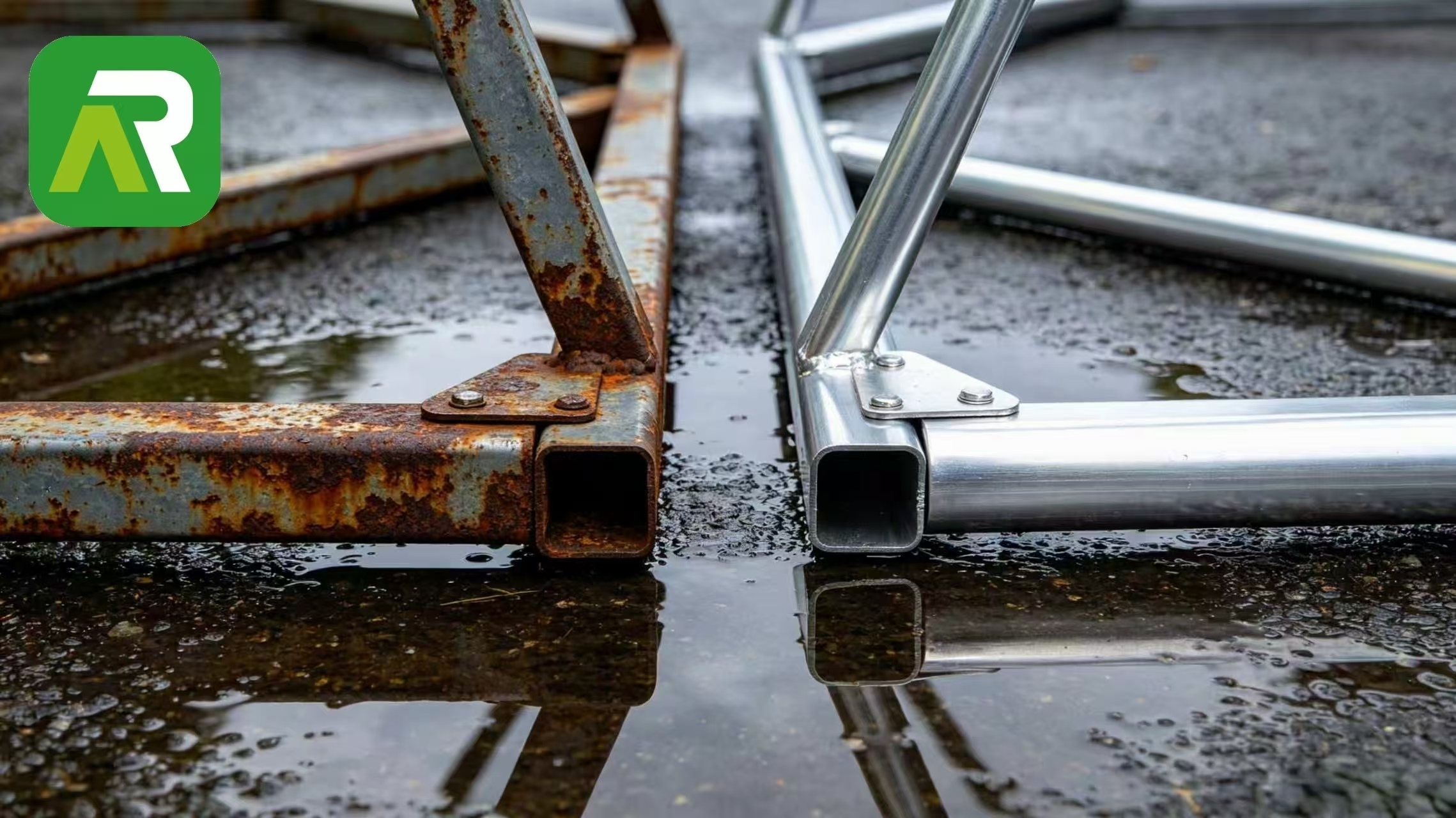
Photovoltaic equipment is exposed outdoors for long periods of time and is susceptible to corrosion damage from rain, humid air and coastal salt spray. While ordinary metal materials are prone to rust and aging, aluminum profiles have their own natural anti-corrosion properties, which are suitable for harsh outdoor working conditions.
The surface of aluminum can independently form a dense oxidized protective film, effectively isolating the external corrosive medium, preventing the profile from rusting and breaking. Its maintenance-free, long-life characteristics significantly reduce the cost of PV project operation and maintenance.

Thermal Conductivity

Long-term exposure of photovoltaic modules to sunlight will continue to heat up, and high temperatures will easily reduce the photoelectric conversion efficiency and accelerate the aging and degradation of the modules. Aluminum profiles have excellent thermal conductivity and heat dissipation properties, making them an excellent heat dissipation carrier for photovoltaic equipment.
Aluminum PV frames and brackets can quickly channel the residual heat of the equipment, effectively avoiding overheating and performance degradation of the PV panels. Stabilized operating temperature ensures continuous power generation efficiency and extends the overall service life of the PV modules.

Sustainability

Aluminum alloy is a high-quality green recyclable industrial material that supports 100% recycling without loss of core performance. Scrap aluminum PV profiles can be smelted and processed repeatedly and have a high recycling rate.
Recycled aluminum consumes far less energy than virgin aluminum, significantly reducing carbon emissions and energy consumption. It is a perfect match for the cleaner nature of PV power generation, helping PV projects realize low-carbon development throughout their life cycle.

Customizability

Aluminum extrusion process has excellent forming flexibility and can be customized according to the needs of all kinds of complex cross-section profile structure. It completely breaks the limitations of traditional profile specifications and accurately matches the individual design requirements of various types of photovoltaic equipment.
Manufacturers can combine the size of PV panels, installation scenarios and structural characteristics to realize the fine customized production of accessories. It can be fully adapted to various PV application scenarios, such as household, industrial and commercial, and large-scale power stations.

Main Applications of Aluminum Extrusions in the Solar Industry
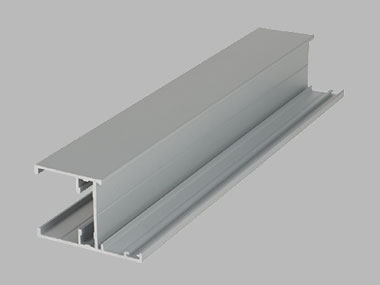
Aluminium Solar Panel Frames

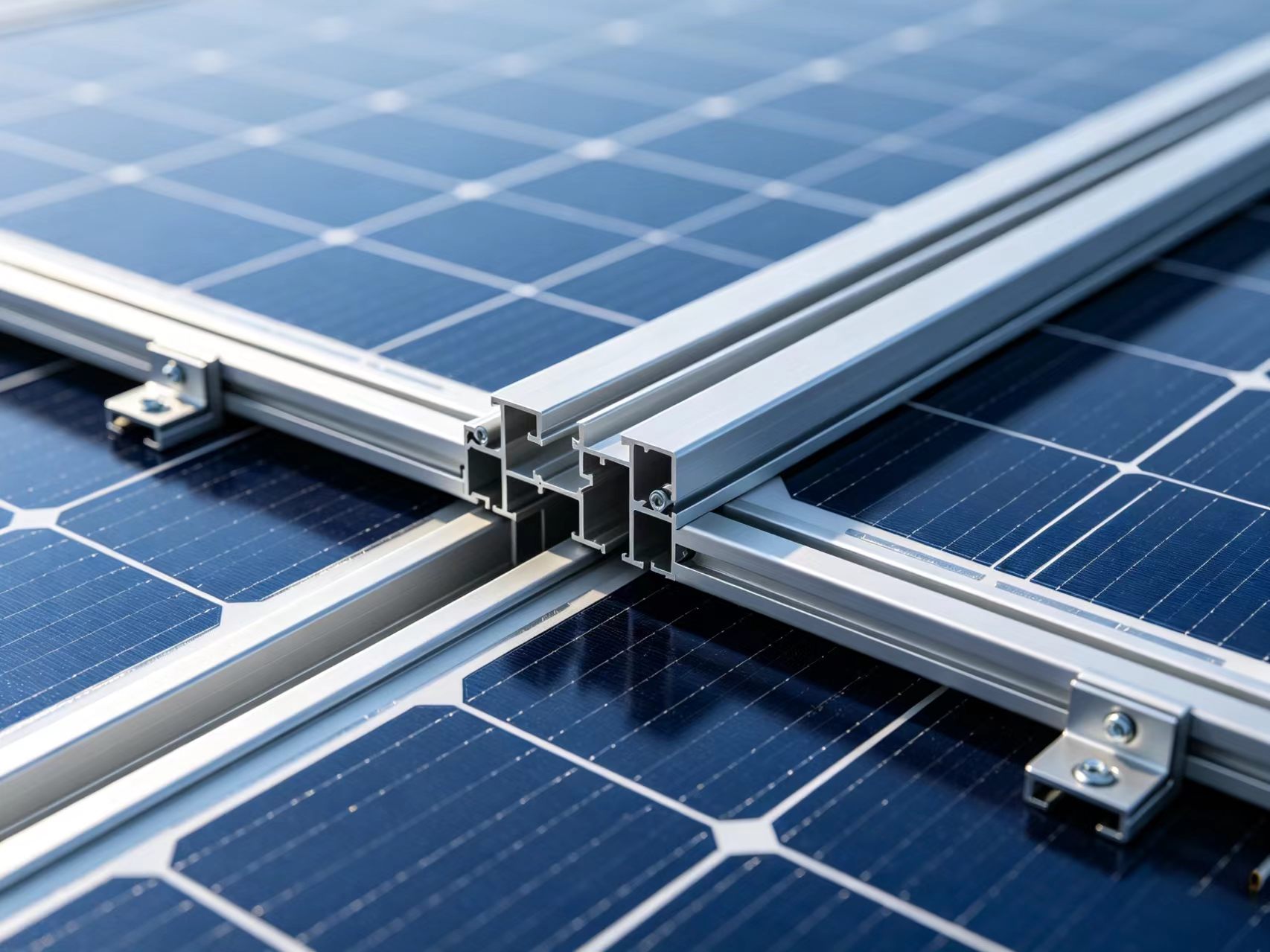
Aluminum Solar Panel Frames are the core protective structure of PV modules, tightly wrapping the edges of PV panels. It can effectively resist external damage such as bumping and squeezing, and protects the glass panel and internal cells in all aspects.
It can firmly lock the overall structure of the PV module, effectively preventing the panel from loosening, cracking and other problems. It provides a solid foundation for the transportation of PV modules from the factory, on-site installation, and long-term operation and maintenance.

Aluminum Solar Mounting Rails

Aluminum solar mounting rails are the core load-bearing foundation of the PV system, used to receive and fix various types of PV modules. It is suitable for roof, ground, water and other installation scenarios, with strong versatility and adaptability.
The guide rail adopts standardized modular design, which can realize the regular arrangement of PV modules and enhance the overall aesthetics of the power station. The lightweight structure is easy to handle and assemble, which greatly improves the efficiency of on-site construction and installation of photovoltaic projects.

Aluminium Solar Panel Clamps

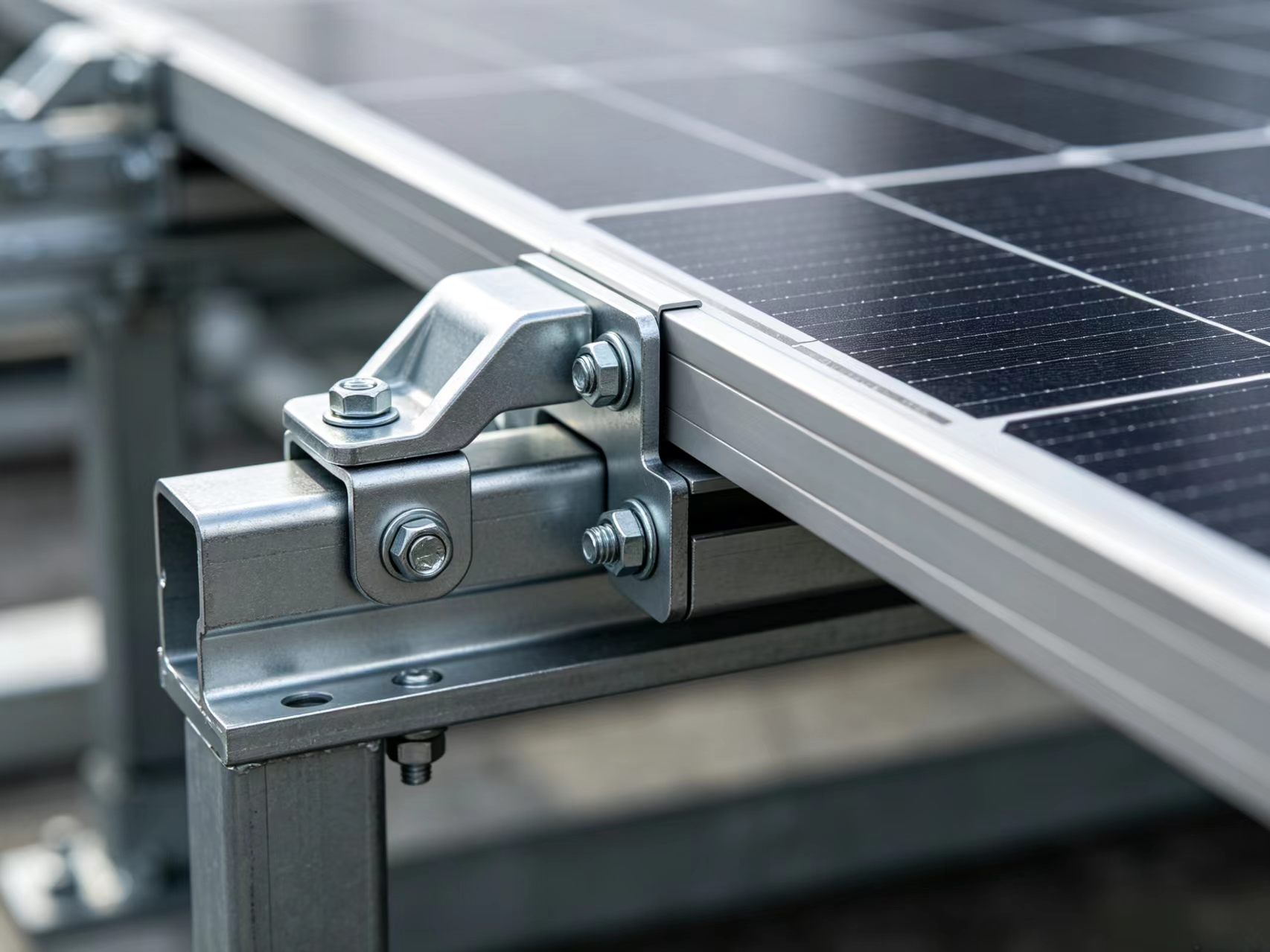
Aluminum Solar Panel Clamps are the core fasteners connecting the PV panels to the mounting rails, mainly used for locking and fixing the PV modules. They can effectively withstand wind, vibration, rain and snow impacts, and avoid shifting and falling off of the modules.
Aluminum compression blocks take into account the characteristics of lightweight and high strength, will not increase the load of the photovoltaic system, and at the same time has excellent anti-corrosion and weather resistance. They can be used outdoors for a long period of time without frequent replacement, thus ensuring the safe operation of the PV power plant.

Solar Panel Mounting Brackets

Aluminum PV mounting base is the key connection hub of PV system, responsible for connecting the mounting rails with various types of mounting substrates. It carries the overall weight of the PV modules and rails, which directly determines the operational safety and stability of the entire PV plant.
The bracket adopts a modularized structure design, which can be adapted to a variety of complex installation scenarios such as rooftop, ground, mountain, and so on. With excellent anti-corrosion and anti-aging properties, it can withstand the harsh outdoor environment for a long time, effectively reducing the later operation and maintenance costs of PV projects.

Advantages of Aluminum Extrusions for Solar Applications

Structural and Weight Advantages

The core advantage of aluminum extrusion profiles is to achieve the ultimate balance of strength and lightweight, compared with traditional steel structural components, the overall weight is greatly reduced. This effectively reduces the load-bearing pressure on the roof and ground base of the building, and is suitable for all kinds of old roof renovation projects.
Lightweight characteristics can significantly reduce the cost of equipment transportation, reduce the difficulty of manual handling and installation. Shorten the construction period of photovoltaic projects, improve the efficiency of the project, suitable for large-scale power plant construction.

Environmental Compatibility and Durability Advantages

PV aluminum profiles have strong environmental adaptability and can withstand extreme working conditions such as desert heat, coastal salt spray, rainy season humidity, cold and snow. No additional anti-corrosion protection is required to maintain structural stability.
The material has excellent anti-aging and anti-corrosion properties, with a service life of several decades and no frequent maintenance. Significantly reduces the cost of operation, maintenance and replacement in the later stages of a PV project.

Design and Production Advantages

Relying on advanced extrusion technology, the aluminum profiles can be customized with high precision and personalization, and the profile shape can be optimized according to the structure of new PV modules. This effectively reduces material waste and improves the fit of accessories and equipment.
Modular and customized profile design can simplify the assembly process on site and improve the construction efficiency. At the same time, the appearance of the profiles is smooth and beautiful, which can enhance the overall visual effect of the PV project.

Advantages in Heat Dissipation and Power Generation

The excellent thermal conductivity and heat dissipation performance of aluminum profiles can quickly channel the residual heat generated by the PV module work, avoiding high temperature overheating of the equipment. Stabilizes the working temperature of the module and ensures stable output of photoelectric conversion efficiency.
Continuous and stable heat dissipation effect can slow down the aging speed of PV modules and prolong the service life of the equipment. In the long run, it can effectively improve the overall power generation revenue of the PV power plant.

Advantage of Environmental Protection and Economic Value

Aluminum alloy can be 100% recycled, low-carbon and environmentally friendly, in line with the concept of green development of the new energy industry. It effectively reduces the carbon footprint of the entire life cycle of the PV project, helping to realize the goal of carbon neutrality.
Moderate initial procurement cost of aluminum alloy, combined with long service life, low operation and maintenance cost, and recyclable residual value, the long-term cost-effectiveness is extremely high. Bringing stable and considerable return on investment for PV projects.

Common Aluminum Alloys and Surface Treatments for Solar Aluminum Extrusions

Mainstream Aluminum Alloy Models and Applicable Scenarios

The mainstream PV aluminum profile adopts 6000 series aluminum alloy, of which 6063 alloy is the most commonly used. It has good extrusion molding effect and smooth and delicate surface, which is very suitable for making all kinds of fine photovoltaic frame structures.
The alloy has excellent anti-corrosion performance, outstanding cost performance, and can be adapted to a variety of surface processes such as anodic oxidation and coloring. It can fully meet the long-term outdoor use requirements of conventional PV frames and decorative accessories.

Surface Protection Process for Profiles

Surface treatment is the core means to enhance the outdoor durability of PV aluminum profiles, and the anticorrosive foundation of virgin aluminum is better than that of ordinary steel. Through anodic oxidation, electrostatic powder spraying and other processes, the corrosion and aging resistance of the profile can be further strengthened.
Anodizing can thicken the protective oxide layer, suitable for salt spray, strong ultraviolet rays and other extreme working conditions. Electrostatic powder spraying takes into account the protective performance and appearance texture, can be customized color, suitable for all kinds of high-end photovoltaic projects.

Design Considerations for Solar Aluminum Extrusions

Alloy Selection and Matching Design Principles

6063 is the mainstream general profile in PV industry, suitable for thin-walled, complex shape of PV frame, with delicate surface texture and excellent oxidation effect. The process is mature and cost-controllable, after T5/T6 tempering treatment, the strength fully meets the service standards of household and industrial and commercial conventional photovoltaic projects.
The overall structural strength of 6005A alloy is higher, and the mechanical properties are more stable, with significant advantages in the application of thick-walled profiles. Its production and heat treatment are more fault-tolerant and stable, and it is designed for large-size, high-power PV modules and large-scale ground power station projects with high loads.

Key Points in the Design of Profile Dimensions

The flange thickness of the PV frame directly determines the overall load-bearing stability, and the force area of the long frame needs to be appropriately thickened to effectively avoid deformation and fatigue damage brought about by long-term loading. Reasonable flange structure can firmly fix the PV module and ensure the long-term operation of the equipment is stable and safe.
The wall thickness of the profile is related to the wind and snow compression resistance and overall strength. Thicker wall thickness can improve the structural load bearing capacity, but it will simultaneously increase the weight and production costs. When designing, it is necessary to take into account the working conditions of the project and accurately match the parameters, taking into account the structural safety, light weight and project economy.

Module Adaptive Structure Design Specifications

There are strict industry standard dimensions for the PV glass bay, with a width of 6.1 to 6.2mm to fit mainstream 2mm double-glass PV modules. Accurate slot size can effectively avoid sealant overflow, glass extrusion and other quality problems.
The width of the upper lip of the photovoltaic frame should be controlled at a reasonable range of 9-11mm, balancing the structural strength and power generation efficiency, and avoiding shading loss. The rounded curved sealant groove design can be evenly filled with sealant, blocking water vapor infiltration and significantly extending the waterproof service life of the module.

Connection and Hole Design Standard

Hollow corner code is a high-quality connection structure for PV frames, which is lighter in weight and saves material, and has excellent splicing strength. Compared to solid corner blocks, they are more cost-effective and can be adapted to all kinds of PV frame assembly scenarios without loss of structural performance.
The design of the various holes in the PV profile should strictly follow the industry standards, with drainage holes, grounding holes, and mounting holes in their respective roles. Standardized apertures and spacing can optimize load distribution, enhance overall stability of the profile, and meet the requirements of long-term outdoor safety service.

Load and Safety Testing Standards

The PV aluminum profile structure must strictly pass the IEC international load test, which can withstand high-intensity snow and wind impacts and protect the power station against extreme wind and snow. Manufacturers can upgrade the load standard according to the climate difference of the project location to enhance the safety of outdoor operation.
Profiles need to pass the professional grounding continuity test, standardized control of the grounding area oxidation process, in line with IEC, UL electrical safety standards. The standard anodized film thickness can effectively enhance the salt spray and UV resistance, which significantly improves the durable outdoor service life of the profiles.

Challenges and Future Trends in Solar Aluminum Extrusions

Existing Eore Fevelopment Challenges in the Industry

Risk of Raw Material Price Volatility

The primary challenge in the PV aluminum industry is the volatility of aluminum raw material prices, which are continuously affected by changes in the global economy, geopolitical situation and supply chain. Price fluctuations directly influence manufacturers' production costs, greatly compressing the overall profit margin of photovoltaic projects.
The instability of raw material prices, significantly increasing the difficulty of daily cost control. At the same time impede the industry standardized pricing system to build, restricting the industry scale, standardized benign development iteration.

Production Energy Consumption Transformation Pressure

Aluminum extrusion belongs to the high-energy production process, the production process of energy consumption, carbon emissions are high. In the global trend of energy saving and carbon reduction, the traditional production model has become the main shortcomings of the transformation and upgrading of the industry.
Major manufacturers urgently need to update energy-saving production equipment, optimize and upgrade the extrusion process. Through technological transformation to reduce energy consumption and emissions, to adapt to the green development requirements of the new energy industry.

Industry Homogenization Competition

The current photovoltaic aluminum industry homogenization phenomenon is extremely serious, small and medium-sized manufacturers of products, technologies and services are highly similar. The industry lacks core technology differentiation advantage, the market competition model is a single curing.
Most companies can only rely on low price competition to seize the market, disorderly competition continues to compress the overall profitability of the industry. Not only affect the profitability of enterprises, but also impede the development of high-quality innovation in the industry.

Product Quality Control Management is Difficult

Aluminum profile production process parameters are prone to fluctuations, which can easily cause product strength, appearance, dimensional accuracy variations. Photovoltaic industry implementation standards are stringent, the profile of the overall quality requirements are extremely high.
The industry has a very low tolerance rate for quality control, forcing enterprises to continue to invest in equipment upgrades and technological research and development. Continuously improve the level of production refinement, in order to stabilize product quality, to avoid quality risks.

The Core Development Trend of the Industry in the Future

Production Digitalization and Intelligent Upgrading

Digitalization and automation transformation is the core development trend of the industry, the intelligent system can realize the whole production process real-time monitoring and precise parameter fine-tuning. It can predict equipment failure in advance, effectively avoid production errors, and improve the profile production precision and operational efficiency.
Relying on big data technology, it can continuously optimize the core extrusion process and stabilize the product size and performance quality. It effectively reduces production energy consumption and material loss, and helps production enterprises realize refined cost reduction and efficiency.

Iterative Innovation of New Alloy Materials

PV aluminum material technology continues to be updated and iterative, high-strength, high anti-corrosion, high thermal conductivity of new alloys have been applied one after another. The new alloys are specially adapted to the new type of PV modules with high power and large size to meet the upgrading demand of the industry.
The new material can adapt to high temperature, high salt spray, strong ultraviolet rays and other complex outdoor working conditions. The comprehensive service performance of PV profiles is greatly improved, and the safety and operational stability of PV systems are continuously upgraded.

Green and Low-carbon Production System Construction

Green and low-carbon has become the mainstream development of the industry, the enterprise actively enhance the recycling rate of aluminum waste. With clean energy production mode, we gradually build a complete closed-loop green production system.
From the source of production to reduce energy consumption and pollutant emissions, significantly reduce the carbon footprint of profile production. Deeply fit the new energy green attribute, help the whole chain of photovoltaic industry carbon neutral development.

Comprehensive Optimization and Upgrading of Product Performance

Along with the iteration of photovoltaic equipment technology, PV aluminum profiles are continuously upgraded in the direction of lightweight, high strength and high durability. The adaptability, safety and durability of the products have been improved in all aspects.
Refined material improvement and structural optimization can match all kinds of new photovoltaic products and complex application scenarios. It provides a solid structural guarantee for the long-term stable operation of PV power stations.

How to Choose a Reliable Solar Aluminum Extrusion Supplier

Verify the Production Qualification and Strength of Manufacturers

Selection of photovoltaic aluminum suppliers, need to prioritize the distinction between physical manufacturers and trade intermediaries. Formal entity factories are equipped with complete production lines and professional technical team, with independent production and processing capabilities.
Manufacturers can control the entire production, quality control and delivery links, to ensure product quality and stability, delivery time can be controlled. At the same time, we can undertake various types of PV projects exclusive customized production to meet the needs of diversified projects.

Examination of Engineering Design and Customization Capabilities

High-quality PV aluminum profile suppliers need to have professional engineering design capabilities, and can provide a full set of technical services, such as load calculation, foundation optimization, component layout. They can meet the industry standards of different regions such as Europe, America, Australia, etc., and customize exclusive profile solutions for overseas PV projects.
Strong customization ability is the core advantage, manufacturers can optimize product parameters for special size, complex terrain and high corrosion environment. Support structure, technology, size and other personalized adjustments, all-round fit all kinds of special photovoltaic project construction needs.

Verification of Product Certification and Material Quality

Regular PV aluminum profile suppliers need to hold a full set of international authoritative certificates such as CE, UL, TÜV, SGS, etc., and be equipped with complete material testing reports. Complete compliance qualification can guarantee the smooth customs clearance and acceptance of the products, effectively avoiding all kinds of project compliance risks.
Products need to use 6005, 6063 series standard aluminum, can verify the oxidation thickness, salt spray test and other material indicators. Strictly control the quality of raw materials, to eliminate poor-quality materials, to ensure the long-term stability of service profiles, to eliminate equipment safety hazards.

Evaluation of Project Experience and Delivery Capacity

Reliable photovoltaic aluminum profile suppliers need to have a wealth of domestic and international photovoltaic project experience, covering ground power stations, industrial and commercial and household photovoltaic and other diversified scenarios. Mature project cases can support manufacturers to accurately identify scene requirements, quickly output adaptive solutions, and effectively avoid various construction risks.
High-quality manufacturers need to have perfect cross-border delivery capabilities, and master the full set of export processes such as customs clearance, logistics and transportation. With standardized protective packaging, they can effectively prevent moisture and bumps to ensure that the profiles are delivered to the project site in good condition and on time.

Confirmation of After-sales Protection and Cooperation System

Reliable PV aluminum profile suppliers can provide 10-25 years of long-term warranty service, covering the structure and surface technology all-round protection. Professional technical team to follow up the whole process, provide installation guidance, questions and answers, accessories replacement and other perfect after-sales support.
High-quality manufacturers have a mature and stable B2B cooperation system, supporting flexible customization and priority scheduling cooperation rights. Continuous iterative optimization of product solutions and core technologies to help partners enhance the market competitiveness of photovoltaic projects.

Conclusion

Aluminum extrusion is an indispensable structural material in the photovoltaic  industry. With its light weight, high strength, corrosion resistance and recyclability, it ensures stable, efficient and long-term operation of PV systems. Although the industry is facing difficulties such as raw material fluctuations, it is continuing to iterate through digital upgrading, new alloy research and development, and green production. The selection of high-quality profiles and reliable suppliers can enhance the efficiency of PV projects and help the global clean energy transition.


Henan Retop Industrial Co., Ltd. Will Be There Whenever Wherever Whatever You Need
You Are Welcome to : phone call, Message, Wechat, Email& Seaching us, etc.
Email: sales@retop-industry.com
Whatsapp/Phone: 0086-15537183797
Share us:
Related products

Sliding Window Series

Sliding Window 20 Series

Material:6063 Aluminium Alloy
Temper:T5
Thickness:1.0mm
Casement Window Series 1

Casement Window Series 1

Material: 6063/6082/6061 Aluminium
Temper:T5/T6
Thickness:0.4mm-1.5mm/Customized
Series53 Aluminium profiles for various uses

Series53 Aluminium profiles for various uses

Material:6063/6082/6061 Aluminium
Temper:T5/T6
Thickness:0.4mm-1.5mm/Customized