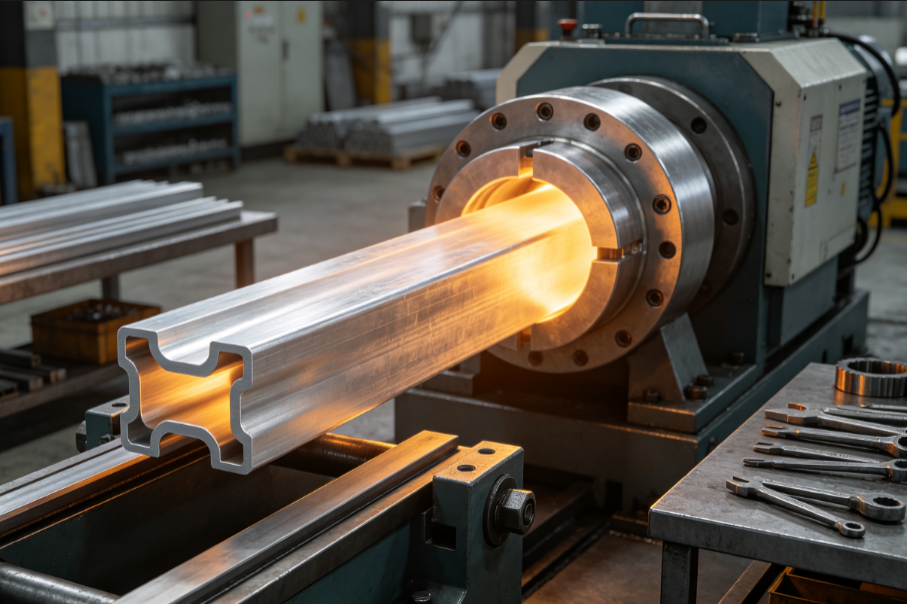
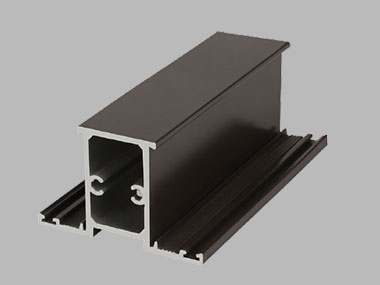
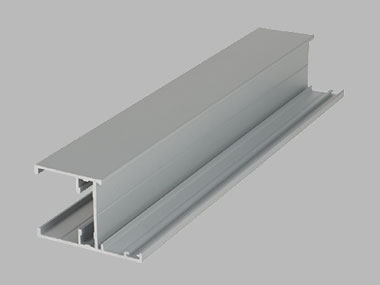
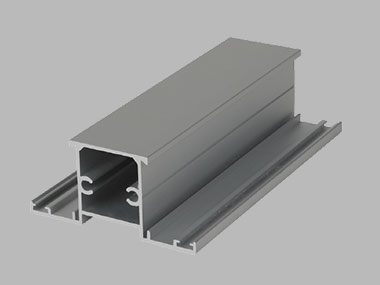
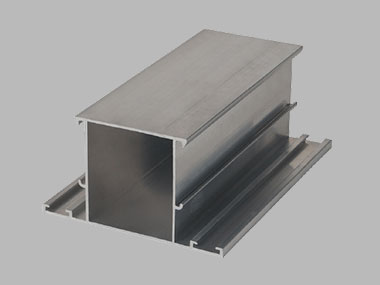
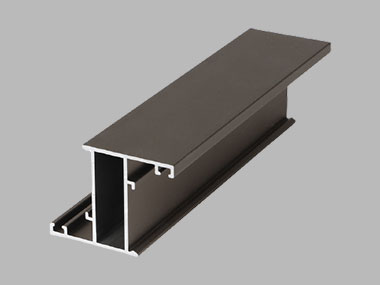
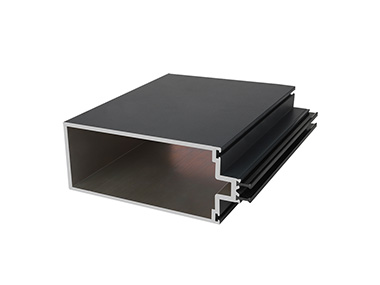
At present, the automobile industry is moving towards lightweight, low-carbon and intelligent rapid iteration, and it is difficult for traditional steel to adapt to the brand-new demand for vehicle building.With the comprehensive advantages of lightweight, high strength and easy processing, aluminum profiles gradually replace traditional materials and become the core material for fuel vehicles, especially new energy vehicles.
Why Aluminum Is Becoming the Material of Choice for the Automotive Industry
Lightweight Advantage
Aluminum alloy has ultra-high strength to weight ratio characteristics, weight is only one third of the traditional steel, optimized structure design strength completely standard steel materials.The aluminum body structure can achieve a lightweight effect of about 45%, and simultaneously promote the weight reduction and upgrading of supporting parts such as brakes and suspensions. Lightweight vehicle body can significantly optimize vehicle energy consumption performance, vehicle weight reduction of 10% can improve fuel economy by 6%-8%, effectively reduce exhaust carbon emissions.For new energy vehicles, lightweight body can directly lengthen the range, reduce battery carrying cost and vehicle dead weight load.
Safe, Durable and Environmentally Friendly
The aluminum surface can spontaneously form a dense oxidation protective layer, which can effectively resist the corrosion attack of rain and road salt without additional complex coating protection technology.This feature greatly improves the durability of automobile chassis and exterior accessories, and effectively reduces the maintenance cost of vehicles in the later period. Aluminum profiles have excellent collision energy absorption performance, which can cushion impact force through controllable deformation to ensure the driving safety of drivers and passengers in all directions.At the same time, aluminum supports unlimited recycling, and the recycling energy consumption is only 5% of the original production, and the moped enterprises achieve the development goal of low carbon and zero carbon.
Process Flexibility Cost Performance
High aluminum extrusion process can be integrated into complex special-shaped structures, integrating multiple functions into a single part, greatly simplifying the assembly process of the vehicle.Mainstream 6000 series aluminum takes into account formability, strength and corrosion resistance, and adapts to various automotive structure and appearance customization requirements. Although the purchase unit price of aluminum raw materials is higher than that of ordinary steel, the advantages of energy saving and low maintenance brought by lightweight can completely offset the price difference.With the upgrading of extrusion process and large-scale mass production, the comprehensive cost of aluminum profile vehicle application continues to decrease.
Fit Value in Vehicle Architecture
Customized aluminum extrusion profiles can create core components such as door frame, roof rack, battery tray, bumper, etc. to meet the multi-scene structure requirements of the whole vehicle.Excellent thermal conductivity can also meet the use requirements of new energy vehicle thermal management systems. Under the market background of tightening environmental protection regulations and consumers favoring energy-saving models, aluminum profiles have become the core grasp of technological upgrading of automobile enterprises.The industry predicts that the consumption of aluminum for passenger cars and commercial vehicles will continue to grow steadily in the future.
Key Properties That Make Aluminum Ideal for Automotive Parts
Lightweight and Mechanical Properties
The density of aluminum is only 2.7g/cm³, which is about one-third of that of steel. The tensile strength of different grades of alloys can cover the range of 70-700MPa.Through process optimization, the structural stability can be guaranteed while greatly reducing weight. After replacing steel parts, the weight of parts can be reduced by 30%-60%, effectively optimizing vehicle acceleration, braking and handling performance.Hollow profile aluminum is to achieve a perfect balance between lightweight and high rigidity.
Corrosion Resistance and Durability
Aluminum can generate self-healing aluminum oxide protective film independently, isolating the corrosion of external water vapor and salt, and avoiding rust problems from the root.No need to spray protective coating frequently, suitable for outdoor complex conditions. 5000 series, 6000 series mainstream automotive aluminum, corrosion resistance performance is particularly outstanding, long-term use is not easy to age damage.Greatly extend the service life of automobile chassis and exterior accessories, and reduce maintenance costs.
Forming and Processing Properties
Aluminum has strong ductility and plasticity, and is suitable for extrusion processing. It can produce complex integrated structures with card slots, cooling fins, and installation points.Completely change the traditional multi-component splicing production mode. 6061, 6063, 6082 and other mainstream aluminum, taking into account extrusion molding, bending, welding and other secondary processing performance.It can accurately match the refined and customized parts production requirements of automobile enterprises.
Thermal and Electrical Conductivity
Aluminum has excellent thermal conductivity, electrical conductivity, heat dissipation efficiency far more than steel, is the preferred material for automotive cooling accessories.It can quickly remove excess heat generated by power system and battery operation. Relying on this characteristic, aluminum profiles are widely used in automobile radiators, battery cooling modules, electrical housings and other parts.Effectively guarantee the stable operation of on-board equipment and prolong the service life of core accessories.
Crashworthiness
Aluminum can efficiently absorb collision impact force in controllable deformation scene, and the cushioning effect is excellent.It can be accurately applied to the design of automobile collapse zone to weaken the destructive force caused by collision. Lightweight aluminum anti-collision structure, no additional body load, while maximizing the protection of drivers and passengers and vehicle core equipment safety.It is a key material for upgrading automobile safety structure.
Common Aluminum Alloys Used in Automotive Manufacturing
5000 Series
This series of alloys do not need heat treatment, rely on cold working to improve strength, the core advantages are corrosion resistance, easy forming, excellent welding performance.Adapt to all kinds of complex molding and welding auto parts. 5052, 5083, 5182, 5754 are commonly used brands, mostly used for body panels, interior structural panels, floor panels and other parts.Excellent deep drawing performance, suitable for body sheet metal processing.
6000 Series
As the main alloy of automobile extrusion profile, it relies on magnesium and silicon elements to realize precipitation hardening, giving consideration to high strength, high formability and corrosion resistance.It is the core material of lightweight transformation of automobile enterprises. After T6 heat treatment, the strength is greatly improved, and core structural parts such as bumper, frame, battery case and heat dissipation profile can be made.6063, 6061, 6005A and 6082 are high-frequency use grades.
7000 Series
This series is the highest strength automotive aluminum, excellent fatigue resistance, can meet the requirements of ultra-high load conditions.However, the cost of raw materials is high and the corrosion resistance is relatively weak. 7003,7046,7075 and other brands are only used for core safety components such as collision reinforcement and seat structure of high-end models and performance vehicles, belonging to niche high-end materials.
Automotive Parts Commonly Made from Aluminum
Body and Exterior Aluminum Fittings
Automobile hood, door, fender, trunk cover more aluminum plate and stamping parts, compared with steel parts weight reduction of about 50%.Effectively optimize the center of gravity of the vehicle body and improve the handling performance of the vehicle. The roof panel and body beams mostly use customized aluminum extrusion profiles to ensure the rigidity of the body while achieving lightweight.Significantly reduce the body weight, improve driving stability.
Chassis and Safety Structure Aluminum Accessories
Aluminum extrusion profiles are widely used in safety parts such as bumpers, crash beams, energy absorption boxes, etc., which can realize controllable deformation energy absorption.Accurate adaptation to automotive crash safety design standards. Frame longitudinal beam, subframe, suspension control arm and other chassis core parts, mostly made of 6000 series aluminum profiles.Effectively reduce the unsprung mass, optimize the driving texture and stability of the vehicle.
Power and Thermal Management Aluminum Accessories
Automobile engine block, cylinder head and gearbox shell are generally made of cast aluminum, gradually replacing traditional heavy cast iron accessories.This material upgrade can greatly reduce the weight of the vehicle powertrain, effectively reduce the energy consumption loss during driving, and improve fuel economy. Heat management accessories such as automobile radiators, heat exchangers and cooling pipes make full use of the excellent thermal conductivity of aluminum.Aluminum cooling accessories have higher heat dissipation efficiency, which can accurately maintain the stable working temperature of the power system and avoid high temperature failure.
Aluminum Accessories for New Energy Vehicles
The battery tray and protective frame of new energy vehicles are mostly manufactured by large-scale integrated aluminum extrusion.The profile gives consideration to lightweight, high strength and good sealing performance, and can fully wrap the protective power battery module to improve the safety factor of the vehicle. Motor shell, inverter shell and body reinforced aluminum profile are the core lightweight supporting components of new energy vehicles.It can effectively offset the weight gain problem of the power battery, balance the front and rear weights of the whole vehicle, and optimize the driving control texture of the vehicle.
Interior with Universal Aluminum Accessories
Modern car seat frames, slide rails and dashboard support structures are mostly made of lightweight aluminum profiles.While greatly reducing the overall weight of the interior, it firmly guarantees the stability of the interior structure and the durability of long-term use. Forged and cast aluminum wheels have become the mainstream configuration in the automotive industry, with multiple advantages of lightweight, efficient heat dissipation and high face value.It can not only effectively improve the dynamic driving performance of the vehicle, but also greatly enrich the appearance texture of the whole vehicle.
Benefits of Aluminum for Electric Vehicles
Effective Range Extension
The weight of aluminum material is only one third of that of steel, and the targeted replacement of steel body parts can achieve a weight reduction of 30%-50% of the vehicle.It can greatly reduce the driving energy consumption of new energy vehicles and optimize the vehicle energy consumption structure from the root cause. The lightweight body structure can directly extend the cruising range of new energy vehicles, while allowing for the matching of small-capacity battery modules.It can not only effectively reduce the manufacturing cost of the whole vehicle, but also greatly reduce the body load of the battery.
Improve Vehicle Performance
For every 10% reduction in vehicle weight, energy efficiency can be increased by 6%-8%, and the chain weight reduction and efficiency effect brought by lightweight is very prominent.Automobile enterprises can simultaneously streamline the specifications of accessories such as brakes and suspensions to further reduce the weight of the whole vehicle. After the vehicle counterweight is optimized with aluminum, the vehicle acceleration, braking and steering response are more sensitive and rapid.It completely solves the common problems of heavy body, lagging control response and poor driving texture of traditional new energy vehicles.
Enhanced Thermal Management Capabilities
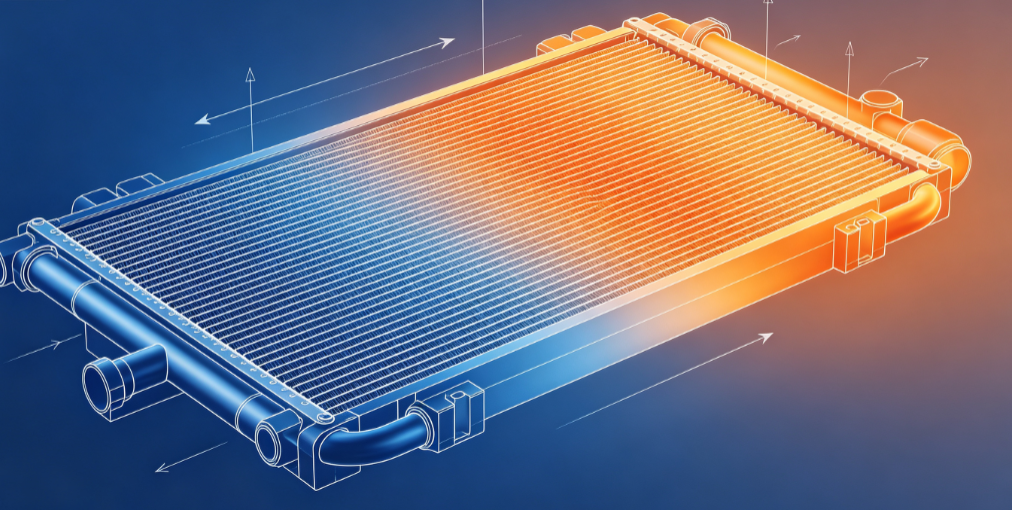
Customized aluminum extrusion profiles can integrate heat dissipation channels and fins, one-stop completion of battery cooling, motor cooling and other core functions.Overall heat dissipation uniformity and working efficiency, far beyond the traditional split heat dissipation accessories structure. Stable and accurate temperature control environment can effectively improve the charging speed of new energy vehicle batteries and delay battery decay and aging.Avoid battery failure, performance degradation and various safety hazards caused by high temperature from the source. Battery System Stable Operation. Customized aluminum battery protection structure is rigid enough, anti-extrusion and impact resistance is strong, which can resist the risk of daily driving collision and extrusion.From the body structure level, comprehensively improve the overall safety factor of new energy vehicles. Conform to new energy development concept Aluminum has the core advantages of ultra-high recovery rate and ultra-low recovery energy consumption, which can greatly reduce the carbon emission index of the whole life cycle of new energy vehicles.Highly consistent with the green and low-carbon core product positioning of new
Adaptive Modular Vehicle Building
Aluminum extrusion process can create multifunctional integrated profiles, integrating multiple functions such as equipment installation, circuit layout, heat dissipation and cooling.Significantly reduce the number of vehicle parts and streamline cumbersome assembly processes. Large-scale integrated aluminum profile perfectly adapts to the modular platform of new energy vehicles.Effectively improve the efficiency of vehicle mass production, while reducing the comprehensive cost of vehicle assembly and daily maintenance in the later stage.
Aluminum vs. Steel in Automotive Applications
Density Weight
The density of steel is about 7.8g/cm³, while that of aluminum is only 2.7g/cm³. The density difference between the two is very large.Under the same structural strength standard, the weight of aluminum parts is only 40%-60% of steel parts. The hollow special-shaped structure created by aluminum extrusion technology can accurately optimize the weight distribution of materials and avoid redundant weights.To achieve the ultimate lightweight effect of the whole vehicle, this is the core advantage that traditional steel cannot match.
Corrosion Resistance and Durability
Aluminum surface can spontaneously form oxidation protection layer, without complex anti-corrosion coating treatment, can resist corrosion and aging loss for a long time.It can adapt to complex and ever-changing outdoor driving conditions, and the service life of accessories is longer. Steel is susceptible to moisture oxidation rust, must rely on galvanization, painting and other processes to do anti-corrosion treatment.After long-term use, the coating is easy to fall off, rust and damage, and the maintenance cost remains high in the later period.
Adaptability Between Forming and Production
Steel stamping, welding process system mature, adapt to large-scale standardization of auto parts production.However, it is impossible to make complex and special-shaped integrated structure, the process of fitting splicing is complicated, and the fault tolerance rate is low. Aluminum extrusion process can quickly form complex multifunctional integrated profiles, greatly simplifying the number of parts and assembly processes.The mold development cycle is short and the cost is low, which can meet the rapid iteration requirements of new products of automobile enterprises.
Comprehensive Cost and Performance Ratio
The unit price of steel raw materials is low, and the investment cost advantage in the early stage of vehicle building is obvious, which is suitable for mass production of low-cost household models.However, the vehicle consumes large energy consumption in the later period, the maintenance frequency is high, and the comprehensive cost is high. Although aluminum has high procurement cost in the early stage, it can realize multiple benefits such as energy saving, simplified accessories and low maintenance.From the whole life cycle accounting of the whole vehicle, the comprehensive cost performance of aluminum far exceeds that of traditional steel.
Environmental Protection Attributes and Development Prospects
Aluminum supports unlimited recycling, low energy consumption and lower carbon emissions throughout its life cycle.It is highly compatible with the low-carbon transformation trend of the automobile industry and perfectly meets the development needs of new energy vehicles. Steel recycling has high energy consumption and limited body weight reduction, making it difficult to adapt to increasingly stringent environmental and energy regulations.Application scenarios in the field of new energy vehicles are gradually being replaced by aluminum.
How Aluminum Extrusions Improve Automotive Manufacturing
Integrated Molding
Aluminum extrusion technology can integrate multiple functions such as structural support, heat dissipation, installation and wiring into a single profile.Completely subvert the cumbersome production mode of traditional multi-component assembly and simplify the production structure. Profile integrated molding greatly reduces the number of vehicle parts, simplifies the assembly process, and reduces labor production costs.At the same time, it reduces the splicing gap and effectively reduces the failure probability of abnormal sound and looseness of accessories.
Precise Structural Optimization
By adjusting the wall thickness of the profile, adding reinforcing ribs and reserving hollow structures, the stress points of the material can be accurately distributed.While reducing the weight of the vehicle body, it achieves a precise balance between structural rigidity and load-bearing capacity. The aluminum body with optimized structure can effectively reduce the weight of the whole vehicle and improve the energy consumption economy and handling stability of the vehicle.At the same time, it firmly guarantees the structural strength of the vehicle body and the anti-collision safety performance of the whole vehicle.
Process Flexibility
Aluminum extrusion die development cost is lower, production cycle is shorter, compared with steel stamping die advantages are significant.It can quickly complete the whole process of new products from design and trial production to mass production. The process can not only adapt to large-scale standardized mass production of automobile enterprises, but also meet the spare parts production requirements of niche performance vehicles and customized models.Wide range of production adaptation, high flexibility.
Strengthen Vehicle Safety
The multi-cavity aluminum extrusion profile can absorb energy step by step and orderly during vehicle collision, and the deformation law can be controlled.Greatly improve the anti-collision protection performance of the whole vehicle, accurately protect the safety of drivers and passengers and power battery system. The integrated aluminum heat dissipation profile has large heat dissipation area, uniform heat conduction and high efficiency, which can quickly solve the high temperature heat dissipation problem of new energy automobile batteries and motors.Continuously ensure the stable operation of core on-board equipment.
Low-carbon Production
The aluminum extrusion process has a very low production waste rate. With aluminum closed-loop recycling technology, it can realize green and low-carbon production mode.Effectively reduce resource consumption and total carbon emissions in the process of vehicle building. Lightweight aluminum profiles can reduce vehicle energy consumption, streamline accessory specifications, and reduce logistics transportation costs.From production to use, improve the comprehensive economy of vehicles in an all-round way.
How to Choose the Right Aluminum Alloy for Automotive Parts
Alloy Selection
The mechanical properties shall be considered first in the selection of automobile aluminum materials. According to the stress of accessories and the requirements of anti-collision protection, the alloy materials corresponding to strength and toughness shall be matched.and ensure that that fittings are stable and safe for long-term use. At the same time, it is necessary to give consideration to the processing adaptability, and the difficulty of extrusion, bending and welding of profiles directly affects the mass production efficiency.It is necessary to balance performance and process, and adapt to the large-scale and standardized production mode of automobile enterprises.
Material Selection for Process
6000 series aluminum alloy has excellent extrusion forming performance, can be used for processing various complex special-shaped structures and has high surface flatness.It is the most widely used core material for automotive structural profiles at present. 6063 alloy focuses on appearance texture and molding effect, 6061 and 6082 mainly focus on high-strength structural performance, which can be selected according to the function differentiation of accessories.Accurate adaptation of various processing techniques and use scenarios.
Corrosion Resistance and Environmental Material Selection
Chassis, body exterior and other long-term exposure to the outside of the accessories, preferred to use 5000 series, 6000 series high corrosion resistant aluminum.It can effectively resist erosion damage caused by rain water, salinity and temperature difference. Under severe working conditions such as rain, snow, salt and alkali, it can be equipped with exclusive surface treatment process to strengthen protection.Further prolong the service life of accessories, avoid corrosion damage caused by all kinds of potential safety hazards.
Material Selection for Connection and Welding Performance
For the body structural parts requiring welding and bonding assembly, the 5000 series and conventional 6000 series alloys with excellent welding performance shall be preferred.and that problem of welding crack, local strength attenuation and the like are effectively avoided. Accurate matching of aluminum connection process can ensure the assembly accuracy and structural stability of the whole vehicle.and that probability of failure such as looseness, failure, abnormal sound and the like of later part is greatly reduced.
Heat Conduction and Material Selection for Special Function
Accessories such as battery cooling module, motor cooling structure, electrical enclosure, etc., preferably choose high thermal conductivity aluminum.Ensure rapid heat dissipation and stable temperature control of on-board equipment, and maintain the best working condition. Ordinary body structures do not need extreme thermal conductivity, and material selection can focus on structural strength and cost control.On the premise of meeting the use requirements, the perfect balance between function and cost performance is realized.
Material Selection for Cost and Mass Production
In principle, the raw material price, supply chain stability and mass production cost shall be comprehensively considered in the selection of aluminum materials, and the mainstream brands with strong universality and high cost performance shall be preferred.and that production cost of the whole vehicle is effectively control. New energy vehicles can give priority to high-recycling recycled aluminum materials, taking into account the environmental protection attributes of products and compliance with industry policies.It is deeply in line with the core trend of low-carbon development of the automobile industry.
Conclusion
On the whole, aluminum profiles fully meet the production needs of fuel vehicles and new energy vehicles by virtue of multiple advantages such as lightweight, high strength, corrosion resistance, easy processing and recyclability.Its various performances perfectly fit the development trend of low-carbon and high-performance in the automotive industry.
Henan Retop Industrial Co., Ltd. Will Be There Whenever Wherever Whatever You Need

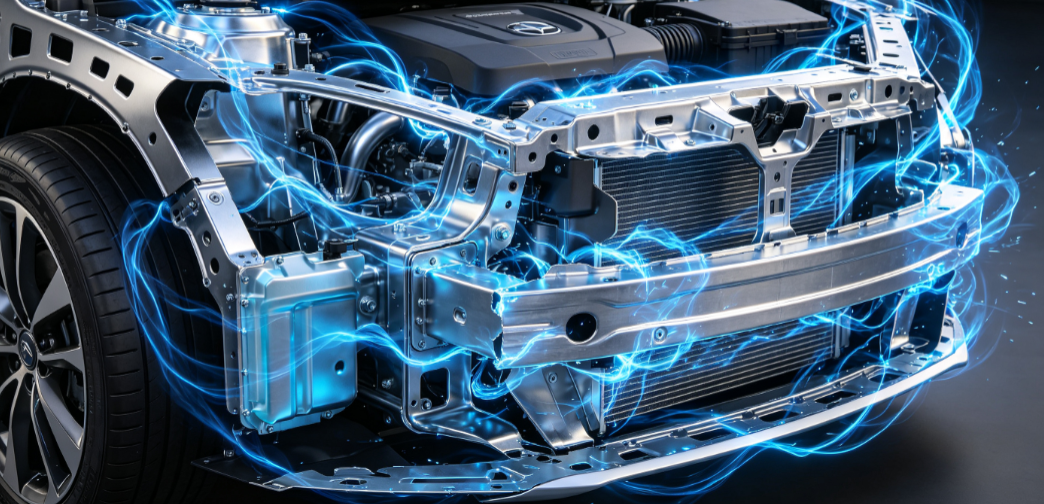
 Key Properties That Make Aluminum Ideal for Automotive Parts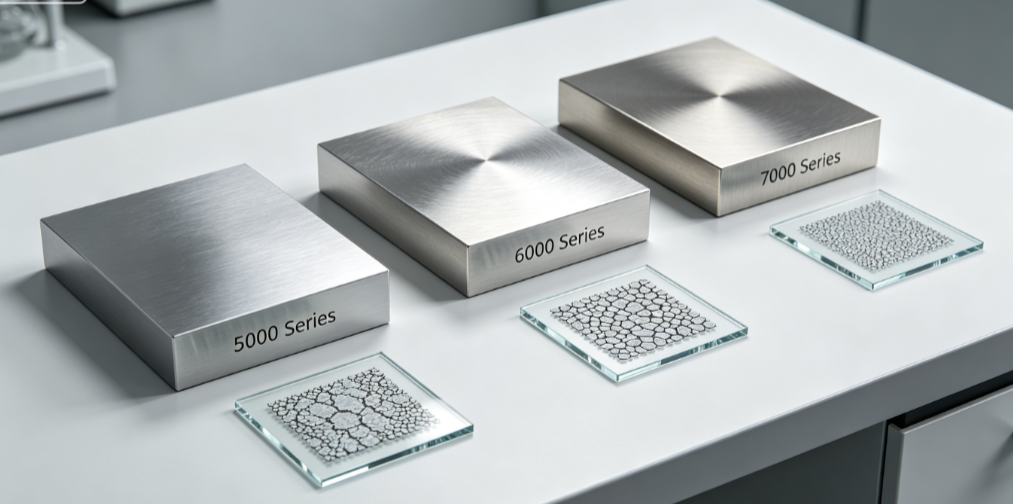
 Benefits of Aluminum for Electric Vehicles