Why You Should Consider Aluminium Facades to Help Withstand Earthquakes
Date:2026-07-06
View: 1389 Point
The core of building safety in earthquake-prone areas depends not only on the structural strength of the main building, but also on the seismic bearing capacity and deformation adaptation capacity of the external wall curtain wall. Aluminum curtain wall has become the preferred anti-seismic solution for building exterior wall in high earthquake area by virtue of its multiple core advantages of light weight, high strength, high ductility and deformable energy absorption.
Why Is Earthquake Resistance Important for Building Facades
Safeguard the Safety of Personnel
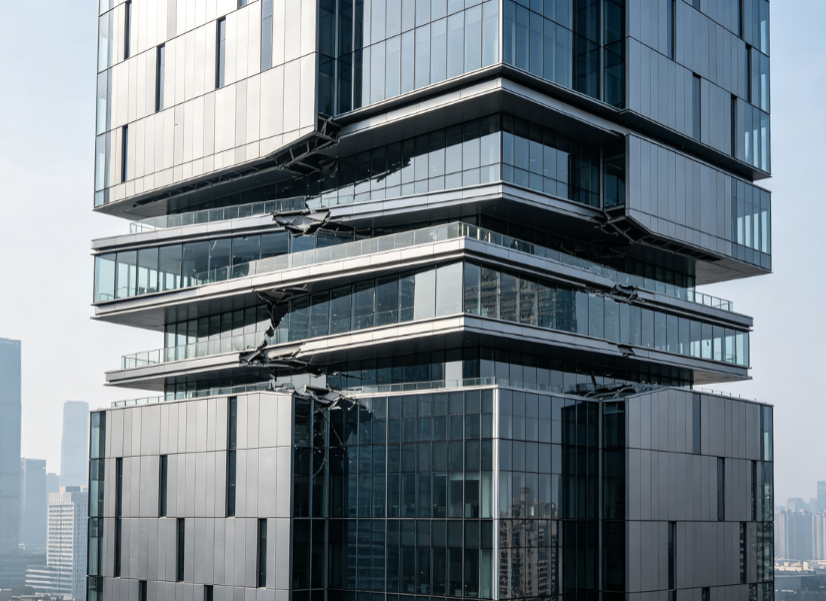
When earthquake disaster occurs, glass fragments, aluminum profiles, decorative plates and other components falling off the curtain wall will fall rapidly from high altitude, causing direct and fatal personal injury to people staying inside the building and outdoor pedestrians.This type of non-structural damage is the most common and easily overlooked safety risk in earthquakes, with a wide range of hazards. Looking at many major earthquake disaster cases around the world, it can be found that most of the non-structural casualties are caused by the failure of the building curtain wall. This also makes the seismic design of curtain walls an indispensable and strictly implemented core link in the modern building safety system.
Optimization of Structural Forces
After professional design of the anti-seismic aluminum curtain wall system, with a strong deformation adaptation capacity, can follow the vibration of the main structure of the building, displacement synchronous deformation.This flexible adaptation feature can effectively avoid the curtain wall from transmitting seismic load reversely to the core main structure such as columns and floors. The lightweight advantage of aluminum profile itself can greatly reduce the inertia force of the whole curtain wall and reduce the impact load generated by earthquake from the source. At the same time, the curtain wall flexible structure can gradually disperse and consume seismic energy, effectively reduce the bearing pressure of the main body of the building, and protect the safety of the core structure.
Improve Long-term Durability of Buildings
Anti-seismic aluminum curtain wall takes into account structural toughness and environmental durability, can adapt to the complex environment of high earthquake area for a long time, and continuously resist multiple external corrosion such as earthquake, wind and rain, temperature difference, etc. Effectively extend the service life of the building envelope and improve the overall long-term stability of the building. Aluminum profiles have the core characteristics of 100% recyclability and recycling, and there is no performance loss in the recycling process, which fully conforms to the concept of green building and circular economy development.While ensuring the seismic safety of buildings, it helps the project to achieve green certification standards such as LEED and BREEAM.
What Makes Aluminium an Ideal Material for Seismic Applications
Reduce Seismic Load
The density of aluminum profile is only one-third of that of traditional steel, and it is one of the most prominent lightweight materials in curtain wall materials.Using aluminum profiles to create building facades can greatly reduce the overall weight of curtain walls and reduce the load pressure of building facades. The weight of curtain wall is greatly reduced, which can effectively reduce the inertial impact force generated in the process of earthquake vibration and weaken the pulling force of earthquake on building structure.Fundamentally reduce the probability of curtain wall damage, falling off and collapse, and improve the safety of buildings in earthquake areas.
Adapting to High-rise Buildings
6061-T6, 6082 and other high-end aviation grade aluminum alloy profiles retain excellent structural strength, bending resistance and compressive bearing capacity on the basis of extreme lightweight. Perfect balance of lightweight and high strength two core characteristics, adapt to high-end building needs. This kind of high-strength aluminum profile can fully meet the structural bearing requirements of high-rise buildings, large-span curtain walls and special-shaped facades in high-earthquake areas, and can withstand the deformation and load caused by strong earthquakes and adapt to various difficult seismic design scenarios.
Deformation Buffering Capacity
Aluminum profiles have excellent physical ductility, under the continuous stress pulling and twisting of earthquakes, large flexible deformation can occur, and will not break or fail instantly. This unique cushioning feature allows the curtain wall to have strong seismic tolerance. In the process of curtain wall deformation, it can absorb and consume a large amount of earthquake impact energy independently, and buffer the destructive force caused by earthquake.Effectively avoid major failures such as overall structural damage and collapse of curtain wall, and ensure the integrity of building envelope structure.
Custom Profile Structure Design
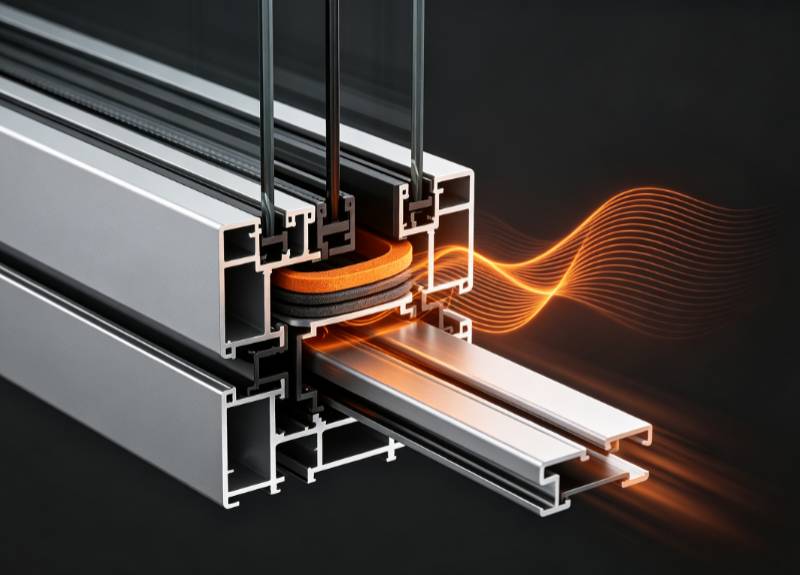
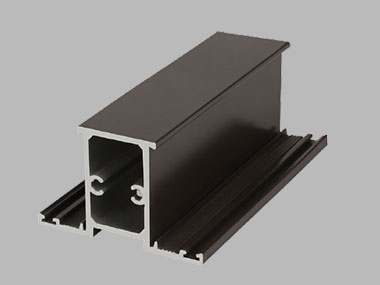
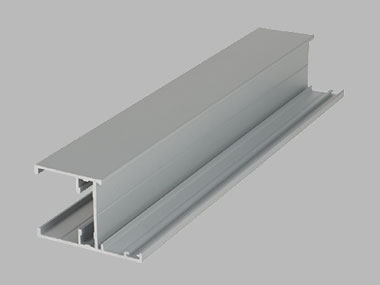
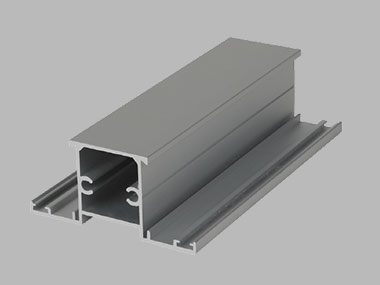
Aluminum profiles adopt mature hot extrusion molding technology, which can create various complex and special-shaped cross-section structures according to the needs of architectural design, breaking through the modeling limitations of traditional curtain wall materials. It can meet the personalized and diversified facade design requirements of high-end buildings. Profile can be integrated with insulation broken bridge, pressure stabilizing waterproof cavity, special seismic connection node, sound insulation structure and other multifunctional modules.Realize the integrated comprehensive performance of seismic safety, energy saving and heat preservation, waterproof and windproof, noise reduction and durability.
How Do Aluminium Facades Perform During Earthquakes
Energy Dissipation Buffer and Flexible Deformation
The inherent high ductility and toughness of aluminum profiles allow the curtain wall to bend and fine-tune deformation autonomously during earthquake high-frequency vibration without brittle fracture. Through continuous deformation, massive seismic vibration energy is absorbed and impact load is buffered. With exclusive structures such as flexible columns, sliding anchors, and elastic joints, the curtain wall can freely release stress and eliminate accumulated loads. Completely eliminate all kinds of problems caused by stress concentration, such as profile tearing, panel breakage, curtain wall damage, etc.
Reduce Vibration Loads
Compared with traditional curtain wall materials such as stone and heavy steel, the weight of aluminum curtain wall is greatly reduced and the structure is lighter. In the process of earthquake reciprocating vibration, the inertial impact force generated will be significantly reduced, and the load pressure will be lower. Lower inertia load can effectively reduce the pulling force of curtain wall on building main body, anchor bracket and fixing bolt. Reduce the risk of structural loosening, tearing and damage from the source, and improve the overall seismic stability.
Stability of Protective Curtain Wall Integrity
Modern aluminum curtain wall system adopts structural silicone integral bonding and pressing plate fixing technology to firmly fix glass and decorative panels on aluminum frame. The fixing method is stable and has flexible fine-tuning ability to adapt to deformation requirements. Even if the curtain wall deforms slightly during the earthquake, the glass panel can still maintain stability and not fall, while maintaining the airtight waterproof performance of the curtain wall. Effectively eliminate secondary problems such as glass falling, rainwater leakage, wind pressure backflow, etc.
Easy and Efficient Post-earthquake Repair
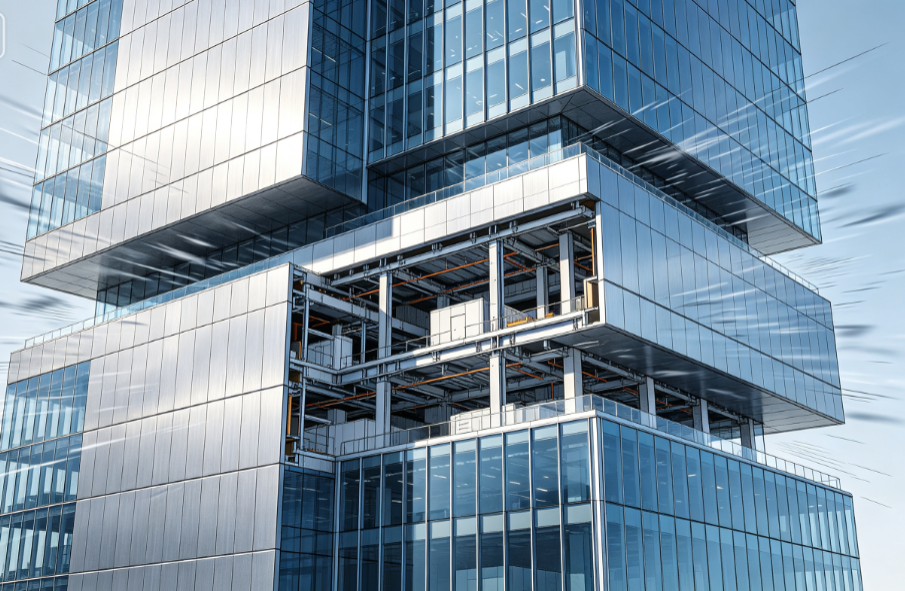
The aluminum curtain wall mainstream adopts modular assembly structure, with strong overall stability and high fault tolerance. When an earthquake occurs, there will be no overall collapse and large-area damage, only local slight loss and damage. Damaged modules, profiles or panels can be removed and replaced separately without removing the overall curtain wall in a large area. The construction quantity is small, the repair speed is fast, and the appearance and use function of the building can be quickly restored.
Which Aluminium Facade Systems Offer Better Seismic Performance
Field Assembled Frame System
The on-site assembled frame system is to install the foundation components such as curtain wall columns and beams one by one on the construction site, and complete the overall curtain wall structure through on-site splicing and assembly molding. Construction flexibility is high, suitable for all kinds of special-shaped buildings. The shortcomings of this system lie in that the construction quality highly depends on manual technology and site management level, and is greatly affected by environment and construction period.The construction accuracy of different construction teams is different, which leads to the uneven stability of seismic performance.
Factory Prefabricated Modular System
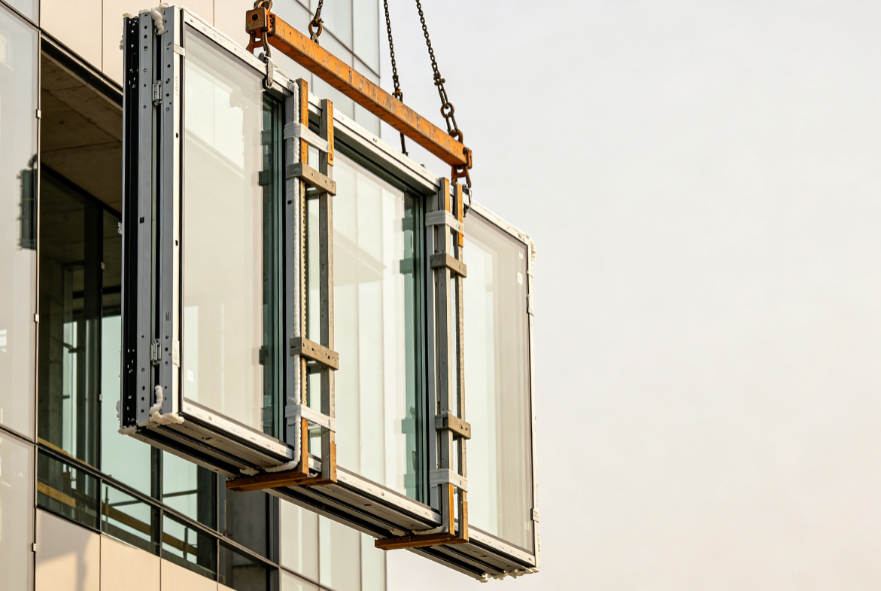
Factory prefabricated unit curtain wall is a complete set of procedures such as module assembly, glass installation, sealing and gluing, performance debugging, etc. completed in a standardized factory. After molding, it is transported to the construction site and directly hoisted in place. Industrial production precision is extremely high. The whole factory standardized operation, effectively avoiding errors and defects in site construction, high module consistency.Overall structural stability, sealing performance and seismic consistency far exceed those of on-site assembled curtain walls.
Semi-unitary Hybrid System
Semi-unit hybrid system combines the core advantages of frame type and unit type curtain wall. The core module is prefabricated in factory, and the connecting components are assembled and debugged on site. It takes into account industrial accuracy and on-site adaptation flexibility. The system effectively balances construction efficiency, product precision and project cost, and has outstanding cost-performance advantages.Perfect adaptation to high-rise buildings, moderate seismic requirements of the project, is the mainstream preferred scheme.
Floor-type Curtain Wall System
Floor-type curtain wall system takes single floor as basic unit, custom-made aluminum frame fits floor structure accurately, and the curtain wall system is built layer by layer. Strong structural fit, good integrity, suitable for multi-storey, small high-rise civil buildings. The system is easy to construct, stable in structure and good in deformation adaptability, and can meet the seismic design standards of most civil buildings in low and moderate earthquake areas. Wide applicability and low landing cost.
Pressure Stabilizing Rain Curtain Wall System
The rain curtain wall system adopts lightweight aluminum decorative panels and special support frames to form an inner and outer double-layer enclosure structure, which has multiple performances of waterproof and pressure stabilization, ventilation and heat insulation and seismic protection. Comprehensive practicality is extremely strong. The whole system has very light weight, does not bring extra load pressure to the main body of the building, and has good flexible deformation ability. It can effectively resist the impact and torsion load caused by earthquake, and its seismic performance is stable.
What Design Features Improve the Earthquake Resistance of Aluminium Facades
Optimize Custom Aluminum Profile Structure
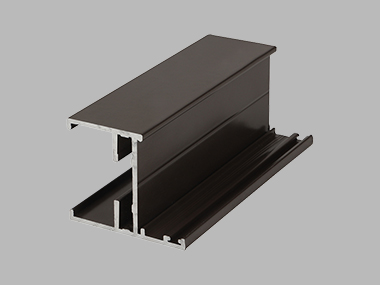
After optimization, the customized aluminum profile structure with deepened box and built-in reinforcing ribs can significantly improve the bending resistance, torsion resistance and compression resistance of the whole curtain wall, and effectively broaden the upper limit of structural deformation tolerance. It can easily cope with large amplitude and high strength structural deformation load caused by strong earthquake. The integrated insulation bridge structure keeps the whole structure continuous and complete in the whole process of flexible deformation of the curtain wall.The problems of structural fracture and performance failure due to displacement and torsion will not occur, and the dual performance of seismic safety and energy conservation and heat preservation will be considered.
Interlayer Displacement Adaptive Structure
Exclusive expansion joint and socket profile adaptation structure, with strong displacement resistance, can stably withstand ±25mm to ±50mm of the building inter-story displacement difference.It can accurately adapt to the large-amplitude interlayer dislocation deformation condition of buildings in high earthquake areas. The supporting suspension glass installation technology completely solves the disadvantages of traditional rigid installation methods, and perfectly solves the problems of glass extrusion, cracking and breakage caused by earthquake interlayer displacement.Greatly improve the Retention rate and safety of glass panels in earthquakes.
Multilayer Pressure Stabilizing Seal System
The system is equipped with flexible rubber strips with large compression capacity and double-layer airtight sealing structure, which has excellent deformation adaptation and sealing and pressure holding capacity. Even if the curtain wall displaces or distorts during the earthquake, it can still maintain the airtight, waterproof, windproof and dustproof performance of the building facade. The built-in pressure stabilizing cavity can balance the wind pressure inside and outside the curtain wall in real time, effectively resisting the airflow and rainwater infiltration into the building during earthquake vibration. Avoid secondary problems such as post-earthquake leakage, wall moisture, interior damage, etc., and ensure the stability of the building environment for a long time.
Modular Lightweight Structure
The unitary modular overall design of the curtain wall greatly simplifies the splicing and connecting nodes on the construction site, and reduces the seismic weak points of the curtain wall from the source. Effectively reduce the probability of node failure, structural loosening and local damage in earthquakes. The lightweight modular overall structure greatly reduces the static and dynamic loads of the curtain wall on the anchoring system and the main structure of the building.Effectively reduce the structural pulling pressure under earthquake conditions, and comprehensively improve the overall seismic stability of the curtain wall system.
Auxiliary Structure for Energy Dissipation and Vibration Reduction
High-end seismic aluminum curtain wall will have friction and fluid damping devices built in the core nodes, which can quickly absorb and dissipate high-frequency vibration energy generated by earthquakes.Effectively suppress structural vibration amplitude, reduce stress accumulation and weaken seismic damage effect. For the high-stress stressed areas of the curtain wall, high-toughness alloy profiles are specially used to strengthen the deformation resistance and tear resistance of the core stressed parts. The overall seismic performance of the curtain wall is more balanced, and the overall damage caused by local weakness is eliminated.
How Does Aluminium Compare with Other Facade Materials
Aluminum vs Steel
The overall weight of aluminum profiles is only one third of that of traditional steel, and the extremely lightweight characteristics can greatly reduce the inertial impact force generated during earthquake vibration.Effectively reduce the seismic load of the main building and anchor structure, and weaken the seismic damage force from the source. Aluminum has natural metal corrosion characteristics, no need to do rust removal, corrosion prevention and rust prevention treatment as frequently as steel.During long-term use, there is no attenuation of structural performance, and it can continuously maintain stable seismic capacity and adapt to various complex earthquake areas.
Aluminum vs Pure Glass Curtain Wall
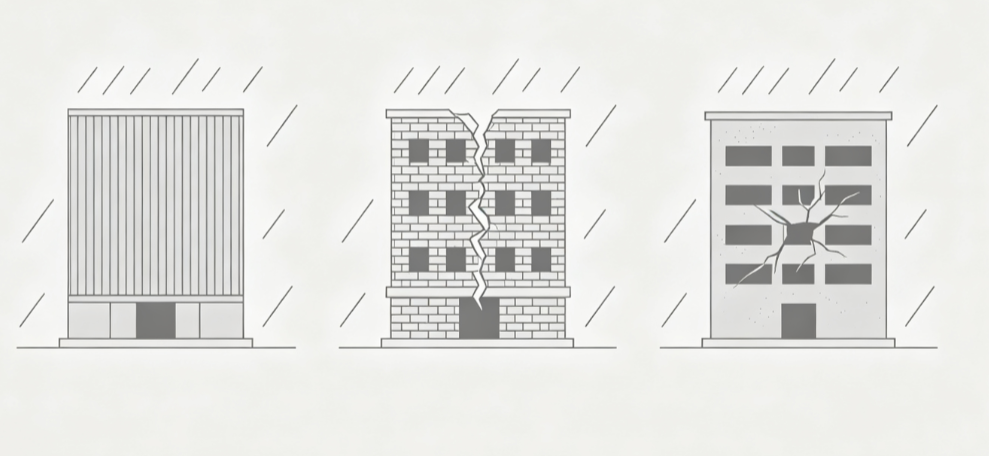
Pure glass curtain wall is a typical brittle material, almost no toughness and deformation ability, can not adapt to the structural displacement and distortion caused by earthquake. Under strong earthquake conditions, it is easy to break and fall from high altitude, which has great potential safety hazards. The supporting aluminum profile frame can fix the glass panel through flexible connection technology, effectively buffering and resolving the concentrated stress caused by earthquake deformation. Completely avoid the core short board that is easy to fall off and break of pure glass structure, and greatly improve the safety of curtain wall.
Aluminum Profile VS Wood Composite Curtain Wall
Although the wooden composite curtain wall has natural appearance and unique texture, the material stability is extremely poor, and it is easily affected by temperature and humidity, such as moisture deformation, decay and moldy, insect damage, etc.It is completely unable to adapt to the complex and changeable long-term use environment of the earthquake area. Aluminum curtain wall has multiple characteristics of waterproof, fireproof, anticorrosive and weatherproof, and its structural performance is stable for a long time without attenuation. It can maintain excellent seismic capacity for decades, is not affected by environmental climate, and adapts to various earthquake conditions.
Which Buildings Benefit Most from Aluminium Earthquake-Resistant Facades
Hospital Medical Buildings
As the core rescue and support building of the city, the hospital must be put into medical rescue and wounded treatment immediately after the earthquake disaster occurs. Problems such as curtain wall damage, building closure and site suspension are not allowed. The requirements for seismic stability of curtain walls are extremely high. The high-performance seismic aluminum curtain wall can ensure the integrity of the hospital building envelope structure and the safety and stability of the facade. Completely eliminate secondary risks such as curtain wall falling off and leakage, and perfectly meet the core needs of uninterrupted operation and continuous rescue of post-earthquake hospitals.
Schools Educational Buildings
Schools and educational buildings belong to typical personnel-intensive places, with concentrated teachers and students and large flow of people. Once an earthquake curtain wall falls off, it can easily cause large-scale casualties and pose extremely high safety risks. Anti-seismic aluminum curtain wall can avoid the risk of curtain wall damage and falling in earthquake to the maximum extent, and protect the personal safety of teachers and students in all directions. At the same time, with the characteristics of easy repair, the campus buildings can quickly resume teaching activities after earthquakes and reduce the loss of teaching interruption.
Business Office High-rise Building
High-rise commercial office buildings are mostly core office premises of enterprises, with high daily operation output value and dense personnel. Once the earthquake causes the curtain wall to be damaged and the building to be closed, it will cause the enterprise to stop working and stop production, resulting in huge indirect economic losses. Aluminum curtain wall has excellent characteristics of low damage, low loss and easy to repair, which can effectively ensure the continuity of business operations of commercial buildings. Minimize the shutdown losses caused by earthquake disasters, and protect the normal operation order and economic benefits of enterprises.
Emergency Government Building
Government emergency buildings such as police stations, fire rescue centers and emergency command centers are the core hubs for urban disaster relief, emergency rescue and order restoration after earthquakes, undertaking key public service functions. No damage or downtime is allowed after an earthquake. High stability seismic aluminum curtain wall can guarantee the structural integrity and facade safety of this kind of core emergency building in all directions. Ensure that all kinds of emergency command and rescue work can be carried out normally and efficiently after the earthquake, and protect the emergency support capability of the city.
High-rise Residential Buildings in Earthquake Zone
High-rise residential buildings in the earthquake area are highly concentrated, densely populated, and have strict safety protection requirements. Most buildings in coastal earthquake areas also need to resist earthquake impact and salt fog corrosion at the same time, testing the comprehensive performance of materials. The aluminum curtain wall with anti-corrosion and anti-seismic performance can protect the residential safety of high-rise residential buildings for a long time and eliminate all kinds of potential safety hazards. At the same time, it can effectively maintain the appearance and structural quality of the building, and help the long-term maintenance and appreciation of the real estate.
Transportation Hub Infrastructure
Airport, high-speed rail station, rail transit hub and other transportation infrastructure, huge flow of people, strong mobility of personnel, complex building structure. The safety protection level of facade curtain wall is far higher than that of ordinary public buildings, and the fault tolerance rate is extremely low. The lightweight aluminum curtain wall will not bring additional load burden to the complex hub building structure, and is suitable for various projects of new construction and old hub reconstruction. Excellent seismic stability, all-weather protection of large-scale transportation hub personnel and building safety.
What Should You Consider Before Investing in Aluminium Facades
Earthquake Zone Grades and Performance Criteria
In the early stage of project design, it is necessary to accurately align the seismic grade corresponding to the standard site, clarify the core performance indicators such as interlayer displacement adaptation capacity and ultimate seismic bearing capacity required by the curtain wall, and formulate a compliant design scheme. For building projects in high-intensity earthquake-prone areas, priority should be given to the use of high-precision, high-stability unit aluminum curtain wall system, so as to reserve sufficient seismic safety redundancy to resist strong earthquake impact.
Aluminum Profile Quality and Specification Selection
According to the seismic and energy-saving requirements of the project, accurately select the appropriate aluminum alloy grade and profile wall thickness, and strictly control the processing and assembly technology of profile strengthening structure and thermal insulation broken bridge. PVDF fluorocarbon spraying, anodizing and other high-quality surface protective coatings are preferred to ensure long-term corrosion resistance and aging of aluminum profiles, and to continuously and stably output standard seismic performance.
Testing Certification and Compliance Qualification
Before purchasing and landing, it is necessary to strictly check the authoritative inspection reports of earthquake resistance, waterproof, wind pressure resistance and fire prevention of curtain wall system, and verify the authenticity and professionalism of product performance parameters. Ensure that the selected aluminum curtain wall products fully conform to the seismic and construction specifications of the building where the project is located, avoid compliance risks from the source, and ensure the smooth acceptance and landing of the project.
Life-cycle Costing
Abandon the one-sided thinking that only pays attention to the initial procurement and construction cost, and comprehensively calculate the full-cycle comprehensive cost of building construction, daily energy consumption, late maintenance and replacement, etc. After long-term engineering practice verification, the whole life cycle cost performance of high-quality anti-seismic aluminum curtain wall is far superior to all kinds of ordinary non-standard curtain wall products, and the long-term benefit advantage is significant.
Conclusion
With its core advantages of light weight, high strength, high ductility and flexible adaptation, aluminum curtain wall has become the best solution for building exterior walls in earthquake-prone areas. Compared with traditional materials such as stone, steel and wood, its seismic performance, durability and cost-performance advantages are significant, and it is suitable for various core building projects. Reasonable selection, scientific design and standardized construction can maximize the value of aluminum curtain wall and protect the seismic safety of buildings.
Henan Retop Industrial Co., Ltd. Will Be There Whenever Wherever Whatever You Need