What Is Ductility and Why Is It Important for Aluminum
Date:2026-07-06
View: 1314 Point
Ductility is the core mechanical property of aluminum, and it is also the core basic attribute of aluminum processing and application. Different from brittle metals, aluminum relies on excellent plastic deformation ability to achieve a variety of molding processes and adapt to multi-industry scenarios.
What Is Ductility
Core Definition
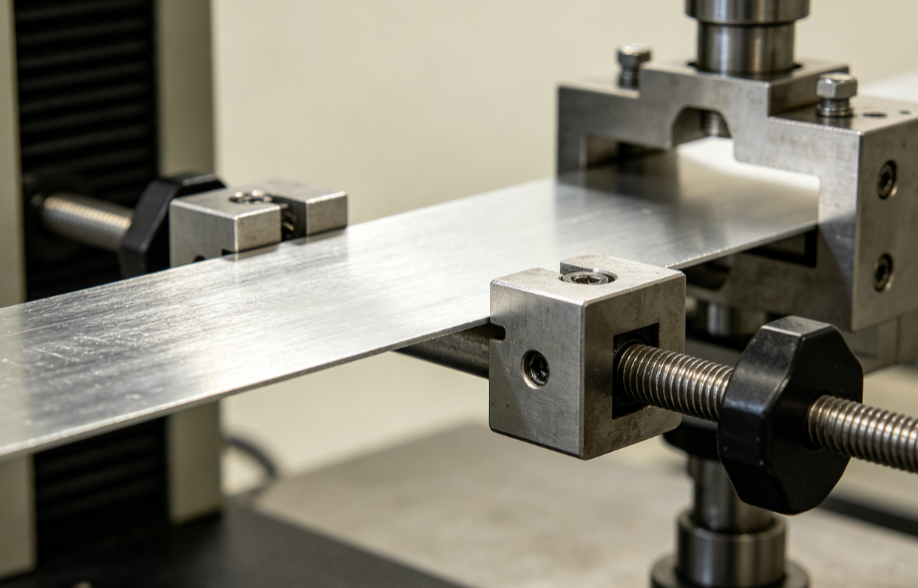
Ductility is the key mechanical properties of materials, especially the characteristics of large plastic deformation without fracture under tensile stress. Common forms of stress include tension, drawing, bending, etc. This property is the core index to measure the forming ability of materials and is widely used in the field of metal processing. In the industry, ductility is mainly quantified by elongation at break and cross-sectional area shrinkage, and the data are obtained through tensile test. The higher the index value, the stronger the plastic deformation ability and the better the forming fault tolerance.
Industrial Application Value
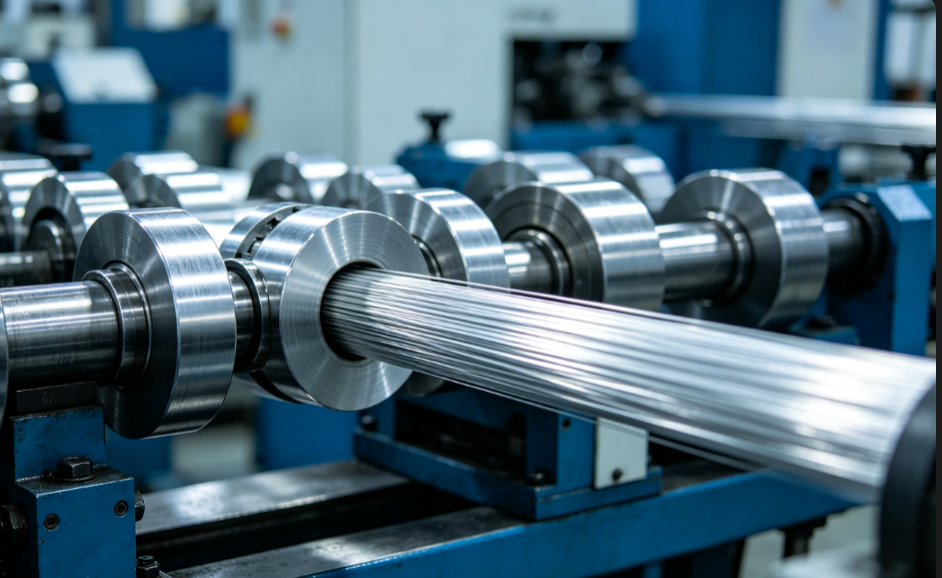
Metal material with good ductility, which can be drawn into metal wires and stamped into complex special-shaped structures to adapt to a variety of precision machining processes. This feature allows metal materials to get rid of simple modeling restrictions and adapt to diversified industrial production needs. Extrusion, rolling, forging, deep drawing and other mainstream metal forming processes, all based on excellent ductility of materials, are the basic performance guarantee of modern metal manufacturing industry.
Why Is Ductility Important for Aluminum
Aluminum Material Advantages
Aluminum has excellent ductility, lightweight characteristics, corrosion resistance and formability, and its comprehensive performance far exceeds that of most conventional metal materials. Compared with brittle materials such as cast iron, aluminum does not crack easily during deformation and retains structural integrity. The ductility of different series of aluminum materials is obviously different, pure aluminum has the best ductility, and the ductility of heat treated high-strength alloy decreases slightly, but it still has good processing ability and can meet the needs of different scenarios.
Effect of Auctility on Aluminum
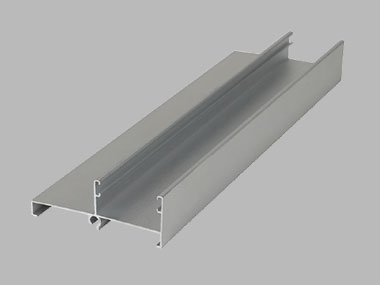
Excellent ductility allows aluminum profiles to be processed into complex special-shaped sections and thin-walled precision structures,which are widely used incore fields such as architecture, automobiles, aerospace, and electronics. Diversified molding effect greatly broadens the application boundary of aluminum. At the same time, aluminum can maintain stability and toughness under normal temperature and low temperature environment, and there will be no embrittlement problem, which ensures the long-term use stability of various profiles under complex working conditions.
What Factors Affect the Ductility of Aluminum
Alloy Composition
Pure aluminum has a regular and simple crystal structure and extremely low impurity content, so it has extreme and stable ductility and is the best commercial aluminum substrate for formability. When magnesium, silicon, copper, zinc and other alloy elements are added to aluminum, the structural strength of the material will be significantly improved, but the plastic deformation ability will decrease, and the ductility will be obviously attenuated. On the whole, the formability of low alloy series aluminum such as 1xxx and 3xxx is much better than that of 6xxx and 7xxx high strength alloy series, and the processing fault tolerance is higher. In recycled aluminum, excessive iron and silicon impurities will generate brittle metal structures, destroy the plasticity of materials, and further weaken the overall ductility of aluminum.
Heat Treatment and Conditioning
After annealing treatment, the internal residual stress will be completely released, the overall texture is soft and mild, and the maximum plastic deformation effect can be achieved. This state of aluminum is suitable for all kinds of complex bending and stretching processes, and is the preferred material for precision special-shaped machining, while the cold work hardening process will reverse the material properties. Conventional heat treatment aging processes such as T6 can greatly strengthen the structural strength and bearing capacity of aluminum, and adapt to various structural profiles. However, this process will shorten the elongation at break of the material, so that the ductility of the aluminum material will be moderately reduced, and finally the performance state of the balance between strength and formability will be formed.
Grain Structure and Microstructure
Aluminum with fine grains and uniform distribution has more balanced stress during plastic deformation, which can effectively prevent crack propagation and greatly improve the overall ductility and forming stability of the material. On the contrary, aluminum with coarse grain and mixed structure has uneven deformation and stress, and it is easy to crack and deform during processing. During the extrusion process of aluminum profiles, the grains will be arranged regularly along the length direction of the profiles, effectively improving the longitudinal formability and structural strength of the profiles. However, this grain arrangement will produce material anisotropy, resulting in obvious differences in ductility in different directions of aluminum, which requires targeted adaptation of processing technology.
Temperature vs. Processing Rate
An increase in ambient temperature can accelerate the movement rate of aluminum atoms, reduce the deformation resistance of the material, and steadily improve the ductility of aluminum. This is also the core principle for the efficient forming of aluminum profiles by the hot extrusion process. In high temperature processing scenarios, slow forming methods can make aluminum plastic deformation more sufficient and effectively avoid processing defects. Unlike most steels, aluminum has excellent low temperature properties and does not cause embrittlement failure in low temperature or even cryogenic environments. In addition, its material toughness will be slightly improved, its performance is stable and reliable, and it can be widely used in parts manufacturing scenarios such as low temperature equipment and cold chain matching.
Processing Technology and Impurities
Internal defects such as porosity and oxide inclusions produced in aluminum casting process will become key stress concentration points and destroy the plastic uniformity of materials. This kind of defect will greatly reduce the forming performance of aluminum subsequent bending, extrusion and other processing, and significantly increase the risk of cracking and scrapping of profiles. Extrusion, welding, cold working and other follow-up procedures, it is easy to make aluminum profiles produce local residual stress, directly change the local ductility parameters of the material. If the processing parameters are not set reasonably, it will lead to local deformation imbalance of the profile, causing warpage, cracking and other failure problems, affecting the quality of finished products.
How Does Alloy Selection Influence Ductility
Differences Between Series of Alloys
1xxx pure aluminum series alloy:Extremely low impurity content, is currently the most excellent ductility of commercial aluminum materials, conventional elongation at break up to 30%-50%. Excellent plastic deformation ability enables it to be competent for all kinds of high-precision, complex and irregular molding processing scenarios, and the molding fault tolerance rate is extremely high. 3xxx and 5xxx low alloy series: Aluminum achieves a perfect balance between ductility and structural strength, while having excellent corrosion resistance. This kind of aluminum is suitable for bending, welding, stamping and other secondary processing technologies, and its comprehensive versatility is suitable for most conventional industrial processing scenarios. 6xxx magnesium silicon alloy: This series is the mainstream core material of aluminum extrusion profile, ductility is at a moderate level and support heat treatment flexible control performance. Whether it is architectural or industrial structural profiles, this series of alloys can be adapted to cover most common application scenarios. 2xxx, 7xxx high-strength aluminum:Copper, zinc as the core alloy elements, the overall tensile strength of the material greatly increased, but the plastic deformation capacity significantly decreased. These alloys are only suitable for special industrial applications where high loads, high pressures and low forming complexity are required.
Principles of Alloy Selection
For complex thin-walled, special-shaped surfaces and other high-precision profiles, low alloy aluminum with high ductility is the best choice. This kind of aluminum has excellent flow performance, which can effectively improve the extrusion processing speed, reduce molding defects and greatly reduce the production scrap cost. The load-bearing structural profiles should not pursue high strength blindly, but should balance strength and ductility reasonably. 6xxx series aluminum which can be heat treated is widely used in the industry. By adjusting the material state, it can accurately adapt to the stress and molding requirements of different working conditions.
How Does Ductility Affect Aluminum Extrusion
Effect on Metal Flow and Forming Quality
High ductility aluminum can realize uniform and continuous plastic flow under high pressure and high shear complex stress environment of extrusion process. The material can fill the mold cavity smoothly and fully, with excellent molding consistency and integrity, and few molding defects. The flow resistance of aluminum with poor ductility is very high, and the problems such as incomplete cavity filling and surface cracking are easy to occur during extrusion. At the same time, the internal welding seam of the profile is easy to crack, which seriously reduces the qualified rate of finished products and increases the production loss and rework cost.
Effect on Extrusion Production Efficiency
High ductility aluminum with excellent formability can adapt to higher extrusion speed of production line and effectively improve production capacity. At the same time, it can reduce extrusion pressure and processing temperature, reduce equipment energy consumption and delay die wear aging speed. High strength and low ductility aluminum is extremely demanding in processing conditions, requiring low speed extrusion, high pressure feeding and precise constant temperature control. This kind of material production efficiency is low, energy consumption and mold cost are higher, only suitable for aviation, military and other special high-end scenarios.
Value for Post-extrusion Processing
After aluminum extrusion, it usually needs to be bent, cut, assembled and other secondary finishing processes. Good material ductility can buffer processing stress and effectively avoid bad processing problems such as fracture, deformation and warpage. High-quality ductility can optimize the grain arrangement after aluminum extrusion, refine the internal microstructure, and make the profile material more uniform and dense. It can simultaneously improve the structural strength, fatigue resistance and corrosion resistance of profiles, and prolong the service life of products.
Why Is Ductility Critical in Fabrication and Machining
Guarantee of Bending Forming Process
High ductility aluminum has excellent bending ability, can realize small radius bending processing, forming smooth surface. No appearance defects such as cracking, orange peel, wrinkles, etc., can perfectly adapt to all kinds of curved, shaped personalized product design requirements. Low ductility of high-strength aluminum bending processing fault tolerance is very low, can not achieve small radius modeling, must reserve a larger bending buffer radius. This greatly limits the flexibility of product modeling and makes it difficult to meet the needs of diversified and high-value industrial design.
Optimization of Precision Machining
Moderate ductility of aluminum cutting chip removal smooth, not easy to stick tool, fully adapted to high-speed CNC precision machining process. The machined profile has high surface finish, small size deviation and stable precision, and can meet the production standards of various precision parts. Aluminum excellent plastic deformation ability, can effectively buffer drilling, milling, tapping process of mechanical cutting stress. Especially for thin-walled and precision special-shaped structures, it can effectively eliminate common processing quality problems such as edge chipping, cracking, and deformation. Assistance for Assembly and Joining Processes Aluminum good ductility can effectively buffer welding, riveting, bolt assembly process of local concentrated stress. Greatly reduce heat-affected zone cracking, assembly deformation, dislocation and other common processing problems, improve the qualified rate of processed finished products. At the same time, the high ductility aluminum material adapts to new lightweight assembly processes such as press fitting and buckling, simplifying the traditional cumbersome assembly process. While improving the assembly efficiency of aluminum profile components, the overall connection stability and firmness are effectively enhanced.
Which Industries Benefit Most from Ductile Aluminum
Building Decoration Industry
Building curtain walls, doors and windows, decorative aluminum profiles often need personalized modeling design such as curved surfaces and special-shaped shapes, which is difficult to process. Highly malleable aluminum allows for easy precision bending and overall shaping, perfect for modern and creative architectural design solutions. Aluminum plastic deformation capacity, adaptive building thermal expansion and contraction and seismic load brought structural stress, buffer deformation impact. Effectively reduce the risk of cracking and falling off the facade, and greatly improve the safety and service life of the building decoration structure.
Transportation Automotive Industry
Core structural profiles such as automobile body, crash beam and chassis rely on the excellent ductility of aluminum to achieve controllable plastic deformation. It can efficiently absorb impact energy when vehicles collide, buffer impact strength, and comprehensively ensure the driving safety of drivers and passengers. The core advantages of aluminum lightweight and easy molding can effectively reduce the weight of the whole vehicle, reduce driving energy consumption and exhaust emissions. At present, it has become the core material support for lightweight upgrading, energy saving and consumption reduction of new energy vehicles, and the application scope continues to expand.
Aerospace Industry
Aerospace structural profiles and fuselage accessories have strict requirements on material properties, which need to meet lightweight, high strength and fatigue resistance characteristics at the same time. Controllable excellent ductility to accommodate complex molding processes while resisting dynamic load shocks during flight. Aluminum has excellent low-temperature toughness and structural stability, and will not be brittle due to high-altitude temperature difference and high-frequency vibration. It can stably adapt to aviation high-altitude complex working conditions for a long time, and ensure the operation reliability and safety of various aviation parts.
New Energy and Electronics Industry
New energy aluminum accessories such as photovoltaic brackets and wind power equipment rely on excellent molding flexibility to adapt to outdoor complex installation scenarios. At the same time, with good ductility, buffer the structural stress deformation caused by outdoor wind and temperature difference, and have stronger durability. Electronic equipment heat dissipation profiles are mostly precision thin-walled fin structure, which is extremely difficult to form and difficult to process ordinary metals. High ductility aluminum can be integrated into complex heat dissipation structure to maximize heat dissipation performance while ensuring size accuracy.
How Can Manufacturers Improve Aluminum Ductility
Optimization of Alloy Formulation Design
In the production of high ductility aluminum, low alloy base materials are preferred, the proportion of magnesium and silicon elements is reasonably controlled, and the addition amount of strengthening elements such as copper and zinc is strictly controlled. The excellent plastic deformation ability of aluminum is retained from the source of raw material formula, which lays the foundation for subsequent forming processing. During the production process, harmful impurities such as iron and silicon shall be strictly controlled, and brittle impurities shall be removed through refining and filtration processes. At the same time, trace grain refining elements are added to accurately balance the strength and ductility of aluminum without greatly reducing the strength.
Control Heat Treatment Process
For deep bending, complex stretching forming of the workpiece, can be fully annealed heat treatment process. Completely release the residual stress inside aluminum, soften the material, maximize the ductility of the material, and meet the requirements of high-precision molding. The size of alloy precipitates can be refined by graded solid solution and low temperature aging. Avoid the generation of coarse brittle precipitation particles, effectively optimize the ratio of aluminum plasticity and strength, and adapt to the requirements of multiple processing.
Refining Microstructure
Fine and uniform equiaxed grain structure can be cultivated by adding grain refiner accurately in aluminum melting stage and cooperating with homogenization heat treatment process. Effectively improve the uniformity of aluminum deformation, greatly improve the overall ductility and molding stability. Optimize the complete melting process of melting, degassing and filtering to minimize fatal defects such as pores and oxidation inclusions inside aluminum. Completely eliminate the hidden danger of stress concentration and improve the molding quality and processing stability of aluminum from the micro level.
Optimization of Forming Parameters
According to the material characteristics of different alloys, the optimum extrusion temperature, extrusion speed and extrusion ratio should be matched in production. Avoid plastic damage caused by excessive processing stress and abnormal temperature, and completely retain the original ductility of aluminum. A new mild plastic deformation process can be used to refine the surface structure of aluminum. Under the premise of not reducing the structural strength of the profile, the plasticity of the material is slightly improved, and the comprehensive forming performance of the aluminum material is comprehensively optimized.
How to Choose Aluminum with the Right Ductility for Your Project
Combined with Processing Technology Selection
If the project involves complex forming processes such as deep bending, profiled extrusion, precision stamping, etc., 1xxx and 5xxx annealed aluminum materials are preferred. This kind of high plastic material can effectively avoid processing cracking, deformation and other problems, and ensure the molding qualification rate. Structural profiles that require simple cutting, drilling and other basic processing without excessive plasticity. 6xxx-T6 high strength aluminum can be selected to meet the basic processing requirements while giving consideration to excellent structural strength and stability. Select Model Based on Application Scenarios Architectural decoration, civil household products pay more attention to appearance molding effect and cost performance, moderate strength requirements.6063 series aluminum has excellent ductility and fine surface texture, which is the preferred material for this kind of project. Safety core conditions such as automobile and aviation require extremely high material performance. Special alloys with balanced ductility and structural strength shall be selected to ensure the collision energy absorption and seismic buffering capacity of profiles and improve the overall safety of products.
Bonding Material State Selection
In the forming stage of profile processing, O-state and T4-state high-plasticity aluminum materials are preferred to easily complete various complex shaping processes. After molding, the strength is improved by aging treatment, taking into account processing convenience and use stability. When selecting materials, do not blindly pursue aluminum with high strength and high hardening state, because the ductility of such materials is very poor. It is easy to scrap in the processing process, or brittle fracture in later use, greatly shortening the service life of the product.
Conclusion
Ductility is the core mechanical property that determines the processing ability and terminal application value of aluminum, which is affected by multiple factors such as alloy formula, heat treatment process and processing parameters. And each performance can be accurately adjusted and optimized through manual technology. The material selection standard and production optimization scheme for accurately controlling the ductility of aluminum can not only effectively improve the processing efficiency, reduce the production loss cost, but also continuously broaden the high-end application scenarios of aluminum profiles in high-end manufacturing, new energy and other industries.
Henan Retop Industrial Co., Ltd. Will Be There Whenever Wherever Whatever You Need

.jpg)
.jpg)