Why Curtain Wall Aluminum Profiles Become the Main Material of Building Exterior Walls
Date:2026-07-20
View: 1113 Point
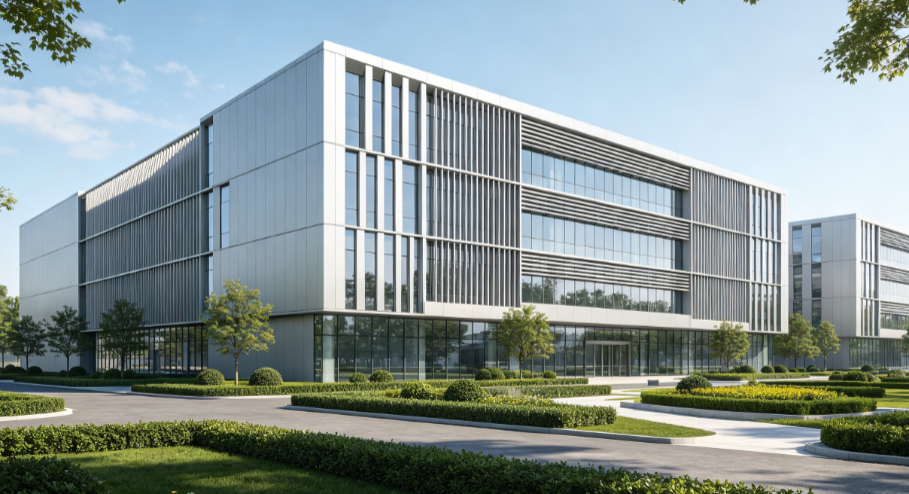
The iteration speed of modern building exterior wall materials is accelerated, and the curtain wall aluminum profile gradually replaces traditional materials such as stone and steel by virtue of its comprehensive performance advantages, becoming the core main material of commercial and civil building exterior walls. It gives consideration to practicality, aesthetics and environmental protection, adapts to the diversified needs of modern buildings, and is the preferred material for the development of green buildings.
What Are Curtain Wall Aluminum Profiles?
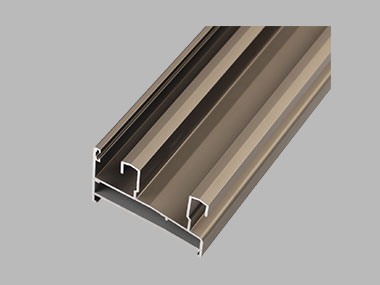
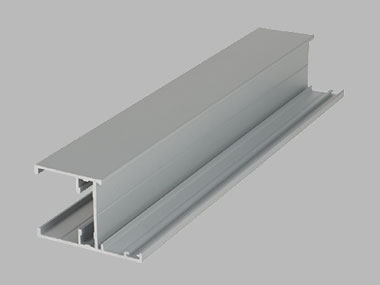
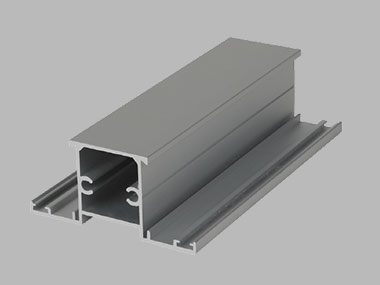
Building curtain wall is the outer envelope structure of the building, which does not belong to the main load-bearing system. It will not bear the main load of the building on floors and columns, and is only responsible for the protection and decoration of the facade of the building. The structure is suspended like a curtain on the building frame to meet the facade design requirements of various high-rise and large-scale public buildings. The complete curtain wall system has perfect structure, mainly including vertical columns, horizontal beams, glass filling plates, various sealing rubber strips, waterproof gaskets and other accessories. All parts work together to construct a complete building peripheral protection system with waterproof, windproof and soundproof.
Lightweight Design Reduces Building Load
Principle of Lightweight Aluminum Profiles
Density and Strength Characteristics of Materials
The density of aluminum profile is only 2.7g/cm³, which is about one-third of the density of ordinary steel. Under the same structural volume, the weight of aluminum profile is much lower than that of steel, and the lightweight advantage is very prominent, which is suitable for large-area curtain wall applications. With 6063, 6061 and other special aluminum alloy formulations for construction, the profile has excellent strength-to-weight ratio, light weight and can meet the mechanical requirements of wind resistance and deformation resistance of the curtain wall, and will not reduce the structural stability due to lightweight.
Weight Reduction Effect of Structural Optimization
Through finite element analysis and parametric design, the section structure of aluminum profiles can be optimized, the strength, stiffness and weight can be accurately balanced, the redundant material consumption can be reduced, and the overall load of the curtain wall can be further reduced to adapt to the design of large-span glass curtain walls. Lightweight aluminum curtain wall can effectively reduce the bearing pressure of building foundation and beam column, without large-scale structural reinforcement, which can simplify the construction process and reduce the construction cost of building structure from the source.
Core Advantages of Lightweight Curtain Wall Design
Structure and Cost Advantages
The lightweight design of aluminum profiles can reduce the bearing standard of the main structure of the building, reduce the use of steel, concrete and other main materials, greatly reduce the construction cost of the foundation and the main structure, and have significant cost performance advantages. This feature is particularly important in the renovation project of the facade of old buildings, which can complete the replacement of curtain walls without reinforcing the original building structure, shorten the renovation period, and reduce the construction risk and overall investment.
Architectural Design and Construction Advantages
The lightweight feature allows architects to design taller, slimmer building structures, while expanding the span of individual glass curtain walls to create larger lighting surfaces, breaking through the traditional exterior wall shape and lighting limitations. Profile members are light in weight, convenient for on-site transportation, handling and installation, without the assistance of large lifting equipment, effectively shortening the construction cycle and reducing the interference of weather factors on the curtain wall construction progress.
Safety and Environmental Advantages
The overall weight of the building is reduced, which can effectively reduce the inertial impact force when the earthquake occurs, improve the seismic performance of the building, and enhance the stability and safety factor of the building in extreme geological environments. The reduction of structural consumables can reduce carbon emissions generated by building materials production and transportation, and lightweight curtain walls with energy-saving structural design can help buildings achieve various green building certification standards.
Building exterior walls exposed to the natural environment for a long time will encounter multiple erosions such as rain erosion, air humidity, coastal salt fog, urban acid rain, industrial pollutants, etc., causing oxidation, corrosion, cracking, discoloration and other problems of materials. Steel exterior walls are prone to large-area corrosion and peeling, stone exterior walls are prone to water seepage, alkali flooding, cracking and damage, concrete exterior walls are prone to weathering and peeling, and various corrosion problems will destroy the integrity of exterior wall structure and appearance.
Engineering Hidden Danger Caused by Corrosion
The corrosion of external wall materials will gradually reduce the structural strength, weaken the windproof, waterproof and load-bearing capacity of curtain walls, and in serious cases, the components will fall off, causing potential safety hazards of buildings and threatening the safety of pedestrians and indoor personnel. The fading, damage and stain of the external wall caused by corrosion will destroy the overall aesthetics of the building, and at the same time, frequent maintenance and renovation are required, which greatly increases the operation and maintenance cost in the later stage of the building and affects the long-term use value of the building.
Natural corrosion protection mechanism of aluminum profiles
Protection Principle of Primary Oxide Layer
Aluminum profiles will spontaneously form a layer of dense, stable aluminum oxide film after contact with the air. The oxide layer is colorless and transparent, with strong adhesion, which can isolate the contact between air, moisture and the substrate and prevent the continuous oxidation corrosion of internal metals. Different from the peeling characteristics of steel after corrosion, the oxide layer of aluminum profiles has self-repairing ability, which can be quickly regenerated after slight wear, continuously provides protection for the profile substrate, and adapts to long-term outdoor exposure scenarios.
Corrosion Protection of Alloy Formula
6061 and 6063 aluminum alloys for curtain walls are added with trace elements such as magnesium and silicon to optimize the internal structure of the metal and greatly improve the corrosion resistance of the material in humid, salt spray and polluted environments. Special alloy profiles can effectively resist the erosion of harsh environments such as coastal high salt, industrial high pollution, and freezing and thawing in the north. The performance stability is far superior to ordinary carbon steel and pure aluminum materials.
Flexible Designs Meet Modern Architectural Needs
Core Design Flexibility for Aluminum Profiles
Custom Extrusion Advantages
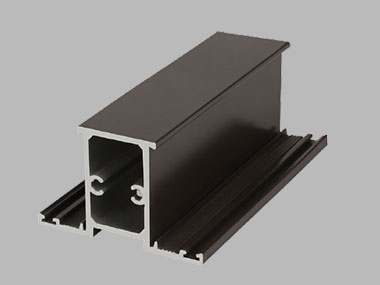
Aluminum profile high temperature extrusion process plasticity is very strong, can be customized mold processing of various complex cross-section structure, including multi-cavity, insulation broken bridge, hidden drainage, integrated buckle and other integrated profile structure. According to the project requirements, profiles of different depths, widths and radians can be customized to accurately match the design requirements of special-shaped curtain walls, sunshade systems and ventilation structures without secondary complex processing.
Multidimensional Modeling Adaptability
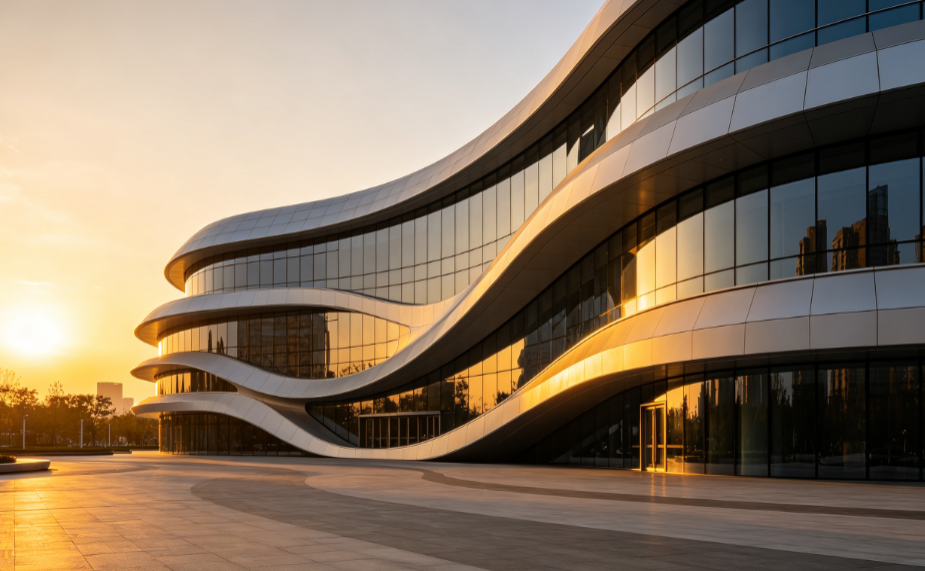
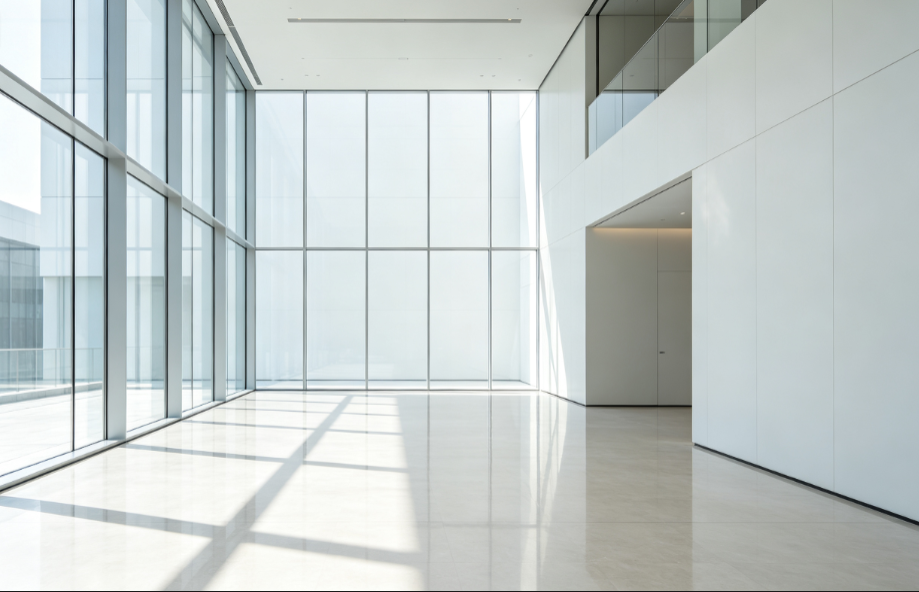
After forming, the aluminum profile can be processed twice by bending, welding, finishing and other processes, easily realizing various free surface shapes such as arc, bevel, polygon, etc., and adapting to the personalized design of landmark buildings. At the same time, it can create a very narrow frame curtain wall structure, maximize the expansion of glass lighting area, realize the extremely simple and transparent facade effect, and conform to the simple and advanced aesthetic trend of modern architecture.
Adapting to the Core Needs of Modern Architecture
Aesthetic Design Innovative Adaptation
Aluminum profiles with diversified surface technology can achieve various texture effects such as metal matte, bright surface, wood grain, stone grain, etc., with wide color coverage, which can adapt to various architectural styles and create the facade of urban landmarks. The flexible modeling and color matching ability allows architects to freely exert their design creativity, break through the monotonous limitations of traditional external walls, create a highly recognizable architectural appearance, and enhance the urban landscape texture.
Energy Saving and Functional Adaptation
Customized profiles can integrate thermal insulation, ventilation, sunshade, photovoltaic adaptation and other functional structures, optimize building energy-saving performance without damaging the appearance of the building, and help green building rating standards. It can be flexibly matched with stone, glass, metal plate, photovoltaic module and other materials to create a composite curtain wall system, taking into account multiple practical functions such as beauty, energy saving, power generation and noise reduction.
Adaptation Between Reconstruction and Construction
For renovation projects of old buildings, exclusive profiles can be customized to adapt to the original building structure, and the facade upgrade can be completed without substantial demolition of the original structure. The construction adaptability is extremely strong. Modular and prefabricated profile structure can adapt to rapid construction requirements, accurately position component size in combination with BIM parametric modeling, greatly reduce construction error and improve project landing efficiency and quality.
Superior Weather Resistance Protects Building Interiors
Weatherproof Protection Principle of Aluminum Curtain Wall
Wind and Compression Resistance of Structures
The structural rigidity of columns and beams of high-strength extruded aluminum profiles is sufficient, which can resist high altitude strong wind pressure and earthquake external force, and is not easy to bend, deform and loosen, and continuously maintain the tightness of the overall structure of the curtain wall. Through precise structural mechanics design, profiles can evenly disperse external wind and vibration forces, avoid component damage and crack cracking caused by excessive local stress, and ensure long-term structural stability of curtain walls.
Waterproof and Windproof Seal Design
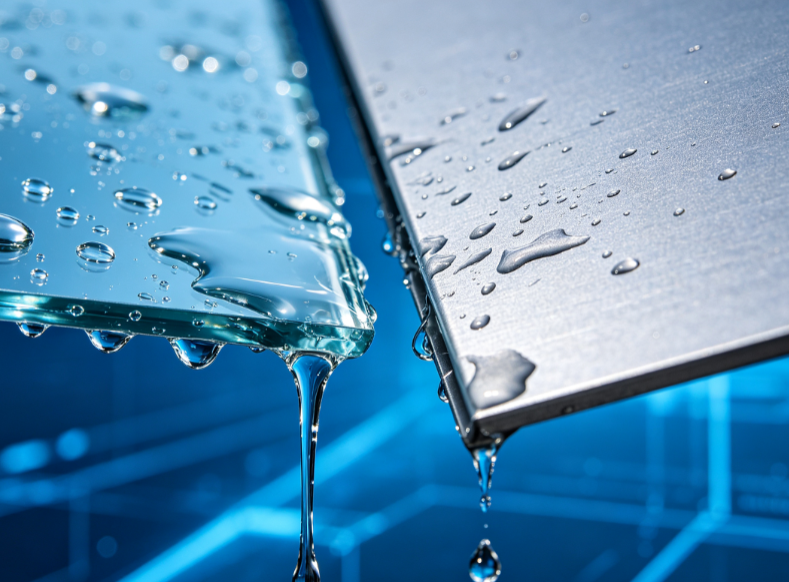
Modern aluminum curtain wall adopts pressure stabilizing rain screen structure and multi-cavity sealing design, matched with high-quality EPDM and silicone sealant strips to construct multi-layer waterproof and windproof barrier to prevent rainwater and airflow infiltration. The profile has built-in slope drainage grooves and drainage holes, which can quickly collect and drain the gap water, avoid rainwater retention and infiltration, and completely solve the common problem of curtain wall water leakage from the structural level.
Temperature Control Anti-aging Performance
Broken bridge insulation aluminum profile can effectively block the conduction of cold and hot air flow, reduce the impact of extreme temperature difference on indoor temperature, reduce the probability of dew condensation and icing of curtain wall, and stabilize indoor temperature environment. The high-end surface coating process can resist long-term ultraviolet radiation and alternating temperature changes, effectively prevent fading, powdering and cracking of profiles, and ensure long-term stability of curtain wall appearance and performance.
Indoor Protection Value Brought by Weather Resistance
Optimize Indoor Living Environment
The waterproof and windproof curtain wall structure can completely prevent outdoor wind and rain penetration, keep indoor walls and floors dry and clean, and avoid moldy, peculiar smell, wall falling and other problems caused by humid environment. Excellent air tightness and thermal insulation performance can stabilize indoor temperature, reduce cold and hot wind penetration, reduce the operating load of air conditioning and heating equipment, and create a constant temperature and comfortable indoor living and office environment.
Sound and Noise Reduction and Asset Protection
The compact aluminum structure and multi-layer sealing design can effectively block the noise of outdoor traffic flow, people flow and wind, greatly reduce indoor noise decibels, and improve the quietness and comfort of the space. Stable enclosure structure can protect indoor furniture, electrical appliances, decorative materials from moisture, exposure, temperature damage, prolong the service life of indoor facilities, reduce asset loss and maintenance expenses.
Energy Efficiency Supports Green Building Development
Building Energy Saving and Green Development Trend
Core Impact of Building Energy Consumption
Building operation energy consumption accounts for a large proportion of energy consumption and carbon emission in the whole society, among which heat loss from external walls and air infiltration are the core reasons for building energy consumption waste, and are also the key links in green building transformation. The traditional external wall has poor thermal insulation performance, outstanding cold in winter and hot in summer, and needs to rely on air conditioning and heating equipment to adjust temperature for a long time, which not only consumes a lot of energy, but also increases carbon emission, which does not conform to the concept of low-carbon development.
Green Building Certification Requirements
Standards such as LEED, BREEAM, and domestic green building ratings all put forward clear requirements for the thermal insulation, energy conservation, and air tightness of building envelopes, forcing curtain wall materials to upgrade to energy conservation. Modern building construction needs to take into account the core requirements of low energy consumption, low emission and sustainability. As the core envelope structure, the external wall curtain wall is the key carrier to realize the green rating of buildings and achieve the zero carbon goal.
Core Values for Green Building Development
Reduce Carbon Emissions From Building Operations
Energy-saving aluminum curtain wall can effectively reduce the heating and cooling energy consumption of buildings, reduce the electricity and gas consumption of long-term operation of buildings, reduce greenhouse gas emissions from the source, and assist the construction of low-carbon buildings. Compared with the traditional external wall system, the high-performance aluminum curtain wall can reduce the HVAC energy consumption by more than 30%, and the energy saving and carbon reduction benefits are very significant after long-term operation, which is suitable for the double-carbon development strategy.
The Material Itself is Green
Aluminum profiles have unlimited recyclability, recycling utilization rate is close to 100%, recycling production energy consumption is much lower than that of raw aluminum, greatly reducing the implied carbon emissions in the production stage of building materials. The curtain wall system has a long service life, less maintenance consumables, no need for frequent renovation and replacement, and reduces the generation of construction waste.
Help Green Rating Landing
The energy-saving, environmental protection and low-consumption characteristics of aluminum curtain wall can directly add points to the green certification and energy-saving rating of buildings, help the project quickly achieve various green building standards, and enhance the comprehensive value of the project. At the same time, the optimized natural lighting design can reduce daytime lighting electricity consumption, further improve the building energy-saving system, and comprehensively improve the green and low-carbon level of buildings.
Advanced Surface Treatments Improve Appearance and Durability
Mainstream Advanced Surface Treatment Technology
Anodizing Process
Anodic oxidation is an electrochemical treatment process, which can thicken the original oxide film of aluminum and form a hard and wear-resistant protective layer. The film has strong adhesion and is not easy to fall off. It has excellent scratch resistance and corrosion resistance. The process can realize a variety of metal color, warm and natural color, high texture, long-term outdoor use is not easy to fade, suitable for various high-end public buildings and commercial building curtain wall projects.
Powder Coating Process
Powder spraying adopts electrostatic spraying + high temperature curing process, thick and uniform coating, good sealing performance, no solvent pollution, belonging to green environmental protection process, excellent impact resistance and wear resistance. The process color selection is extremely rich, can realize matte, bright, matte and other textures, outstanding cost performance, widely used in all kinds of civil buildings, commercial building curtain wall aluminum profiles.
Fluorocarbon Spraying Process
Fluorocarbon spraying is a high-end coating process, with fluororesin as the core raw material, with strong UV resistance, anti-aging, anti-chemical corrosion ability, weather resistance far more than ordinary coating process. The process can guarantee 20 to 30 years of non-fading, non-powdering, non-cracking, adapt to coastal, industrial, plateau strong ultraviolet and other harsh environments, mostly used for landmark high-end building curtain walls.
Features and New Processing Technology
Electrophoretic coating process transparent fine coating, can restore aluminum metal texture, while improving protective performance; wood grain, stone grain transfer process can simulate the texture of natural building materials, adapt to antique, light luxury architectural design. Nano self-cleaning, anti-graffiti new coating, can make the curtain wall surface automatically remove dust stains, eliminate graffiti residue, greatly reduce the difficulty of cleaning and maintenance in the later period, adapt to urban core area buildings.
Core Value of Surface Treatment
Beauty Aesthetic Value
Diversified surface technology can realize various visual effects such as pure color, metal color, wood grain, stone grain, etc., accurately match the architectural design tonality, and create personalized and high-value building facade. Batch processing can ensure that the color and texture of the curtain wall of the whole building are highly uniform, without obvious color defects, and the appearance can be kept clean and new after long-term use, and the high-end visual texture of the building can be maintained continuously.
Durable Protective Value
All kinds of professional coatings can be superimposed on the original anti-corrosion performance of aluminum, further resist the erosion of wind and rain, ultraviolet rays and pollutants, eliminate the aging, corrosion and fading problems of profiles, and prolong the service life of curtain walls. Hardened coating can improve the scratch resistance and wear resistance of the profile surface, reduce the collision damage during construction and use, and ensure the long-term integrity and stability of the curtain wall structure and appearance.
Easy Processing and Installation Reduce Project Costs
Excellent Processing Adaptability of Aluminum Profiles
Basic Characteristics of Material Processing
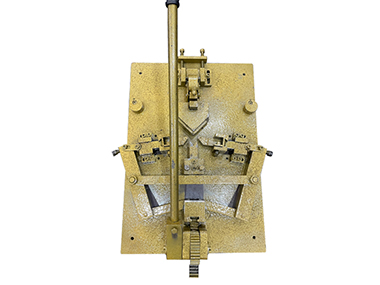
Aluminum profiles have good toughness, moderate hardness, low melting point, and strong machinability. They can be quickly machined by conventional processes such as cutting, drilling, bending, and milling without complex equipment. High material processing precision, can achieve millimeter precision cutting and drilling, high component fit, small error, effectively reduce on-site rework rectification, improve the finished product qualification rate of curtain wall component processing.
Advantages of Batch Prefabrication
Aluminum profiles support factory standardized batch processing and customized production, and can complete molding, drilling, coating and other processes in advance. Only assembly and splicing are needed on site, greatly reducing the workload of on-site processing. Factory controlled environment processing can avoid the influence of weather and site factors, ensure uniform and stable component processing quality, reduce material waste and defective products, and effectively control processing costs.
Cost Reduction Advantage of Installation System
Frame Curtain Wall Installation Advantages
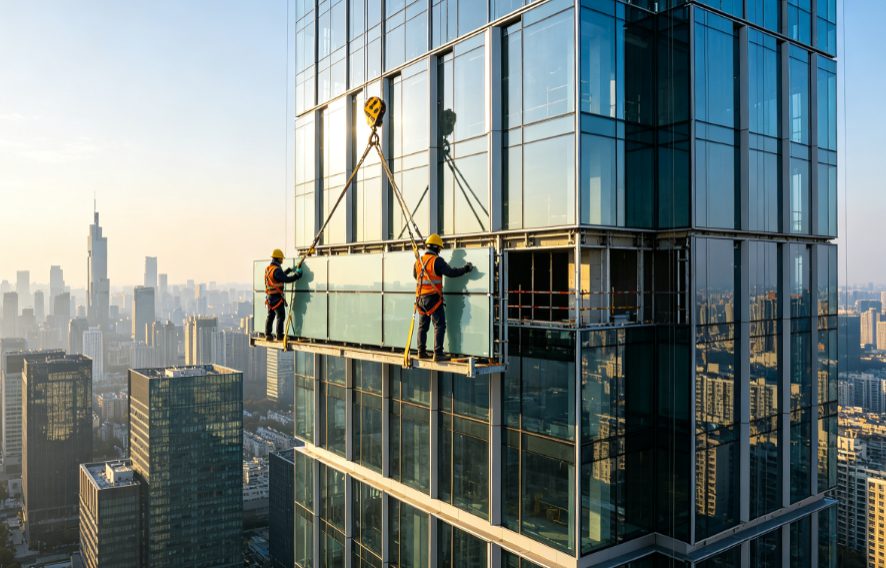
Frame-type curtain wall components are lightweight and simple to assemble. Large lifting equipment and a large number of construction personnel are not required for on-site construction. It can flexibly adapt to various site conditions and reduce labor and equipment rental costs. The construction process is simple and easy to operate, the construction threshold is low, the fault tolerance rate is high, the facade assembly can be completed quickly, the on-site construction cycle can be effectively shortened, and the extra expenditure caused by the delay of the construction period can be reduced.
Unit Curtain Wall Installation Advantages
The unit curtain wall is prefabricated in advance in the factory, only lifting and splicing are needed on site, and the construction of the single-story curtain wall can be completed in a short time, and the construction efficiency is several times higher than that of the traditional process. Greatly shorten the working time at height, reduce the construction safety risk, and quickly complete the facade closure of the building, create conditions for indoor decoration construction, and reduce the overall construction cycle of the project.
Why Aluminum Profiles Will Continue to Dominate Curtain Wall Applications
Long-term Market Application Validation
Since the large-scale popularization in the 1970s, aluminum curtain wall has been verified by the market for decades, and has been stably applied in various climates and various building scenarios around the world, and the technical system is very mature. The landing of numerous urban landmarks, high-rise buildings and public buildings fully confirms the reliability of aluminum curtain walls and has been widely recognized by architects, engineers and developers.
Perfect Industry Standard System
At present, aluminum curtain wall has perfect industry standards for production, processing, installation and testing, from raw material selection to project acceptance, to ensure the quality of project landing. The supporting production equipment, construction technology and after-sales system are very perfect, and the maturity of the industrial chain far exceeds that of other curtain wall materials, which can meet the construction needs of various large and small projects.
Performance Balance Without Short Board
Aluminum profiles take into account multiple advantages such as light weight, high strength, corrosion resistance, weather resistance, energy saving, beautiful appearance and easy construction. There is no obvious performance short board, which perfectly meets the diversified and high standard requirements of modern curtain walls. Compared with steel, stone, FRP and other materials, aluminum profiles have outstanding advantages in comprehensive performance, adaptation scenarios, service life, cost performance and other aspects, and are the most balanced curtain wall main materials at present.
Adapt to Various Building Scenarios
Whether it is a high-rise building, a large public building, an old building renovation, or a low-carbon green building project, aluminum curtain walls can be accurately adapted through process adjustment and structural optimization. It can give consideration to the beauty requirements of high-end landmark buildings and the cost performance requirements of ordinary civil buildings. The scene adaptation breadth is unmatched by other exterior wall materials.
Conclusion
Curtain wall aluminum profiles with light and high strength, corrosion resistance, flexible design, energy saving and durability, high cost performance and other multiple core advantages, fully meet the needs of modern building construction. Its continuous iteration of technology and outstanding green attributes can conform to the development trend of low carbonization, intelligence and individuation of buildings in the future, and it has been firmly positioned as the core material of building exterior wall for a long time.
Henan Retop Industrial Co., Ltd. Will Be There Whenever Wherever Whatever You Need

.jpg)