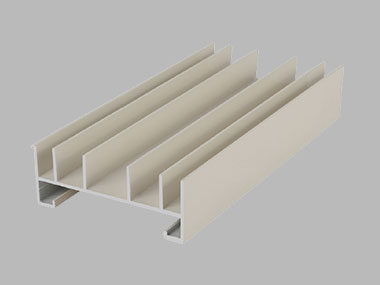
When to Choose Thermal Break Curtain Wall Aluminum Profiles for Energy Saving Buildings
Date:2026-07-20
View: 976 Point
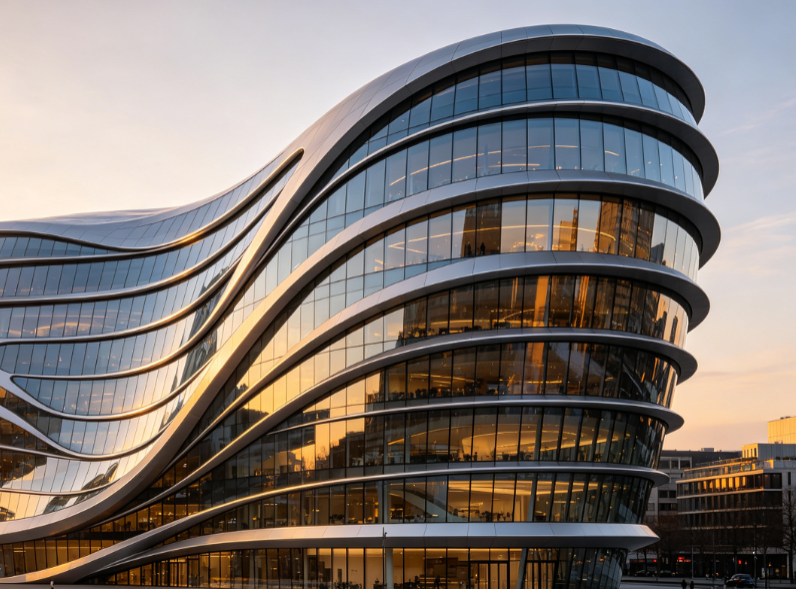
In the popularization of green buildings and increasingly stringent energy conservation standards, the selection of curtain wall profiles directly determines the building energy consumption and living experience.With excellent thermal insulation performance, aluminum profiles for insulation bridge curtain wall have become the core material of modern energy-saving buildings.
What Are Thermal Break Curtain Wall Aluminum Profiles?
Curtain wall is a common outer envelope structure of modern high-rise buildings, which is mainly composed of aluminum frame, glass filling layer and sealing components, and has both decoration and protection functions.The early curtain wall relied on the advantages of light weight, high strength and corrosion resistance of aluminum alloy to rapidly popularize and adapt to the facade construction of various high-rise and large-scale public buildings. Traditional aluminum curtain wall has obvious short board, aluminum thermal conductivity is very strong, easy to form cold and hot bridge effect.This will cause rapid heat loss or influx in the building, greatly increase the operating energy consumption of air conditioning and heating equipment, and it is difficult to meet the energy saving and consumption reduction needs of modern buildings.
Choose Thermal Break Profiles for Buildings with High Energy Efficiency Requirements
Envelope Energy-saving Pain Point
Modern buildings prefer large-area glass curtain wall design to improve indoor lighting and architectural aesthetics, but the curtain wall area is the weak link of building energy efficiency.Relevant data show that the curtain wall structure without insulation optimization will cause more than 30% of the energy loss of the building, and the energy-saving short board is very prominent. Ordinary aluminum profile curtain walls cannot solve the energy consumption problem caused by thermal bridges. Even with high-performance glass, the thermal insulation performance of the overall envelope structure still does not meet the standards, and it is difficult to meet the design requirements of high-standard energy-saving buildings.
Energy Efficiency Adaptation Advantages
The thermal insulation bridge profile can greatly optimize the overall heat transfer coefficient of the curtain wall, easily meeting the parameter standards of high-end energy-saving buildings such as passive houses, zero-energy buildings, LEED Platinum, etc.At the same time, it is compatible with ASHRAE 90.1 and other international general building energy efficiency standards, with strong compliance. Buildings using this profile can significantly reduce the operating load of HVAC equipment, save a lot of operation and maintenance costs in the long term, and at the same time reduce carbon emissions during the building operation stage, helping buildings achieve sustainable development goals.
Key Parameters of Selection
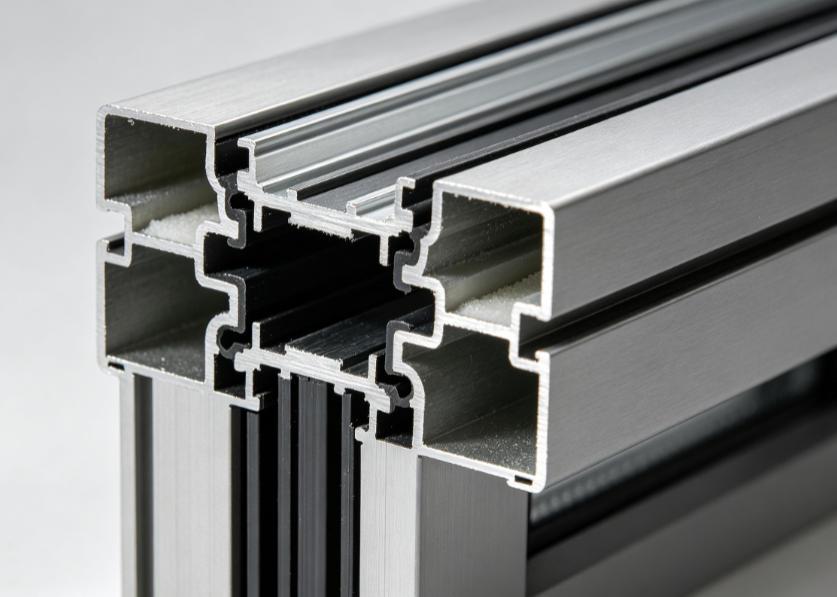
When selecting, we should pay attention to the width and material of the insulation strip. The wide and high-quality polyamide insulation strip above 34mm can provide more stable insulation effect and adapt to various high-energy-saving building scenarios.The multi-cavity profile structure can further improve thermal insulation and structural performance. At the same time, it is necessary to verify the alloy specifications, surface treatment technology and industry certification qualifications of the profiles, preferably 6063-T5/T6 alloy profiles, with NFRC, CE and other authoritative certifications to ensure the long-term stable operation of the curtain wall.
Use Thermal Break Curtain Walls in Extreme Climate Conditions
Disadvantages of Ordinary Curtain Wall in Extreme Weather
Extreme environments such as cold, heat, high humidity and large temperature difference between day and night will cause great performance tests for building curtain walls.Ordinary aluminum profiles conduct heat too fast, cold weather is prone to inner wall condensation, frost, hot weather will quickly introduce outdoor heat. Long-term extreme temperature alternating changes will lead to aging of ordinary profile curtain wall seals, profile deformation, water seepage, ventilation and other problems, not only reduce the comfort of living, but also shorten the overall service life of the curtain wall.
Extreme Environmental Adaptation of Broken Bridge Profiles
The insulation bridge structure can effectively block the outdoor extreme temperature conduction, so that the temperature of the inner wall of the curtain wall is always close to the indoor normal temperature state.Even if the outdoor temperature exceeds 40℃ or drops to below zero, it can stabilize the indoor thermal environment and reduce temperature fluctuations. The structural design of the profile can buffer the deformation pressure of the profile caused by the alternation of cold and heat, protect the sealing rubber strip and the glass component, improve the air tightness and water tightness of the curtain wall, and effectively resist the severe weather erosion such as rainstorm, blizzard and sand.
Extreme Climate Project Design Points
In extreme climate areas, widened high-strength insulation strips are selected, with multi-cavity profile structure and special sealing gaskets to enhance insulation and protection performance in all directions.At the same time, it needs to be matched with Low-E insulating glass, three-glass two-cavity and other high-performance glass systems. Special tests such as thermal cycle, wind pressure resistance and watertightness shall be completed before construction, and surface technology with ultraviolet resistance and corrosion resistance shall be selected to ensure long-term durability of curtain wall in extreme environment.
Select Thermal Break Profiles for Large Glass Curtain Wall Projects
Difficulties in Construction of Large-span Curtain Wall Engineering
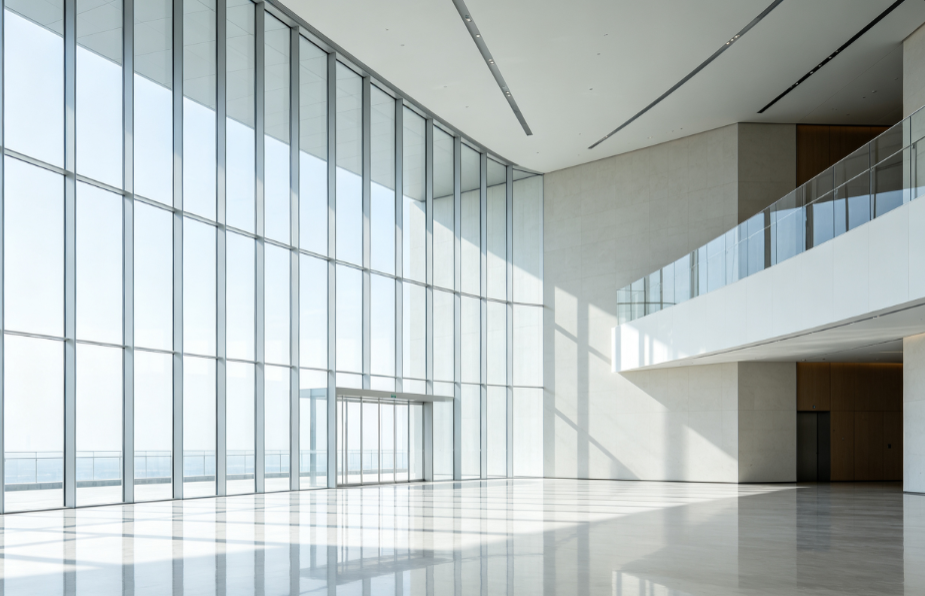
Large-scale buildings such as airports, exhibition centers and high-rise office buildings generally adopt large-span glass curtain walls, which require extremely high structural strength and stability of profiles.Large size glass has large weight, so it needs excellent load-bearing and wind-pressure resistance. If there is no thermal insulation optimization for large-area curtain walls, the overall energy consumption will increase geometrically, local dew condensation and uneven temperature will easily occur, and it will be difficult to meet the green energy-saving acceptance standards of modern large-scale buildings.
Engineering Adaptation Advantages of Thermal Insulation Broken Bridge Profiles
6063 series alloy profiles can meet the wind pressure resistance and deformation resistance requirements of large-span curtain walls, and adapt to the curtain wall construction standards of high-rise and large-space buildings. Its excellent thermal insulation performance can solve the energy consumption problem of large-area curtain walls, greatly reduce the overall heat transfer coefficient, avoid large-scale thermal bridge effect, and adapt to all kinds of high-end glass, taking into account the architectural appearance and energy-saving performance.
Core Standards for Selection of Large Curtain Wall Projects
The section parameters, inertia moment and bending strength of profiles shall be calculated in priority to ensure that profiles can bear large size glass load, resist strong wind, earthquake and other external forces, and ensure the safety and stability of curtain wall structure. At the same time, it is necessary to match different curtain wall construction systems of unit type and frame type, verify the authoritative test report of heat insulation performance and anti-aging performance of profiles, and adapt to the high standard construction and acceptance requirements of large-scale projects.
Improve Indoor Comfort with Better Thermal Insulation
Core Criteria for Indoor Thermal Comfort
High-quality indoor living environment not only needs constant temperature, but also needs to avoid local uneven cold and heat, dew condensation and humidity, blowing feeling and other problems.According to industry comfort standards, indoor space needs to maintain uniform surface temperature and stable humidity environment. Ordinary aluminum curtain walls will form obvious cold and hot radiation areas, and the temperature deviation in the window area is large, cold in winter and sultry in summer, which not only affects the living experience, but also leads to indoor humidity imbalance and mold breeding.
Principle of Optimized Experience of Insulation Broken Bridge Profile
The thermal insulation bridge structure blocks the heat conduction channel of the profile, so that the temperature of the profile inside the curtain wall is consistent with the indoor temperature, and the problem of cold and hot temperature difference at the window edge is completely eliminated.People close to the curtain wall area will not feel a significant temperature difference. Stable inner wall temperature can effectively prevent condensation, maintain indoor humidity balance, reduce mold and mite breeding, optimize indoor air quality, and multi-layer sealing structure can effectively block outdoor noise.
Comprehensive Energizing Effect of Comfortable Buildings
Through fine heat insulation regulation, the profile makes the indoor temperature distribution of the building more uniform, reduces the frequent start and stop frequency of HVAC equipment, and effectively saves the daily energy consumption of the building while improving the comfort of living and office. It is suitable for residential buildings, hotels, hospitals, office buildings and other buildings with high requirements for environmental comfort, taking into account the three core requirements of healthy living, efficient energy saving and quiet space.
Choose Thermal Break Aluminum Profiles for Sustainable Buildings
Core Development Requirements of Green Building
At present, the construction industry focuses on low-carbon sustainable development, and various green building certification systems put forward strict requirements on building energy consumption, carbon emission and environmental protection of materials, and reducing building operation energy consumption has become the core assessment index. Aluminum alloy itself can be recycled, environmental protection attributes outstanding, but the thermal bridge defects of ordinary aluminum profiles, will greatly weaken the building's energy saving and environmental protection value, can not meet the green building rating requirements.
Green Application Value of Insulation Broken Bridge Profile
The insulation bridge technology makes up for the energy-saving short board of ordinary aluminum profiles, which can reduce the heat loss of curtain walls by more than 50%, greatly reduce the carbon emissions in the operation stage of buildings, and help buildings achieve zero-carbon and low-carbon operation goals. The profile adapts to mainstream green building certification standards such as LEED and BREEAM, which can improve the green rating of buildings. At the same time, the profile has a long service life and can be recycled and reused, which is in line with the concept of circular economy development of buildings.
Green Project Selection Core Considerations
Green building materials need to focus on checking the environmental protection parameters of profiles, product environmental protection statements and the proportion of recycled materials, giving priority to the selection of high-recycling aluminum insulation broken bridge profiles to reduce the implied carbon emissions of buildings. At the same time, it is necessary to combine the building energy consumption simulation data selection, match the project energy conservation objectives and certification requirements, and realize the all-round unification of material environmental protection, energy conservation and durability.
Consider Thermal Break Profiles for High-Performance Curtain Wall Systems
Definition and Standard of High Performance Curtain Wall System
High-performance curtain wall system is different from ordinary enclosure structure, which not only undertakes the function of building protection and decoration, but also needs to meet multiple stringent performance requirements such as ultra-low energy consumption, high sealing performance, anti-harsh environment, long-term durability, etc. This kind of curtain wall is widely used in high-end commercial and public buildings, and is the landmark configuration of modern high-end buildings. It has a very high standard for the comprehensive performance of insulation, structure, waterproof and sound insulation.
System Energizing Effect of Thermal Insulation Broken Bridge Profile
Insulation broken bridge profile is the core component of high-performance curtain wall, which can completely solve the defects of aluminum thermal bridge, greatly improve the overall insulation and anti-condensation performance of curtain wall, and make curtain wall system reach the strict index of ultra-low heat transfer coefficient. On the basis of retaining the advantages of aluminum structure stability, wind pressure resistance and earthquake resistance, optimize the energy consumption performance of buildings, adapt to the design of various high-end curtain wall systems, and help buildings achieve high performance and low energy consumption.
Upgrading and Selection Scheme of High Performance Curtain Wall
For high-end high-performance curtain wall projects, wide insulation strips, multi-cavity structures and upgraded profiles with patented insulation systems can be selected to further improve insulation efficiency and adapt to curtain wall projects with super high rise, large span and high energy saving requirements. The selection shall be combined with the overall performance parameters of the building, and the integrated design of linkage glass, sealing and shading system shall be adopted to comprehensively improve the comprehensive performance of curtain wall and meet the long-term operation requirements of high-end buildings.
Customize Thermal Break Curtain Wall Profiles for Different Projects
The Core Necessity of Curtain Wall Profile Customization
The location climate, structural form, design style and energy-saving goal of different buildings are quite different. It is difficult for standardized profiles to meet the personalized needs of all projects, and it is easy to have problems such as mismatching performance and inconsistent face value. General profiles cannot take into account special requirements such as extreme weather protection, large-span load-bearing, special architectural modeling, etc., while customized profiles can accurately match project scenarios and maximize the performance of curtain wall systems.
Mainstream Customized Dimensions of Thermal Insulation Broken Bridge Profiles
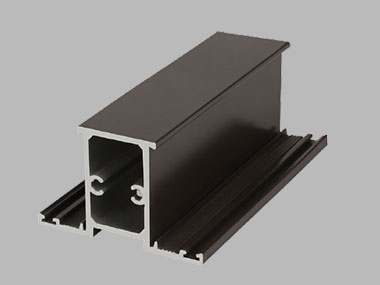
Section size, cavity structure and insulation bar parameters can be customized according to project requirements, so as to optimize thermal insulation performance and structural strength, and adapt to curtain wall construction scenarios with different spans and wind pressure loads. At the same time, it can customize the surface technology, internal and external colors, modeling structure, and can also add special functions such as fire prevention, sound insulation and explosion resistance to meet the personalized design requirements of special-shaped buildings and high-end landmark buildings.
Application Value of Customized Profiles
Customized thermal insulation broken bridge profiles can accurately match the multiple requirements of energy conservation, structure and face value of the project, avoid the problem of performance redundancy or insufficient performance of general profiles, and improve the overall landing effect of curtain wall projects. Effectively reduce the workload of secondary reconstruction on the construction site, improve the construction efficiency and project quality, ensure the long-term stable operation of the curtain wall, reduce the later maintenance cost, and improve the comprehensive cost performance of the project.
How to Decide Whether Thermal Break Curtain Wall Profiles Are Needed
Low-demand Scenarios Where Common Profiles Can be Selected
Some low-standard building scenes do not need to use insulation broken bridge profiles, simple supporting buildings in mild climate areas, open corridors without constant temperature requirements, open-air structures, and changes in thermal environment have little impact on building use. For temporary buildings and secondary facade structures with limited budget and loose energy-saving acceptance standards, ordinary aluminum profiles can be selected to control costs and meet the needs of basic enclosure and decoration.
The Core Scene of Heat Insulation Broken Bridge Profile is Preferred.
For permanent buildings in extreme climate, high humidity and high altitude areas, insulation broken bridge profiles must be selected, which can effectively solve the core problems such as dew condensation, high energy consumption and too fast aging of profiles to ensure the quality of building use. Commercial, residential and public buildings with green certification, ultra-low energy consumption and constant temperature comfort requirements shall be equipped with thermal insulation broken bridge profiles to meet the specification requirements and enhance the comprehensive value and market competitiveness of buildings.
Practical Qperation Judgment Flow of Scientific Type Selection
In the early stage of building design, energy consumption simulation and thermal bridge analysis need to be carried out to compare the heat transfer coefficient and anti-condensation parameters of different profiles, and determine the profile selection plan based on the project's climatic conditions and energy-saving standards. At the same time, the whole life cycle cost accounting shall be carried out, and the initial investment and the later energy-saving benefits shall be compared. The curtain wall engineers and profile manufacturers shall jointly determine the most optimal type to balance the performance, cost and long-term value.
Conlusion
Aluminum profiles for thermal insulation broken bridge curtain walls are the core preferred materials for modern energy-saving buildings, which are suitable for most high-end scenarios such as high energy efficiency, extreme climate, large curtain walls and green buildings. Reasonable selection and customization can take into account the architectural beauty, structural safety, living comfort and low carbon energy saving, which is in line with the green development trend of the construction industry and has extremely high engineering application value.
Henan Retop Industrial Co., Ltd. Will Be There Whenever Wherever Whatever You Need