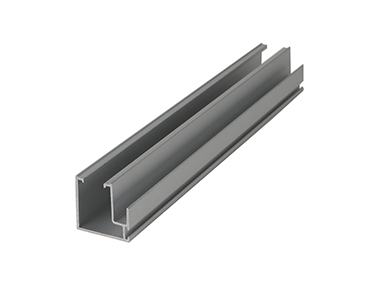
Differences Between Aluminum and Steel Profiles
Aluminum and steel profiles are two foundational materials in construction, manufacturing, and transportation, each shaping projects with distinct strengths. This article breaks down their core differences—from materials and processes to costs and sustainability—to help you make informed choices for your specific application.
What Are Aluminum Profiles
Aluminum profiles are metal structural parts with specific cross-sectional shapes made from pure aluminum or aluminum alloys through casting, extrusion, surface treatment and subsequent processing. The core process is hot extrusion molding, a process that gives it the unique advantage of being lightweight and easy to customize.
The production of aluminum profiles is divided into three core stages, with a clear process and focus on the key aspects of forming. The first is the casting stage, where the raw aluminum alloy is melted and injected into a circular mold, and then cooled to form a cylindrical ingot (commonly known as an “aluminum bar”) to ensure uniform composition of the raw material in preparation for subsequent extrusion.
Next comes the core extrusion stage, where the ingot is heated to a thermoplastic state and placed into an extruder, where it is extruded through the die holes of a customized die under high pressure to form the desired cross-sectional shape. The die can be designed to be solid, hollow or shaped according to the requirements, and the length of a single profile can be up to tens of meters, providing flexibility for small batch customization.
Finally, there is the post-processing stage, where the extruded profiles are cooled and straightened to ensure precision, then heat-treated by aging to improve strength, and finally surface-treated to remove impurities and form a protective layer to ensure corrosion resistance and aesthetics, and then the finished product is cut to size and ready to be put into use as required.
What Are Steel Profiles
Steel profiles are metal structural members with specific cross-sectional shapes made from steel as raw material through hot rolling and other processes. Their core advantages are high strength and high rigidity, making them ideal for heavy structures and load-bearing members.
The production of steel profiles is dominated by the hot rolling process, and the core process is divided into five key steps. The first is the preparation of raw materials, mostly using various types of scrap as raw materials to reduce production costs and adapt to the material requirements.
Subsequently entered the melting stage, the scrap into the furnace, after high temperature melting to remove impurities, to lay the foundation for subsequent processing. Next is the casting stage, where the steel is cast into billets through a continuous casting machine and cut to the right length.
The rolling stage is the core of molding, after preheating the billet to a high temperature, it is rolled in a rolling mill through several passes to form the target cross-section shape. The final stage is the finishing stage, where the rolled section is straightened, cut to length and finished to complete the production process, ensuring that the product meets the requirements for installation and use.
Key Differences Between Aluminum and Steel Profiles
Differences in materials and physical properties
Density
The density of aluminum profiles is only about one-third of that of steel profiles, and this difference directly determines that the weight of aluminum profiles is much lighter than that of steel, which not only significantly reduces the overall weight of the structure, but also reduces energy consumption and costs during transportation, and makes installation easier and more convenient in situations where there is a lack of large-scale lifting equipment or work at high altitude.
Strength
The overall strength of ordinary aluminum profiles is lower than that of ordinary steel, but the specific strength (the ratio of strength to density) of aluminum profiles is more advantageous, reaching 2-3 times that of steel, which means that in the pursuit of lightweight application scenarios, aluminum profiles can achieve sufficient structural strength with lighter weight to fully meet the needs of use. High-strength steels, on the other hand, have excellent tensile, flexural and torsional strengths, making them a core support material for heavy-duty structures.
Modulus of Elasticity
The modulus of elasticity of steel is about 3 times that of aluminum. Under the same load, the deformation of steel profiles is smaller and the structural rigidity is stronger, which is more suitable for scenarios with stringent requirements for stability. In terms of thermal conductivity, aluminum profiles are 4.5 times more thermally conductive than steel, and have excellent heat dissipation efficiency, making them especially suitable for electronic equipment, radiators, and other applications that require rapid heat dissipation.
Coefficient of thermal expansion
The coefficient of thermal expansion of aluminum is twice that of steel. In a high-temperature environment, the deformation of aluminum profiles is much greater, so when used in such conditions, special compensation structures need to be designed to offset the effects of deformation, so as to avoid affecting the overall performance.
Anti-corrosion
Aluminum profile surface can naturally form a layer of oxidized protective film, without additional protection can resist humidity, salt spray and other environmental erosion, long-term outdoor use is not easy to damage; and steel profiles if no protection treatment, very easy to rust and corrosion, must be galvanized, painted and other coating processes for protection, in order to extend the service life.
Conductivity
Aluminum profiles have excellent electrical conductivity, can be used for bus ducts and other conductive scenes; steel profiles have poor electrical conductivity, basically not for such applications.
Production Process Differences in Depth Comparison
Aluminum profile core forming process is hot extrusion, steel profiles are mainly hot rolling process, this essential difference leads to the two in the flexibility of customization and production adaptability is very different.
Hot extrusion of Aluminum Profiles
The production only need to change the mold, can produce solid, hollow, shaped and other types of complex cross-section products, a single set of mold cost is relatively low and flexible replacement, even for small batch customization also has economic feasibility, can quickly respond to personalized needs.
Hot Rolling of Steel Profiles
Suitable for the production of relatively simple cross-sectional shape of the product, although the mass production of high efficiency, cost control, but the high cost of roll molds, the replacement process is complex, long customization cycle, small batch customization of the economy is not good, more suitable for standardization, large-scale production needs.
Processing temperature:The extrusion temperature of aluminum profiles is much lower than the rolling temperature of steel profiles, which makes the energy consumption in the production process of aluminum profiles is only about one-fifth of that of steel, which is not only more in line with the requirements of environmental protection, but also reduces the overall processing costs.
Dimensional Accuracy
The cross-section error and straightness error of aluminum profiles are smaller, the finished product can be installed with higher precision, and can be directly assembled without additional processing adjustments; while the dimensional accuracy of hot rolled steel profiles is relatively low, the surface roughness is larger, and if you need a high-precision product, you need to use the cold rolling process, which will lead to a corresponding increase in cost.
Surface Treatment Process
Aluminum profiles have more choices, anodic oxidation, powder coating, electrophoresis and other mature processes, which can not only enhance anti-corrosion performance, but also achieve a variety of colors and textures, more decorative; steel profiles of the surface treatment of hot-dip galvanizing, spray painting is the main process is relatively single, the choice of colors is limited, and the core purpose of the focus on anti-corrosion protection.
Production Cycle
Aluminum profiles have a shorter delivery cycle for small-lot orders, usually 7-15 days to complete production and delivery, which is more suitable for expedited projects and customized needs; steel profiles have a longer production cycle for small-lot orders, and the efficiency advantage is more obvious in mass production, which is more suitable for standardized projects with loose schedule requirements.
Cost Structure Differences
Initial Purchase Cost
The unit weight price of aluminum profiles is higher than steel profiles, mainly from raw materials and processing costs; however, the lightweight characteristics of aluminum profiles can significantly reduce transportation and installation costs, reduce lifting equipment and labor costs, combined, the initial comprehensive cost advantage of small and medium batch projects is obvious.
The raw material cost of steel profile is lower, the price per unit weight is only one-third to one-half of aluminum profile, for the large volume, large cross-section of the project, the initial procurement cost advantage is outstanding, but due to the larger weight, the transportation process needs to bear higher energy consumption and cost, installation also needs more labor and heavy equipment to cooperate with the initial comprehensive cost of aluminum profile to narrow the gap.
Long-term Use Cost
The advantages of aluminum profiles are even more significant. Its excellent corrosion resistance eliminates the need for frequent maintenance, and its outdoor life cycle can last up to 15-25 years, during which time there is basically no need to invest in additional maintenance costs.
Steel profiles, on the other hand, require regular inspection and re-coating of the anti-corrosion coating, usually every 2-3 years, which results in higher maintenance costs in the long run, and may also lead to corrosion and damage due to untimely maintenance, thus affecting the service life.
Recycling Value
The recycling rate of aluminum profiles is as high as 99%, the energy consumption of recycling is only 5% of the original production, and there is no significant decline in performance after recycling, so the recycling value is higher;
Steel profiles have a recycling rate of about 95%, but the recycling process requires the removal of surface coatings and impurities, which is a relatively complex process and has a lower recycling value than aluminum profiles.
Environmental and Sustainability Differences
Production Energy Consumption
Aluminum profiles consume more energy in the aluminum electrolysis stage if primary raw materials are used, but recycled aluminum consumes only 5% of the energy used in primary aluminum production;
Steel profiles consume less energy in primary production than primary aluminum, but recycled steel consumes more energy than recycled aluminum. Taken together, the energy consumption of aluminum profiles is more environmentally friendly when recycled raw materials are used in the long term.
Carbon Emissions
Carbon emissions from primary production of aluminum profiles are higher, but the carbon emissions of recycled aluminum are only about 5% of those of primary aluminum, and the lightweight nature of aluminum profiles reduces the carbon emissions of the transportation process. For the same capacity, the transportation volume of aluminum profiles is three times that of steel, which significantly reduces the carbon footprint of the transportation process;
Steel profiles have lower carbon emissions from primary production than primary aluminum, but recycled steel has higher carbon emissions than recycled aluminum, and its heavier weight results in higher transportation carbon emissions.
Recycling Rates
Both are highly recyclable materials and are in line with the development of a circular economy. Aluminum profiles have a simpler recycling process, requiring no complex treatment of impurities and coatings, and can be recycled indefinitely with stable performance;
Steel profiles need to deal with surface coating and impurities during recycling, which is a relatively cumbersome process. After recycling, the performance of steel profiles is slightly reduced, but they still have good reuse value.
How the Differences Affect Performance in Common Scenarios
Architecture and Building Systems
Aluminum profiles are the optimal choice for non-load-bearing facade scenarios such as building curtain walls, window and door frames. Thanks to the lightweight properties of aluminum, the weight of a single curtain wall is significantly reduced. Compared to steel profile solutions, the weight reduction is more than 60%. This significantly reduces the overall deadweight of the building and the load-bearing pressure on the main structure.
At the same time, through professional surface treatment, the aluminum profiles have successfully resisted high-altitude strong UV rays and wind and rain erosion. After many years of use, there is still no visible damage and no additional maintenance is required. The long-term use cost is extremely low.
The advantages of steel profiles are irreplaceable in load-bearing scenarios such as plant frames, bridges and large-span structures. For example, the load-bearing frame of a heavy machinery plant is built with steel profiles. With a span of 30 meters, it can still stably carry heavy equipment and production loads.
Its initial cost is only about one-third of the aluminum profile solution, fully meet the high strength, high rigidity of the use of demand. If aluminum profiles were used, not only would it require the use of high-strength alloys resulting in a significant increase in cost, but it would also be difficult to guarantee load stability.
Transportation Equipment
The new energy automobile field is the core application scenario of the lightweight advantage of aluminum profiles. Take Tesla Model 3 as an example, its body frame is made of aluminum profiles, which reduces weight by about 30% compared with the traditional steel body, and directly brings about a significant effect of 15% increase in mileage; meanwhile, the integrated extruded frame structure also enhances the torsional rigidity and safety performance of the body.
Meanwhile, the core safety components such as automobile chassis and collision beams are still made of high-strength steel, utilizing its high rigidity and impact-resistant characteristics to ensure driving safety.
In the field of rail transportation, the frame of high-speed railway carriages also adopts aluminum profiles in large quantities, which reduces weight by more than 40% compared with steel frames, effectively reduces the energy consumption of train traction, and improves the operation efficiency. At the same time, through professional surface treatment process, aluminum profile can resist the erosion of wind, sand and rain along the track, and its service life is up to 30 years, which fully meets the long-term use requirements of rail transportation.
The track support structure and bridges and other load-bearing parts are still mainly made of steel profiles to ensure load-bearing stability and structural safety.
Industrial Machinery and Automation
In the frame scene of automated production line, the modularity advantage of aluminum profiles is extremely prominent. The SMT production line of the electronics factory uses aluminum profiles to build a frame, and with its unique structural design, it can realize fast assembly and flexible adjustment, with the assembly cycle only one-third of that of steel frames, and it can be reconfigured at any time according to the production demand, and it can be adapted to different production processes and equipment installation requirements.
In the later transformation, the secondary processing difficulty of aluminum profile is low, and it can be cut, drilled and spliced directly, which greatly reduces the transformation cost and cycle.
Steel profiles are the preferred material for heavy machine tool bases, press frames and other scenarios that require high rigidity and stability. The base of heavy machine tool adopts steel profile welding structure, with its high rigidity and low deformation characteristics, effectively guaranteeing the machining accuracy of the machine tool, and after aging treatment to eliminate welding stress, the service life can reach 20 years, which fully meets the high-intensity use requirements of industrial production.
In the photovoltaic mounting scenario, ground-based photovoltaic power stations mostly use aluminum profiles, compared with steel mounting weight reduction of more than 50%, the installation of large-scale lifting equipment is not required, the labor cost is reduced by 40%, and there is no need for additional maintenance in outdoor environments, the long-term use of very low cost.
For offshore photovoltaic power stations, special steel profiles are used due to the harsh corrosive environment. Although the cost is higher than that of aluminum profiles, they can meet the requirements for use in strong corrosive environments.
Electronics and Thermal Management
In the heat dissipation scenario of electronic equipment, the thermal conductivity advantage of aluminum profiles makes it the preferred material. Cell phones, computers and other electronic products, heat sinks are mostly made of aluminum profiles, its excellent thermal conductivity can quickly chip the heat generated by the heat emitted, the thermal efficiency is more than 3 times that of steel heat sinks, which effectively protects the stable operation of the electronic equipment to avoid overheating leading to performance degradation or damage.
Industrial control cabinet shell and other scenes, steel profile protection advantages are more obvious. Control cabinet shell made of steel profiles, through the cold-rolled molding and paint treatment, with good impact resistance and fire performance, can effectively protect the internal electronic components from the external environment, suitable for industrial production and other complex working conditions.
The new energy battery shell is mostly used in aluminum profiles, both lightweight, thermal conductivity and corrosion resistance, not only can quickly emit the heat generated by the battery work, but also to protect the safety of the battery, to extend the service life.
Conclusion
In summary, aluminum profiles excel in lightweight, customization, and long-term corrosion resistance, while steel profiles stand out for high strength, rigidity, and cost-effectiveness in heavy-duty scenarios. Understanding these differences lets you align material selection with project goals, balancing performance, cost, and sustainability seamlessly.
Aluminum and steel profiles are two foundational materials in construction, manufacturing, and transportation, each shaping projects with distinct strengths. This article breaks down their core differences—from materials and processes to costs and sustainability—to help you make informed choices for your specific application.
What Are Aluminum Profiles
Aluminum profiles are metal structural parts with specific cross-sectional shapes made from pure aluminum or aluminum alloys through casting, extrusion, surface treatment and subsequent processing. The core process is hot extrusion molding, a process that gives it the unique advantage of being lightweight and easy to customize.
The production of aluminum profiles is divided into three core stages, with a clear process and focus on the key aspects of forming. The first is the casting stage, where the raw aluminum alloy is melted and injected into a circular mold, and then cooled to form a cylindrical ingot (commonly known as an “aluminum bar”) to ensure uniform composition of the raw material in preparation for subsequent extrusion.
Next comes the core extrusion stage, where the ingot is heated to a thermoplastic state and placed into an extruder, where it is extruded through the die holes of a customized die under high pressure to form the desired cross-sectional shape. The die can be designed to be solid, hollow or shaped according to the requirements, and the length of a single profile can be up to tens of meters, providing flexibility for small batch customization.
Finally, there is the post-processing stage, where the extruded profiles are cooled and straightened to ensure precision, then heat-treated by aging to improve strength, and finally surface-treated to remove impurities and form a protective layer to ensure corrosion resistance and aesthetics, and then the finished product is cut to size and ready to be put into use as required.
What Are Steel Profiles
Steel profiles are metal structural members with specific cross-sectional shapes made from steel as raw material through hot rolling and other processes. Their core advantages are high strength and high rigidity, making them ideal for heavy structures and load-bearing members.
The production of steel profiles is dominated by the hot rolling process, and the core process is divided into five key steps. The first is the preparation of raw materials, mostly using various types of scrap as raw materials to reduce production costs and adapt to the material requirements.
Subsequently entered the melting stage, the scrap into the furnace, after high temperature melting to remove impurities, to lay the foundation for subsequent processing. Next is the casting stage, where the steel is cast into billets through a continuous casting machine and cut to the right length.
The rolling stage is the core of molding, after preheating the billet to a high temperature, it is rolled in a rolling mill through several passes to form the target cross-section shape. The final stage is the finishing stage, where the rolled section is straightened, cut to length and finished to complete the production process, ensuring that the product meets the requirements for installation and use.
Key Differences Between Aluminum and Steel Profiles
Differences in materials and physical properties
Density
The density of aluminum profiles is only about one-third of that of steel profiles, and this difference directly determines that the weight of aluminum profiles is much lighter than that of steel, which not only significantly reduces the overall weight of the structure, but also reduces energy consumption and costs during transportation, and makes installation easier and more convenient in situations where there is a lack of large-scale lifting equipment or work at high altitude.
Strength
The overall strength of ordinary aluminum profiles is lower than that of ordinary steel, but the specific strength (the ratio of strength to density) of aluminum profiles is more advantageous, reaching 2-3 times that of steel, which means that in the pursuit of lightweight application scenarios, aluminum profiles can achieve sufficient structural strength with lighter weight to fully meet the needs of use. High-strength steels, on the other hand, have excellent tensile, flexural and torsional strengths, making them a core support material for heavy-duty structures.
Modulus of Elasticity
The modulus of elasticity of steel is about 3 times that of aluminum. Under the same load, the deformation of steel profiles is smaller and the structural rigidity is stronger, which is more suitable for scenarios with stringent requirements for stability. In terms of thermal conductivity, aluminum profiles are 4.5 times more thermally conductive than steel, and have excellent heat dissipation efficiency, making them especially suitable for electronic equipment, radiators, and other applications that require rapid heat dissipation.
Coefficient of thermal expansion
The coefficient of thermal expansion of aluminum is twice that of steel. In a high-temperature environment, the deformation of aluminum profiles is much greater, so when used in such conditions, special compensation structures need to be designed to offset the effects of deformation, so as to avoid affecting the overall performance.
Anti-corrosion
Aluminum profile surface can naturally form a layer of oxidized protective film, without additional protection can resist humidity, salt spray and other environmental erosion, long-term outdoor use is not easy to damage; and steel profiles if no protection treatment, very easy to rust and corrosion, must be galvanized, painted and other coating processes for protection, in order to extend the service life.
Conductivity
Aluminum profiles have excellent electrical conductivity, can be used for bus ducts and other conductive scenes; steel profiles have poor electrical conductivity, basically not for such applications.
Production Process Differences in Depth Comparison
Aluminum profile core forming process is hot extrusion, steel profiles are mainly hot rolling process, this essential difference leads to the two in the flexibility of customization and production adaptability is very different.
Hot extrusion of Aluminum Profiles
The production only need to change the mold, can produce solid, hollow, shaped and other types of complex cross-section products, a single set of mold cost is relatively low and flexible replacement, even for small batch customization also has economic feasibility, can quickly respond to personalized needs.
Hot Rolling of Steel Profiles
Suitable for the production of relatively simple cross-sectional shape of the product, although the mass production of high efficiency, cost control, but the high cost of roll molds, the replacement process is complex, long customization cycle, small batch customization of the economy is not good, more suitable for standardization, large-scale production needs.
Processing temperature:The extrusion temperature of aluminum profiles is much lower than the rolling temperature of steel profiles, which makes the energy consumption in the production process of aluminum profiles is only about one-fifth of that of steel, which is not only more in line with the requirements of environmental protection, but also reduces the overall processing costs.
Dimensional Accuracy
The cross-section error and straightness error of aluminum profiles are smaller, the finished product can be installed with higher precision, and can be directly assembled without additional processing adjustments; while the dimensional accuracy of hot rolled steel profiles is relatively low, the surface roughness is larger, and if you need a high-precision product, you need to use the cold rolling process, which will lead to a corresponding increase in cost.
Surface Treatment Process
Aluminum profiles have more choices, anodic oxidation, powder coating, electrophoresis and other mature processes, which can not only enhance anti-corrosion performance, but also achieve a variety of colors and textures, more decorative; steel profiles of the surface treatment of hot-dip galvanizing, spray painting is the main process is relatively single, the choice of colors is limited, and the core purpose of the focus on anti-corrosion protection.
Production Cycle
Aluminum profiles have a shorter delivery cycle for small-lot orders, usually 7-15 days to complete production and delivery, which is more suitable for expedited projects and customized needs; steel profiles have a longer production cycle for small-lot orders, and the efficiency advantage is more obvious in mass production, which is more suitable for standardized projects with loose schedule requirements.
Cost Structure Differences
Initial Purchase Cost
The unit weight price of aluminum profiles is higher than steel profiles, mainly from raw materials and processing costs; however, the lightweight characteristics of aluminum profiles can significantly reduce transportation and installation costs, reduce lifting equipment and labor costs, combined, the initial comprehensive cost advantage of small and medium batch projects is obvious.
The raw material cost of steel profile is lower, the price per unit weight is only one-third to one-half of aluminum profile, for the large volume, large cross-section of the project, the initial procurement cost advantage is outstanding, but due to the larger weight, the transportation process needs to bear higher energy consumption and cost, installation also needs more labor and heavy equipment to cooperate with the initial comprehensive cost of aluminum profile to narrow the gap.
Long-term Use Cost
The advantages of aluminum profiles are even more significant. Its excellent corrosion resistance eliminates the need for frequent maintenance, and its outdoor life cycle can last up to 15-25 years, during which time there is basically no need to invest in additional maintenance costs.
Steel profiles, on the other hand, require regular inspection and re-coating of the anti-corrosion coating, usually every 2-3 years, which results in higher maintenance costs in the long run, and may also lead to corrosion and damage due to untimely maintenance, thus affecting the service life.
Recycling Value
The recycling rate of aluminum profiles is as high as 99%, the energy consumption of recycling is only 5% of the original production, and there is no significant decline in performance after recycling, so the recycling value is higher;
Steel profiles have a recycling rate of about 95%, but the recycling process requires the removal of surface coatings and impurities, which is a relatively complex process and has a lower recycling value than aluminum profiles.
Environmental and Sustainability Differences
Production Energy Consumption
Aluminum profiles consume more energy in the aluminum electrolysis stage if primary raw materials are used, but recycled aluminum consumes only 5% of the energy used in primary aluminum production;
Steel profiles consume less energy in primary production than primary aluminum, but recycled steel consumes more energy than recycled aluminum. Taken together, the energy consumption of aluminum profiles is more environmentally friendly when recycled raw materials are used in the long term.
Carbon Emissions
Carbon emissions from primary production of aluminum profiles are higher, but the carbon emissions of recycled aluminum are only about 5% of those of primary aluminum, and the lightweight nature of aluminum profiles reduces the carbon emissions of the transportation process. For the same capacity, the transportation volume of aluminum profiles is three times that of steel, which significantly reduces the carbon footprint of the transportation process;
Steel profiles have lower carbon emissions from primary production than primary aluminum, but recycled steel has higher carbon emissions than recycled aluminum, and its heavier weight results in higher transportation carbon emissions.
Recycling Rates
Both are highly recyclable materials and are in line with the development of a circular economy. Aluminum profiles have a simpler recycling process, requiring no complex treatment of impurities and coatings, and can be recycled indefinitely with stable performance;
Steel profiles need to deal with surface coating and impurities during recycling, which is a relatively cumbersome process. After recycling, the performance of steel profiles is slightly reduced, but they still have good reuse value.
How the Differences Affect Performance in Common Scenarios
Architecture and Building Systems
Aluminum profiles are the optimal choice for non-load-bearing facade scenarios such as building curtain walls, window and door frames. Thanks to the lightweight properties of aluminum, the weight of a single curtain wall is significantly reduced. Compared to steel profile solutions, the weight reduction is more than 60%. This significantly reduces the overall deadweight of the building and the load-bearing pressure on the main structure.
At the same time, through professional surface treatment, the aluminum profiles have successfully resisted high-altitude strong UV rays and wind and rain erosion. After many years of use, there is still no visible damage and no additional maintenance is required. The long-term use cost is extremely low.
The advantages of steel profiles are irreplaceable in load-bearing scenarios such as plant frames, bridges and large-span structures. For example, the load-bearing frame of a heavy machinery plant is built with steel profiles. With a span of 30 meters, it can still stably carry heavy equipment and production loads.
Its initial cost is only about one-third of the aluminum profile solution, fully meet the high strength, high rigidity of the use of demand. If aluminum profiles were used, not only would it require the use of high-strength alloys resulting in a significant increase in cost, but it would also be difficult to guarantee load stability.
Transportation Equipment
The new energy automobile field is the core application scenario of the lightweight advantage of aluminum profiles. Take Tesla Model 3 as an example, its body frame is made of aluminum profiles, which reduces weight by about 30% compared with the traditional steel body, and directly brings about a significant effect of 15% increase in mileage; meanwhile, the integrated extruded frame structure also enhances the torsional rigidity and safety performance of the body.
Meanwhile, the core safety components such as automobile chassis and collision beams are still made of high-strength steel, utilizing its high rigidity and impact-resistant characteristics to ensure driving safety.
In the field of rail transportation, the frame of high-speed railway carriages also adopts aluminum profiles in large quantities, which reduces weight by more than 40% compared with steel frames, effectively reduces the energy consumption of train traction, and improves the operation efficiency. At the same time, through professional surface treatment process, aluminum profile can resist the erosion of wind, sand and rain along the track, and its service life is up to 30 years, which fully meets the long-term use requirements of rail transportation.
The track support structure and bridges and other load-bearing parts are still mainly made of steel profiles to ensure load-bearing stability and structural safety.
Industrial Machinery and Automation
In the frame scene of automated production line, the modularity advantage of aluminum profiles is extremely prominent. The SMT production line of the electronics factory uses aluminum profiles to build a frame, and with its unique structural design, it can realize fast assembly and flexible adjustment, with the assembly cycle only one-third of that of steel frames, and it can be reconfigured at any time according to the production demand, and it can be adapted to different production processes and equipment installation requirements.
In the later transformation, the secondary processing difficulty of aluminum profile is low, and it can be cut, drilled and spliced directly, which greatly reduces the transformation cost and cycle.
Steel profiles are the preferred material for heavy machine tool bases, press frames and other scenarios that require high rigidity and stability. The base of heavy machine tool adopts steel profile welding structure, with its high rigidity and low deformation characteristics, effectively guaranteeing the machining accuracy of the machine tool, and after aging treatment to eliminate welding stress, the service life can reach 20 years, which fully meets the high-intensity use requirements of industrial production.
In the photovoltaic mounting scenario, ground-based photovoltaic power stations mostly use aluminum profiles, compared with steel mounting weight reduction of more than 50%, the installation of large-scale lifting equipment is not required, the labor cost is reduced by 40%, and there is no need for additional maintenance in outdoor environments, the long-term use of very low cost.
For offshore photovoltaic power stations, special steel profiles are used due to the harsh corrosive environment. Although the cost is higher than that of aluminum profiles, they can meet the requirements for use in strong corrosive environments.
Electronics and Thermal Management
In the heat dissipation scenario of electronic equipment, the thermal conductivity advantage of aluminum profiles makes it the preferred material. Cell phones, computers and other electronic products, heat sinks are mostly made of aluminum profiles, its excellent thermal conductivity can quickly chip the heat generated by the heat emitted, the thermal efficiency is more than 3 times that of steel heat sinks, which effectively protects the stable operation of the electronic equipment to avoid overheating leading to performance degradation or damage.
Industrial control cabinet shell and other scenes, steel profile protection advantages are more obvious. Control cabinet shell made of steel profiles, through the cold-rolled molding and paint treatment, with good impact resistance and fire performance, can effectively protect the internal electronic components from the external environment, suitable for industrial production and other complex working conditions.
The new energy battery shell is mostly used in aluminum profiles, both lightweight, thermal conductivity and corrosion resistance, not only can quickly emit the heat generated by the battery work, but also to protect the safety of the battery, to extend the service life.
Conclusion
In summary, aluminum profiles excel in lightweight, customization, and long-term corrosion resistance, while steel profiles stand out for high strength, rigidity, and cost-effectiveness in heavy-duty scenarios. Understanding these differences lets you align material selection with project goals, balancing performance, cost, and sustainability seamlessly.
Henan Retop Industrial Co., Ltd. Will Be There Whenever Wherever Whatever You Need
You Are Welcome to : phone call, Message, Wechat, Email& Seaching us, etc.
Email:
sales@retop-industry.com
Whatsapp/Phone:
0086-15537183797