Industrial T-Slot Aluminum Profiles: A Complete Guide
Date:2026-04-20
View: 5316 Point
As the core material of modular construction, industrial T-slot aluminum profiles have been widely used in industrial manufacturing, warehousing and logistics, commercial display and other fields by virtue of flexible assembly, high strength and durability advantages.
What Is T-Slot Aluminum Profile
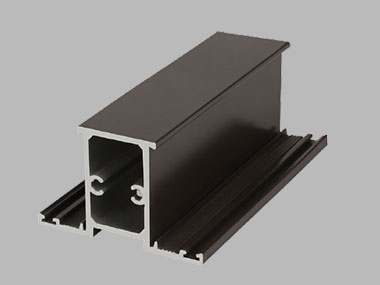
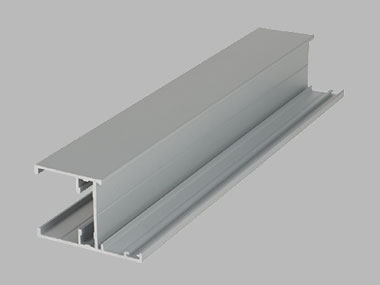
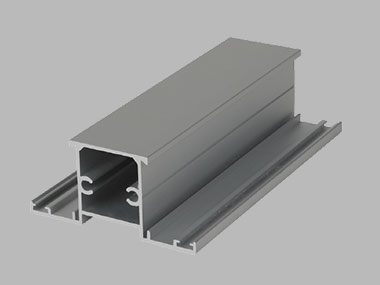
T-slot aluminum profiles are square or rectangular aluminum framing materials made by an extrusion process whose central feature is a “T” shaped groove structure on at least one side. This groove design provides the basis for modular connections compatible with all types of specialized fasteners, enabling flexible assembly without welding. As a “modular building system” in the industrial field, T-slot aluminum profiles can be designed as non-grooved, single-grooved or multi-grooved structures with a wide variety of cross-section sizes, depending on requirements. Although there is no uniform manufacturing standard in the industry for the time being, the mainstream specifications and groove types have formed a common specification to ensure the compatibility of different brands of fittings. Its greatest advantage is the ease of assembly - a solid structure can be built through connectors, completely eliminating the rigidity limitations of traditional welding and drilling, and providing unlimited possibilities for customized design.
It's a common misconception that aluminum can't meet structural strength requirements, but in reality, the strength-to-weight ratio of T-slot aluminum profiles far exceeds that of steel. Extruded from specialized aluminum alloys such as 6063-T5 and 6060-T6, it has a tensile strength of 36,000 psi, which is sufficient for most industrial structures. The combination of lightweight properties and high strength makes it the ideal framing material for both economy and practicality. Whether it's a small to medium-sized equipment frame or a large modular structure, it keeps weight in check while maintaining structural stability.
Structural durability: Durable Performance for Long-lasting Corrosion Protection
Unlike steel, which is prone to rust, aluminum profiles are naturally corrosion-resistant, and the anodized or powder-coated surface provides double protection against harsh environments without the need for primer or spray paint. This characteristic allows it to maintain its appearance in wet, outdoor and other scenarios, and its service life far exceeds that of traditional materials, which not only reduces the trouble of frequent maintenance, but also lowers the long-term cost of use, which is especially suitable for long-term exposure to complex environments of industrial equipment and building structures.
Modular design is the core advantage of T-slot aluminum profiles. With core components such as T-nuts, the profiles can be quickly disassembled, adjusted and repositioned to meet a wide range of needs, from temporary structures to permanent frames. Whether it's a simple workbench or a complex automated equipment frame, the profile can be flexibly combined to achieve a customized design and adapt to the functional requirements of different scenarios. This flexibility makes later modification and functional expansion easy, without the need to reconstruct the overall structure, significantly improving the adaptability and economy of the project.
Types and Applications of T-Slot Aluminum Profiles
20 Series: Lightweight Scene Preferred
As the smallest standard specification in the T-slot aluminum profile lineup, the 20 series features a compact 20×20mm outer dimension and a standard 6mm slot width. It boasts ultra-light weight, easy manual cutting and assembly, low material cost, and a neat minimalist appearance. Since it is engineered for low static load and space-limited installation environments, it excels in scenarios that prioritize portability and simple framing rather than heavy weight bearing.
DIY personal projects: custom small wall-mounted shelves, handmade craft work tables, household portable workbenches and hobby station setups.
Equipment protective structures: protective enclosures for precision testing electronics, outer housings and mounting brackets for small laboratory instruments.
Commercial retail display: compact countertop retail display stands, customizable modular product display props and exhibition small sample racks.
Light mechanical equipment: supporting frames for desktop FDM 3D printers, base and outer frames for small desktop CNC engraving and cutting machines.
Office & home space solutions: thin lightweight space partitions, simple movable storage racks and small indoor compartment frames.
30 Series: The Universal Choice for Medium Duty Applications
The 30 series, sized at 30×30mm with an 8mm standard slot width, is the most widely used all-around profile across the entire industry. It perfectly balances structural sturdiness, moderate weight and installation versatility, delivering far better rigidity than the 20 series while remaining cost-effective and easy to process. It can handle continuous medium dynamic load and frequent disassembly, making it the go-to option for most general industrial and commercial projects.
General industrial applications: medium-sized workshop workbenches, assembly line workstation supports, fixed and movable frames for small-to-medium automated production equipment.
Commercial event & retail use: modular trade fair exhibition booth frames, self-service kiosk and terminal housings, large supermarket and mall multi-layer retail shelving.
Office and interior construction: durable long-use office partition walls, multi-functional adjustable office desks, dedicated document and filing storage framework.
Robotics and automation: mounting frames for small industrial robots, support and side rail structures for automated material conveyor lines.
40 Series: Mainstay for Heavy-duty Scenarios
Regarded as the industry workhorse for heavy-duty applications, the 40 series comes in a standard 40×40mm dimension, with optional 8mm and 10mm slot widths to meet different accessory and load demands. With greatly enhanced wall thickness, structural rigidity and overall load capacity, it can withstand long-term heavy static pressure, vibration and mechanical impact, ideal for permanent or high-strength industrial builds.
Heavy industrial machinery: framework for large machine processing tools, factory heavy-duty fixed workbenches, inspection and operation work platforms.
Warehousing and logistics infrastructure: heavy-duty warehouse storage racking, industrial pallet rack systems, bulk material handling and sorting structures.
Building and interior engineering: modular permanent office building frames, mezzanine floor load-bearing support structures.
Large-scale event construction: complex large exhibition booth builds, large performance and event stage supporting frames.
Special transportation builds: caravan and recreational vehicle conversion frames, heavy-duty fixed transport support structures.
45 Series: Cost-effective Heavy-duty Solutions
Positioned between the 40 and 50 ultra-heavy grade, the 45 series is purpose-built to strike an optimal balance between outstanding heavy load performance and overall project budget control. It delivers upgraded weight-bearing performance without stepping up to the premium pricing of full ultra-heavy specifications, offering an economical upgrade option for users needing higher strength without over-engineering their build.
Large industrial load frames: large-scale equipment fixed support structures, stable base mounts for heavy industrial machinery.
Professional warehousing systems: heavy cargo turnover transport racks, industrial grade high-capacity heavy-duty storage cabinets.
Intelligent material handling: body and chassis frames for automated guided vehicles (AGVs), heavy-duty industrial conveyor system support frameworks.
50 Series: Specialized for Ultra-heavy-duty Scenes
As the top-tier ultra-heavy specification range, 50 series profiles feature a minimum 50×50mm dimension and a 10mm or wider reinforced slot width. With extra thick profile walls and optimized internal reinforcement design, this series is engineered for extreme heavy load, high pressure and long-term continuous high-intensity working conditions, suitable for large-scale permanent industrial infrastructure.
Oversized industrial manufacturing equipment: frame structure for heavy-duty industrial processing machinery, main load-bearing skeleton of full-scale automated production lines.
Civil and modular construction: main load-bearing frames for modular industrial buildings, large span industrial mezzanine and elevated platform structures.
Super heavy engineering equipment: large gantry crane main body frames, supporting structures for oversized heavy transportation machinery.
Accessories and Components
No T-slot aluminum profile system can achieve stable, safe and long-lasting operation without matching professional supporting accessories. Each fitting is designed to perfectly fit the profile groove structure, realizing fast assembly, firm locking, adjustable positioning and flexible later modification. The right accessory combination directly determines the overall structural stability, installation efficiency and service life of the whole build.
T-Nuts
Slide-in type: Installed directly by sliding in from the open end of the aluminum profile. It features a large contact surface with the profile groove for extremely tight, stable connection. Many models come with built-in spring positioning to prevent accidental sliding during assembly.
Roll-in type: Allows installation at any random position along the profile groove without needing access to the profile end. Built-in spring loaded design enables easy adjustment, repositioning and locking at any point.
Embedded type: Inserted laterally into the profile slot from the side, then locked in place via a simple rotating twist lock. It is perfectly suited for making modifications or adding new parts to an already fully assembled structure.
Hammer head nuts: Features a special widened hammer head profile for fast, tool-assisted quick installation. Ideal for structures that require frequent disassembly, adjustment and reconfiguration over time.
T-Bolts
Standard type: Classic T-shaped head that inserts directly into the profile slot, used for fastening connecting panels, joining two profile sections together and creating stable fixed connections.
Rhombic type: Can be inserted vertically into the slot then rotated to achieve complete locking. It offers simpler, faster installation and strong anti-loosening effect, and is compatible with nearly all mainstream T-slot groove sizes.
Other Key Accessories
Auxiliary fastening hardware: standard socket head cap screws, flat washers for pressure dispersion, hexagonal locking nuts.
Connection fittings: butt joint fasteners for vertical profile connection, end connection fasteners for straight length extension, hidden anchor fasteners for invisible internal connection.
Structural finishing parts: corner connection brackets for firm 90 degree right angle joints, end caps to seal and protect open profile ends, adjustable leveling foot cups for horizontal leveling and ground stability.
When selecting matching accessories, you need to make a comprehensive evaluation based on your project's actual load bearing requirements, on-site installation difficulty, and later maintenance & adjustment frequency. Only by matching the correct fittings to your specific usage scenario, can you guarantee the connection strength, structural safety and long term reliable performance of your entire aluminum profile system.
How to Connect T-Slot Aluminum Profiles
Preparation
The preparation work before connection has a direct impact on the connection quality, the core of which includes three links: accurate cutting, thread processing and drilling positioning. The cutting process requires the use of aluminum alloy special saw blades, with cutting fluid to reduce temperature, to avoid the profile and saw blade deformation due to overheating, to ensure that the kerf is flat and burr-free, which is the basis for the subsequent connection fit. Thread processing should match the tap according to the groove type, 6mm groove corresponds to M6 tap, 8mm/10mm groove corresponds to M8 tap, and the processing can be combined with special cutting paste to ensure smooth and complete threads; drilling and positioning is recommended to use drilling machines or guides, to ensure the precise alignment of the operation hole with the threaded holes, to avoid the connection failure due to the drilling offset, and at the same time, protect the surface of the profiles from damage.
Standard Joining Procedure
The standardized connection follows a standardized procedure to ensure a solid and precise connection. Firstly, threaded holes are machined at the end of the profile and drilled for the Allen wrench at the corresponding position, keeping the holes vertical and avoiding tilting; Subsequently, install flat washers and hexagonal screws, slide the head of the screws along the T-slot and adjust them until they are perfectly aligned with the threaded holes, at this time, it is necessary to ensure that the two sections of the profile fit tightly, without gaps or deviation. Tighten the screws with hexagonal wrench through the operation hole, and observe the profile alignment during the tightening process to avoid shifting due to uneven force; finally, check the connection accuracy and confirm that there is no loosening or shifting to complete the connection operation. For important structures, it is recommended to carry out the second fastening check to ensure the stability in long-term use.
Connection Precautions
Three key points to note in the connection process: First, to ensure that the connection surface is clean, remove dust, oil and other debris, to avoid affecting the degree of fit and connection strength; second, to control the tightening torque, conventional scenarios recommend 10-13Nm, excessive tightening may damage the profile threads or surface coatings, while insufficient torque will lead to connection loosening. Third, heavy-duty scenarios need to strengthen the connection, by increasing the number of fasteners, with reinforced corner yards and other ways to enhance the load-bearing capacity, to ensure that the structure is stable and reliable in long-term use. If used in humid or outdoor environments, it is recommended to use fasteners with stronger anti-corrosion properties to extend the service life of the connection parts.
Designing with T-Slot Aluminum Extrusions
Core Indexes for Profile Selection
The key to profile selection is to balance rigidity and lightweight, and the core reference indexes include moment of inertia, cross-sectional area, material properties and safety factor. The moment of inertia directly determines the profile's bending resistance, with higher values indicating greater structural rigidity, especially for long spans or heavy load scenarios. The cross-sectional area affects the overall weight, which needs to be optimized under the premise of guaranteeing strength to avoid excessive design leading to increased costs. In terms of materials, priority should be given to industrial-grade aluminum alloys such as 6063-T5 and 6060-T6, which are both high-strength and corrosion-resistant, and can be adapted to most industrial environments. The safety coefficient should be set according to the application scenarios, and it is recommended to be 4 to 5 times for regular scenarios, and should be increased appropriately in heavy-loaded or precision-equipment scenarios, so as to ensure the stability of the structure.
Node Connection Optimization Design
Node connection design directly affects the overall structural strength, and should prioritize the use of force-transferring nodes to avoid relying solely on friction connection. When the friction connection is unavoidable, the required quantity should be calculated according to the fastener bearing capacity, for example, the friction bearing capacity of each M8 fastener is about 2100N, and the required quantity can be deduced according to the actual load. It is recommended to adopt three-way node design, screwing the bolts directly into the end of the profile, so that the force is transmitted directly, improving the stability of the connection; heavy loads or precision scenes should be used with high-precision (HP) assembly plate, whose special design avoids angular deviation and slippage, ensures the connection accuracy, and reduces the potential risks of maintenance in the later stage.
High Strength System Application
For heavy-duty or precision applications, high-strength system accessories are required to enhance structural performance. We recommend the use of high-precision assembly plates with V-shaped tabs. This design eliminates the positioning errors caused by screw gaps in traditional assemblies, transforms friction bonding nodes into structural bonding nodes, and significantly improves anti-slip capability. When choosing accessories, it is necessary to distinguish between general purpose (GP) and high precision (HP). The general purpose type is suitable for conventional scenarios, balancing cost and performance, while the high precision type is for heavy-duty, precision positioning needs, which is slightly more costly but ensures the stability of the structure. In the design of long-span structures, it is necessary to calculate the flexural strength through Euler's critical load formula to verify the stability of the structure under pressure and avoid deformation or failure due to design defects.
Connection Precautions
Three key points to note in the connection process: First, to ensure that the connection surface is clean, remove dust, oil and other debris, to avoid affecting the degree of fit and connection strength; second, to control the tightening torque, conventional scenarios recommend 10-13Nm, excessive tightening may damage the profile threads or surface coatings, while insufficient torque will lead to connection loosening. Third, heavy-duty scenarios need to strengthen the connection, by increasing the number of fasteners, with reinforced corner yards and other ways to enhance the load-bearing capacity, to ensure that the structure is stable and reliable in long-term use. If used in humid or outdoor environments, it is recommended to use fasteners with stronger anti-corrosion properties to extend the service life of the connection parts.
Maintenance and Care
Regular Cleaning
Regular cleaning is the basis for maintaining the performance of the profiles and should be done in accordance with different stains. Daily cleaning is based on removing dust and debris. It is recommended to use a soft bristle brush to gently wipe the surface of the profile and the interior of the T-slot to avoid scratching the surface coating with a hard bristle brush. For stubborn stains, a mild detergent solution can be prepared, gently wiped with a soft cloth or sponge, and then rinsed thoroughly with water to avoid corrosion of the coating by detergent residues; avoid the use of corrosive detergents such as acidic, alkaline and other corrosive detergents during the cleaning process, which can damage the anodized or powder coating, affecting the anticorrosive properties and appearance.
Lubrication Maintenance
Appropriate lubrication can reduce the friction loss of fittings and profiles and prolong service life. Lubrication products should be selected silicone-based lubricants, this type of lubricant is non-corrosive, and is not easy to adsorb dust, can maintain long-term lubrication effect; avoid the use of petroleum-based lubricants, which are prone to adsorption of dust to form a sludge, but affects the fittings sliding. Lubrication needs to be a small amount of uniformly coated in the T-slot internal, covering the entire channel can be, without excessive; lubrication cycle can be adjusted according to the frequency of use, the conventional scene every 3-6 months to review, if found that the fittings sliding resistance increases, you need to supplement the lubrication in a timely manner, to ensure smooth operation.
Damage Inspection
Regular inspection can detect potential problems in time to avoid structural failure. Inspection focuses on the structure of the profile, the state of the T-slot and the fastening of the connectors: Profiles need to be observed for cracks, dents and other damage. Even small cracks may gradually expand, affecting structural strength, and need to be replaced in a timely manner after discovery. T-slot need to check whether the edge is smooth, there is no deformation, chipping, etc., damage will affect the fitting and sliding accessories; connectors need to check the fastening status one by one, if found loose need to be tightened in time, to avoid local loosening lead to the overall structure of uneven stress. For structures exposed to the outdoors for a long time, it is recommended to increase the frequency of inspections to cope with the wear and tear caused by environmental factors in a timely manner.
Comparing T-Slot Aluminum vs. Steel Framing
Weight
T-slot aluminum profiles are about one-third the weight of steel, with significant lightweight advantages that not only reduce handling and installation costs, but also reduce the overall structural load; whereas steel is heavier and requires more manpower and equipment support during transportation and installation, increasing construction costs.
Connection Method
T-channel aluminum profiles adopt modular design, no welding, only need simple hand tools to complete the assembly, convenient operation and high efficiency; steel frames require professional welding technology, processing cycle is long, and welding quality directly affects the stability of the structure, the construction of the skills of the construction staff requires a higher.
Total Cost
Aluminum raw material prices are slightly higher than steel, but steel frames require additional cutting, drilling, welding and other processing procedures, and later require frequent maintenance, comprehensive labor and maintenance costs, T-slot aluminum profiles are more economical; steel is cheaper raw materials, but the high cost of processing and maintenance offset the initial advantage.
Strength
Steel has a higher tensile strength of up to 50,000 psi, but this strength advantage comes at the cost of increased weight. T-slot aluminum profiles have nearly twice the strength-to-weight ratio of steel, providing superior load-bearing capacity for the same weight, and are well suited for most industrial applications.
Processing Requirements
T-slot aluminum profiles can be assembled directly from the factory without additional processing, which is suitable for rapid construction requirements. Steel requires complex pre-processing, including precision cutting, drilling, positioning and welding, which is a cumbersome and time-consuming process.
Anti-corrosion
Aluminum profiles are naturally anti-corrosive, and the surface coating further enhances the protective effect to withstand humidity, outdoor and other harsh environments without additional treatment; steel is susceptible to rust and corrosion, and must be treated with multiple protective treatments, such as primer + topcoat, and requires regular painting and maintenance at a later stage, which will affect the service life of the product.
Flexibility
T-slot aluminum profiles can be repeatedly disassembled, adjusted and reorganized to adapt to the functional changes of different scenarios, with low modification costs; steel frames, once welded into shape, are difficult to modify, with poor flexibility, and need to be adjusted by re-cutting and welding, with higher costs.
Thermal Conductivity and Electrical Conductivity
Aluminum profiles have excellent performance and are suitable for special scenarios that require heat dissipation or electrical conductivity; steel's thermal conductivity and electrical conductivity are general and difficult to meet these special needs.
Why Choose Our T-slot Profiles
Superior Quality and Precision Craftsmanship
Retop T-slot aluminum profiles are precision extruded from 6063-T5 industrial grade aluminum alloy, with strict control of production tolerances and high standard anodic oxidation surface treatment, combining anticorrosion and wear-resistant performance with dimensional consistency, in line with international norms and ensuring perfect compatibility with mainstream accessories.
Full Scenario Product Coverage
Retop covers 20-50 series of standard profiles, and also supports customization of special sizes and grooves, providing one-stop supply of a full range of connectors and structural components, from lightweight DIY to ultra-heavy-duty industrial needs, all of which can be adapted to meet the needs of the industry, and can be used as needed.
Professional Services and Global Support
Retop provides free technical consultation and design services, fast delivery of core specifications from stock, efficient delivery of customized products with optimized cycle time, global logistics network and professional after-sales team to provide stable support for the whole process of the project.
Conclusion
With the core advantages of light weight, high strength and flexible assembly, T-slot aluminum profiles are the ideal framing solutions for industrial and commercial scenarios. From selection and design to installation and maintenance, scientific application methods can maximize its performance value, while our full range of products and professional services can provide stable and reliable guarantee for the project.
Henan Retop Industrial Co., Ltd. Will Be There Whenever Wherever Whatever You Need