Fire-Resistant Aluminum Alloy Windows: Key Features, Selection and Benefits
In the age of heightened building safety awareness, fire-resistant aluminum alloy windows are a crucial construction element. Combining aluminum's lightweight, corrosion-resistant, and aesthetic advantages with fire-retardant tech, these windows withstand high heat and curb flame and smoke spread. Ideal for architects, contractors, and property owners, this guide details their benefits, selection, types, maintenance, and costs for enhanced fire safety.
What Are Fire-Resistant Aluminum Alloy Windows
When you're looking for fire-resistant windows, you need more than just a sturdy frame. Fire-rated windows are designed with special materials and construction to slow down the spread of fire, and their frames, glazing, and filler materials need to work in tandem. Aluminum frames are inherently non-combustible, but the glazing and seals must be heat-resistant. Qualified fire rated windows need to pass stringent tests to stop flames and smoke within a specified period of time, buying valuable time for evacuation and property protection.
Note: The fire performance of a fire rated window depends on all components, such as the frame and glass, meeting the corresponding fire rating. Be sure to check the product labeling when purchasing.
Benefits of Fire-Resistant Aluminum Alloy Windows
Excellent Fire Protection
Fire-Resistant Aluminum Alloy Windows can effectively stop the rapid spread of fire. The materials used have excellent heat and fire resistance, which can slow down the spread of flames and smoke, providing more time for the safe evacuation of people. These windows act as a firewall, preventing the rapid spread of fire within the building and adhering to strict safety standards to ensure critical protection in the event of a fire, making them a smart choice for enhancing fire safety in buildings.
Durable
Fireproof aluminum alloy windows can cope with harsh environments and withstand strong winds, rainfall and other weather erosion without deformation or damage, providing reliable security for the building. The material is hard, not easy to wear and tear, long-term use can still maintain a solid structure, and has a good ability to prevent rust and corrosion, even in harsh environments can also maintain their own strength, is both strong and reliable quality window.
Low Maintenance Cost
Fireproof aluminum alloy windows do not require frequent maintenance to maintain good condition and performance, because the material is not easy to rust, fade, and do not need to be painted frequently. The cleaning process is simple, usually with soap and water to remove dust and dirt; unlike other materials, aluminum alloy is not easy to deformation and cracking, low frequency of repair and replacement, can save a lot of time and maintenance costs, so that the building appearance is always kept neat and clean.
Modern Appearance
Fireproof aluminum alloy windows add fresh and clean visual effects to all kinds of buildings, and the slim frame and smooth surface present a simple and fashionable style, which is suitable for a variety of design schemes. Its material characteristics allow more natural light to enter the room, making the space look bright and open, and easy to shape, can be customized according to the architectural style of different sizes and shapes, so that homes and offices are more modern and attractive.
Energy Saving and Environmental Protection
Fireproof aluminum alloy windows can effectively maintain a stable indoor temperature, reduce heat transfer in summer and retain indoor warmth in winter, reducing the frequency of use of air conditioning and heating equipment, thus saving energy and reducing expenses. The windows usually adopt special glass and sealing design to prevent air leakage and maintain a comfortable indoor environment throughout the year, thus realizing energy-saving effect without additional operation.
Sound Insulation and Noise Reduction
Fire-rated aluminum alloy windows can effectively block outside noise, including traffic sounds, human voices and other daily noises, creating a quiet and comfortable environment indoors. The use of thick glass and tight sealing structure to block the spread of sound helps people concentrate on their work or relax indoors, creating a peaceful indoor space even in busy areas.
Enhance Property Value
Installing fire-rated aluminum windows can enhance the attractiveness of a property to home buyers, highlighting the advantages of a well-maintained home upgraded with high-quality materials, and conveying the value of both security and style. These windows are a smart investment to increase the value of a property as they are made of good materials and are functional, making the property more competitive in the marketplace and often selling faster and at a higher price.
Home Security
Fire rated aluminum windows add an extra layer of security to your home by resisting heat and flames, slowing the spread of fire and buying more time for family members to evacuate. At the same time, they can block the intrusion of smoke, guaranteeing breathing safety in emergencies, making the living environment more secure and providing critical protection for loved ones when danger occurs.
Long Service Life
Fireproof aluminum alloy window material is not easy to bend, crack or damage, long-term use can still maintain good performance, can withstand high temperature, rain, cold and other weather changes without losing shape and strength, maintenance and replacement needs less. The surface coating can effectively prevent rust and abrasion, and maintain a beautiful appearance for a long time, providing users with long-lasting peace of mind.
Key Factors to Consider When Choosing Fire-Resistant Aluminum Windows
Fire Rating Aalysis (industry standard system)
When choosing fire-rated windows, you will come across different fire ratings that represent how long the window will resist fire. Common fire ratings include 30-minute, 60-minute, and 90-minute and above: 30-minute for low-risk areas such as storage rooms and corridors; 60-minute for commercial spaces that require increased fire protection; and 90-minute and above for high-risk areas such as stairwells and elevator shafts. The higher the level, the longer the time available for evacuation and rescue in a fire.
In addition, fire windows need to comply with the relevant standards, the main development organizations and corresponding standards are as follows: National Fire Protection Association (NFPA) of the United States NFPA 80 standard, the core focus on fire doors and windows, fire protection and fire resistance; Underwriters Laboratories (UL) UL 263 standard, focusing on building structure and material fire testing; American Society for Testing and Materials (ASTM) ASTM E119 standard, focusing on regulating fire resistance. UL 263 standard, focusing on building structure and material fire test; ASTM's ASTM E119 standard, focusing on fire test and temperature rise limit.
Certification and Testing
In order to ensure that the fire-resistant windows work in real fires, they need to undergo rigorous testing by certified laboratories. The tests are conducted according to NFPA 257 and UL 9 standards, including two core items: fire resistance test and water impact test. Indoor fire windows are rated for 20-45 minutes, while outdoor fire windows are rated for up to 90 minutes. When purchasing, it is important to choose certified fireproof windows to ensure the safety of use and compliance with building codes.
Aluminum Alloy Frame Qptimization
The thickness and alloy of the frame are critical to the performance of fire rated windows.
Thicker frames can maintain the shape stability for a longer time under high temperature environment; the alloy material is also critical, some alloys (e.g. 6013-T6) will lose their strength above 200℃, and the structural strength will be greatly reduced at 400℃, which will be easy to fail in a fire. Therefore, it is necessary to choose the frame thickness and alloy material that are suitable for high temperature environment when purchasing.
Tips: Consult the supplier about the alloy material and frame thickness of the fireproof window to ensure that the product has excellent fireproof performance.
Fireproof Filling Materials and Seals
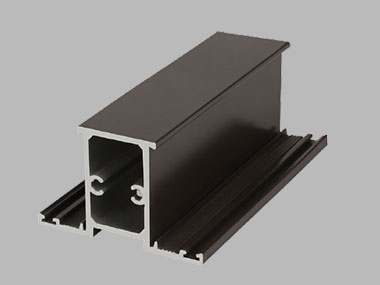
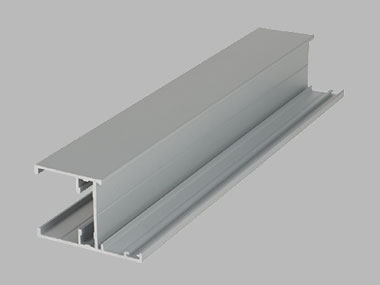
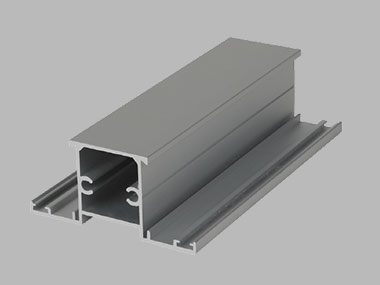
Aluminum alloy frame alone can not completely block the fire, the manufacturer will usually fill the frame with fireproof materials or cement core, these materials can effectively block the heat and flame penetration; glass and frame at the connection of special seals will expand when heated to close the gaps, preventing smoke and flame intrusion. When choosing the product, you need to confirm whether the product is equipped with these key components, of which the fireproof filling material can slow down the heat conduction, intumescent seals can be expanded by heat to block smoke and flame, cement core can enhance the structural strength of the frame, and all three together to ensure that the window to play an effective role as a fire barrier.
Matching Fireproof Glass
The complete fireproof performance cannot be separated from the appropriate fireproof glass, which needs to work with the aluminum alloy frame to block the flame and smoke. Fireproof glass is mainly divided into two categories: one is fire protection glass, can block the flame and smoke in a certain period of time; the other is fireproof insulation glass, in addition to blocking the flame and smoke, but also has the function of blocking the heat transfer to protect the other side of the personnel and goods safety.
High-quality fire-resistant glass is typically rated for 45-120 minutes, and common types such as Pilkington Pyrostop® glass, with a clear, intumescent interlayer, are certified to UL 263/ASTM E119 standards for 60-120 minute fire ratings and carry Underwriters Laboratories (UL) certification labels.
When selecting, make sure the fire-resistant glass matches the fire rating of the frame. Some fire-resistant windows can support a larger glass area without lowering the fire rating, which can be up to 120 minutes, and can be installed in finished openings with a wide field of view, providing more flexibility in design while ensuring building safety.
Assembly and Installation
Even with high quality materials, improper assembly and installation can affect the performance of fire rated windows. Installers need to strictly follow the manufacturer's instructions and use matching hardware to ensure that all components such as the frame, fire-resistant glass, filler material and seals are tightly fitted. Poor gaps or seals can lead to smoke and flame ingress, reducing the safety of the window.Note: Always hire a trained professional to install fire-rated windows to ensure that the product complies with safety regulations and acts as an effective fire barrier.
Different Types of Fire-Resistant Aluminum Windows
Different Types of Fire-Resistant Aluminum Windows are available in a variety of styles to meet different architectural designs and functional requirements, all of which are designed to ensure safety and practicality at the same time:Fire-Resistant Aluminum Windows have a variety of styles to meet the differences in design aesthetics and functional needs of various buildings, and each product takes safety and protection as the core element, while considering the practicality and scene suitability in depth.
Fixed Windows
Fixed window adopts non-openable design structure, which is especially suitable for those special areas that do not need daily ventilation but require very high fire performance. Its advantage lies in its ability to maximize indoor light transmission, so that the natural light fully sprinkled into the space, while always maintaining excellent fire performance, commonly used in commercial complexes, office buildings and other public buildings, as well as high-risk residential areas with stringent fire safety requirements.
Casement Windows
Casement windows are hinged on the side as a way to open, and can be flexibly opened outward, this design can bring comprehensive and efficient ventilation for the space. During the design and manufacturing process, fire rating standards are strictly followed, and careful consideration is given to the selection of materials and structural design to ensure that good ventilation is achieved while building a strong safety defense for the building space, which is ideal for places where fire protection and air circulation need to be guaranteed at the same time.
Single-hung Windows
The uniqueness of the single-hung window is that the lower fan can be moved flexibly while the upper fan remains fixed, and the ventilation function is realized through the lower area. This design skillfully balances the need for ventilation and safety protection, and because of its simplicity and practicality, it has become a popular choice for residential buildings, which can easily meet the daily use of partially opened windows.
Horizontal Sliding Windows
Horizontal sliding window sashes can be slid horizontally from side to side, with a smooth and fluid operation process, and a very modern design, adding a fashionable flavor to the building.
This type of window not only has excellent fire safety performance, but also with the pursuit of simple, modern style of the building is perfectly adapted to both commercial buildings and modern residential, can show its unique charm.
Top-hung Windows
Upper-hung windows are hinged at the top and open outward from the bottom, which gives them unique ventilation advantages, even in light rainy weather, they can maintain moderate ventilation and effectively avoid rainwater backflow. With their flexible functionality, top-hung windows are widely used in many types of buildings such as houses, schools, hospitals, etc., providing comfortable and safe ventilation solutions for different spaces.
All types of windows can be manufactured with corresponding fire ratings according to demand, ensuring safety without compromising design and function. When choosing a window, you need to take into account the layout of the building, ventilation needs and aesthetic preferences.
Maintenance Tips for Long-Term Performance
Cleaning and maintenance of fire rated windows require attention to the following points:
During the installation process, make sure the cement is filled evenly and densely, so that the window frame fits seamlessly with the wall, and at the same time, adjust the precision of the fit of each part of the window frame accurately, so as to prevent deformation caused by improper installation for long-term use.
When cleaning the surface of the window frame with neutral cleaner or wet cloth, it should be wiped clean in time to avoid the residue of cleaner eroding the decorative layer on the surface, which may cause color fading or peeling phenomenon.
Daily cleaning, it is recommended to use a soft cotton cloth to gently wipe the surface; in case of stubborn stains, you can use special cleaners, toothpaste and other mild products to assist in processing. After cleaning, be sure to rinse with water and wipe dry to prevent water residue. Prohibit the use of coins and other sharp hard objects to avoid damage to the surface coating.
If you find that the window closure resistance increases, you can apply the appropriate amount of lubricant to the movable latch part to ensure smooth opening and closing.
In daily use, avoid rubbing the corners of the window frequently to prevent the surface layer from wearing off, which will affect the beauty and protection performance.
Cost Factors and Budget Planning
Fire Rating
Fire rating is a key factor affecting the cost, representing the duration of the window against fire (30 minutes - 120 minutes), the higher the rating, the higher the cost. The higher the rating, the higher the cost. For example, a 60-minute rated window costs more than a 30-minute rated window, and a 120-minute rated commercial window is more expensive because it is used in high-risk areas; and if you choose a glazed commercial window, you will need to install additional fire-resistant glazing, which will further increase the cost.
Material Used
The type of material directly determines the cost. Aluminum alloy is a popular choice because it is strong and lightweight, but its surface treatment and style design will affect the price; commercial fire rated windows with glass require additional investment in fire rated glass; and the choice of fire rated seals also affects the cost, as high-quality seals can enhance the safety, but the price is relatively high.
Customization
The cost is related to the installation size and location, and the price of off-the-shelf standard size fireproof windows is lower than customized products. Customized products require an exclusive production process, which is costly; commercial fire rated windows with glass are equipped with automatic control mechanisms, which can better protect assets but increase costs; customized designs can enhance the aesthetics of the building, but also increase the overall investment.
Safety Requirements
Fire-rated aluminum windows need to meet strict safety standards, the cost of compliant products is higher than ordinary windows due to the need to meet code requirements; commercial fire-rated windows with glass need to go through a series of tests and certifications, which further increases the cost. The cost of commercial fire-rated windows with glass is further increased by a series of tests and certifications. The need to ensure that the product has all the necessary safety approvals to avoid legal risks is also an important factor in the increased cost.
Common Fire-Rated Aluminum Window Questions
Can existing aluminum windows be retrofitted with fire-rated windows
Fire rated windows are complete integrated systems. Fire-rated windows are fully integrated systems where the frame, glazing, seals and fixings are tested and verified as a whole. Replacing the fire-resistant glass only for ordinary aluminum alloy windows cannot achieve fire-resistant effect, the frame of fire-resistant window needs to be specially designed with built-in fire-resistant core and intumescent seals. The retrofit needs to replace the whole certified fireproof window system and be installed by professional personnel.
Which one is more suitable for the fire rating requirement, steel or aluminum alloy
Steel has a much higher melting point than aluminum alloy and naturally has better heat resistance, but modern engineered aluminum alloys can achieve fire ratings of 90 minutes and above through technological improvements, which is comparable to steel and has unique advantages. Aluminum alloys are clean, rust-resistant, and perfectly suited to the modern storefront systems commonly found in Bay Area commercial buildings. The choice between the two depends more on aesthetic preference and system compatibility than on fire performance alone.
Do aluminum windows burn
Aluminum alloy itself does not burn and does not become a fuel for fires, making it a non-combustible material, unlike wood frames that can contribute to the spread of fire. However, the melting point of aluminum alloy is relatively low, although it will not burn in a fire, it may lose its structural strength and fail due to high temperature, resulting in the glass falling off and forming a channel for the spread of flame, smoke and heat.
Conclusion
Fire-resistant aluminum alloy windows combine safety, durability, and efficiency, making them ideal for residential and commercial buildings. They block fire and smoke, need little maintenance, and last long. When selecting them, check fire ratings, certifications, materials, and installation. As safety standards rise, these windows are crucial for sustainable design, protecting lives and property while enhancing building value. Choosing the right ones ensures a balance of safety, practicality, and cost in construction.
Henan Retop Industrial Co., Ltd. Will Be There Whenever Wherever Whatever You Need
You Are Welcome to : phone call, Message, Wechat, Email& Seaching us, etc.
Email:
sales@retop-industry.com
Whatsapp/Phone:
0086-15537183797