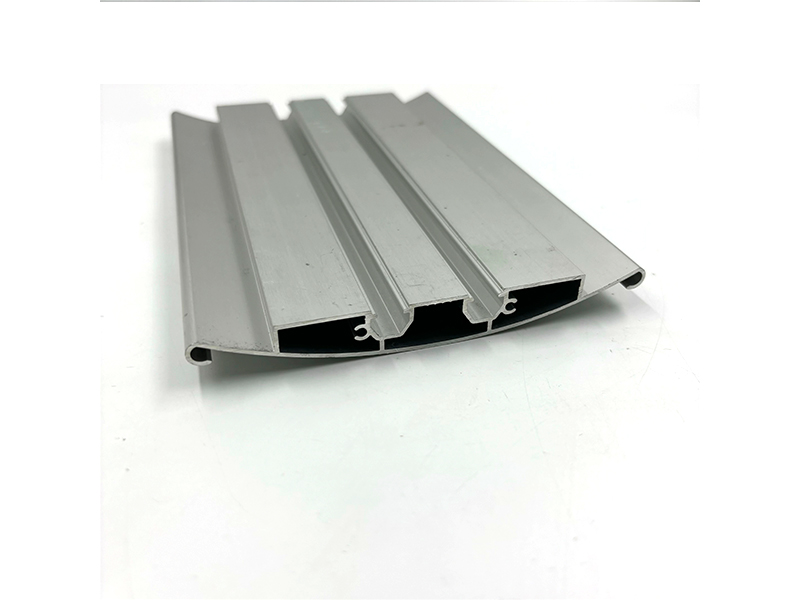
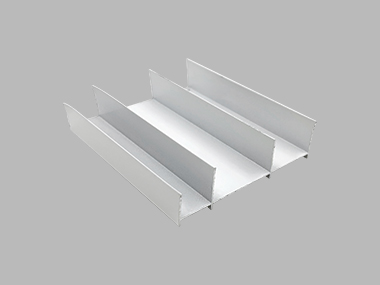
When selecting LED aluminum profiles, cost-effectiveness is always an important consideration. A wise choice balances quality, performance, durability and practical value to ensure your lighting project achieves the best long-term results.
Why Does the LED Strip Need an Aluminum Profile?
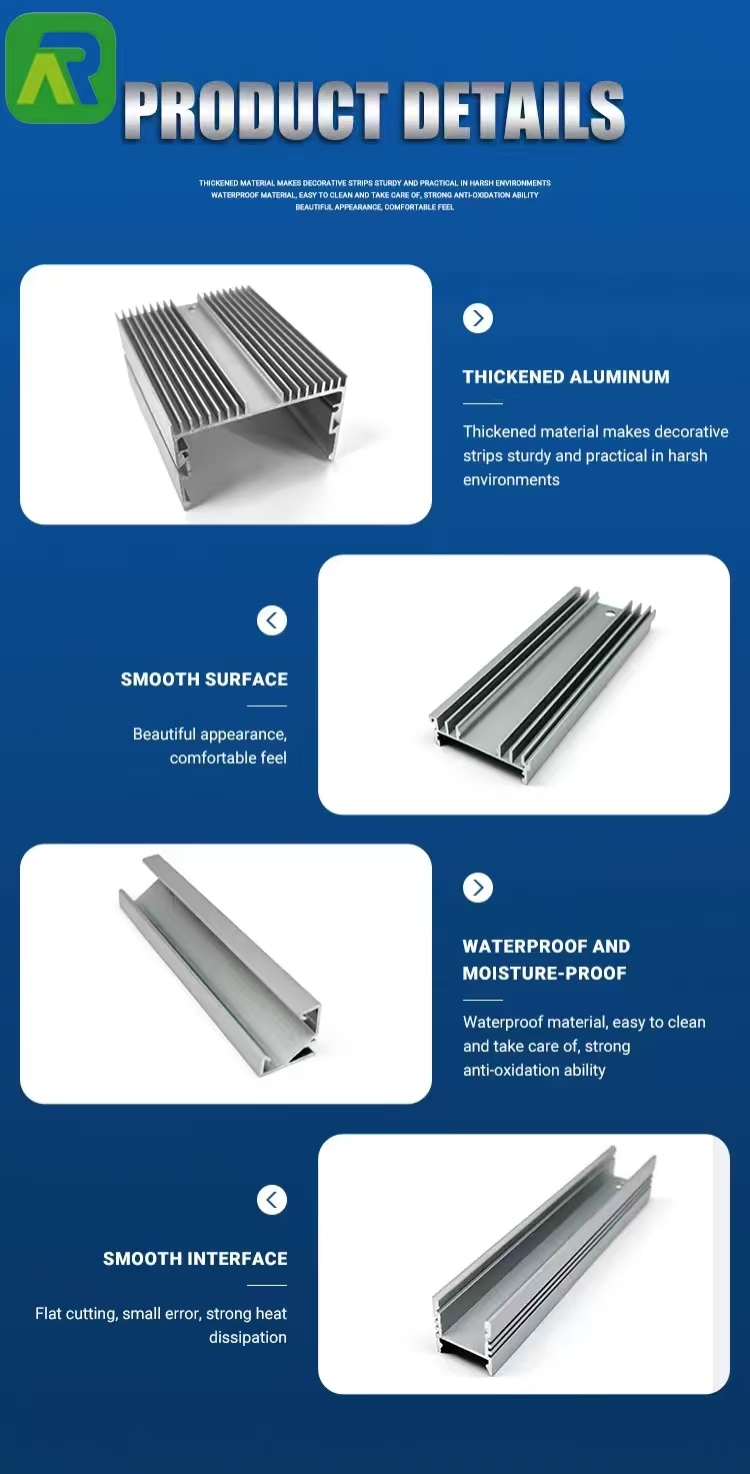 Using LED strips on their own may seem simple (just peel off the backing and stick them down), but pairing them with an aluminum profile is crucial for achieving professional-grade lighting effects and preventing future malfunctions. Based on industry practice, the core value of LED aluminum profiles lies in five key aspects.
Superior Heat Dissipation Extends Strip Lifespan
LED strips generate heat during operation. Although they are more efficient than traditional lighting fixtures, heat buildup can severely impact the lifespan of LED chips, as well as their brightness output and color temperature stability. As an excellent thermal conductor, aluminum transforms into a “heat sink” when the strip is installed within an aluminum profile. Through its larger surface area, the profile rapidly dissipates heat into the surrounding air, maintaining the optimal operating temperature for the LED chips.
Industry data shows that LED strip lights paired with aluminum profiles can extend their lifespan by 30%–50%. This setup also prevents issues such as “lumen depreciation” and “color temperature drift” caused by overheating, ensuring long-term, stable lighting performance.
Physical Protection: Resisting Environmental Damage
The diodes, resistors, and circuit boards of LED strip lights are exposed and highly vulnerable. Aluminum profiles (especially those paired with diffuser covers) form an effective protective barrier
Dust and Moisture Protection: Prevents dust accumulation, accidental water splashes, and moisture damage (specific protection level depends on the profile’s IP rating), making them particularly suitable for kitchens, bathrooms, workshops, or outdoor settings;
Protection Against Physical Damage: The rigid housing withstands impacts and vibrations during installation and cleaning, prevents circuit damage from daily contact, and reduces the risk of on-site malfunctions.
Aesthetic Upgrade: Creating a Professional Look
Exposed LED strips reveal individual LED dots, appearing cluttered and cheap, while aluminum profiles perfectly solve this issue:
Concealed Integration: Cleverly hides the light strip and connection ports, allowing the lighting to seamlessly blend into architecture, furniture, or display settings, elevating it from an “afterthought” to a “professional design element”;
Softened Light: Profiles paired with diffuser covers eliminate the “spotty” light from individual LEDs, producing uniform, soft illumination that reduces glare and creates a more comfortable visual experience.
Easy Installation: Secure and Stable
The adhesive backing on LED strip lights is prone to peeling off when exposed to high temperatures, rough surfaces, or during inverted installation. Aluminum profiles offer a more reliable mounting solution:
Multiple Installation Methods: Can be secured directly via clips or screws, or installed using recessed or suspended designs, ensuring precise positioning without shifting;
Adaptability to Complex Scenarios: Profiles of various shapes meet diverse installation needs—such as walls, ceilings, corners, and cabinet interiors—making complex lighting designs easy to implement.
Light Optimization: Enhancing Lighting Quality
Beyond aesthetics, aluminum profiles actively optimize lighting effects:
Reduced Glare and Hotspots: Diffusers ensure even light distribution, eliminating the harsh glare caused by individual LEDs for a more comfortable lighting experience;
Directional light guidance: Some profiles, precision-machined via CNC, feature internal angle designs that enable directional light projection, meeting personalized needs for accent lighting or ambient lighting.
Understanding the MaterialsBehind LED Aluminum Profiles
A complete LED aluminum profile is not a single piece of aluminum but a system composed of multiple functional components, each serving a specific purpose:
Heat Sink
As the core component of an LED lighting system, aluminum profiles, with their excellent thermal conductivity, serve as the key carrier for heat dissipation solutions. Their heat dissipation efficiency not only directly affects the operational stability of the light strip but is also a core factor determining the product’s lifespan.
Diffuser
During the editing process, I will add details regarding material properties, use technical terminology to enhance precision, and optimize sentence structure to make the text clearer and more fluent.
It is available in two materials: polymethyl methacrylate (PMMA, commonly known as acrylic) and polycarbonate (PC). They utilize the principle of diffuse reflection to soften glaring direct light and employ frosted or matte finishes to conceal the outlines of the LED chips. Additionally, they feature an IP65 or higher protection rating, effectively resisting dust ingress and liquid splashes, providing dual protection for the light strip through both physical shielding and optical optimization.
End Caps
End caps serve as essential accessories for LED aluminum profiles and are installed at both ends of the profile. In terms of material, they come in two types: plastic and aluminum. Functionally, models with cable entry holes facilitate quick wiring of the light strip, while hole-free versions prioritize sealing and protection, effectively blocking the intrusion of dust and moisture.
Cable and Clips
Suspension Accessories: Premium 304 stainless steel suspension cables, specifically designed for suspended installations, offer exceptional load-bearing capacity. With special anti-corrosion treatment, they withstand humid environments and ensure long-lasting durability.
Mounting Clips: Suitable for various flat surfaces such as walls and ceilings, these clips feature a patented interlocking design. Installation requires only a simple press to achieve a secure hold, saving time and effort.
Other Accessories: Includes suspension brackets, swivel brackets, precision connectors, and other components. Through high-precision interface design, these components enable seamless profile splicing and flexible angle adjustment from 0 to 180°, meeting diverse installation needs while significantly enhancing mounting stability and structural strength.
Types of LED Aluminum Profiles
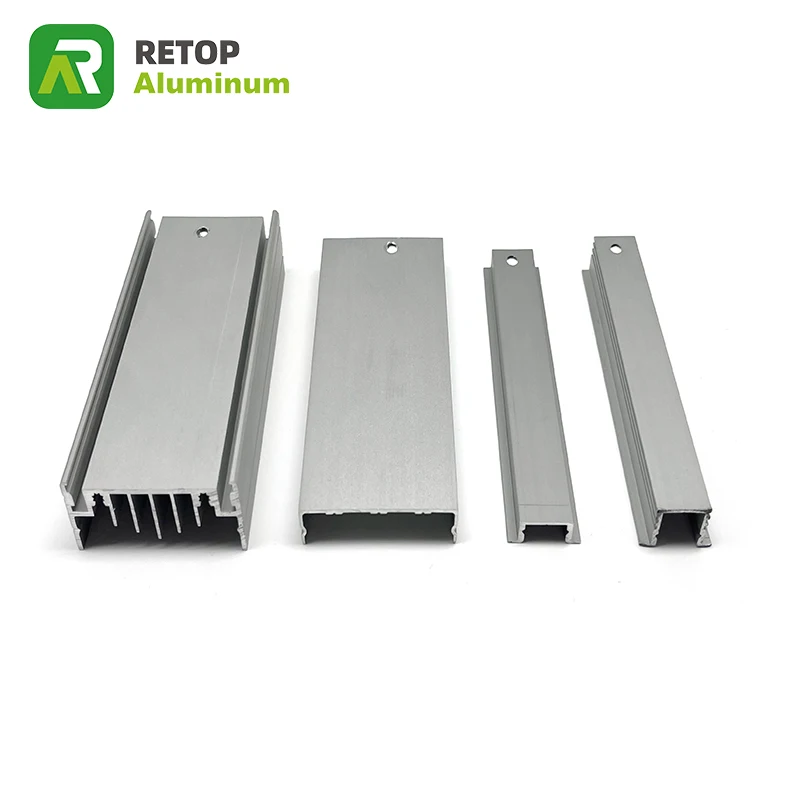 Based on installation methods and application scenarios, LED aluminum profiles are primarily divided into 8 major types, each with its own suitable scenarios and core advantages:
Plaster-In LED Profile
Design Features: Utilizes an embedded installation process, pre-embedded and secured during the base construction phase of walls or ceilings. Once the decorative surface is completed, the fixture itself is completely concealed, presenting only a linear light strip effect
Key Advantages: Innovatively interprets the spatial aesthetic concept of “light visible, fixture invisible.” Creates a minimalist, modern atmosphere through a design without a visible main light source, allowing light to naturally integrate into the space with a floating effect;
Suitable Scenarios: Ideal for public areas in homes such as living rooms and hallways, as well as high-end venues like art galleries and commercial exhibition halls, meeting the demand for a pure lighting environment and visual invisibility;
Specifications: Profile widths range from 10–30 mm; narrow-profile models (10–15 mm) are suitable for low-intensity ambient lighting, while wide-profile models (20–30 mm) can accommodate high-power LED strips for accent lighting.
Drywall LED Profile
Design Features: Innovative drywall-embedded design achieves seamless integration through precise wall grooving, blending seamlessly with the wall surface upon installation to create a minimalist aesthetic space;
Core Value: Deeply integrated with drywall construction, it perfectly merges the lighting system with the wall structure to present a clean, fluid, and unified visual effect;
Application Scenarios: Suitable for various scenarios such as setting the mood on residential living room accent walls or creating layered lighting effects on office ceilings, precisely meeting accent lighting needs;
Specifications: Available in multiple width options ranging from 15mm to 40mm, with depth specifications highly compatible with LED strip power ratings. Greater depth accommodates higher-power LED strips, delivering more dynamic lighting effects.
Recessed LED Profile
Design Features: Features a recessed installation structure that seamlessly integrates with ceilings, floors, or furniture surfaces without requiring full concealment. The profile sits precisely flush with the installation surface, leaving only a minimal edge line to create a minimalist visual effect.
Core Advantages: Compared to traditional plaster recessed solutions, the installation process is simplified and requires less technical expertise. The finished product presents a seamless, flush appearance, enhancing both functionality and aesthetics.
Suitable Applications: Ideal for diverse scenarios such as under-cabinet lighting in kitchens, ambient lighting around bathroom mirrors, and floor guidance lighting in hallways.
Specifications: Profile widths range from 10mm to 50mm. The slim version is suitable for creating soft, discreet lighting environments, while the wide version can accommodate multiple light strips to meet high-brightness lighting requirements.
Surface Mount LED Profile
Design Features: Features a classic U-shaped open structure that supports direct surface mounting, eliminating the need for pre-cut grooves. This significantly simplifies the installation process and boosts construction efficiency.
Core Value: Low installation threshold, catering to both the personalized needs of DIY enthusiasts and professional engineering applications; combines functionality with aesthetic appeal, achieving a perfect balance between practicality and decoration.
Suitable Applications: Widely used for under-cabinet lighting, accent lighting in display cases, and general ceiling lighting, effortlessly creating a comfortable lighting environment.
Specifications: Available in multiple widths ranging from 7mm to 25mm; smaller models offer high concealment, ideal for spaces pursuing a minimalist style; larger models feature excellent heat dissipation and are compatible with high-power LED strips, ensuring stable, long-term operation.
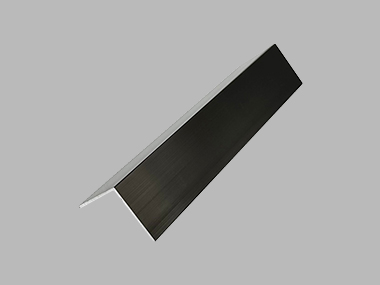
Corner LED Profile
Design Structure: Features classic L-shaped or V-shaped geometric designs that precisely fit 90° corner joints where two planes meet, enabling seamless installation;
Core Value: Effectively eliminates lighting blind spots in corners, ensuring safe passage while enhancing decorative aesthetics through layered lighting effects;
Application Scenarios: Suitable for anti-slip warning lighting on stair tread edges, display lighting in cabinet corners, and protective lighting for sharp edges on furniture;
Specifications: Available in 10–20 mm widths; the 10 mm ultra-thin model creates a delicate and soft ambient lighting effect, while the 20 mm wide-body model delivers stronger light coverage and brightness.
Suspended LED Profile
Design Highlights: Features an innovative suspension cord structure that creates a floating connection between the fixture and the ceiling, producing a visually light and dynamic “suspended” artistic effect.
Core Advantages: Boasts a highly modern, minimalist aesthetic; supports standalone installation or creative multi-unit combinations; allows for customizable arrangements to meet diverse lighting design needs.
Suitable Scenarios: Particularly suitable for open commercial environments such as office spaces with high ceilings, dining establishments requiring strong ambiance, and retail stores seeking a sense of spatial openness.
Specifications: Standard lengths range from 1m to 3m, with flexible customization available; compatible with wide-format LED strips, with a single unit covering 8–15㎡, meeting the lighting needs of large-scale spaces.
Bendable LED Profile
Design Features: Features a flexible structural design with exceptional bending performance, allowing it to conform closely to curves, corners, and irregular surfaces for free-form shaping
Key Advantages: Breaks the limitations of traditional linear installation, offering unlimited possibilities for creative lighting design and achieving personalized, artistic lighting effects
Applications: Widely used in art installations, cylindrical decoration and beautification, and highlighting curved architectural details
Specifications: Widths range from 5mm to 15mm; must be used with flexible LED strips to ensure uniform and consistent light distribution during bending
Tile-In LED Profile
Design Features: Utilizes an embedded installation process to sit precisely flush with the tile surface; features an integrated structural design customized for humid environments;
Key Advantages: Offers professional IP67-rated waterproofing; achieves dual functions of waterproofing and decoration through seamless integration, significantly enhancing the space’s sophistication;
Suitable Applications: Ideal for bathroom wall decoration, kitchen splashback areas, and tiled floors—environments with frequent water exposure;
Specifications: Available in multiple standard widths ranging from 10mm to 20mm; must be paired with waterproof LED strips of the same rating to form a complete wet-area lighting system.
How to Choose t LED Aluminum Profile Step by Step
With a wide variety of types and specifications available, follow these steps to ensure the perfect match for your needs:
Step 1: Determine the Lighting Purpose
Different lighting needs require different profile selections:
Functional Lighting Scenarios (kitchen countertops, reading corners, etc.): We recommend selecting aluminum profiles compatible with high-power light strips, prioritizing their efficient heat dissipation performance to ensure stable, long-term operation;
Decorative Lighting Scenarios (mood lighting, accent lighting, etc.): Prioritize profiles equipped with diffuser covers, which utilize the principle of diffuse reflection to achieve a soft lighting effect, balancing visual comfort with spatial aesthetics.
Step 2: Determine Installation Method and Select Profile Type
Choose based on the installation scenario and construction conditions:
Completed Renovation Scenarios: When walls are already finished and grooving is not possible, surface-mounted profiles—with their no-drilling, easy-installation features—allow for quick lighting setup while balancing aesthetics and convenience;
Scenarios where renovation is in progress: If the space is currently under renovation and you seek a “hidden” lighting effect, recessed plaster profiles can blend seamlessly with the wall surface, while drywall profiles are suited for modern, minimalist design needs; both create a cohesive visual appearance;
Special Structural Locations: For special areas such as wall corners and transitions, corner profiles feature customized curved designs to achieve 360° coverage with no blind spots, illuminating every corner of the space;
High-Ceilinged Areas: In high-ceilinged spaces such as living rooms and lobbies, suspended profiles can be hung vertically or in creative configurations to meet large-area lighting needs while serving as a visual focal point.
Step 3: Matching Profile Dimensions with LED Strip Lights
Dimension matching directly impacts installation results and heat dissipation efficiency:
Width Selection Principles: Profile width should include a safety margin; it is recommended to select a profile 2–3 mm wider than the actual width of the LED strip (e.g., an 8 mm strip should be paired with a 10–11 mm profile). This extra space creates an efficient heat dissipation channel, ensuring stable operation of the LED strip.
Depth Selection Strategy: To achieve uniform light diffusion and eliminate light spots, prioritize deep-channel profiles with a depth of ≥25mm; for high-brightness direct lighting effects, shallow-channel profiles (depth ≤15mm) better meet the requirements for intense light projection.
Step 4: Selecting the Appropriate Diffuser
The diffuser determines the lighting effect; choose based on your needs:
Clear Diffuser: Features ultra-high light transmittance, fully unleashing the brightness advantages of LED light sources. It is particularly suitable for functional lighting scenarios requiring high light intensity, such as kitchen countertops and study reading areas, ensuring a clear and bright lighting environment for tasks and reading.
Frosted / Opal Diffusers: Utilize unique material processing to soften harsh light, effectively conceal the outline of the LED chips, and prevent glare caused by direct viewing. This soft, even lighting effect makes them an ideal choice for everyday lighting such as bedroom bedside lamps and living room pendant lights, creating a warm and comfortable atmosphere in the space.
Opal Diffuser: With exceptional light diffusion capabilities, it evenly disperses light to every corner, producing a delicate and soft illumination effect. Commonly used for interior cabinet lighting and decorative light strips on accent walls, it creates a soft, romantic, and layered play of light and shadow.
Step 5: Consider Application Scenarios, Durability, and Budget
Environmental Compatibility: Standard profiles are recommended for dry indoor environments due to their excellent versatility. For outdoor areas and humid spaces such as bathrooms, we recommend waterproof and weather-resistant aluminum profiles. These products feature special surface treatments and sealed designs to effectively resist moisture corrosion and UV aging.
Key Quality Considerations: High-quality LED aluminum profiles use high-purity primary aluminum as the base material. They not only offer excellent heat dissipation—significantly extending the lifespan of the light strips—but also feature high mechanical strength and structural stability. In contrast, low-cost profiles often use recycled scrap aluminum; the high impurity content leads to poor heat dissipation efficiency, making them highly prone to overheating and damage.
Budget Decision Strategy: If your budget is tight, you can opt for mid-range products with a good market reputation to balance cost and performance; if you prioritize long-term stable operation and low maintenance costs, we recommend prioritizing high-quality aluminum profiles. Their advantages in heat dissipation efficiency, corrosion resistance, and service life can deliver a higher cost-effectiveness ratio over the entire lifecycle.
How to Match LED Strips with Aluminum Profiles
The dimensional accuracy, heat dissipation performance, and surface treatment of LED aluminum profiles directly impact project outcomes. When selecting a supplier, focus on these six key dimensions:
Product Quality: Adherence to International Standards
High-quality profiles must comply with international standards such as ISO, ASTM, or EN, which clearly specify composition, strength, dimensional accuracy, and surface treatment processes. Additionally, suppliers should use high-quality raw materials and advanced extrusion technology to provide diverse surface treatment options—including anodizing, electrophoretic coating, and powder coating—that balance corrosion resistance with aesthetic appeal.
Product Range and Customization Capabilities
When selecting an LED aluminum profile supplier, consider the breadth of their product range and customization capabilities: On one hand, verify whether the supplier offers a full series of profiles—including recessed, surface-mounted, corner, and suspended types—to meet diverse application needs; on the other hand, assess their ability to provide custom extrusion services tailored to specific dimensions, shapes, and surface treatment requirements for unique projects.
Industry Experience: Prioritize Established Suppliers
Suppliers with years of industry experience have more mature production processes, quality control, and customer service. They can maintain product consistency during mass production and avoid issues such as dimensional deviations and poor heat dissipation caused by technical immaturity.
Lead Time and Delivery Reliability
Timely delivery is crucial for project progress, so when selecting a supplier, comprehensively evaluate their supply chain strength and logistics capabilities. Regarding the supply chain, confirm whether the supplier has a stable supply of raw materials and sufficient production capacity; logistically, assess whether they can provide timely and secure delivery services to prevent project delays caused by material shortages.
Technical Support and Customer Service
Professional suppliers should provide technical support throughout the entire project lifecycle, including guidance on selecting appropriate profile types, dimensions, and accessories based on project requirements; customized recommendations regarding alloy selection and production processes to optimize solutions and reduce trial-and-error costs; as well as prompt after-sales support to resolve issues during installation and use.
Price and Overall Value
When making a selection, one should not focus solely on low prices but rather conduct a comprehensive evaluation of cost-effectiveness and long-term value: the former requires assessing whether material quality, customization capabilities, and service standards align with the price; the latter requires understanding that while high-quality profiles may involve a higher initial investment, their longer service life can actually reduce future maintenance and replacement costs.
Application Scenarios
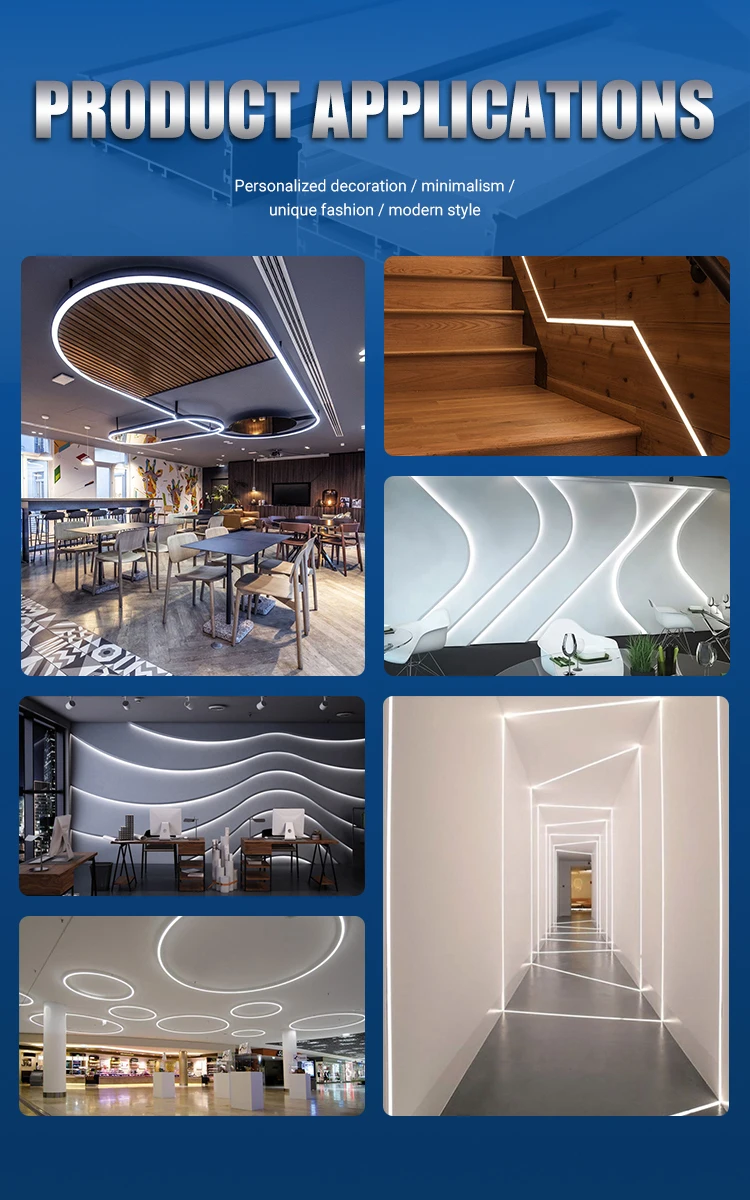 Thanks to their flexibility and practicality, LED aluminum profiles are widely used in residential, commercial, and industrial settings. The following are the most representative applications:
Cove Lighting
By installing light strips within ceiling or wall recesses using recessed or suspended profiles, soft and uniform ambient lighting is created. This is suitable for residential living rooms, hotel corridors, and commercial spaces, enhancing the spatial depth and dimension.
Shelf Lighting
Surface-mounted or recessed profiles are installed beneath or behind shelves to provide accent lighting for exhibits, books, and decorative items, enhancing display effects. This is suitable for home bookshelves, retail display cases, and office filing cabinets.
Cabinet Lighting
Slim recessed or surface-mounted profiles are installed inside kitchen cabinets, wardrobes, and bathroom vanity cabinets to eliminate lighting blind spots within the cabinets. This solution combines practicality with aesthetics, improving the user experience.
Linear Lighting
Utilizing long, linear profiles installed along walls, ceilings, or floors to create continuous light strips. Ideal for modern-style living rooms, hallways, and commercial showrooms, delivering a clean and elegant visual effect.
Staircase Lighting
Corner or recessed profiles are installed along the edges of stair treads or beneath handrails to enhance safety during nighttime use while adding a touch of design to the space. Suitable for staircases in residential homes, hotels, and office buildings.
Skirting Board Lighting
Slim profiles are installed along the baseboard to emit soft floor lighting that highlights the contours of the space. Ideal for hallways, bedrooms, and living rooms to create a warm and inviting atmosphere.
Facade Lighting
Utilizing waterproof and weather-resistant profiles installed along building exteriors and around door and window frames, this lighting highlights architectural details, improving nighttime visibility and aesthetic appeal. It is suitable for residential, commercial, and public buildings.
Conclusion
LED aluminum profiles are essential for safe, durable and professional lighting effects. With the right type, size and accessories, they greatly improve heat dissipation, protection, appearance and light quality, making them the perfect solution for all kinds of lighting projects.
For customized solutions, product inquiries or more support, please feel free to contact us—we are ready to help you build your ideal lighting system.