Where Are Insulated Aluminum Profiles Mostly Applied in Modern Buildings
Date:2026-06-30
View: 2038 Point
With the development of modern buildings towards energy-saving, high-end and intelligent, heat-insulating aluminum profiles have become the core material for building facade construction. It solves the drawbacks of fast heat conduction and high energy consumption of ordinary aluminum profiles, and takes into account the structural strength and thermal insulation performance. At present, this material has been widely used in all kinds of building components, suitable for the construction and use of different scenarios.
What Are Insulated Aluminum Profiles
Basic Definition of Heat Insulating Aluminum Profiles
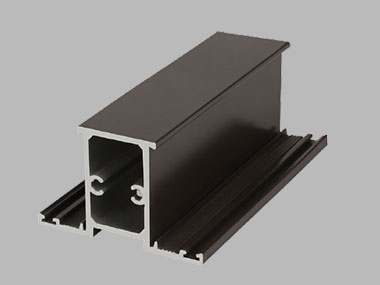
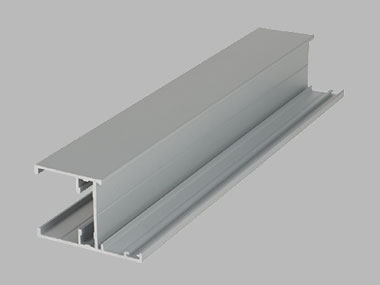
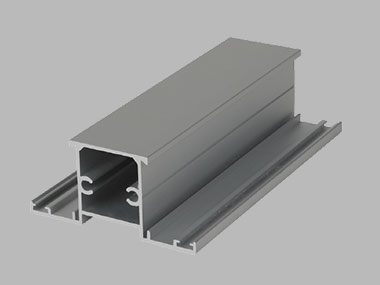
Aluminum profiles have become the core material for modern construction and industrial manufacturing by virtue of their light weight, high strength, corrosion resistance and other advantages, and their applications cover a wide range. However, ordinary aluminum profiles have excellent thermal conductivity, which is very easy to cause the loss of heat and cold energy in the building, and cannot be adapted to the construction standards of energy-saving buildings. Heat-insulating aluminum profiles, also known as aluminum profiles with broken bridges, are upgraded products developed to address the drawbacks of ordinary aluminum profiles. Through the addition of heat insulation structure, effectively blocking heat conduction, is the preferred profile material for modern green buildings.
The Working Principle of Heat-insulating Aluminum Profiles
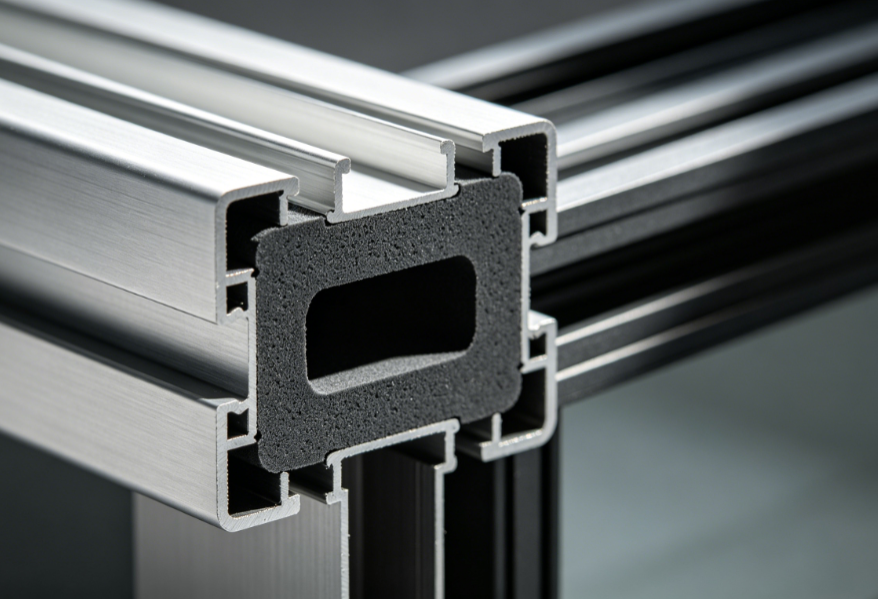
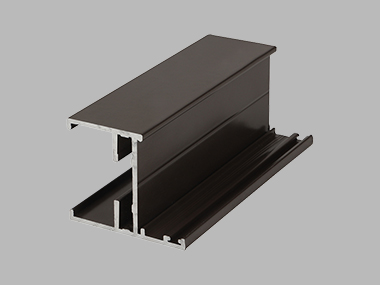
The heat-insulating aluminum profile is divided into three main parts, namely, indoor aluminum profile, heat-insulating partition and outdoor aluminum profile, with a clear and reasonable structural layering. This split structure completely eliminates the direct contact of aluminum, cutting off the heat conduction channel from the root. The commonly used core material for heat insulation is glass fiber reinforced nylon 66, which has a much lower thermal conductivity than aluminum. Combined with auxiliary insulation materials such as polyurethane foam, the heat transfer coefficient of the profile can be significantly reduced to meet all types of energy-saving building codes.
Core Advantages of Heat Insulating Aluminum Profiles
The profile has excellent heat and cold blocking ability, which can reduce indoor heat loss in winter and stabilize indoor temperature by blocking the intrusion of outdoor heat waves in summer. At the same time, it retains the rigidity advantage of aluminum alloy, which can support the installation of large-size glass and withstand strong wind loads. The surface of the profile is resistant to corrosion and aging, with a long service life and low maintenance costs. At the same time, the style is colorful and recyclable, and it can also weaken the noise propagation and effectively avoid the problem of mold and condensation inside the building.
Why Modern Buildings Need Insulated Aluminum Profiles
Adapting to Building Energy Conservation Demands
Modern building energy consumption accounts for nearly 40% of the world's total energy consumption, of which HVAC energy consumption is the main component of building energy consumption. Thermal bridges formed by ordinary aluminum profiles intensify heat exchange, resulting in a large amount of energy waste. Heat-insulating aluminum profiles reduce the heat transfer coefficient of profiles through high-quality heat-insulating structures, effectively reducing the heat and cold loss of buildings. It can be easily adapted to all kinds of green building energy-saving standards and certification requirements at home and abroad.
Enhancement of Building Comfort Experience
A quality building environment requires stable temperature, quiet space and healthy indoor environment. Heat-insulating aluminum profiles can weaken the temperature difference at doors, windows and curtain walls, eliminating the dead space of indoor cold temperature difference. Its heat-insulating structure reduces the problems of condensation and mold growth on the wall surface, and at the same time, it has a good sound insulation effect. It can effectively block outdoor noise, and is suitable for residential buildings, schools, hospitals and other buildings with high environmental requirements.
Structural Performance and Design Aesthetics
Heat-insulating aluminum profiles continue the lightweight, high-strength characteristics of aluminum alloy, structural stability far exceeds the plastic steel, wood profiles. It can be adapted to the construction needs of high-rise buildings and large-span glass curtain walls, and has excellent wind and seismic resistance. The surface of the profile can be sprayed, anodized, wood grain transfer printing and other processes, with a rich appearance. The slim frame design takes into account the minimalist aesthetics and is suitable for various modern architectural design styles.
Compatible with the Concept of Green and Sustainable Construction
Aluminum alloy is infinitely recyclable, and recycling will not deplete the performance of the material, so it is low-carbon and environmentally friendly. When paired with an insulated structure, it can significantly reduce carbon emissions during the long-term operation of a building. Numerous manufacturers are now adopting low carbon recycled aluminum to produce profiles, further reducing energy consumption in the production of building materials. This helps building projects to achieve carbon neutrality and is in line with the trend towards a circular economy.
Adapting to Complex Climate and Market Development
Extreme high temperatures, cold snaps, high humidity and other frequent weather events continue to raise the performance requirements for building envelopes. Heat-insulating aluminum profiles can maintain stable thermal insulation performance in all types of extreme weather. From an investment point of view, the use of insulated aluminum profiles reduces building O&M energy costs and increases property values. At the same time, it meets ESG investment criteria, making building projects more competitive in the market.
Aluminum Windows and Doors
Material Core Advantages of Aluminum Windows and Doors
Aluminum alloy material is light in weight and high in hardness, and it can be used to make door and window structures with large glass and thin frames. While expanding the indoor lighting area, it will not destroy the overall structural stability of doors and windows. Aluminum surface with oxidation protection layer, corrosion resistance, resistance to deformation ability is outstanding. It will not crack, deform, or fade with temperature and humidity changes, and is suitable for coastal, urban, industrial and other environments.
Important Value of Upgrading Heat Insulation Technology
The biggest shortcoming of traditional aluminum alloy doors and windows is poor thermal insulation performance, which is very easy to cause indoor and outdoor heat exchange. It is unable to meet the core demand of energy saving and comfortable living in modern buildings. The broken bridge aluminum doors and windows with nylon and polyurethane heat-insulating strips have completely solved the disadvantage of rapid heat conduction. It can be adapted to different climate zones around the world, realizing a comfortable living experience with constant temperature all year round.
Mainstream Aluminum Doors and Windows Product Types
Aluminum doors and windows on the market are rich in styles, including casement windows, top-hung windows, fixed windows, sliding doors, folding doors and other basic categories. There are also commonly used European-style internal opening and closing windows and high-end entry heavy-duty casement doors. The products are categorized into regular models, heat insulation and energy saving models, hurricane-resistant models, fireproof models and other series. We can customize the doors and windows according to the different usage scenarios of residential and commercial buildings.
Curtain Wall Systems
Curtain Wall System Basic Definition and Characteristics
Building curtain wall is suspended from the main structure of the building peripheral protection components, does not bear the building load-bearing pressure, only responsible for resisting external wind and rain, wind and other environmental loads. It is the landmark structure of modern high-rise buildings. Aluminum profiles have become the core material for curtain wall frames by virtue of their lightweight, high strength and easy processing characteristics. It can support large-area glass curtain walls to create a transparent and atmospheric building facade.
Technical Iteration and Upgrade of Aluminum Curtain Wall
Early aluminum curtain wall has many problems such as poor temperature preservation, water seepage, condensation, etc., and the limitations of use are large. Unable to adapt to the energy-saving construction standards of green buildings, the performance short board is obvious. After technological upgrading, modern heat-insulating aluminum curtain wall is equipped with heat-insulating strips, equal-pressure waterproof structure and high-performance glass. Completely solve the traditional shortcomings and realize multiple performance upgrades in energy saving, waterproofing and sound insulation.
Core Advantages of Heat-insulating Aluminum Curtain Wall
Heat-insulating aluminum curtain wall can create a large area of glass façade without obstruction, and the visual effect of the building is high-end and atmospheric. At the same time, the self-weight is extremely light, which can effectively reduce the load of the main body of the building and infrastructure costs. The profile is resistant to ultraviolet rays, corrosion, and aging, and is not easy to be discolored and damaged in long-term use. Prefabricated curtain wall components can be constructed quickly, which can significantly shorten the construction period.
Classification of Mainstream Curtain Wall System
Frame-type curtain wall needs to be assembled on-site piece by piece, with great flexibility, suitable for complex shaped building facade. Unit-type curtain wall is prefabricated and assembled in the factory, and directly lifted and spliced on site. Semi-unit type curtain wall takes into account the flexibility and construction efficiency, with wide applicability. Hidden frame curtain wall hides the profile frame and realizes the ultimate visual effect of full glass transparency.
Sliding and Folding Door Systems
Sliding and Folding Door Systems
Sliding door relies on the track to realize horizontal sliding of the door, without occupying indoor and outdoor opening and closing space, with transparent lighting and high space utilization rate. They are available in a variety of styles, including normal sliding and lifting sliding. Folding door can be folded and stored on both sides of the wall, which can realize the effect of large openings. Perfectly breaking the boundaries between indoor and outdoor space, suitable for landscape architectural design.
Core Reasons for Aluminum Profiles’ Suitability
The high strength and light weight of the heat-insulating aluminum profiles allow them to support oversized glass doors. The slim frame structure does not block the view, maximizing the architectural view. Stable profile structure is not easy to deform, long-term sliding and folding use remains smooth. The corrosion-resistant characteristics are suitable for balconies, courtyards, outdoor and other humid and windy environments.
The Core Role of Heat Insulation Structure
Traditional aluminum alloy sliding and folding doors have poor thermal insulation effect, and the large area of glass is very easy to cause serious energy loss. It is difficult to meet the demand of modern building energy saving and constant temperature living. The broken bridge aluminum door body with heat insulation strip can effectively block the heat conduction. Reduce indoor energy loss, and at the same time eliminate the door body around the condensation, moisture and other problems, suitable for all kinds of climate areas.
Comprehensive Practical Advantages of the Product
This kind of door body has a strong sense of transparency, which can improve the effect of indoor lighting and ventilation. High-quality sealing structure can effectively prevent wind, water, sound insulation, suitable for noisy urban environments. Multi-point locks provide excellent anti-theft performance, and the surface technology is wear-resistant and colorfast. Flexible style customization can be adapted to all kinds of high-end architectural decoration styles.
Sunrooms and Glass Facades
Basic Overview of Sunroom and Glass Curtain Wall
Sunroom is a translucent extension space attached to the main body of the building, with a very high proportion of glass, focusing on light and leisure functions. Widely used in residential courtyard and terrace remodeling. Glass curtain wall is the transparent facade structure of large buildings, including atrium, light roof, panoramic wall and other forms. It is the core design of modern architecture to create natural and ecological wind.
Adaptation Advantages of Heat-insulating Aluminum Profiles
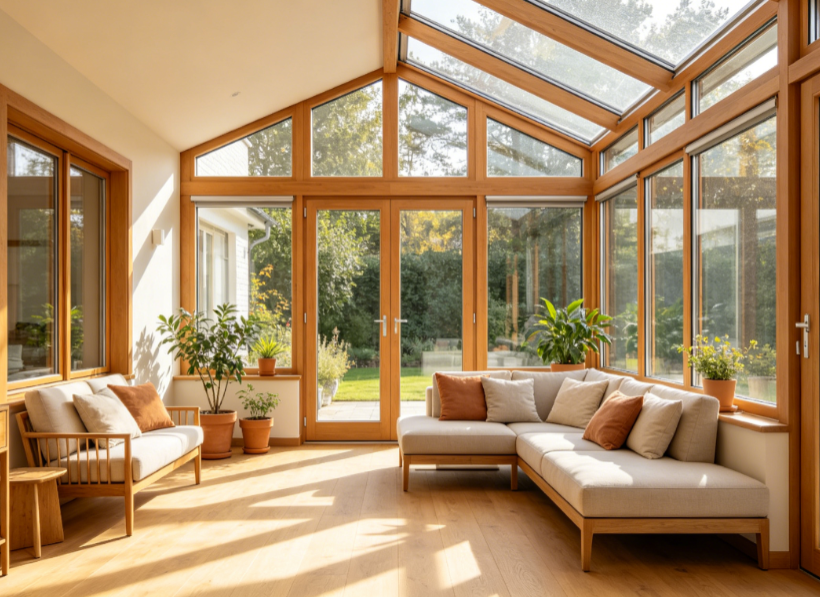
Heat-insulating aluminum profiles are high-strength and easy to shape, and can create sunrooms and curtain walls with complex shapes such as curved and slanted roofs. The thin frame design maximizes the light and landscape view. The profile is extremely weather resistant and is not easily damaged by long-term exposure to outdoor wind, rain and sunshine. Matching with the heat insulation structure, it completely solves the pain point of traditional transparent space which is cold in winter and hot in summer.
Key Value of Thermal Insulation Technology
The temperature imbalance of the glass space without thermal insulation structure is serious, stuffy in summer and cold in winter, and the energy consumption is extremely high. It is also prone to glass and profile condensation and dripping problems. Heat-insulating aluminum profiles balance the temperature of the space through exclusive heat-insulating partitions, allowing the sunroom to be available all year round. At the same time, it helps the glass curtain wall meet the green building energy-saving acceptance standards.
Core Advantages and Application Scenarios
This type of structure can maximize the use of natural light, reduce indoor lighting energy consumption, and improve living comfort. The high-quality sealed drainage structure can withstand extreme weather and has excellent waterproof and windproof performance. Widely used in residential sunrooms, hotel lobbies, shopping mall atriums, ecological curtain walls in hospitals and campuses. Help buildings create a natural, comfortable, energy-saving space environment.
Residential, Commercial, and Public Buildings
Application Value in Residential Construction
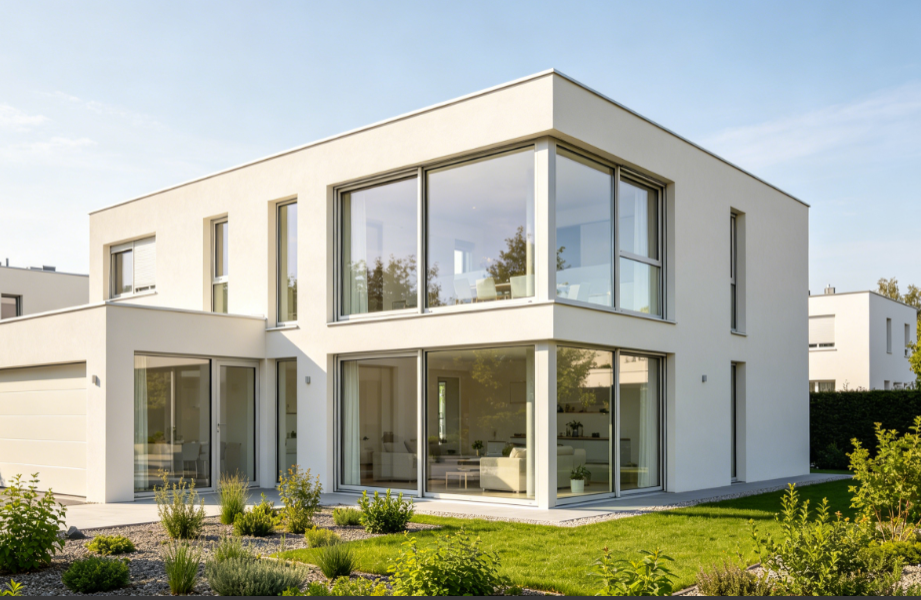
In residential projects, heat-insulating aluminum profiles are mainly used for doors, windows, balconies, sunrooms and other components. The slim and beautiful profile structure can effectively enhance the lighting and overall value of the residence. Its excellent heat insulation, sound insulation and anti-theft performance can optimize the living experience. Meanwhile, it is easy to maintain and has a long service life, which is suitable for all kinds of residential projects, such as fresh demand houses and high-end villas.
Application Value in Comercial Buildings
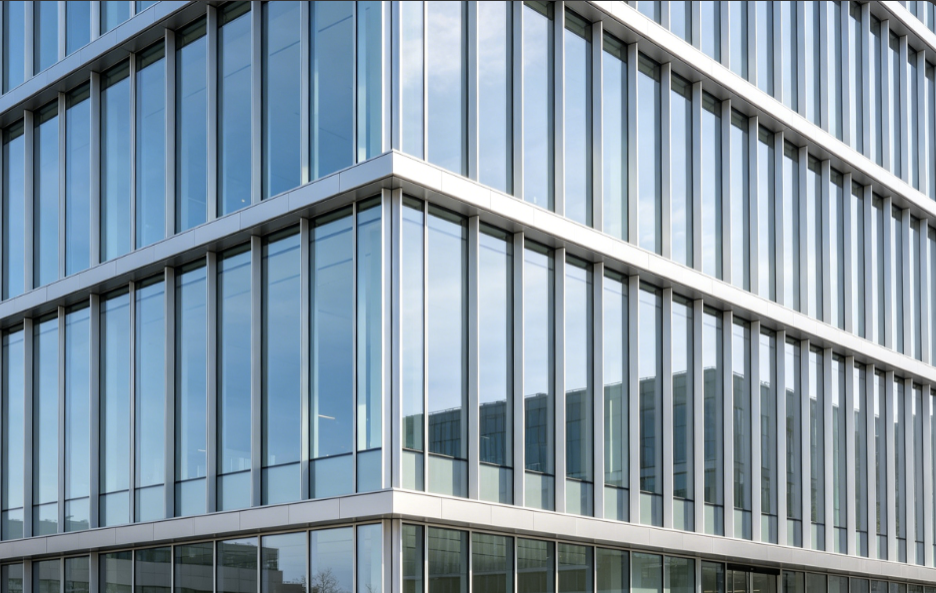
Office buildings, shopping malls, hotels and other commercial buildings often use heat-insulated aluminum curtain walls and panoramic windows and doors to create high-end facades. Enhance building recognition and commercial brand image. The energy-saving performance of profiles can significantly reduce the energy consumption of commercial buildings in long-term operation, and the prefabricated structure construction is highly efficient. It can effectively shorten the construction period of commercial projects and enhance the commercial value of assets.
Application Value in Public Buildings
Schools, hospitals, airports, exhibition halls and other public buildings have a high flow of people and are used frequently. Heat-insulating aluminum profiles are durable, safe and environmentally friendly, and are suitable for high-frequency use scenarios. The products can be customized for sound insulation, fire prevention and accessibility to meet the special specifications for public buildings. At the same time, it helps the project to complete green building certification and reduce operation and maintenance costs.
Core Advantages of All Scenarios
Heat-insulating aluminum profiles are suitable for all types of buildings, with remarkable energy-saving and consumption reduction effects, which can effectively reduce carbon emissions from buildings. The material can be recycled and utilized, which is completely in line with the concept of green building development. Flexible product design and solid structure can be adapted to all types of climate and architectural shapes. Cost-effective for long-term use, with good market versatility and adaptability.
How to Choose the Right Insulated Aluminum Profile
The Significance of Reasonable Profile Selection
The selection of heat-insulating aluminum profiles directly determines the performance and service life of building doors, windows and curtain walls. Suitable profiles can take into account energy saving, aesthetics and cost-effectiveness, and avoid all kinds of problems in later use. If the profile is not selected properly, problems such as high energy consumption, condensation and water leakage, and deformation of the profile are likely to occur. Not only affect the living experience, but also increase the cost of maintenance and replacement.
Core Selection Reference Factors
First of all, we need to focus on the thermal insulation performance of the profile, and prioritize the selection of wide, high-quality nylon heat-insulating strips, multi-cavity structure of the profile. It can effectively reduce the heat transfer coefficient and guarantee the energy-saving effect. Secondly, it is necessary to consider the structural strength, watertightness and airtightness in conjunction with the building scene. High-rise buildings, windy areas need to choose high load profiles, wet areas prioritize high sealing style. At the same time, it is necessary to take into account the appearance design, sound insulation needs and weather resistance. According to the decoration style to choose the profile color and frame type, the street building focus on sound insulation configuration. Finally, combine the project budget with the environmental attributes of the building materials to make a comprehensive selection. Balance the initial purchase cost with long-term operation and maintenance cost, and give priority to recyclable low-carbon profiles.
Recognize the Industry's Authoritative Standards and Certifications
High-quality aluminum heat insulation profiles need to comply with international testing standards such as ISO, EN, ASTM, etc., and have a perfect quality testing system. Stable product performance and quality are guaranteed. At the same time, you can refer to the passive house, NFRC and other energy-saving certification, as well as wind load, water tightness and other special testing qualifications. Avoid three inferior products to protect the quality of the project.
Selection of Common Misconceptions to Avoid
Do not focus on the low price, low-priced profiles are often poor quality insulation bars, wall thickness does not meet the standards and other issues. Long-term use of hidden dangers, energy loss. At the same time, you can not ignore the local climate, building codes and installation process. It is necessary to match the scene demand selection, and with professional construction, in order to maximize the performance of the profile.
Conclusion
With excellent energy-saving, structural and aesthetic performance, heat-insulating aluminum profiles are fully suitable for all kinds of modern building scenes. From windows, doors, curtain walls to sunrooms, they cover the whole field of residential, commercial and public buildings. Reasonable selection and application of this material can not only improve building quality, but also help the green and low-carbon development of the construction industry.
Henan Retop Industrial Co., Ltd. Will Be There Whenever Wherever Whatever You Need