Why Multi-cavity Design for Sound Insulation Aluminum Profiles?
Date:2026-07-28
View: 639 Point
Urban noise pollution continues to intensify, and residential and commercial buildings facing the street put forward higher standards for the sound insulation performance of window profiles.Traditional single-cavity aluminum profile sound insulation short board prominent, multi-cavity aluminum profile rely on multi-layer closed air cavity to optimize noise reduction effect.
Understanding the Structure of Multi-Cavity Aluminum Profiles
Definition and Extrusion Technology of Multi-cavity Profile
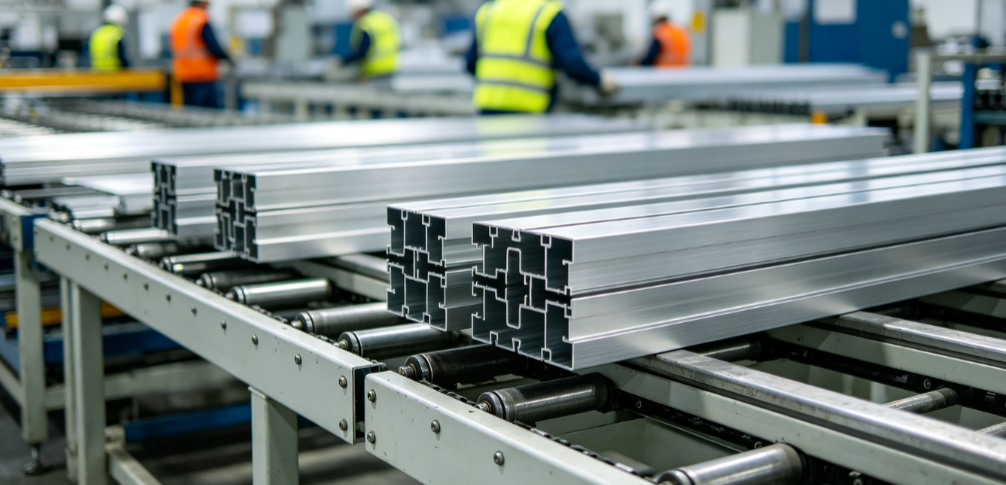
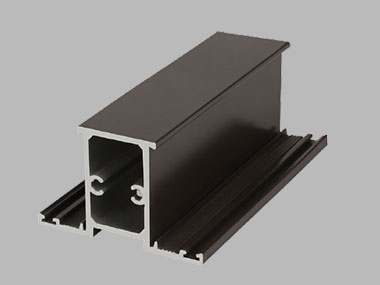
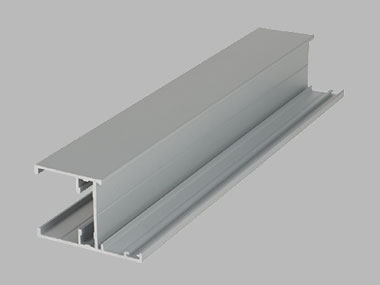
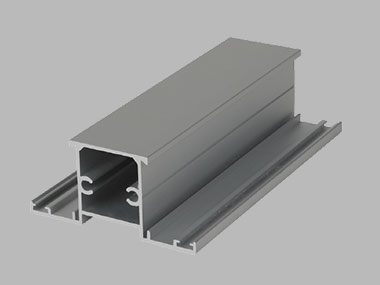
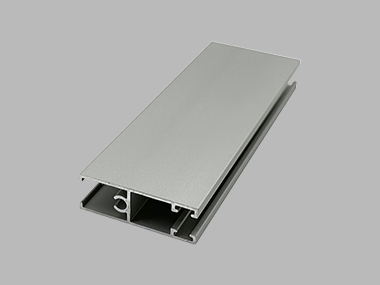
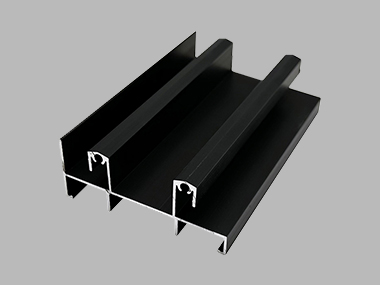
Multi-cavity aluminum profile refers to a single section containing two or more closed hollow cavities for building aluminum, which is different from solid aluminum strip and simple single-hole pipe.The whole set of profiles rely on integrated extrusion molding, without later splicing assembly, the overall structural integrity is stronger, and it is a mainstream new structural profile for door and window curtain wall. Industry production of this profile needs to customize the special bridge hole extrusion mold, high temperature aluminum rod into the mold after the shunt through the cavity, secondary fusion, molding cavity wall thickness uniform, regular structure.The mold can be one-time with glass card groove, drain groove, sealing groove and other functional structures, greatly reducing the secondary processing procedures.
Static air remains inside the sealed multi-layer cavity, which has extremely low thermal conductivity and is a natural heat insulation medium, which can effectively block indoor and outdoor heat conduction.With broken bridge insulation strip can completely cut off the metal heat conduction channel, reduce the heat transfer coefficient of doors and windows, in line with the green building energy-saving acceptance code. The staggered ribs inside the profile are matched with layered cavities, which greatly improve the bending resistance and torsion resistance of the profile without increasing the aluminum material and increasing the weight.Lightweight and high strength characteristics adapt to large glass curtain walls, which can withstand outdoor strong wind loads and ensure long-term stability of building facades.
Mainstream Material and Surface Protection Technology of Profile
Multi-cavity aluminum profiles in the field of building doors and windows are uniformly used 6000 series aluminum alloy, 6063-T5 and 6063-T6 are the two most widely used brands in the market.This series alloy has excellent extrusion plasticity, smooth and burr-free surface after molding, and basic corrosion resistance, suitable for outdoor long-term use environment. In order to prolong the service life of profiles and enrich the appearance options, the industry is equipped with three mainstream surface treatment processes: anodic oxidation, powder coating and fluorocarbon coating.The coating can isolate rainwater, air and ultraviolet rays from corroding aluminum body, avoid fading and peeling of profiles, and various colors can also match various architectural decoration styles.
How Multi-Cavity Design Blocks Sound Transmission
Main Propagation Paths of Construction Noise
The noise in the building environment is divided into two categories: air transmission sound and structure solid transmission sound, which are also the two core channels for noise to penetrate doors and windows. Air transmission depends on air pressure wave diffusion, traffic flow, pedestrian conversation, shop sound, wind all belong to this kind of noise, spread a wide range, covering high, medium and low frequency sound waves. Solid structure sound transmission depends on metal, wall and other hard solid vibration sound wave transmission, aluminum high density, strong rigidity, is an efficient sound transmission medium. The traditional single-cavity aluminum profile has no partition ribs, the metal channel is continuous and complete, the vibration sound wave can quickly penetrate the profile, and the low frequency noise is easy to penetrate into the room.
Noise Reduction Principle of Multilayer Cavity
When the outdoor sound wave hits the outer wall of the aluminum profile, it will enter the layered air cavity and repeatedly reflect and diffract on the metal inner wall of different cavities. Each acoustic wave reflection will lose a part of the acoustic energy, and most of the noise energy will be intercepted and consumed after the multilayer cavity is stacked, greatly reducing the total amount of acoustic waves that can penetrate into the room. The static air in the cavity has the effect of acoustic wave viscosity loss. The acoustic wave vibrates and rubs in the air layer, and the residual acoustic energy will be converted into trace heat energy and dissipated naturally. Independent cavities with different volumes and shapes can reduce high-frequency and low-frequency noise, and the noise reduction coverage is much better than that of a single cavity profile.
Principle of Vibration and Sound Insulation of Ribbed Broken Bridge Structure
The layered ribs inside the profile divide the complete metal outer wall into multiple independent metal plates, directly interrupt the continuous solid sound transmission channel, greatly weaken the transmission efficiency of vibration sound waves inside the aluminum material, and reduce the indoor noise caused by structural sound transmission from the source. Multi-cavity profile with broken bridge insulation strip, indoor aluminum and outdoor aluminum are completely separated by non-metallic insulation strip, there is no direct metal contact. This partition structure completely cuts off the vibration transmission bridge and effectively suppresses the introduction of low-frequency solid noise such as traffic flow and subway into the room.
Measurement of Sound Insulation of Multi-cavity Doors and Windows
The sound insulation level of ordinary single-cavity aluminum doors and windows is only 25 to 30 decibels, which is difficult to meet the quiet living needs of street houses. The multi-cavity bridge-broken aluminum profile with optimized cavity layout can achieve 35 to 40 dB sound insulation only by the profile body, and the noise reduction effect is significantly improved compared with the single-cavity profile. With double-layer laminated sound insulation glass, three ring sealing rubber strips, no gap standard installation process, the overall sound insulation rating of the entire door and window system can reach 45 to 55 dB. The profile has an independent sealed cavity and a dedicated drainage channel, which can eliminate noise leakage from gaps and adapt to noise scenes such as airports and highways.
The Role of Air Chambers in Improving Acoustic Performance
Principle of Cavity Acoustic Reflection
There is a huge acoustic impedance difference between aluminum and the air inside the cavity, and the contact interface between the two media will form a natural noise barrier. When outdoor sound waves are transmitted from the high-density metal outer wall into the low-density air cavity, more than half of the sound wave energy will be directly reflected back to the outside by the interface and cannot continue to propagate indoors. Multi-layer air cavity forms multiple impedance reflection interface, sound wave needs to pass through multi-layer metal-air interface continuously before entering the room, each interface will reflect loss of sound energy. After multiple reflections are superimposed, only a small amount of weak sound waves can penetrate all the cavity structures to achieve efficient sound insulation.
multilayer Cavity Dissipates Acoustic Energy
After sound waves enter the sealed air cavity, they will cause continuous vibration of the internal air. Air molecules will rub and collide with each other. The kinetic energy carried by sound waves will be gradually converted into heat energy and dissipated inside the cavity. The more layers in the cavity, the longer the air friction path, and the higher the total acoustic energy consumption. Different size independent cavity can adapt to different wavelength sound waves, large cavity consumes low frequency long wave noise, small cavity reduces high frequency short wave noise. The combined cavity layout can broaden the noise reduction frequency range and solve the industry pain point that a single cavity cannot balance high and low frequency noise.
Enclosed Cavity Suppresses Resonance
A single wide cavity is easy to resonate with traffic flow and subway low-frequency sound waves. Resonance phenomenon will amplify low-frequency noise and make indoor low-frequency noise more obvious. The multi-cavity structure divides the large cavity into several small independent closed cavities, which can effectively avoid resonance phenomenon after the cavity volume is dispersed. The layered cavity with internal ribs can suppress the overall resonance vibration of the profile and reduce the secondary noise generated by the vibration of the profile itself. Reasonable planning of the volume of each cavity can avoid the common low-frequency noise resonance interval in the city and further optimize the indoor silent environment.
Key Factors Affecting Sound Insulation
The number of cavity, volume of single cavity and layered layout of cavity are the core parameters to determine the sound insulation performance. The more the number of layers of cavity and the longer the attenuation path of sound wave, the more outstanding the overall noise reduction effect. At the same time, the wall thickness and internal rib rigidity of the profile will directly affect the vibration suppression ability, and the uniform wall thickness can ensure the stability and unity of the sound insulation performance of the whole section. The overall tightness of the cavity is the basis of sound insulation. The straight-through gap and transparent drain hole will form air leakage channel, which will directly destroy the sound insulation system of multi-layer cavity and greatly weaken the noise reduction ability. Therefore, the profile drainage and sealing structure need fine partition design to eliminate straight-through air gaps.
Only relying on the profile cavity can not give full play to the sound insulation performance, high-quality multi-channel sealant strips can block the profile splicing gap, glass assembly gap, ensure that all air cavities are completely sealed, to avoid air leakage damage sound insulation structure Standardized construction and installation technology can avoid the installation gap between the wall and the door and window frame, and the gap is filled with sound-insulating foam to block the air transmission of the gap. Standardize the matching of accessories and construction methods to maximize the noise reduction potential of the air cavity.
Why Aluminum Material Works Well with Multi-Cavity Structures
Adaptability of Aluminum Alloy Extrusion
6000 series aluminum alloy has excellent plasticity and fluidity. After softening at high temperature, it can smoothly pass through complex multi-cavity bridge hole molds, forming multi-layer staggered cavities and fine separation ribs at one time. The extrusion molding of steel and plastic steel materials is more difficult, and it is impossible to make fine multi-cavity sections. Aluminum alloy extrusion yield is high, after molding cavity regular, uniform wall thickness, rarely cavity deformation, rib fracture and other defects. Integral extrusion molding eliminates the process of separate assembly, cavity sealing and structural stability are much higher than splicing profiles.
Aluminum Lightweight Structure Advantages
Hollow multi-cavity design can reduce the material of aluminum material, aluminum alloy itself weight is light, finished profile weight is much lower than the same size steel profile, reduce the overall weight of doors and windows, reduce the bearing pressure of building walls. Even with hollow cavity design, aluminum alloy with internal ribs still has excellent structural strength, wind pressure resistance, impact resistance performance standards. The dual characteristics of lightweight and high strength make the multi-cavity aluminum profile suitable for residential small windows and commercial large curtain walls.
Aluminum Weather Resistance and Corrosion Resistance Advantages
Aluminum alloy surface will naturally form a layer of dense oxide film, basic oxidation resistance, excellent rain corrosion resistance, outdoor long-term use is not easy to rust damage, to ensure the integrity of the internal cavity structure is not blocked by corrosion. Anodic oxidation, powder coating and other surface processes can further strengthen the aluminum protection ability, isolation of ultraviolet rays, acid rain corrosion. The internal space of the cavity is kept unobstructed and intact for a long time, and the cavity will not be blocked by aluminum corrosion and scaling, and the sound insulation effect of the air cavity will be continuously and stably exerted.
Multi-Cavity Aluminum Profiles for Energy-Efficient Windows and Doors
Principle of Heat Insulation and Energy Saving of Cavity
The static air in the cavity has a very low thermal conductivity, and the multi-layer air cavity blocks the indoor and outdoor cold and hot air conduction layer by layer to reduce heat loss through aluminum. In summer, it blocks the outdoor high temperature from entering the room, and in winter, it retains indoor heating heat and stabilizes indoor temperature. The multi-cavity bridge-breaking aluminum profile with bridge-breaking insulation strips completely cuts off the indoor and outdoor aluminum metal heat conduction channels, and the double insulation structure greatly reduces the heat transfer coefficient of doors and windows, reduces the operation time of air conditioning and heating equipment, and directly reduces the daily energy consumption of buildings.
Optimization of Building Operation and Maintenance Costs
The use of multi-cavity sound insulation energy-saving doors and windows, indoor temperature fluctuations are smaller, air conditioning, floor heating equipment does not need to continue high power operation, long-term use can significantly reduce electricity and gas expenses, for residential, commercial buildings save a lot of operation and maintenance expenses. The profile integrates multiple performances of sound insulation, heat insulation, waterproof and windproof at the same time, has long service life and low failure rate, greatly reduces the maintenance and replacement frequency of doors and windows in the later period, further reduces the long-term maintenance investment of the building, and has outstanding comprehensive cost performance.
Adapting to Low-carbon Building Needs
Multi-cavity aluminum profile energy-saving noise reduction dual performance, fully in line with the domestic green building, passive ultra-low energy consumption building acceptance standards, is the green building, low-carbon public building designated doors and windows main material. Aluminum alloy materials can be recycled and remelted 100%. The production process is equipped with environmental protection spraying technology to reduce pollutant emissions. The use of such profiles can reduce carbon emissions throughout the life cycle of buildings, in line with the current trend of dual-carbon policy development.
Comparing Multi-Cavity and Single-Cavity Aluminum Profiles for Noise Reduction
Single Cavity Profile Sound Insulation Short Board
The single-cavity aluminum profile only has a single wide hollow channel, and the sound wave can quickly penetrate the profile through the cavity air layer, and there is no multi-layer reflection loss structure. In the face of urban compound high and low frequency noise, the noise reduction ability of single-cavity profiles is weak and cannot meet the high silence requirements. A single wide cavity is easy to resonate with traffic flow and subway low-frequency sound waves, which will amplify low-frequency noise, and the indoor low-frequency roar is strong. At the same time, the single-cavity profile can only be divided into a single functional area, and it is impossible to separate the sealing, drainage and hardware installation areas, and the problem of crack leakage is difficult to avoid.
Layered multi-cavity structure can reflect many times, consume sound wave energy, interrupt solid metal vibration sound transmission channel at the same time, double path suppresses noise transmission, noise reduction frequency band covers a wider range, and can simultaneously weaken high-frequency human voice and low-frequency traffic noise. Under the same conditions of glass and sealing accessories, the sound insulation level of multi-cavity profile is about 10 dB higher than that of single-cavity profile. After matching with sound-insulating glass and multi-channel sealing, the noise reduction capacity of the whole set of doors and windows is greatly upgraded, which can adapt to strong noise scenes such as street, high speed and airport.
Manufacturing Considerations for Multi-Cavity Sound Insulation Profiles
Multi-cavity Extrusion Molding Control
Multi-cavity sound insulation profiles have strict requirements on the precision of extrusion dies. Special bridge-hole shunt dies must be customized to accurately match the number, volume and rib layout of cavities to ensure uniform wall thickness and no deformation and dislocation after molding, so as to avoid cavity structure defects weakening sound insulation effect. In the production process, the preheating temperature of aluminum rod, extrusion speed of equipment and discharge cooling rate shall be strictly controlled to ensure that aluminum is fully fused in the mold, prevent internal defects such as cracks, delamination and false welding in the cavity, and stabilize the structural strength and tightness of the profile.
Specification for Profile Inspection and Surface Treatment
After cooling and molding of profiles, it is necessary to inspect the section size, cavity tightness and wall thickness uniformity one by one, and check the defects such as cavity penetration gap and rib defect. Unqualified profiles shall be reworked in time to prevent structural defects from flowing into the door and window processing links, so as to avoid sound leakage and heat insulation failure problems in the later stage. During the surface spraying and oxidation treatment process, the cavity protection shall be done well to avoid spraying powder and electrolyte blocking the cavity channel, and ensure that the drainage and sound insulation cavities are unobstructed throughout the process. After finishing the surface treatment, clean the cavity again to remove dust and impurities and maintain the integrity of the cavity acoustic structure.
Applications of Multi-Cavity Sound Insulation Aluminum Profiles
Urban Residential Building
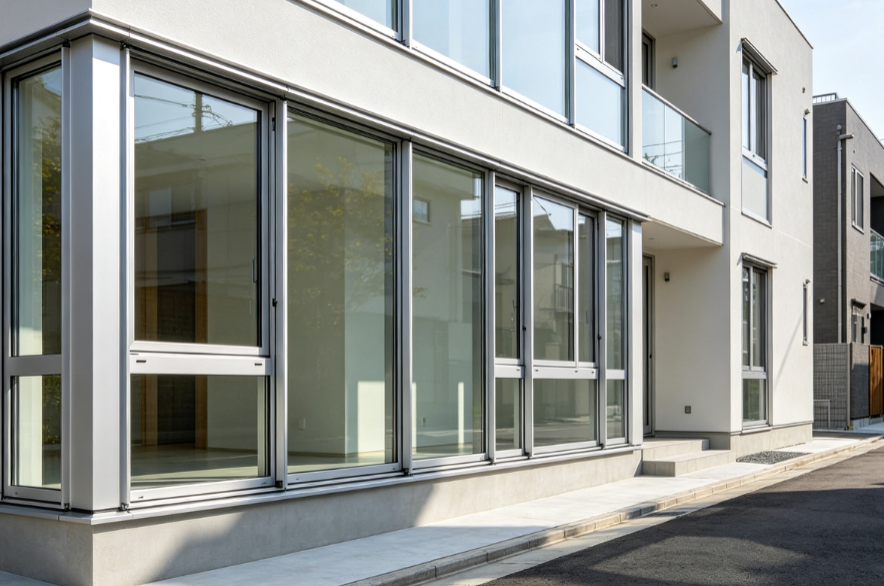
Traffic flow, track and aviation noise in densely populated areas of cities are seriously disturbed. High-performance doors and windows of high-rise apartments,commercial houses and single-family self-built houses will adopt multi-cavity aluminum profiles as the main frame materials. With professional insulating glass, the sound insulation Rw of the whole set of doors and windows can reach 35 to 45 decibels, which can greatly reduce the noise of external traffic and aircraft take-off and landing. The thin visible surfaces of the profiles are designed to match the modern minimalist architectural look without spoiling the overall aesthetic of the facade. Inhabitants can isolate the noise from the outside world, effectively improve the quality of sleep at night, reduce the physical and mental irritability caused by noise, and comprehensively improve the comfort level of home living.
Hotels Medical Education Buildings
Hotel guest rooms, hospital wards, primary and secondary schools and university buildings have rigid requirements for space quietness. Quiet environment is the basic condition to ensure guest privacy, patient recuperation and recovery, and students study efficiently.Multi-cavity aluminum profiles with broken bridge structure are widely used in guest room windows, corridor partitions and building exterior wall systems. The profile can double block the intrusion of outdoor noise, while reducing the sound communication between adjacent rooms. The profile is minimally affected by temperature changes, and there will be no deformation and warping problems. In the service cycle of decades, the sound insulation performance is always stable, and frequent maintenance and replacement are not required.
Commercial Office Buildings and High-rise Complexes
The curtain wall and window wall system of high-rise office buildings and commercial and residential mixed skyscrapers generally use multi-cavity aluminum profiles, which can not only resist the external noise generated by urban traffic and construction site, but also weaken the lateral transmission effect of noise through walls and floors. Multi-cavity extruded aluminum profiles have the advantage of high strength and light weight, which can support large-area glass curtain wall design without adding excessive load to the main building. It can not only meet the current mainstream minimalist and transparent architectural design style, but also meet the strict sound insulation standards and energy conservation specifications of the construction industry.
Traffic and Industrial Supporting Buildings
Buildings close to highways, railway trunk lines, airports and industrial parks have been subject to high and low frequency compound noise for a long time. Multi-cavity soundproof aluminum profiles are the core building materials for creating livable and office environments. The door and window system is assembled with profiles, laminated soundproof glass and high-performance sealing accessories. The sound insulation Rw of the whole set can approach or even exceed 50 decibels, which can effectively isolate all kinds of continuous noise interference such as low-frequency roar of trucks, continuous mechanical vibration, high-frequency noise of aircraft, etc.
Future Development Trends of Sound Insulation Aluminum Profiles
Cavity Structure Optimization and Frequency Band Adaptation Design
Extrusion die design and simulation technology continues to improve, allowing precise control of cavity specifications, profile wall thickness and internal rib layout. In the future, the profile structure will be specially optimized for common low-frequency noise such as urban traffic and airport to realize directional noise reduction design upgrade. At this stage, some profiles have been equipped with baffle plates and resonance noise reduction structures, and relevant designs will continue to be refined and form a standardized system. The industry will broaden the effective noise reduction frequency band without increasing the thickness and weight of the profile, and comprehensively improve the overall sound insulation performance index.
Green Low Carbon Cycle Design Development
Low carbon environmental protection has become the core development trend of the industry, and high recycled aluminum profiles, low carbon primary aluminum materials and detachable broken bridge structures are gradually popularized. The product adopts easy-to-disassemble design, which can realize the classification recovery and recycling of aluminum and polymer parts at the end of service life. LEED, BREEAM and other green building evaluation systems encourage the application of building materials with sound insulation and energy saving performance, accelerating the green transformation of the industry. Multi-cavity sound insulation aluminum profiles have gradually become an important component of low-carbon building envelope, effectively reducing building energy consumption and environmental impact.
intelligent Active Acoustic System Fusion
The new active acoustic doors and windows combine multi-cavity passive sound insulation structure with intelligent sensing and driving devices and special glass, which can adjust the working state adaptively according to the changes of external noise. Even if the doors and windows are half-open, the system can still guarantee stable noise reduction. This kind of intelligent compound scheme is still in the high-end application stage, but it represents a new development direction of the industry. Aluminum profiles will be transformed from a single structural component into an integrated intelligent building carrier integrating environmental monitoring, intelligent noise control and other functions.
Manufacturing Process and Customization Capability Upgrade
Finite element simulation analysis, precision process control and additive modeling technologies continue to mature, allowing low-cost, stable mass production of complex multi-cavity profiles. It can not only meet the minimalist and slender appearance requirements of modern buildings, but also adapt to customized soundproofing solutions for different scenes. The new process greatly improves the accuracy and consistency of profile size, so that the acoustic performance data of laboratory standards can be accurately applied to actual engineering installation. Effectively solve the problem of performance difference between samples and finished products, and ensure the stability and reliability of the actual sound insulation effect of the building.
Conclusion
This paper analyzes the core noise reduction function of air cavity in multi-cavity sound insulation aluminum profile. Multi-layer closed air cavity completely solves the sound insulation and heat insulation defects of traditional single-cavity aluminum profile by means of multiple mechanisms of sound wave reflection, energy loss and blocking resonance. With the continuous improvement of building silence and energy saving demand, refined multi-cavity aluminum profile technology will continue to iterate and become the irreplaceable core door and window main material of green silent building.
Henan Retop Industrial Co., Ltd. Will Be There Whenever Wherever Whatever You Need