Which Tent is Best? Steel vs. Aluminum Frame Tents Explained
Date:2026-05-12
View: 3895 Point
In outdoor activities, commercial exhibitions or long-term storage scenarios, the choice of tent directly affects the experience of use and cost investment. As the mainstream choice of frame tents, the difference between steel and aluminum frame materials is the core of decision-making.
What Are Frame Tents?
Frame tents are freestanding structures that rely on a metal frame (usually aluminum or steel) to support the tarp without the need for poles. This design completely eliminates the space constraints of traditional pole tents, allowing for a wide view and flexible layout that maximizes the use of available space. Whether it is a seat arrangement for a wedding or banquet, a booth setup for an exhibition, or a crowd dispersal for a large event, the frame tent can be perfectly adapted. It is extremely adaptable and can be installed on a variety of surfaces such as concrete, asphalt, grass, etc. without relying on ground pegs for fixing, which makes it particularly suitable for urban venues or event scenarios combining indoors and outdoors. From short-term festival bazaars to long-term outdoor dining areas, frame tents have become the first choice for event planners and corporate users thanks to their modular design and durability.
Weight-to-Strength Performance Comparison
Weight and Portability
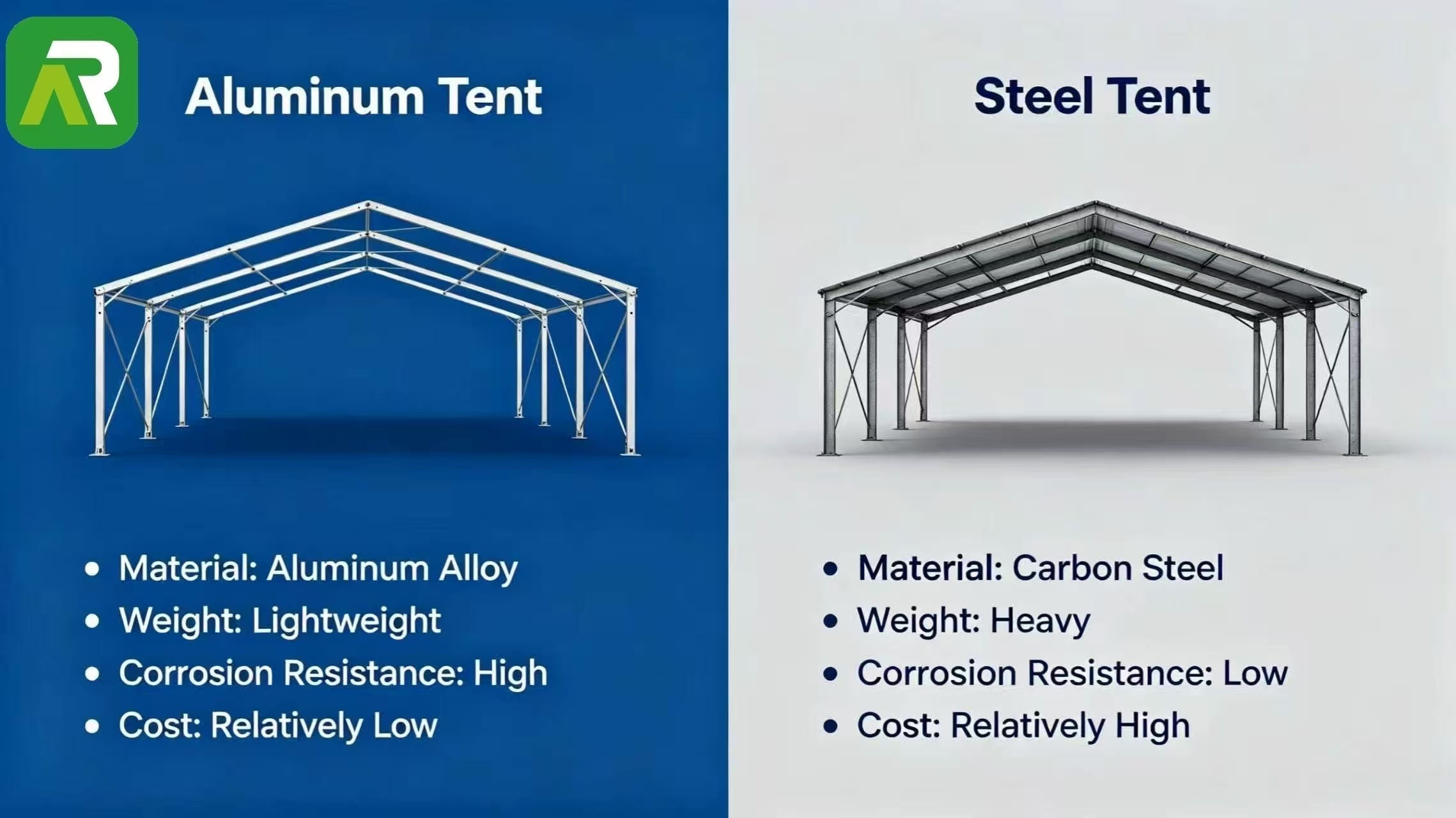
Aluminum-framed tents are typically 30%-50% lighter than their steel counterparts, an advantage due to the physical properties of the material - aluminum has a density of 2.7g/cm³, less than one-third the density of steel (7.85g/cm³). The lightweight design makes aluminum tents more suitable for scenarios that require frequent movement, such as traveling exhibitions, temporary medical sites or disaster relief settlements, where they can be manually moved and assembled without the need for heavy equipment. The lighter weight also significantly reduces logistical costs for event companies or users who need to transport their tents across regions. Steel frame tents are heavier, but their own weight becomes an advantage for stability. In long-term fixed installation scenarios, such as industrial warehousing or permanent outdoor workspace, the weight of the steel frame increases wind resistance and reduces the complexity of external fixings. If your usage scenario is predominantly fixed installation and ease of handling is not required, the weight advantage of a steel tent translates into structural stability.
Strength and Load-bearing Capacity
Steel frames excel in extreme load-carrying scenarios, and are particularly suited to areas with heavy snow or industrial scenarios where heavy equipment needs to be hung. Its high strength properties allow it to withstand greater wind loads and maintain structural integrity in extreme weather. For those who need to erect large storage tents or long-term industrial facilities, the rigidity and load-carrying capacity of steel frames is an irreplaceable advantage. Aluminum frames win in terms of “strength-to-weight ratio” - at one-third the weight of steel, aluminum frames provide adequate support through optimized cross-section design (e.g., octagonal profiles) and thickened tube walls. The common 6061-T6 aluminum alloy, anodized to a hardness second only to diamond, meets the strength requirements of regular scenarios such as commercial trade shows and event tents. Aluminum frames are also more flexible and can withstand external impacts to a certain extent without breaking easily.
Weather Resistance & Outdoor Durability
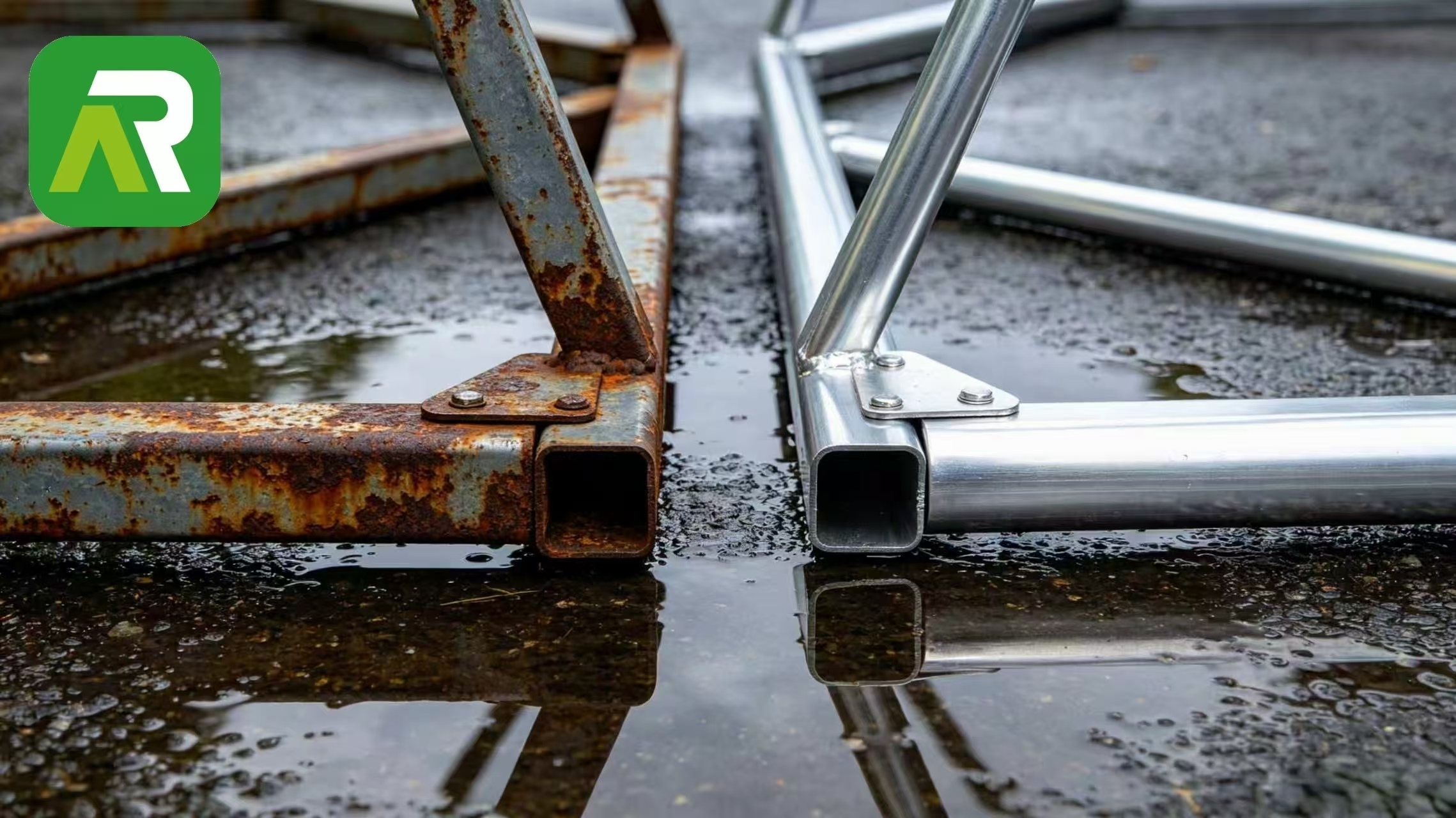
Outdoor tents have to face wind, rain, humidity, UV rays and other natural factors, and the difference in weather resistance between the two materials directly determines the service life of the tent. The weather resistance of aluminum frame tents comes from its naturally formed oxide layer (Al₂O₃), a dense protective film that effectively isolates moisture and oxygen, preventing corrosion and rust. An anodized aluminum frame will triple in hardness and remain structurally stable even after prolonged exposure to rain, sea breeze or high humidity. This feature makes aluminum tents especially suitable for coastal areas, the south with frequent rainy seasons, or areas with heavy industrial pollution, and allows them to be used for long periods of time without additional rust-proofing maintenance. The weather resistance of steel frame tents depends on the surface coating. Although common galvanized or powder coated treatments can temporarily prevent rust, the coating is prone to wear and tear and cracking after long-term use. Once the coating is broken, the steel will quickly react with air and moisture to produce rust, which not only affects the aesthetics, but also gradually weakens the structural strength. In rainy, humid or coastal environments, steel tents need to be repainted and maintained on a regular basis, otherwise the service life will be drastically shortened, and there are even potential safety hazards. If only used for a short period of time in dry and sunny weather, the weather resistance of steel tents can basically meet the demand.
Corrosion Resistance & Long-Term Appearance
The Rust Dilemma for Steel Frames
Steel's inherent weakness is its susceptibility to corrosion, which accelerates dramatically, especially in high humidity, coastal or industrially polluted environments. Even when galvanized, rust spots can still appear after prolonged outdoor exposure, spreading throughout the frame. Rust not only increases maintenance costs - requiring regular sanding, repainting or replacement of components - but also poses a safety risk. The strength of a rusted frame decreases dramatically, and it can deform or even collapse under wind or load. From an appearance point of view, a rusty tent will seriously affect the quality of the event, and is especially unsuitable for high-end scenarios such as weddings and brand launches, which may damage the brand image. Data shows that the service life of steel tents in harsh environments is usually only 5-8 years.
Natural Advantages of Aluminum Frames
Aluminum frames are self-repairing through the protective film formed by natural oxidation - even minor surface scratches, when exposed to air, can quickly re-form an oxidized layer that continues to resist corrosion. This property makes aluminum tents virtually maintenance-free against rust, and keeps them looking neat and tidy even after long periods of use. High-end aluminum tents are also anodized or powder-coated, which not only further enhances corrosion resistance, but also offers a wide range of color options to match corporate VI or event themes. In terms of service life, aluminum tents can last up to 15-20 years, which is 2-3 times longer than steel tents. The corrosion resistance and long-lasting appearance of aluminum tents are core advantages for users who focus on long-term investment and brand image.
Frame Connectors & Structural Stability
As the “joints” of the tent frame, the connectors' material and design directly affect the stability of the overall structure, which is a point of difference between the two types of tents that can be easily overlooked. In order to control the cost, steel tents usually use common plastic connectors, which have low hardness and poor abrasion resistance, and are prone to aging and breakage after long-term use. Under frequent assembly and disassembly or external impact, the damage of plastic connectors may lead to the loosening of the entire frame, affecting the safety of use. The connectors of some low-priced steel tents even have the problem of size mismatch, which further reduces the structural stability. The connectors of aluminum tents pay more attention to durability, and the middle and high-end products are mostly made of engineering plastics or aluminum alloy. Engineering plastic connectors are anti-aging and can withstand frequent opening and closing and loading; while all-aluminum alloy connectors are the same material as the frame, with high hardness and corrosion resistance, and are the standard for heavy-duty aluminum tents. The precision of the design of the connectors is also crucial - the modular connection of the aluminum tent, which is bolted rather than welded, not only ensures the assembly efficiency, but also ensures that the parts are tightly connected and not easily loosened under harsh conditions such as strong winds.
Total Cost of Ownership: Initial vs. Lifetime
Initial Purchase Cost Comparison
In terms of upfront investment, steel tents have a clear advantage. Due to the lower cost of raw steel, steel tents are typically 1/3-1/2 the price of aluminum tents for the same size - a 10x10 foot custom printed tent, for example, costs $399-$699 for a steel model versus $899-$2899 for an aluminum model. This price difference makes steel tents a popular choice for short-term use on a budget, such as family camping, one-time events or temporary storage needs. Steel tents are also more readily available in major supermarkets, sporting goods stores and other channels for immediate purchase.
Lifetime Cost Analysis
The real cost difference is in the long-term use. Although the initial investment of aluminum tent is higher, the lifetime cost is reduced through three dimensions: first, long service life, aluminum tent can be used for 15-20 years, while steel tent needs to be replaced in 2-3 years on average; second, low maintenance cost, aluminum tent does not need anti-rust treatment, while steel tent accumulates considerable costs of paint repair and parts replacement every year; third, transportation and labor cost saving, lightweight design of aluminum tent can reduce handling and assembly labor input. The lightweight design of aluminum tents can reduce the labor input for transportation and assembly. For commercial users, it is also necessary to consider the hidden costs -- downtime caused by frequent replacement of steel tents, which may result in losses such as missed exhibitions and postponed activities; while the stability of aluminum tents can ensure the continuity of brand exposure. Just like the industry's “cans and soup cans” analogy: steel tents are like cans, which seem cheap but are easily damaged; aluminum tents are like soup cans, which are costly but durable, and more cost-effective in the long run.
Frequency of Use vs. Cost
If your usage frequency is no more than 3-4 times per year and only in good weather, the low cost advantage of steel tents can be fully utilized. However, if it is a business scenario with monthly or even weekly use, such as market stalls, brand flash stores or long-term outdoor facilities, the lifetime cost advantage of aluminum tents will become more and more obvious. Some companies control costs by replacing one aluminum tent with two or three steel tents, often ignoring the disruption of business and brand image during the replacement period. Responsible purchasing decisions require a balance between initial investment and long-term value.
Recyclability & Environmental Sustainability
In a world where environmental protection is becoming more and more popular, recyclability has become an important factor in corporate purchasing, and this is one of the core advantages of aluminum tents. Aluminum is 100% recyclable and the recycling process consumes very little energy - only 5% of the energy required to recycle virgin aluminum, while retaining its original physical properties and causing no material loss. Globally, aluminum is highly recyclable, with 60% of aluminum products and 90% of industrial aluminum recycled. For companies that are conscious of their ESG (Environmental, Social and Governance) performance, choosing aluminum tents not only reduces resource consumption, but also enhances a brand's environmental image. When the tent reaches the end of its useful life, the aluminum frame can be directly recycled for cash, making it a recyclable resource. The recycling process for steel tents is relatively complex, with high energy consumption for recycling and possible pollution from rusted steel. Although the steel industry is also promoting sustainable production, from the environmental attributes of the material itself, it is still not as significant as the advantages of aluminum. In the long term, the long-life design of aluminum tents also reduces the frequency of product replacement and lowers the overall carbon footprint, which is in line with global sustainability trends.
How to Choose the Right Frame Tent for You?
The core of choosing a steel or aluminum frame tent lies in matching the usage scenario with the priority of your needs: If your demand is short-term, low-frequency use, limited budget, and the use of a dry and stable environment, steel tent is an affordable choice; if you need to use high-frequency use, cross-region transportation, or use in wet, coastal and other harsh environments, while focusing on brand image and long-term cost control, aluminum tent is undoubtedly a better solution.
Conclusion
In terms of industry trends, the market share of aluminum frame tents continues to grow as the demand for flexibility and durability in commercial activities increases. Its lightweight, corrosion-resistant and long-life characteristics are perfectly suited to the diverse needs of modern commercial activities. Regardless of which material is chosen, priority should be given to the product's structural design, quality of connectors and brand warranty -- quality products can save a lot of maintenance costs in the process of use, truly realizing “once invested, long-term benefit”.
Henan Retop Industrial Co., Ltd. Will Be There Whenever Wherever Whatever You Need

 How to Choose the Right Frame Tent for You?
.jpg)