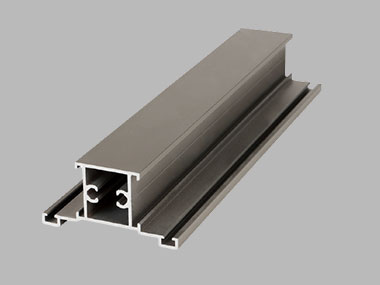
Why Lightweight High-strength Aluminum Profile For Glass Equipment Assembly
Date:2026-07-22
View: 3665 Point
The glass processing and assembly industry is developing rapidly in the direction of automation, high precision and long-term effectiveness, and the disadvantages of traditional steel equipment are gradually highlighted.Lightweight high-strength aluminum profiles have become the core material for glass equipment manufacturing due to their excellent comprehensive properties.This paper comprehensively analyzes its application advantages, adaptation scenarios and selection skills, and provides reference for industrial equipment upgrading.
Basic Definition of Aluminum Profiles
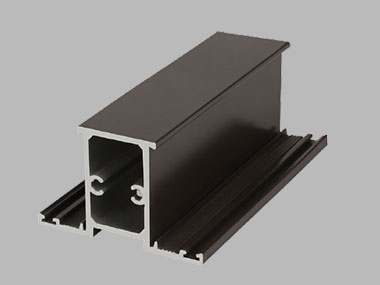
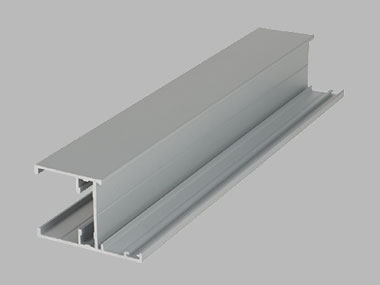
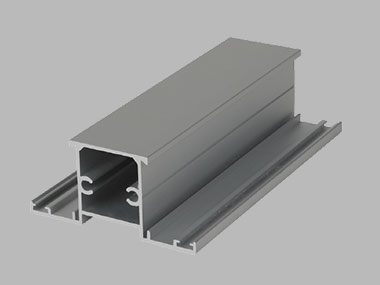
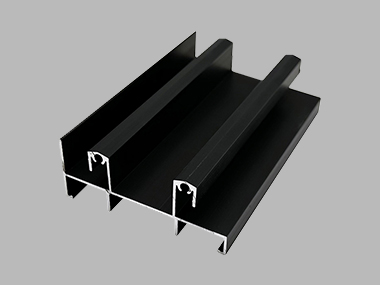
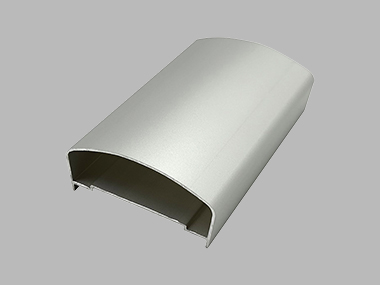
Aluminum profiles, also known as aluminum extrusion profiles, are mainly made of 6000 series aluminum alloys as raw materials, and are made into various regular cross-section structural members by melt extrusion process.The processing technology can accurately control the profile size, support personalized customized section shapes, and adapt to the manufacturing requirements of multiple types of industrial equipment. In the field of glass equipment, aluminum profile is the core structure substrate, which is widely used in the frame construction of glass cutting, edging, tempering, hollow lamination and other full-process equipment.At the same time, it is also used for equipment conveying structure, protection system and automatic assembly module, which is suitable for various glass product production and processing scenarios.
Aluminum Profile Market Demand Growth
All walks of life pay more and more attention to energy conservation, environmental protection and low-carbon production, and the glass industry also continuously implements green production standards.The recyclable characteristics and lightweight energy-saving advantages of aluminum profiles are in line with the development trend of the industry and have become the mainstream direction of equipment manufacturing materials. The glass processing industry continues to increase in automation, modular, upgradable equipment has become just needed.Aluminum profiles adapt to automation module integration, which can quickly build intelligent production lines to help double improve production efficiency and processing accuracy.
How High-strength Aluminum Profiles Improve Structural Stability
Main Alloy of Aluminum Profile
Industrial glass equipment commonly used high-strength aluminum profiles are mainly divided into 6000 series and 7000 series, all through precision extrusion + heat treatment process to strengthen mechanical properties.The strength and toughness of different series profiles are adapted to different working conditions, which can meet the structural bearing requirements of glass equipment. 6000 series profiles represented by 6061 and 6082 have balanced strength, plasticity and corrosion resistance, and have good welding performance. They are the preferred materials for conventional frames and bases of glass equipment.7000 series add zinc, magnesium and other elements, strength close to steel, suitable for heavy load and high precision equipment structure.
Profile Strengthening Equipment Stability
High-strength aluminum profiles have the ultimate strength-weight ratio, which can effectively reduce the deformation and deflection of the equipment during operation and reduce the position deviation in the glass processing process on the basis of greatly reducing the weight of the equipment.At the same time, it can improve the anti-seismic and anti-wind pressure capabilities of the equipment and adapt to industrial continuous production conditions. Relying on the advantages of extrusion technology, the profile can optimize the section structure, thicken and strengthen in the stress concentration area, and the hollow section design can effectively resist bending, torsion and other external forces.With heat treatment process, the fatigue resistance of profiles is greatly improved, and the structure can be maintained stable for long-term cyclic operation.
Aluminum Profile Equipment Application Scenarios
In glass processing mainframe equipment, high-strength aluminum profiles are used to build equipment racks, gantry structures and conveying bases, which can stably carry heavy glass plates, eliminate glass damage and size deviation caused by processing shaking, and ensure fine processing effect. In the field of industrial automation, the profile is suitable for glass processing robots and CNC auxiliary equipment bases. Stable structural performance ensures accurate positioning and high-speed operation of equipment.Building glass curtain wall processing equipment also relies on its stability to adapt to outdoor loads and complex environmental conditions.
Aluminum Profiles Provide Flexible Modular Assembly Solutions
Design Principle of Modular Aluminum Profile
Modular aluminum core adopts T-groove, V-groove standardized structure, with unified specifications of connectors, brackets and accessories, forming a standardized assembly structure system.Abandoning the traditional welding process, relying on mechanical splicing to complete the equipment construction, the assembly threshold is greatly reduced. This type of profile adopts universal size standard, covering mainstream specifications such as 30mm, 40mm, 60mm, etc. Different specifications of profiles and accessories can be universally adapted.Enterprises can freely combine and build according to production needs, and flexibly adapt to the assembly and transformation needs of various glass equipment.
Flexibility of Modular Assembly
Modular aluminum profiles support unlimited point adjustment. After the equipment assembly is completed, you can add or remove sensors, fences, conveying components and other accessories at any time without overall reconfiguration of the equipment structure.It can quickly adapt to the production and processing requirements of glass products with different size. Profile cutting, processing is convenient, can be customized according to the equipment design requirements of any length, with a wealth of supporting hardware, can quickly assemble workbench, protective enclosure, automation modules and other structures, adapt to the glass workshop diversified production scenarios.
Modular Assembly Improves Productivity
The transformation of traditional steel equipment requires long-term welding, polishing, and painting operations, which is long and costly.Modular aluminum profiles can be quickly disassembled and reconstructed with simple tools, greatly shortening the equipment debugging and upgrading cycle, and helping enterprises to quickly upgrade their production capacity. The modular structure is highly compatible, which can easily interface pneumatic, electronic control, Internet of Things sensing and robot equipment to meet the intelligent upgrading requirements of glass processing.At the same time, the profile components can be reused, effectively reducing the material loss and production cost of equipment transformation.
Necessity of Surface Treatment
The original aluminum profile only comes with a thin layer of natural oxide film, which has limited protective performance and cannot resist the long-term corrosion of glass dust, detergents and humid air in the glass workshop.Long-term use is prone to oxidation, wear, color and other problems, affecting the use and appearance of equipment. Professional surface treatment process can thicken the protective layer of the profile, make up for the performance shortcomings of the original aluminum, and customize the color and surface texture.It can not only protect the profile structure in an all-round way, but also unify the appearance of the equipment and improve the overall cleanliness and standardization of the workshop.
Introduction to Mainstream Surface Treatment
Anodic oxidation is the most commonly used treatment process for industrial equipment, and the oxidation protective layer is thickened electrochemically, and the thickness can reach 5-25 microns.The treated profile has high surface hardness, wear resistance and corrosion resistance, uniform and stable color, and is not easy to fade and fall off after long-term use. Powder spraying adopts electrostatic spraying + high temperature curing process, which can form dense and uniform protective coating with excellent scratch resistance, ultraviolet resistance and chemical corrosion resistance.Support matte, bright, metallic and other textures, equipment aesthetics greatly improved.
The Value of Surface Treatment for Glass Equipment
After professional treatment of aluminum profiles, long-term resistance to glass dust wear, acid and alkali detergent corrosion and temperature changes, equipment structure is not easy to aging damage.Greatly reduce the frequency of equipment maintenance, effectively extend the overall service life of glass processing equipment. The regular and beautiful profile surface is convenient for daily cleaning and can quickly remove glass dust and stains attached to the surface of the equipment to ensure a clean production environment in the workshop.Uniform appearance texture can also enhance the professional image of enterprise production equipment.
Why Aluminum Profiles Are Ideal for Glass Panel Integration
Material Suitability
The thermal expansion coefficients of aluminum profiles and glass are highly similar, and when the ambient temperature changes, the deformation amplitude of the two is basically the same, which can effectively avoid the problems of glass cracking and sealant falling caused by temperature difference, and ensure the stability of glass assembly structure. Relying on the characteristics of high strength and weight ratio, aluminum profiles can create thin and narrow frame frames, which can stably carry large glass sheets without heavy structure.It not only solves the load-bearing problem of glass assembly, but also maximizes the retention of glass transparent vision.
Design and Performance Advantages
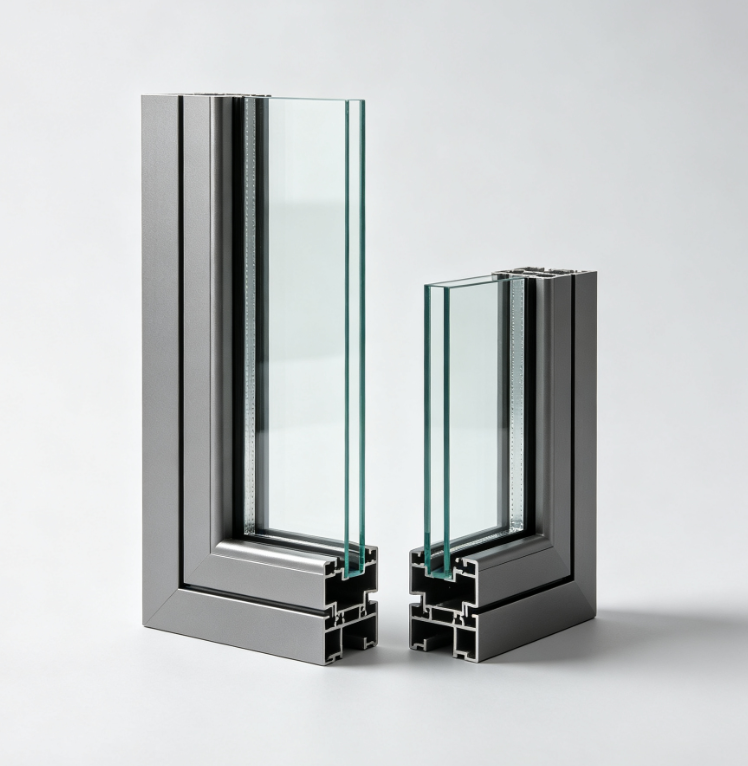
Customized extruded aluminum profiles can reserve exclusive glass card groove, sealing bead structure, with special sealant gasket, can realize the sealed assembly of glass sheet.Effectively guarantee the airtightness and watertightness of the assembly structure, and adapt to high-end products such as insulating glass and curtain wall glass. The profile can easily resist wind pressure, earthquake load and glass weight by strengthening the structure through internal reinforcement, and is suitable for large size glass assembly scenes such as large curtain walls and floor-to-ceiling windows.With the insulation broken bridge structure, it can also improve the energy-saving effect of the glass system.
Multiple Application Scenarios
In the glass production equipment, aluminum profiles are used for the integrated installation of equipment protective glass, observation windows and automatic assembly station glass baffles, with stable structure, convenient disassembly and assembly, convenient equipment maintenance and glass replacement, and suitable for mass production of assembly lines. In the field of architecture, aluminum profile is the core frame material of glass curtain wall, lighting roof and indoor glass partition, which has the advantages of beauty, stability and energy saving, and perfectly adapts to the lightweight, transparent and green design requirements of modern buildings.
Better Corrosion Resistance for Long-term Equipment Operation
Principle of Aluminum Corrosion Resistance
Aluminum profiles will automatically generate a layer of dense and stable oxidation protective film after contact with air, which can isolate the contact between air, water vapor and substrate and prevent continuous oxidation corrosion of internal aluminum.The oxide film has self-healing properties and can quickly heal after slight damage. Different from the rust and continuous corrosion characteristics of steel, aluminum oxide film has strong adhesion and will not peel off in large areas.Even in wet, dusty glass processing conditions for a long time, it can continuously protect the profile substrate and maintain structural integrity.
Corrosion Resistance Strengthening Methods
Reasonable alloy selection is the basic anti-corrosion means, 6061, 6082 and other 6000 series alloys, while ensuring structural strength, have excellent corrosion resistance, is the standard material for glass equipment profiles, suitable for most conventional processing conditions. With anodizing, powder spraying and other surface processes, it can further thicken the protective barrier and isolate the corrosion of acid and alkali reagents and glass dust.At the same time, optimize the structural design of the equipment, avoid the dead angle of accumulated water and dust, and improve the anti-corrosion ability in all directions.
Equipment Operation Value Brought by Long-term Corrosion Protection
Excellent anti-corrosion performance allows aluminum profile equipment to be maintained without frequent rust removal and painting, greatly reducing the labor and material costs of equipment operation and maintenance in the later stage.The equipment can maintain good structure and clean appearance for a long time, and stably adapt to continuous production operations. The structural characteristics of long-term non-corrosion deformation can ensure the stable processing accuracy of glass equipment and avoid glass processing deviation and damage caused by structural corrosion deformation.Effectively improve the production qualification rate and ensure the production efficiency of enterprises.
Core Equipment Structure Application
Aluminum profiles can be used to make frames and bases for core equipment such as glass cutting, edging, tempering, and interlayer. They are light in weight and rigid enough to have good shock absorption effect.It can effectively buffer the vibration of equipment operation and ensure the accuracy and stability of glass fine processing. Relying on modular design advantages, profile equipment frame can be flexibly upgraded to meet the processing needs of different specifications of glass products.No need to replace the whole equipment, you can complete the production line iteration, greatly reducing the cost of equipment upgrade.
Conveying and Protection System Applications
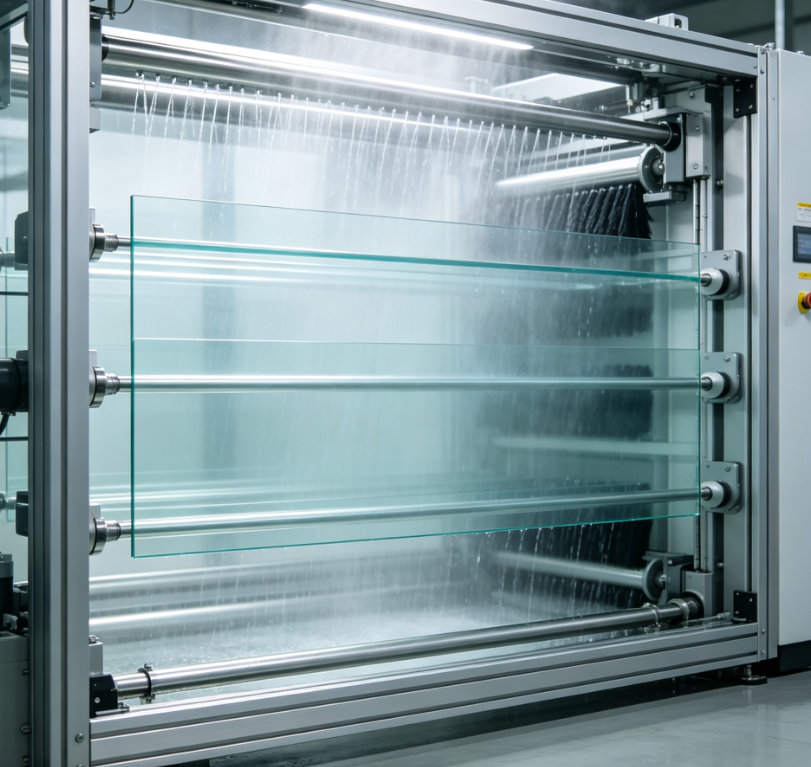
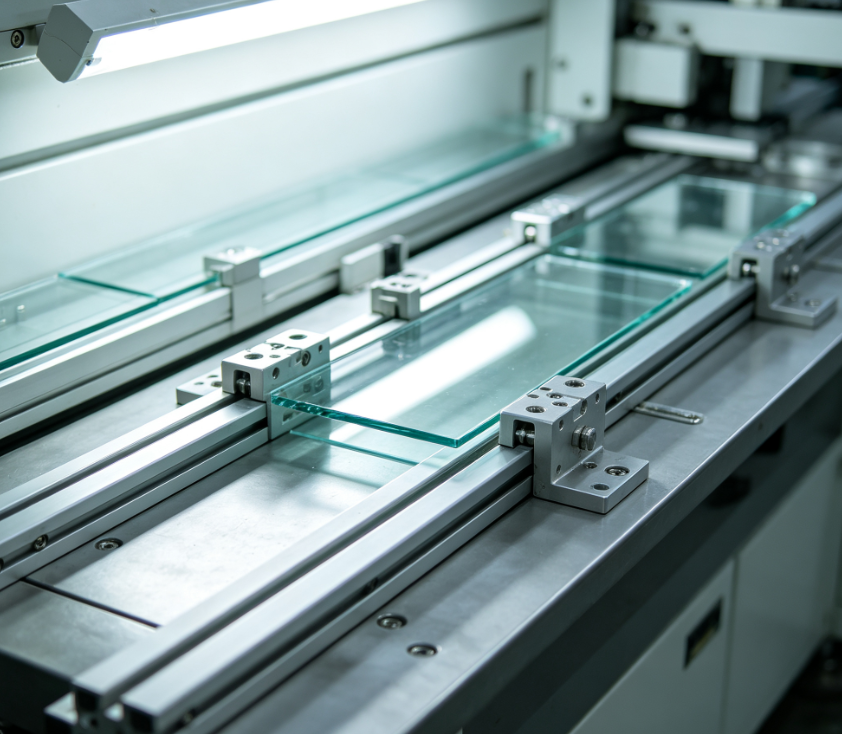
In glass conveying equipment, aluminum profiles are used to make conveying rails, support brackets and transfer structures. The lightweight characteristics reduce the energy consumption of equipment operation, and the stable conveying structure can effectively avoid scratches and bumps on the glass surface. The profiles can be quickly assembled into equipment protective enclosures, safety nets and dust-free protective cabins to meet the clean production requirements of glass processing.The protective structure is convenient to disassemble, convenient for equipment maintenance and workshop layout adjustment, giving consideration to safety and practicality.
Automation Auxiliary Equipment Applications
High strength aluminum profiles are suitable for gantry truss, robot arm base and positioning tooling of glass automation production line. The structure is stable and the positioning is accurate. It can meet the high-precision operation requirements of high-speed automatic processing and adapt to intelligent production scenarios. At the same time, it can make glass assembly workbench, positioning fixture and other auxiliary equipment, light structure, flexible adjustment, suitable for manual and semi-automatic assembly operations, effectively improve the glass plate assembly efficiency and assembly accuracy.
How to Choose the Right Aluminum Profile for Glass Equipment Assembly
Alloy Series Selected According to Strength Requirements
Conventional glass processing equipment frame, protective structure, conveyor bracket, preferably 6000 series 6061, 6082 profiles, balanced performance, high cost performance, can meet the overwhelming majority of conventional conditions of load bearing and stability requirements. For high-load conditions such as heavy-duty gantry structure and high-speed automatic precision equipment, 7000 series ultra-high strength profiles should be selected to minimize structural deformation and ensure long-term high-precision stable operation of equipment.
Determine Profile Specification and Structure According to Working Conditions
Light load protection, small auxiliary equipment can choose 30-45mm small and medium-sized profiles, light weight, high cost performance.Heavy-duty host frame, large-scale conveying equipment need to choose 60-90mm large-scale profiles, improve the bearing capacity. The hollow closed section profiles with reinforcing ribs are preferred for the key parts of the force, and the anti-torsion and anti-bending properties are stronger.Conventional assembly structure uses standard T-groove profiles to ensure flexibility and versatility of modular assembly.
Combined with the Use of Environmental Selection Surface Technology
Conventional drying workshop, anodizing process can meet the anti-corrosion and wear requirements, excellent cost performance.For complex working conditions with humidity and chemical reagents, high-end protective processes such as powder spraying and PVDF coating are preferred. Dust-free workshop, high-end intelligent production line, can choose delicate matte, high cleanliness surface treatment technology, not only to ensure the protection performance, but also to maintain the workshop clean and beautiful, adapt to high-end production standards.
Comprehensive Adaptability and Cost Selection Points
When selecting models, priority should be given to ensuring modular compatibility of profiles, ensuring that accessories are universal and can be upgraded in the later stage to extend the service life of equipment.At the same time, combined with equipment precision, weight limit and other parameters, screening suitable profile models. Considering the initial procurement cost and the later operation and maintenance cost, priority shall be given to the mainstream profiles that can be recycled, low maintenance and high adaptation, so as to avoid the shortage of accessories and high transformation cost caused by niche profiles, and improve the comprehensive cost performance.
Conclusion
Lightweight high-strength aluminum profiles rely on multiple advantages such as stable structure, flexible assembly, anti-corrosion durability and strong adaptability to fully meet the production and assembly requirements of glass equipment.Its all-round performance advantages can help the glass industry equipment to improve quality and efficiency, green upgrade, is the preferred substrate for modern glass processing equipment manufacturing, application prospects are very broad.
Henan Retop Industrial Co., Ltd. Will Be There Whenever Wherever Whatever You Need