Henan Retop Industrial Co., Ltd

Position: Home > News

Aluminum Alloy Formwork: The Ultimate Guide to High-Efficiency Construction Formwork

Date:2026-05-10
View: 0 Point

As a core material for the transformation and upgrading of the construction industry, aluminum alloy formwork has completely changed the inefficient mode of traditional formwork construction by virtue of multiple advantages such as lightweight, durability, precision and environmental protection. This article comprehensively disassembles the dimensions of definition, components, installation, differences, types, applications, cost advantages, market trends and maintenance to provide practitioners with a practical guide.
What Is Aluminum Alloy Formwork?

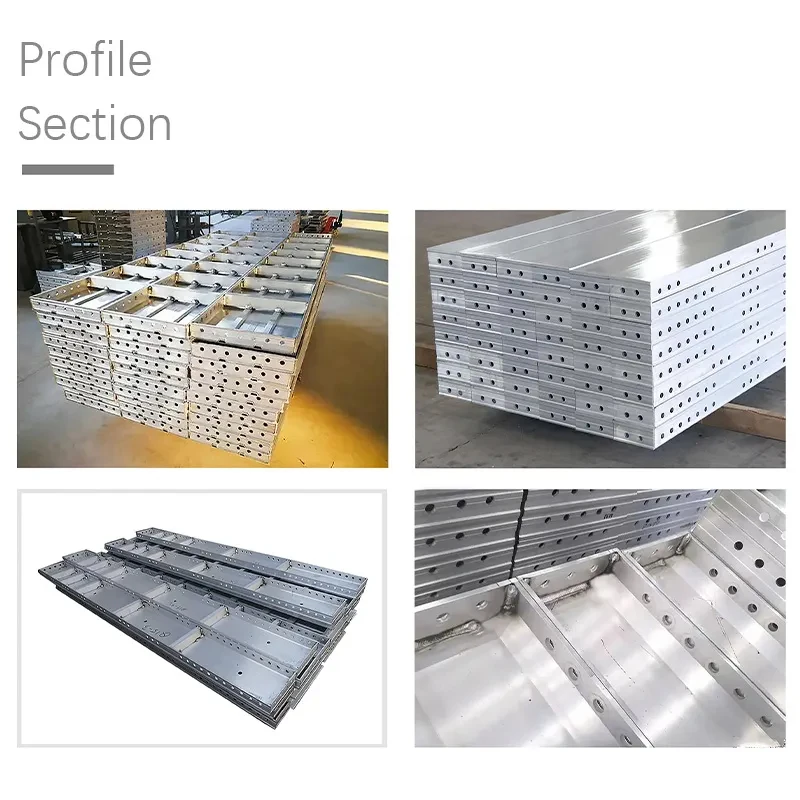
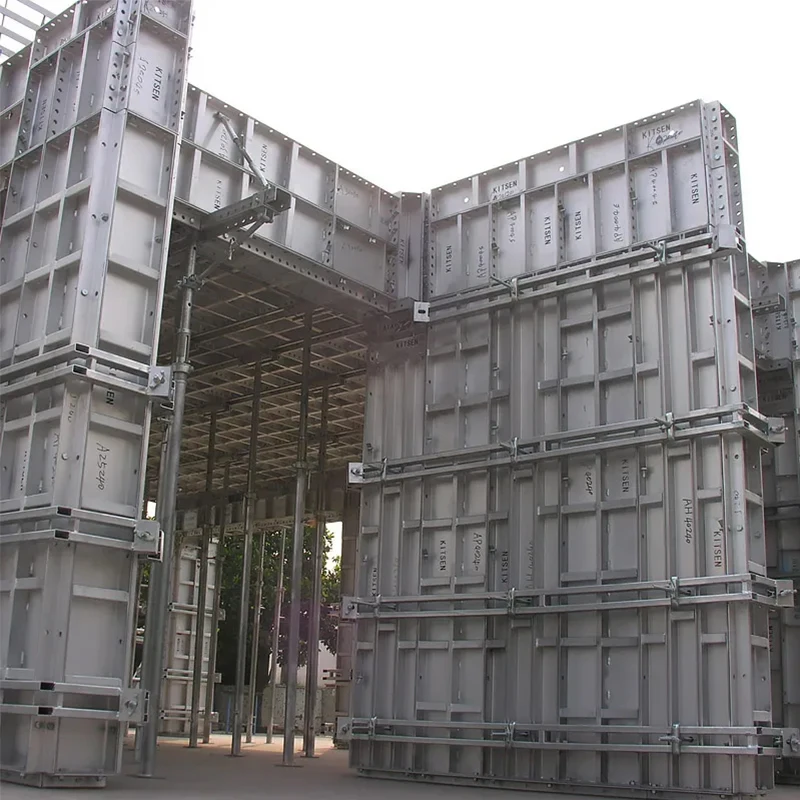
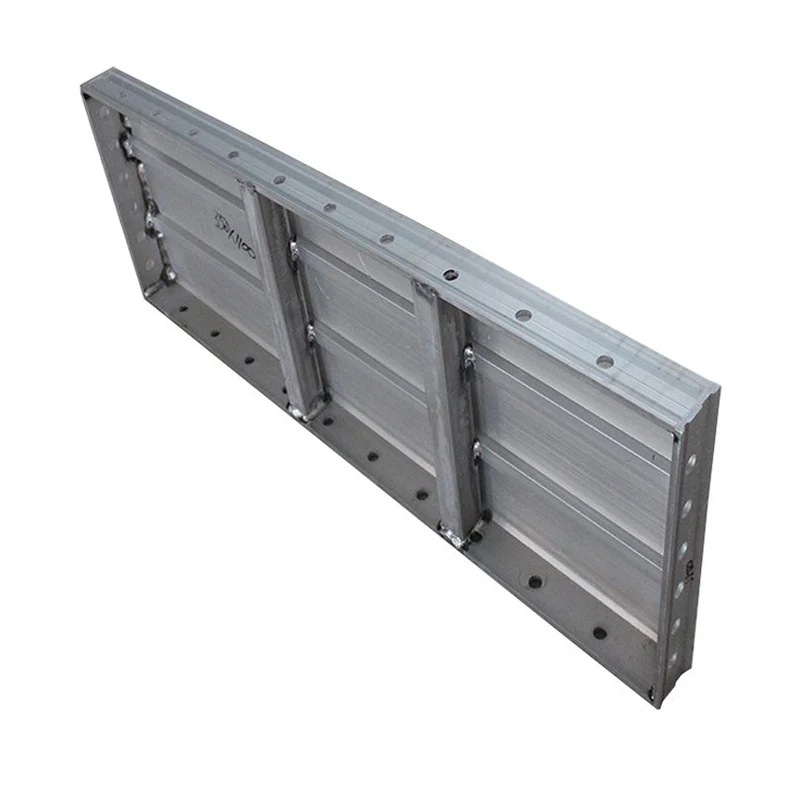
Aluminum alloy formwork is made of aluminum alloy, extruded by professional equipment. The core components include aluminum panels, supports and connectors, with flat plates and screw systems to form a complete system.
It is like building “blocks”, prefabricated according to the design drawings, transported to the site after the workers according to the number of assembly, reinforcement, pouring concrete to be dry to complete the construction, the operation is convenient and efficient.

Main Parts of an Aluminum Formwork System

Aluminum Face Plate

Aluminum panels are the core load-bearing components of a formwork system, providing a flat surface for concrete forming, while maintaining strength and dimensional accuracy. Its lightweight nature makes it easier to install and handle on site, and significantly improves construction efficiency.

Beams and Bracing

The beams and supports bear the role of load transfer and stabilization, and are made of high-strength aluminum alloy extruded profiles. The beams and braces can maintain precise alignment and reliable performance during repeated construction cycles, and are suitable for all kinds of construction projects.

Floor Formwork

Floor formwork is specially designed for the construction of horizontal concrete slabs in multi-storey buildings, which not only meets the structural load-bearing requirements, but also has the advantage of light weight. Precise engineering design allows it to adapt to harsh construction environments and guarantees construction quality.

Wall Formwork Profiles

Wall formwork profiles are used to shape vertical concrete walls, combining aluminum corner pieces and channel profiles to enhance positioning accuracy and support. The resulting wall has precise dimensions and a smooth surface that meets the requirements of high-rise building construction.

Corners and Connectors

Corners and connectors are responsible for fixing each formwork component to ensure structural integrity and alignment accuracy during construction. They are made of aluminum alloy tubes with excellent strength-to-weight ratio, corrosion resistance and reusability.

Step-by-Step Guide to Installing Aluminum Slab Formwork

Before installation, the site should be cleaned up to level and clean, and the ground should be leveled with cement mortar where the error of the ground is more than 5mm; check the model number of formwork components, and prepare fixtures, pillars, safety equipments, torque wrenches and tools such as laser projector (accuracy ±1mm/10m).
At the stage of assembly, the first line will be positioned, and the rods will be laid according to the spacing of 600mm×600mm to ensure that the top elevation error is not more than 2mm; then the main and secondary keel will be installed and locked, and the aluminum panels will be spliced according to the number, and the gap will be controlled to be within 1mm, and the oversized area will be filled with sealant; finally, the level will be calibrated, and at least two pins will be installed to fix each connection point.
After the acceptance of the template, pour concrete, the thickness of layered pouring is not more than 500mm, and the vibrating rod is not less than 100mm away from the template; during the pouring, a person will inspect the status of the template, and reinforce it immediately if it is found to be shifted; after the pouring, clean up the overflowing slurry in time, and maintain the concrete for not less than 5-7 days, and the strength is 75% or more before removing the template.

How Aluminum Formwork Differs from Traditional Formwork Materials

Aluminum formwork differs from traditional wood and steel formwork in its core advantages of light weight, strength and high construction precision. As a new type of formwork after wood and steel formwork, it can be mechanically processed, spliced and molded, and is suitable for all kinds of concrete projects.
Wooden formwork is easy to deform and wear out, steel formwork is heavy and easy to rust, while aluminum alloy formwork is anti-corrosion and anti-rust, and can be reused. Its lightweight characteristics simplify the handling process, fast and safe installation, reduce labor investment, but also to ensure that the surface of the concrete is smooth, reducing the cost of repair later.

What Are the Different Types of Aluminium Formwork Systems Available Today?

Modular Aluminum Formwork Systems for Standardized Construction

The modular system is suitable for large-scale standardized projects. The prefabricated panels are fixed in size and can be assembled by workers after 2-3 days of training. It takes only 7 days to construct a single-story 1000building, which is 50% shorter than wooden formwork, and is suitable for projects such as housing, commercial housing and office buildings.
Its accessories are universal, can be used interchangeably in different projects, and can be lifted into place after pre-assembly off-site, reducing the amount of on-site work and the impact of weather on construction.

Customized Aluminum Alloy Formwork System for Complex Designs

For complex structures such as curved and shaped walls, the customized system is manufactured exclusively according to the site drawings through 3D modeling by BIM software, and pre-assembled and tested in the factory to avoid problems in advance.
For example, for the 8m radius curved exterior wall of a commercial complex, the template was split into fan-shaped panels with a curvature error of ±0.1°; the system was adopted for the shaped dome of a science and technology museum in Beijing, realizing the precise molding of complex curved surfaces without the need for subsequent modification.

Hybrid Aluminum Alloy Formwork System Integrating 0ther Materials

The hybrid system uses aluminum alloy to ensure the strength of the stressed parts, while the non-stressed parts are matched with wood, plastic and other materials to reduce the cost, which is suitable for projects with limited budgets.
A township resettlement housing project adopts this system and uses recycled plastic formwork for non-stressed parts, which reduces the cost by 15-20% compared with pure aluminum alloy formwork, and the molding quality complies with the specification requirements, which is highly flexible.

Top 10 Applications of Aluminum Formwork Systems

Office Buildings

The layout of high-rise office buildings is uniform, and the modular and reusable characteristics of aluminum alloy formwork realize rapid construction. For a 28-storey, 1500m2 standard floor office building, the installation of formwork for each floor takes only 5 days, and the construction cycle of the project is 20 days ahead of schedule, and the surface of concrete is smooth and meets the requirements of visual quality.

Residential Building

Most of the batch residential projects adopt standardized floor design, strong adaptability of aluminum alloy formwork, which can accelerate the process of concrete curing. This helps the developer to realize fast delivery while guaranteeing quality.

Commercial Complex

The structure of commercial complexes is complex, and the combination of modular and customized aluminum alloy formwork design is perfectly adapted. For a large-scale commercial complex project, customized formwork was used for the curved atrium of the shopping center, and modular formwork was used for the standard floors of the office building and the hotel, which shortened the construction cycle by 60 days and increased the rental income by about 5 million yuan by opening 2 months earlier.

Hospital

The layout of the hospital building is regular, with high requirements on the construction environment. For a 15-story inpatient building project of a tertiary hospital, the construction cycle of aluminum alloy formwork is 90 days, which is 30 days shorter than that of wooden formwork, and the noise at the construction site is controlled to be less than 60dB, which reduces the disturbance to the medical order, and the surface of the formwork is easy to be cleaned and disinfected, which is in line with the hygiene standard.

Hotel

The layout of the standard guest room floor of the hotel is uniform, and the structure of the public area is complicated. A five-star hotel uses modular formwork for the 20-story guest room floors, and it takes only 4 days to install each floor; customized formwork is used for the complex parts of the podium, shortening the construction cycle by 45 days, and the concrete surface is smooth, so it can be directly decorated.

Teaching Building

Teaching buildings have a regular layout and high requirements for quality and safety. In the project of a university with 3 10-storey teaching buildings, it takes 5 days to install formwork for each storey, and the construction cycle takes 150 days. The formwork system is stable, no safety accident occurs, and the durability of the formed structure is good, which reduces the cost of maintenance in the later stage.

Bridge

Bridge construction faces challenges such as large-scale pouring and overhead work, and the lightweight and modular characteristics of aluminum alloy formwork optimize the construction process. For a highway project with 10 viaducts, the modular design of the formwork facilitates transportation and installation, and the construction period is 180 days, 60 days shorter than that of steel formwork, with excellent anticorrosion performance and adaptability to harsh outdoor environments.

Pipe Corridor

The construction space of underground pipe corridor is narrow and the demolding requirement is high, the installation speed of aluminum alloy formwork reaches 10m/day, and the side wall formwork can be demolded in 24 hours and the roof formwork can be demolded in 72 hours, which is 50% shorter than that of traditional formwork. In a 5km pipe corridor project, the formwork can be reused more than 250 times and is 100% recyclable, which is in line with the requirements of environmental protection.

Tunnel

Tunnel construction environment is harsh, aluminum alloy formwork modular design is easy to install, the installation speed is 8m/day, and the strength is high enough to withstand the pressure of surrounding rock. Its customized features can be adapted to different cross-section variations, and its smooth surface reduces the roughness of the tunnel wall, improves ventilation and drainage efficiency, and adapts to humid and dark environments.

Railroad

The railroad project is highly standardized and large-scale, and the aluminum alloy formwork is suitable for large-scale construction.
For a 50,000m2 high-speed railway station project, modular formwork is used for platform and waiting hall, with an installation speed of 200m2/day; customized formwork is used for underground passage, shortening the construction cycle by 30 days and meeting the strict quality requirements of high-speed railway projects.

What is the cost - effectiveness of aluminium shuttering?

Durability and Aeusability

Aluminum formwork can be reused 200-300 times, far exceeding the service life of wooden formwork. A single investment can be spread over several projects, reducing the cost of repeated purchases, and aluminum is corrosion-resistant, so maintenance costs are extremely low.

Faster Construction Speed

Standardized components prefabricated in the factory are assembled on site without complicated adjustment, and the assembly and disassembly efficiency is high. A shorter construction cycle means less labor, equipment rental, and management fees, and the building can be put into service earlier to generate revenue sooner.

Reduced Labor Requirements

Formwork is lightweight and simple to install, so ordinary workers can be trained and ready to work, reducing the number of construction workers required. High-precision molding makes the concrete surface smooth, eliminating the need for a large number of subsequent processes such as plastering and repairing, further saving labor.

Reduction of Waste Generation

Aluminum formwork has a high reuse rate, producing almost no waste during construction, and 100% recycling of used aluminum materials. This not only reduces waste disposal costs, but also provides additional value through recycling, which is environmentally friendly and economical.

Design Flexibility

Aluminum alloy formwork can be customized according to the needs, suitable for all kinds of architectural shapes, without the need to open separate molds for special structures. One set of formwork can be used for many different projects, reducing design and manufacturing costs.

Improved Safety

The lightweight feature of aluminum alloy formwork reduces the safety risk during lifting and handling, and the standardized components guarantee the stability of the structure. Safe construction environment can reduce accident compensation, medical expenses and delayed losses.

Maintenance Tips for Aluminum Formwork
After each use, use non-abrasive tools such as plastic scraper, soft brush and neutral cleaner to clean the concrete residue, prohibit the use of high-pressure water gun to rinse the joints or corrosive agents, and dry the surface to prevent oxidation after cleaning.
After cleaning, check the panel damage (over 50mm² need to be replaced), keel deformation (over 3mm need to be corrected), connectors wear and tear, and replace the damaged parts in time; measure the accuracy of formwork dimensions, categorize and mark them.
The formwork should be stored in a dry, ventilated and flat place, stacked on special shelves or pallets with a height of not more than 1.5m, and the panels should be stacked face to face or back to back and padded with wooden squares. Long-term storage (more than 6 months) need to be painted protective coating, outdoor storage need to be covered with rainproof cloth, check once a month.

How is the aluminium formwork market expected to develop by 2026?

Regional Growth Patterns & Market Segmentation

Asia Pacific will continue to dominate the aluminum formwork market due to rapid infrastructure development in India, China, and Southeast Asia. The Middle East focuses on the construction of high-rise residential buildings, where aluminum formwork is preferred for its quick turnaround properties in extreme environments.
North America and Europe are mainly using aluminum formwork for sustainable redevelopment projects to modernize existing buildings with minimal environmental impact. The formwork system is suitable for low, medium and high-rise buildings, combining speed and precision, making it an ideal choice for both new construction and renovation projects.

Competitive Landscape and Industry Consolidation Trends

Material suppliers, manufacturers and technology companies are forming key collaborations to drive innovation in the aluminum formwork sector. Large companies are merging and acquiring to increase capacity and optimize supply chains in growth markets, while smaller manufacturers are focusing on customization to fit complex needs such as curved walls and mixed-use projects.
Industry consolidation has resulted in an ecological network that complements technical capabilities, precision construction, and additional services, including digital design assistance and on-site operator training, to enhance customer experience and project success.

Investment Drivers for Market Expansion

Government incentives for green certifications such as LEED, BREEAM, etc. are boosting the demand for reusable products such as aluminum formwork and encouraging companies to opt for durable solutions to reduce the total project cost.
Private equity funds see building technology as a fast-growing area with potential for scale. As digital tools merge with prefabrication processes, capital continues to flow into aluminum formwork production lines, accelerating technological renewal and industrial upgrading on a global scale.

Conclusion

With the advantages of standardized design, modular assembly, high strength and durability, and environmental protection and recyclability, aluminum alloy formwork comprehensively surpasses traditional formwork, providing reliable support for cost reduction and efficiency increase in construction projects. By mastering the key points of selection, installation and maintenance, the construction efficiency can be increased by more than 30%, and the application prospect of aluminum alloy formwork will be broader, injecting power for the high-quality sustainable development of the construction industry.
 
Henan Retop Industrial Co., Ltd. Will Be There Whenever Wherever Whatever You Need
You Are Welcome to : phone call, Message, Wechat, Email& Seaching us, etc.
Email: sales@retop-industry.com
Whatsapp/Phone: 0086-15537183797
Share us:
Related products

Ecuador Casement Window Aluminum Extrusion

Ecuador Casement Window Aluminum Extrusion

Material: 6063/6082/6061 Aluminium
Temper:T5/T6
Thickness:0.4mm-1.5mm/Customized
P65 Sliding Window Aluminum Profile

P65 Sliding Window Aluminum Profile

Material: 6063/6082/6061 Aluminium
Temper:T5/T6
Thickness:0.4mm-1.5mm/Customized
40 casement window aluminium profile

40 casement window aluminium profile

Material:6063/6082/6061 Aluminium
Temper:T5/T6
Thickness:0.4mm-1.5mm/Customized