Henan Retop Industrial Co., Ltd

Position: Home > News

How Aluminum Perforated Panels Work in Acoustic Absorption

Date:2026-06-08
View: 0 Point

As the demand for noise reduction in modern buildings continues to rise, acoustic perforated aluminum panels have become the mainstream mute decorative building materials. It combines the advantages of lightweight and durable aluminum with a professional acoustic structure, which can efficiently solve the problems of indoor echoes and excessive noise. With the advantages of both value and performance, it is widely used in all kinds of public and commercial buildings, and is the core material for modern acoustic design.
What Are Aluminum Perforated Panels

Basic Definition and Core Characteristics of Aluminum Perforated Panels

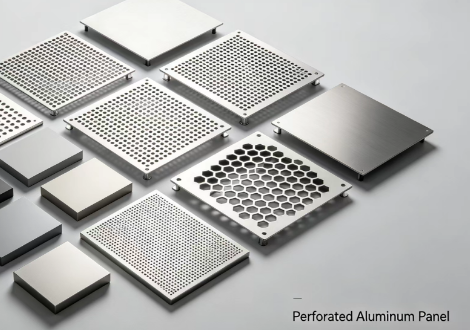
Perforated aluminum panels are a new type of building material with regular holes formed on the surface of aluminum alloy plates through precision technology of stamping and drilling. The style, size and arrangement of the holes can be customized, combining structural utility and decorative appearance.
The material inherits the inherent advantages of aluminum, such as light weight, high strength and corrosion resistance, and breaks the single protective attribute of traditional aluminum panels. It can simultaneously meet the multiple needs of building structure, appearance design and acoustic noise reduction.

Commonly Used Alloy Material Performance Advantages

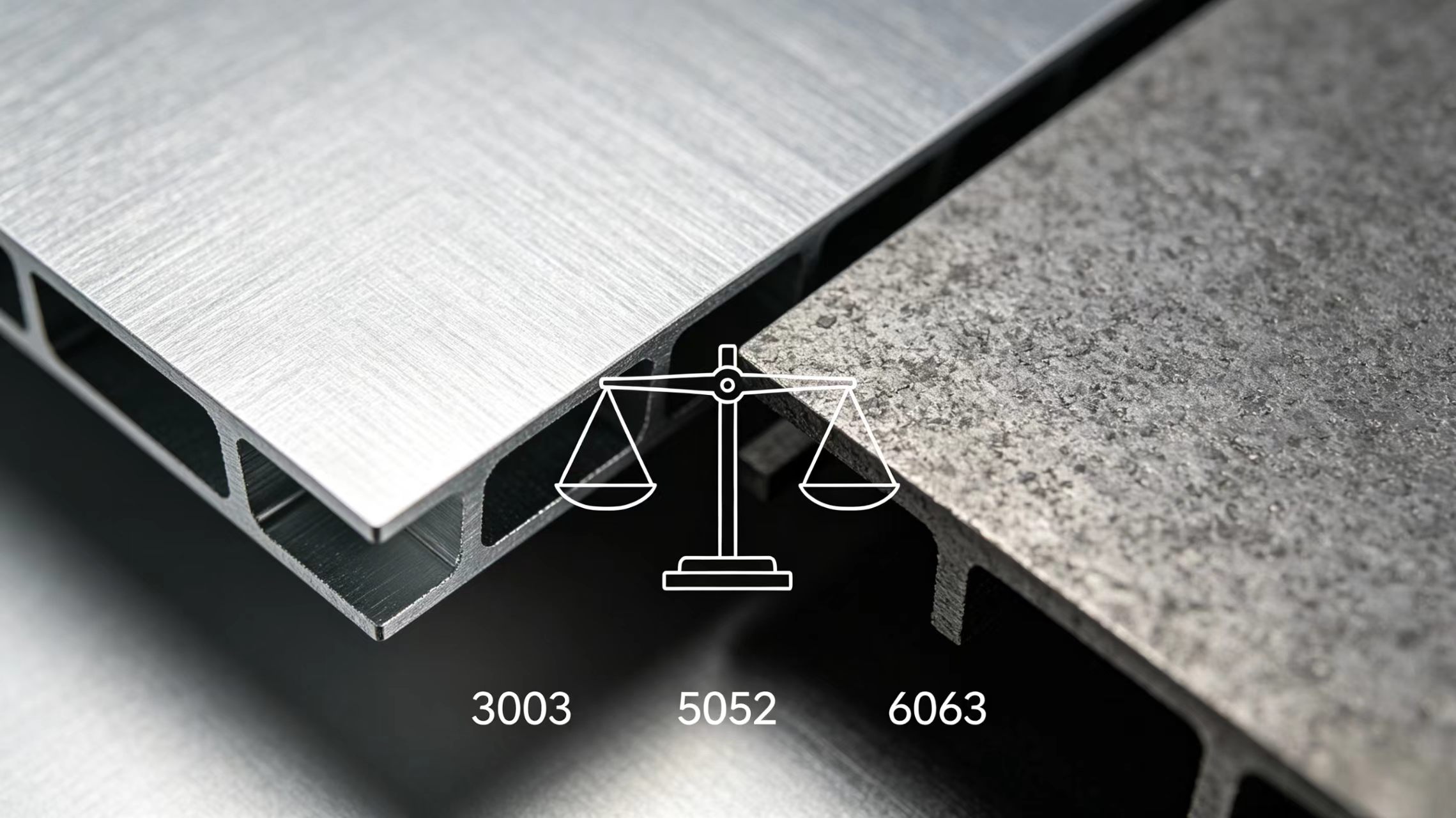
Acoustic perforated aluminum panels are mostly made of 3003, 5052, 6063 series of high-quality aluminum alloys, which have stable and reliable material performance. These alloys have strong plasticity, excellent corrosion resistance, and weigh only about one-third of steel.
Not only can guarantee the long-term use of the plate is not easy to deformation, rust, but also can significantly reduce the overall load of the building. They are suitable for most indoor and outdoor building scenes, and their adaptability and durability far exceed that of ordinary sound-absorbing panels.

Standardized Production Process

The production of perforated aluminum panels involves a number of standardized processes, first of all, high-quality aluminum coils and panels are cut accurately. Then through CNC punching, laser cutting and other processes to process round holes, square holes, hexagonal holes and other types of modeling.
After the perforation is completed, the surface treatment will be powder coating, anodizing, PVDF fluorocarbon coating and so on. Finally, the thickness of the plate and the opening rate are customized according to the requirements, fully adapting to the acoustic and decorative construction standards.

Why Acoustic Control Matters in Modern Buildings

The Core Pain Point of Noise Pollution in Modern Buildings

The density of buildings in modern cities continues to increase, and the noise generated by traffic, construction, and pedestrian flow continues to penetrate the interior of buildings. The elimination of traditional partitions in open office and teaching spaces has further exacerbated the problem of uncontrolled sound transmission.
Contemporary buildings use a lot of glass, concrete and other hard materials, which are very easy to reflect sound waves to form echoes and reverberation. Without effective acoustic control, the comfort and utility of the building space will be greatly reduced.

The Value of Acoustic Optimization for Human Health and Work

Prolonged exposure to noisy environments can lead to elevated cortisol in the human body, causing fatigue, irritability, and inattention. Noise interference in office and study scenes will directly reduce work and study efficiency.
High-quality acoustic environment can effectively enhance the clarity of language, to protect the communication efficiency of meetings, lectures, diagnosis and treatment scenes. At the same time, it can soothe the body and mind, which is in line with the design concept of healthy living in modern buildings.

Industry Standards and Green Building Compliance Requirements

Many domestic and international building standards and green certification systems have included acoustic performance as a mandatory assessment indicator. New buildings and renovation projects need to comply with acoustic specifications such as reverberation time and noise reduction coefficient.
Acoustic design that meets the standards not only meets the requirements of compliant construction, but also enhances the quality and market value of the building. It is an indispensable part of the design of modern green buildings and high-end commercial buildings.

Unique Advantages of Perforated Aluminum Panels in Acoustic Solutions

Perforated aluminum panels with backing materials such as rock wool and sound-absorbing cotton can form a highly efficient composite sound-absorbing structure that accurately converts acoustic energy. The perforation parameters can be adjusted to meet the noise reduction needs of different scenarios.
Unlike traditional sound-absorbing materials, it combines durability, aesthetics and low maintenance, and is suitable for high-traffic and high-wear scenarios. The lightweight structure also significantly reduces the pressure on building structure renovation.

The Science Behind Acoustic Absorption

Fundamental Principles of Acoustic Propagation and Interaction

Sound propagates in the form of air pressure waves, which are reflected, transmitted and absorbed when they come into contact with building surfaces. Traditional hard wall surfaces mainly reflect sound waves, which is the main cause of indoor reverberation and noise clutter.
The core objective of acoustic optimization is to maximize sound wave absorption and reduce ineffective reflection. And low-frequency sound waves compared to high-frequency sound waves are more difficult to absorb, requiring targeted structural design adaptation.

Analysis of Core Acoustic Parameters

Reverberation time RT60 refers to the time required for sound attenuation of 60 dB, the shorter the time, the clearer the space acoustics. Noise Reduction Coefficient (NRC) is 0-1.0, the higher the value, the stronger the sound absorption performance of the material.
Acoustic absorption coefficient can accurately reflect the sound absorption effect of materials in different frequency bands, high-quality acoustic materials can be balanced to cover the core frequency band of the human voice. Guarantee the acoustic comfort of all kinds of human space.

Two Core Acoustic Operating Mechanism

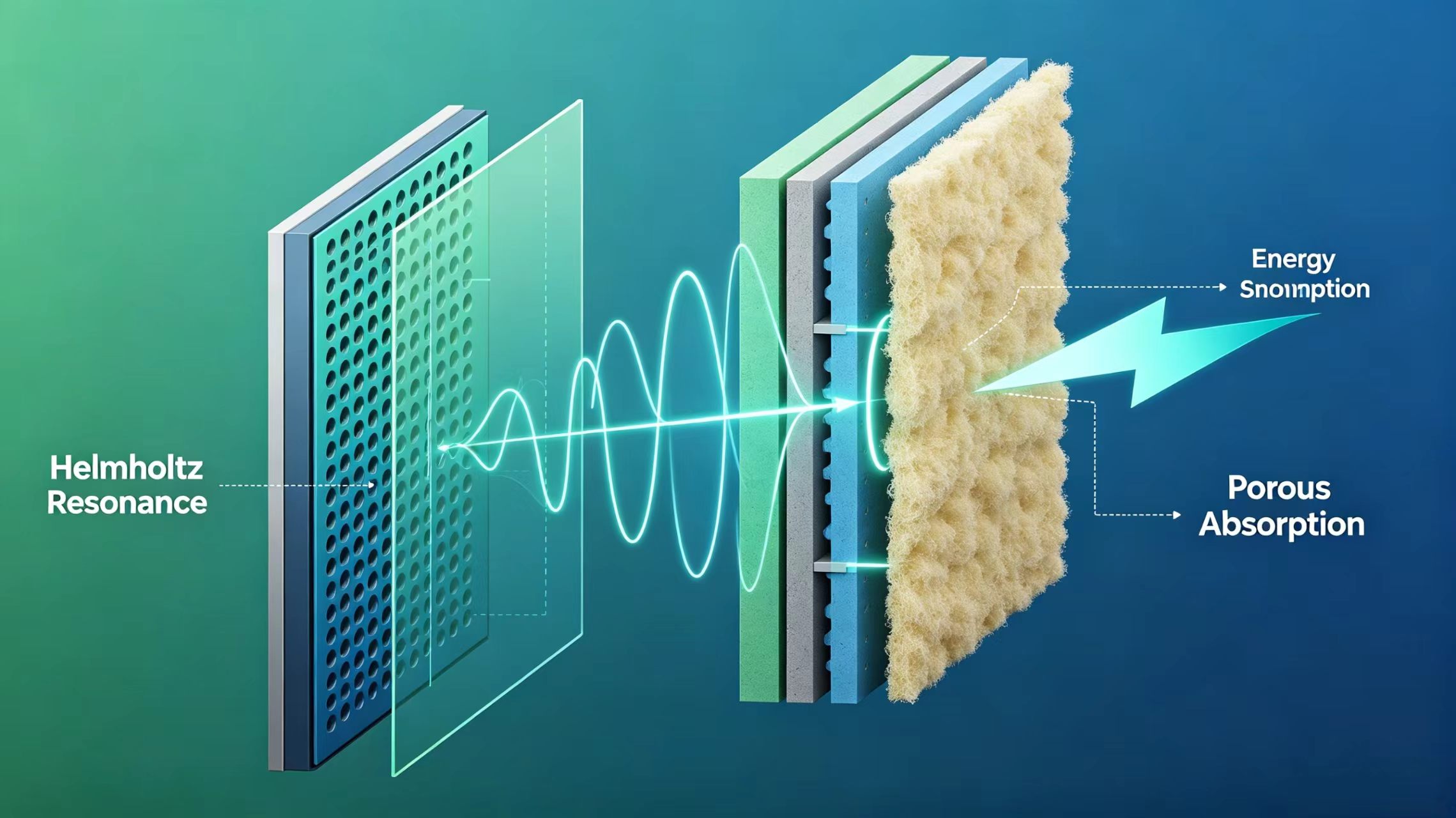
Porous acoustic relying on the backing of rock wool, glass wool and other materials such as fine pores, so that air friction consumes sound energy. This mechanism is particularly effective in absorbing medium and high frequency vocals and environmental noise.
Helmholtz resonance relies on perforations and back cavities to form a miniature resonator, which consumes sound energy through air vibration. It can be targeted to absorb low and medium frequency noise, making up for the shortcomings of the performance of traditional sound-absorbing materials.

Core Advantages of Perforated Aluminum Acoustic Performance

The perforated aluminum panel integrates the dual principles of porous sound absorption and resonance sound absorption to achieve balanced noise reduction across the entire frequency range. The metal panel is stable and durable, and can keep the acoustic structure from aging and deformation for a long time.
By customizing the perforation pattern, opening rate and cavity depth, the sound absorption curve can be precisely adjusted.
With high-density backing material, the NRC value can reach 0.7-0.95, which is suitable for all kinds of demanding acoustic scenarios.

How Aluminum Perforated Panels Absorb Sound

Multi-layer Composite Acoustic System Architecture

The sound-absorbing effect of perforated aluminum panels is not achieved by a single panel, but by the synergistic action of a complete multi-layer composite system. It consists of three core layers: the perforated surface layer, the air cavity and the porous acoustic backing, with a clear division of labor.Each layer of the structure of their respective duties, cooperate with each other, respectively, to complete the acoustic wave introduction, resonance energy consumption, porous acoustic work. Forming a complete and efficient sound wave consumption system, noise reduction effect is stable and controllable.

Step-by-step Acoustic Absorption Workflow

First of all, the sound wave penetrates the perforations on the surface of the aluminum plate and enters into the internal cavity, and the pore opening rate determines the flux of the sound wave entering. Subsequently, the air in the perforations resonates, consuming most of the low and medium frequency sound wave energy.
The remaining sound wave enters the back porous backing, and through fiber friction is converted into heat energy and completely dissipated. A small amount of sound waves are reflected by the panel surface, which prevents the acoustics of the space from becoming too dull and achieves acoustic balance.

Adjustable Core Acoustic Performance Parameters

The hole size and layout are directly adapted to different frequency bands, with small holes adapted to high frequencies and large holes optimized for low-frequency sound absorption. The hole ratio balances the sound absorption performance with the structural strength of the panel to suit different scenarios.
The depth of the back panel cavity and the density and thickness of the backing material are the key to adjusting the low-frequency noise reduction capability. Reasonable matching parameters, can realize 125Hz-4000Hz full frequency band effective noise reduction.

Core Advantages Over Traditional Sound-absorbing Materials

Compared with fabric and foam sound-absorbing panels, perforated aluminum panels have a cleaner and more high-end appearance, and can be directly used as a decorative surface layer of the building. At the same time, it has the practical characteristics of waterproof, fireproof, anti-impact and easy to clean.
Aluminum is lightweight, no need for heavy structural support, installation adaptability is very strong. With the advantage of ventilation and heat dissipation, it combines acoustic, safety and decorative properties, which makes it more cost-effective.

Key Factors That Affect Acoustic Performance

Key Factors That Affect Acoustic Performance

Openings directly determine the total amount of sound waves entering the system. 15%-25% openings balance structural strength and basic acoustic effect. 30%-40% is the optimal range for general scenarios, which is suitable for most commercial building acoustic needs.
Higher openings of 45%-60% can maximize the sound absorption effect, but will reduce the rigidity of the plate. According to the scene noise reduction needs and structural safety, reasonable choice of aperture parameters.

The Role of Hole Size and Arrangement Style

1-3mm small holes are densely arranged, which has better absorption effect on middle and high frequency noise such as human voice etc. 5-10mm large holes can effectively optimize the low frequency noise processing ability, suitable for venues, halls and other scenes.
Round holes have the most stable acoustic performance, while square holes, hexagonal holes, and shaped holes have both decorative and sound absorption effects. Staggered rows of holes provide better acoustic absorption uniformity than conventional aligned grid arrangements.

Back Cavity Depth Tuning Effect

25-50mm shallow cavity, mainly adapted to high-frequency noise absorption, suitable for offices, stores and other conventional space. 75-200mm deep cavity can strengthen the Helmholtz resonance, significantly optimize the low-frequency noise reduction.
Cavity depth is the most easily adjustable parameter for on-site construction, and can be flexibly adjusted according to the noise characteristics of the site. The overall acoustic performance can be quickly optimized without the need to replace panels.

The Core Role of Backing Sound-absorbing Materials

High-density rock wool and glass wool are the mainstream backing materials, with a density of 40-80kg/m³ to realize high-quality sound absorption across the entire frequency range. 50mm thickness meets the basic needs, and 100mm thickness is suitable for high-demand acoustic scenes.
The air permeability, fire resistance and moisture resistance of the backing material directly determines the stability of the system. High-quality backing material can avoid sound wave penetration, prevent sound absorption effect from decaying, and guarantee long-term use performance.

Influence of Panel Specification and Installation Process

1.0-3.0mm thickness of special acoustic aluminum plate, rigidity is sufficient, not easy to resonate the noise. 3003, 5052 high-quality alloys can be adapted to humid, complex environments, to avoid the aging of the material to affect the acoustic effect.
Concealed installation and tight sealing can prevent sound waves from leaking sideways and ensure the integrity of sound absorption. Different installation scenarios for wall and ceiling, the acoustic reflection angle is different, so the construction program needs to be adjusted accordingly.

The Role of Acoustic Backing Materials

Core Application Value of Acoustic Backing Materials

Perforated aluminum panels are only acoustically conductive, protective and decorative, and cannot independently provide efficient sound absorption. The real acoustic energy consumption is realized by the porous acoustic backing materials.
High-quality backing materials can form a synergistic system with aluminum panels and cavities to significantly increase the overall NRC value. It is the core key component that determines the noise reduction effect of the whole acoustic system.

Mainstream Sound-absorbing Backing Material Category Characteristics

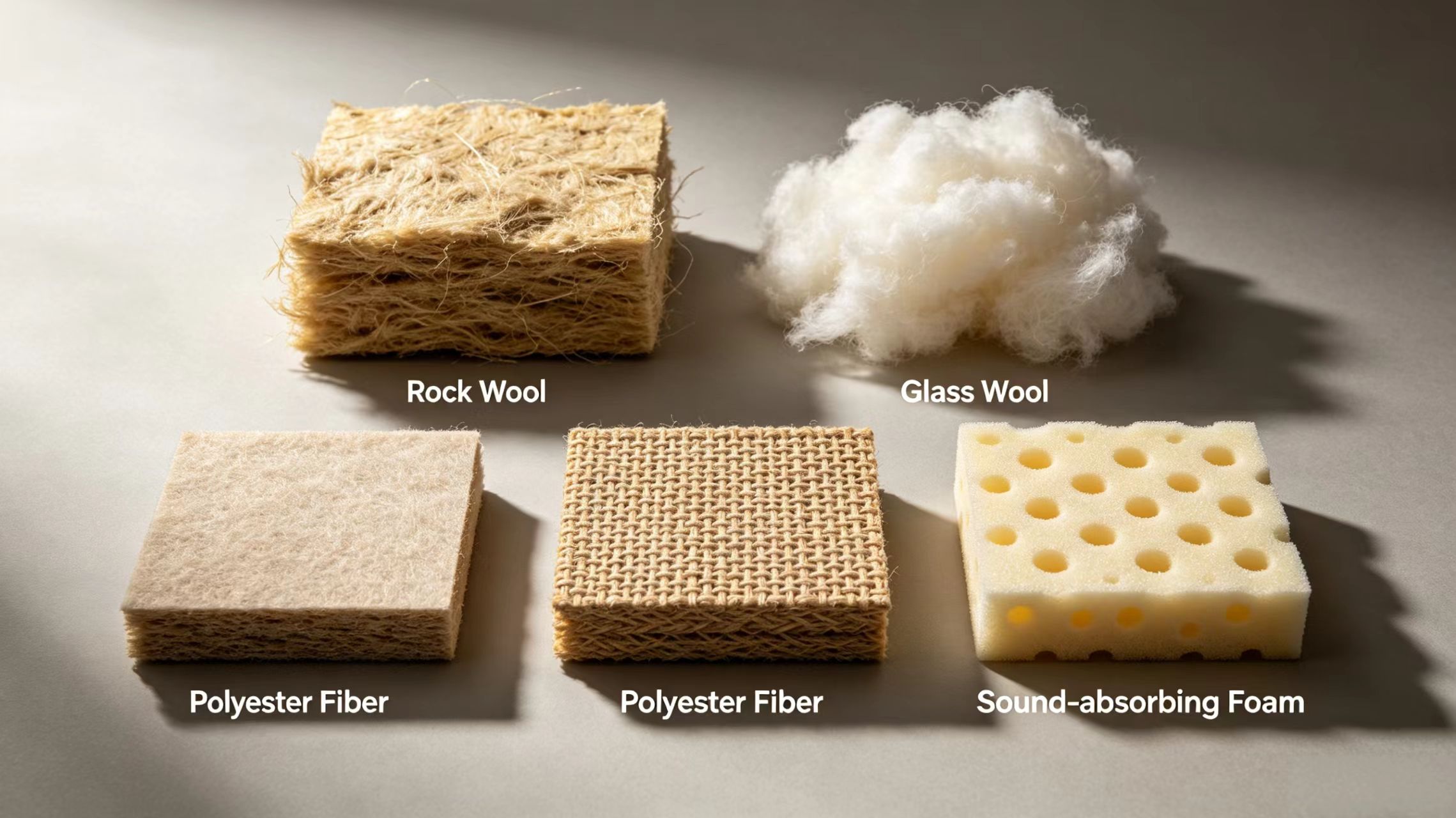
Rock wool fire rating up to Class A, excellent sound-absorbing performance in all frequency bands, suitable for all types of public buildings. Glass wool lighter weight, outstanding cost-effective, suitable for indoor conventional noise reduction scenarios.
Sound-absorbing foam and polyester fiber are environmentally friendly and non-stimulating, suitable for green buildings and human space. Matching with dustproof non-woven fabric can prevent the fiber from scattering, taking into account the sound-absorbing effect and neatness.

Key Selection Parameters of Backing Material

Thickness and density of the material determines the upper limit of sound absorption, the greater the thickness and the higher the density adaptability, the better the low-frequency noise reduction effect. Airflow resistance should be balanced, too high or too low will weaken the sound absorption efficiency.
At the same time, it is necessary to verify the fire rating and moisture-proof performance, and waterproof backing materials should be used in humid scenes. Strictly meet the requirements of the site environment and building safety codes.

Synergy Between Backing Materials and Aluminum Panels

The backing material fills the cavity, consumes the penetrating sound wave, and eliminates the secondary noise reflected from the wall. Effectively complement the aluminum plate single resonance sound absorption short board, broaden the overall noise reduction frequency band.
It can raise the basic NRC value of 0.3 of a single plate to the high quality level of 0.85-0.95. Optimize the acoustic environment of space in all aspects and meet the high standard of quiet demand.

Backing Options for Different Scenarios

For office and classroom, 50-75mm conventional rock wool is used to ensure clear human voice without noise. Auditoriums and theaters use 100mm high-density backing to achieve balanced noise reduction in all frequency bands.
Swimming pools, kitchens and other wet scenes, the use of moisture-proof special sound-absorbing materials. Green certification projects give priority to the use of recyclable polyester fiber environmentally friendly materials.

Applications of Aluminum Perforated Acoustic Panels

Applications of Commercial Office Space

Perforated acoustic panels are commonly used in open offices and business meeting rooms for ceiling and wall decoration. It can effectively reduce the reverberation of the space, eliminate the murmur of conversation, and improve the concentration and efficiency of the staff.
The appearance of the panels is simple and atmospheric, and can be adapted to various office decoration styles. At the same time, wear-resistant, easy to clean, perfectly suited to high-frequency use of commercial office scenarios.

Education and Teaching Places

Classrooms, lecture halls, auditoriums, libraries and other spaces have very high acoustic requirements. Perforated aluminum panels can eliminate echoes, optimize the propagation of the human voice, and guarantee the clarity of lectures and speeches.
The product is fireproof and safe, no dust pollution, in line with the campus safety norms. It can create a quiet and comfortable learning environment and help improve the quality of teaching.

Application in Medical and Recreational Places

Hospital waiting areas, diagnosis and treatment rooms, rehabilitation wards need a quiet and sterile environment. Perforated aluminum panels have a dense and smooth surface that is easy to disinfect and clean, eliminating the growth of bacteria.
The excellent noise reduction effect can reduce the environmental noise interference and help patients recuperate and recover. At the same time, it meets the strict fire prevention and hygiene construction standards for medical buildings.

Culture, Tourism and Entertainment Commercial Scenes

Hotel lobbies, restaurants, theaters, concert halls and other places need to balance the atmosphere and acoustics. Customized perforated aluminum panels can create characteristic decorative shapes while optimizing the sound quality of the space.
It can effectively reduce the noisy ambient sound and avoid the sound clutter from disturbing the public. Taking into account the aesthetics and comfort of the commercial space, it is suitable for diversified cultural and tourism scenes.

Transportation Hub Public Scene

Airports, stations and other large open spaces are characterized by high traffic flow and chaotic noise. Perforated aluminum panels can efficiently absorb and diffuse the noise generated by people and equipment.
The product is weather-resistant, wear-resistant and low-maintenance, suitable for semi-outdoor and high-traffic scenarios. It can maintain high quality acoustic effect and clean appearance for a long time.

Industrial and Niche Applications

Industrial machine rooms and equipment partitions can weaken mechanical noise through perforated aluminum panels to optimize the working environment in the factory. It is also widely used in stadiums and villas to optimize the acoustic experience.
At the same time, it can be used for noise barriers on the exterior walls of buildings and for noise reduction renovation of balconies. The versatility of the material for both indoor and outdoor use significantly broadens the range of applications.

How to Choose the Right Aluminum Perforated Panel for Your Project
Define the Core Acoustic Requirements of the Project

First of all, we need to locate the core target of noise reduction in the space, focusing on the optimization of acoustic clarity in offices and classrooms, and the need for full-band noise reduction in venues. Accurately lock the 250-2000Hz human voice core frequency band optimization needs.
Regular space is suitable for 0.7-0.85 NRC value, and key scenes such as audio-visual rooms and lecture halls need to reach more than 0.9. Set the parameters according to the need to avoid excessive performance or insufficient effect.

Combined With the Use of Environmental Adaptation Selection

For outdoor and humid areas, use 5052, 6063 anticorrosive alloy and PVDF weather-resistant coating. Give priority to lightweight thin plate for indoor ceiling, and use thickened plate for wall decoration to enhance the texture.
For high-traffic and high-collision scenarios, we prioritize the use of impact-resistant and easy-to-clean surface technology. Ensure the stability and service life of the plate from the environmental dimension.

Reasonable Matching of Perforation and Opening Parameters

For most acoustic projects, 30%-40% perforation rate is preferred to balance sound absorption performance and structural strength. Conventional acoustic scenes choose 2-3mm round holes, simple appearance and balanced performance.
Decorative wall surfaces can be customized with shaped perforation patterns, taking into account both face value and basic sound absorption effect. Avoid blind pursuit of high perforation rate, resulting in insufficient plate rigidity.

Optimize Backing and Cavity Matching Scheme

General scenarios with 50-100mm high-density rock wool backing to meet the basic noise reduction needs. When it is necessary to strengthen the low-frequency sound absorption, deepen 75-150mm back air cavity appropriately.
The construction needs to be well adapted to the system to ensure that the panel is compatible with the lighting, fire protection and HVAC systems.
Realize the perfect integration of acoustic performance and building function.

Selection of Suitable Materials and Surface Technology

Mainstream acoustic scene choose 3003, 5052 alloy, 1.5-3.0mm thickness with the best cost performance. Powder coating with rich colors and anodic oxidation with advanced texture can be selected on demand.
High-end green projects can choose recycled aluminum, low VOC environmental protection coating. Take into account the need for decorative effect, performance and environmental compliance.

Consider Budget and Long-term Value

High-end customized acoustic panels have a high upfront investment, but are durable and virtually maintenance-free. Lower total life-cycle costs make them ideal for public buildings with long-term operations.
Standardized panels can be used for small to medium-sized projects, balancing budget and performance.Prioritize overall price/performance over initial pricing.

Future Trends in Acoustic Aluminum Panel Systems
Intelligent Adaptive Acoustic System Development

In the future, perforated acoustic aluminum panels will be integrated with Internet of Things (IoT) sensing technology, which can monitor the space noise data in real time. By intelligently adjusting the cavity structure, it can dynamically adapt to the acoustic noise reduction needs of different scenes.
It can be linked with the building intelligent control system to realize the integrated regulation of acoustics, lighting and HVAC. It promotes the upgrading of building acoustics in the direction of intellectualization and refinement.

Popularization of Low-carbon and Environmentally Friendly Recycling Design

The industry is gradually popularizing more than 80% of highly recycled aluminum, with zero-carbon production process and environmentally friendly coating. Significantly reduce carbon emissions from panel production, in line with the dual-carbon development trend.
Modular and removable design makes the panels recyclable and reusable. The application of bio-based environmental sound-absorbing backing further enhances the green attributes of the whole system.

Customized Intelligent Manufacturing Process Upgrade

Relying on parametric design and 3D intelligent manufacturing technology, shaped and gradient perforated art panels can be customized. It takes into account personalized decorative aesthetics and precise acoustic noise reduction performance.
The process of large-size seamless panels continues to mature, reducing splicing gaps. It makes the building facade and indoor wall more neat and beautiful, and meets the needs of high-end architectural design.

Continuous Optimization of Acoustic Performance

The new composite structure can realize the low-frequency and high-efficiency sound-absorbing effect on the basis of the thin plate. Without deepening the cavity, the noise reduction frequency band can be broadened, which is suitable for compact building space.
The integration of passive sound absorption and active noise reduction technology further enhances the quieting effect in complex scenarios.
Acoustic panels can be adapted to more high-precision mute scenarios.

Healthy and Ecological Integration and Innovation

Anti-bacterial and self-cleaning functional coatings are gradually popularized, and are suitable for medical, campus and other high-standard hygiene scenarios. Photocatalytic coating can purify indoor air and improve the health quality of human life.
Bionic natural perforated texture design combines ecological aesthetics with acoustic function. It makes the silent space more in line with the natural human experience and enhances the building comfort.

Integration of Function and Appearance

Perforated aluminum panels gradually integrate lighting, photoelectric color changing and other technologies to achieve dynamic visual effects. Without affecting the acoustic performance, it enhances the sense of space decoration level.
Ultra-thin and high-performance panels are constantly iterated to save building space while guaranteeing high-quality sound-absorbing effect.It realizes multiple upgrades in value, function and space utilization.

Conclusion

Perforated sound-absorbing aluminum panels rely on the resonance and porous double acoustic principle to achieve efficient full-range noise reduction, with multiple advantages such as lightweight and durable, beautiful and easy to maintain, safe and environmentally friendly. It is widely used in office, education, medical care, transportation and other types of building scenes. With the iteration of intelligent, low-carbon, customized technology, these acoustic panels will continue to upgrade and become the core preferred material for modern green and quiet buildings.

 
Henan Retop Industrial Co., Ltd. Will Be There Whenever Wherever Whatever You Need
You Are Welcome to : phone call, Message, Wechat, Email& Seaching us, etc.
Email: sales@retop-industry.com
Whatsapp/Phone: 0086-15537183797
Share us:
Related products

Window door accessories

Material:aluminum, zinc, plastic, iron, stainless steel, pvc
Type:door and window accessories
Packing:PE bag and carton
Series 25 Sliding Window Aluminium Profile

Series 25 Sliding Window Aluminium Profile

Material:6063/6082/6061 Aluminium
Temper:T5/T6
Thickness:0.4mm-1.5mm/Customized
5020 Anodized Aluminium Windows

5020 Anodized Aluminium Windows

Material:6063/6082/6061 Aluminium
Temper:T5/T6
Thickness:0.4mm-1.5mm/Customized