
Henan Retop Industrial Co., Ltd

Position: Home > News

Why Classroom Ceiling Design Matters for Acoustics and Cost

Date:2026-06-09
View: 0 Point

Classroom ceilings have long since broken through the purely decorative role, and are the core of acoustic optimization, spatial adaptation and cost control of campus buildings. In modern teaching environments, where noise sources are complex, a high-quality ceiling is a key facility for purifying the classroom sound field.

The scientific selection of aluminum acoustic ceiling can effectively balance the initial investment in decoration and long-term operation and maintenance expenses. For modern campuses to create a quiet, comfortable, economical and durable high-quality teaching space.

The Role of Ceiling Design in Modern Classrooms
Acoustic Performance as a Core Function

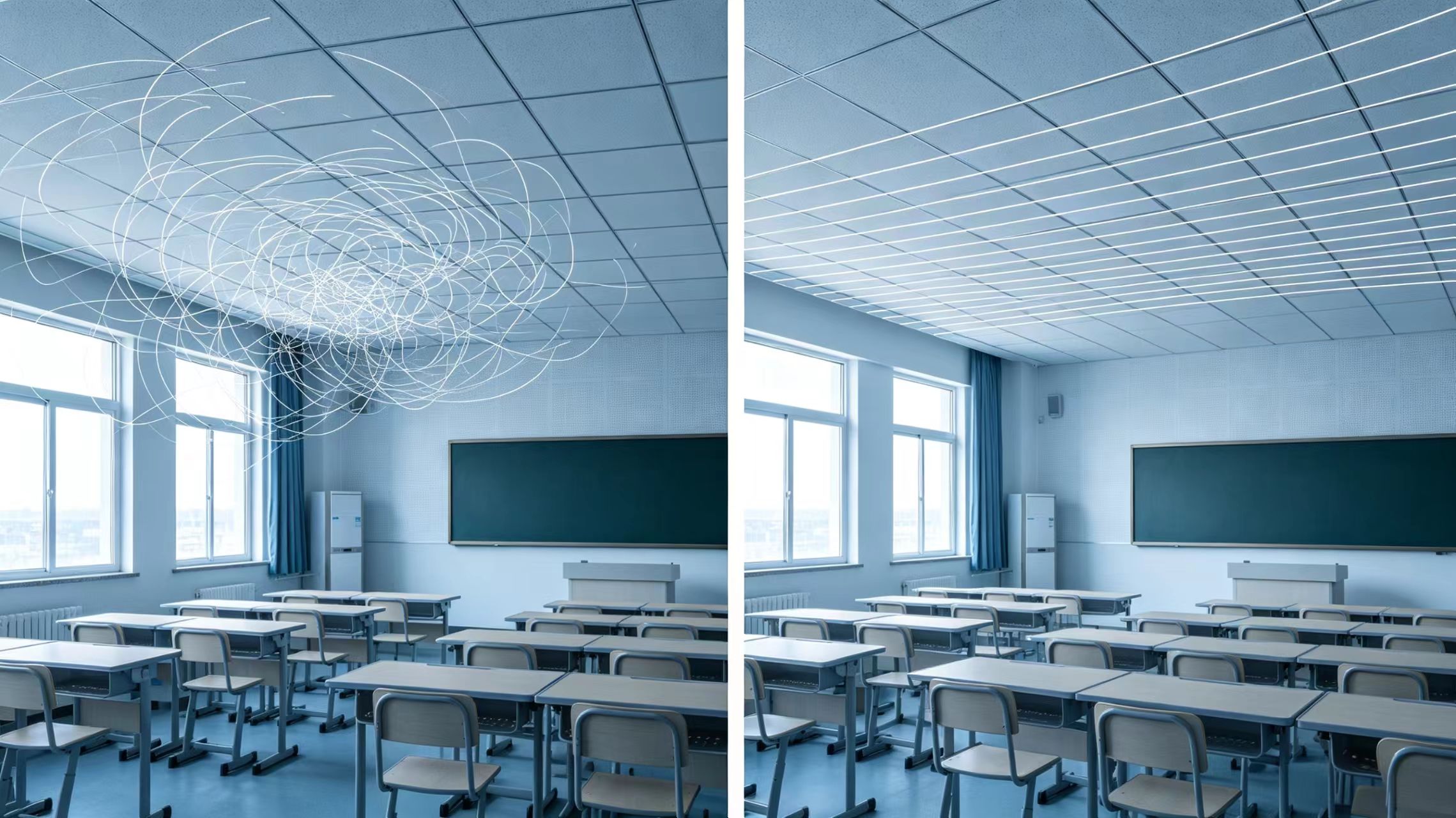
Modern classroom teaching is more diversified, with more group seminars, multimedia lectures and other scenarios, air conditioning operation, student activities will continue to generate indoor noise. Traditional hard ceiling cannot absorb the sound waves, but only reflect the sound, resulting in reverberation and clutter in the classroom.
A high-quality perforated acoustic ceiling system can effectively capture and dissipate excess sound waves, stabilizing the standard classroom reverberation time at 0.4 to 0.6 seconds.
The clean and smooth sound field environment can effectively help students concentrate and build an efficient and focused teaching space.

Integration with Technology and Sustainability

Modern smart classrooms are equipped with intelligent whiteboards, distance learning equipment, sensing systems and other supporting facilities, which puts higher demands on the compatibility and expandability of the ceiling. The modular aluminum ceiling has a flexible structure and can easily reserve space for the installation of various types of pipelines, lamps and fire-fighting equipment.
This kind of ceiling supports the later iteration of equipment upgrading and maintenance, which is suitable for the long-term intelligent transformation needs of the campus. At the same time, the highly reflective surface of the panels can improve the utilization of indoor light, effectively reduce the energy consumption of lighting and air conditioning, and help the campus successfully pass the green building certification.

Cost Implications Over the Building Lifecycle

The selection of materials and design of classroom ceilings directly determines the long-term operation and renovation costs of campus buildings. Traditional gypsum and mineral wool suspended ceilings have a low initial investment, but are structurally fragile and prone to damage, making them difficult to retrofit and maintain, and continually depleting the operation and maintenance budget.
Aluminum modular ceiling has the core advantages of corrosion resistance, reusability and easy renovation, which is suitable for high-frequency campus renovation scenarios.
It can significantly reduce material waste and labor expenses, and the long-term comprehensive cost-effectiveness far exceeds all kinds of traditional ceiling materials.

How Poor Acoustics Impact Students and Teachers
Effects on Students

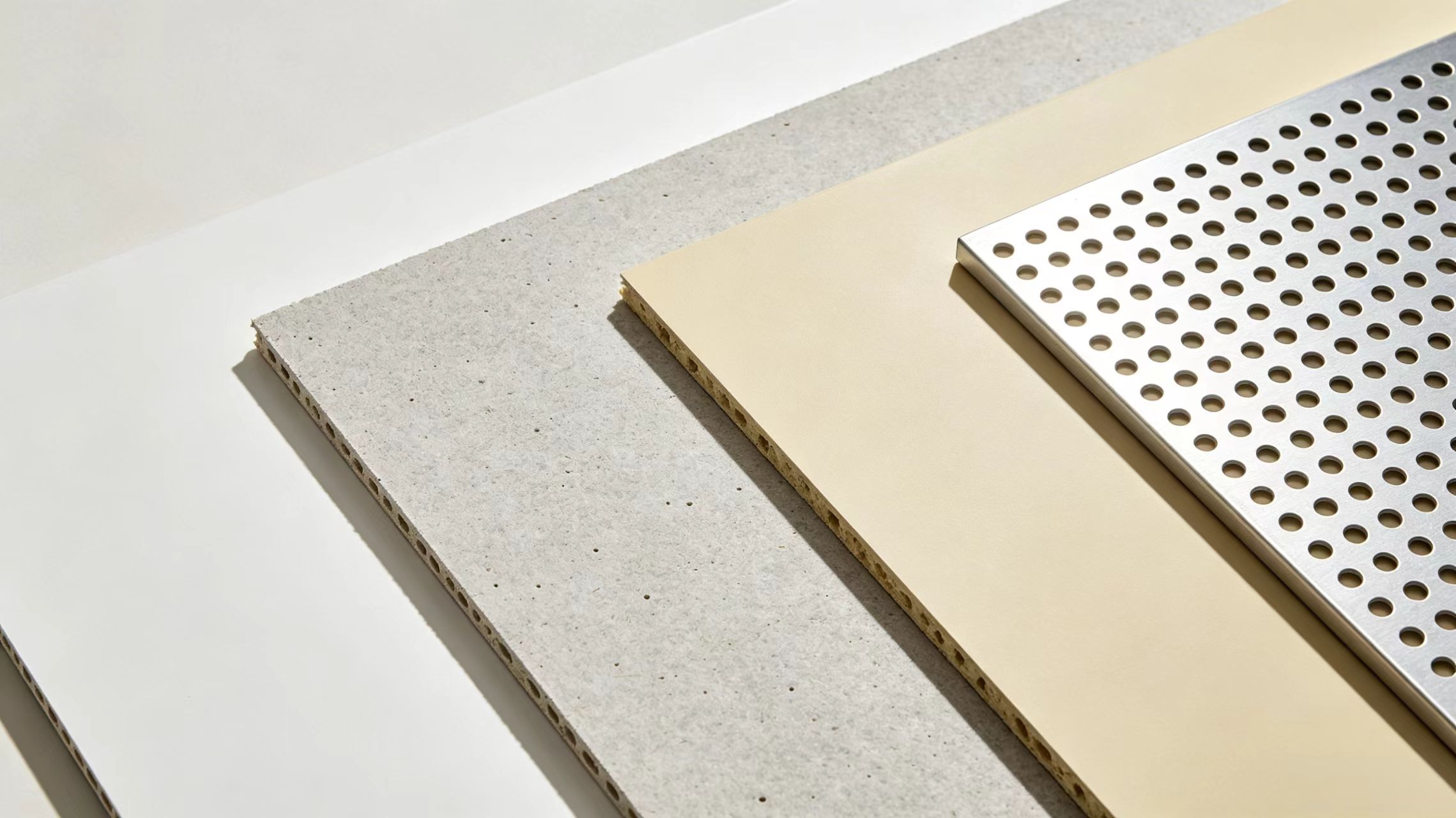
Young people's auditory system and language cognitive ability has not yet fully developed, more sensitive and vulnerable to noise, echo and other bad sound field environment. Excessive classroom reverberation and background noise can seriously interfere with students' reception of lectures and dramatically reduce the accuracy of speech recognition.Long-term exposure to a noisy teaching environment will continue to reduce students' concentration and memory, directly affecting subject performance and classroom absorption efficiency. At the same time, the learning gap between hearing impaired students and foreign language learners will be further widened, which is not conducive to the promotion of education equity.

Effects on Teachers

In classrooms with substandard acoustics, echoes and background noise continue to drown out the teacher's voice. Teachers are forced to use their voices at high volumes for prolonged periods of time, which can lead to vocal fatigue, hoarseness and other common occupational diseases.
Long-term voice stress and the psychological burden of a noisy environment can exacerbate teacher burnout and increase absenteeism. This not only reduces the quality of classroom teaching, but also affects the stability and retention of the teaching force.

The Solution Lies in Better Ceiling Design

The root cause of acoustic problems in most classrooms is the lack of professional sound absorption and noise reduction design for the ceiling, which continuously reflects sound waves and creates reverberation and noise buildup. Simple wall noise reduction treatments cannot fundamentally improve the overall sound environment.
Aluminum modular acoustic ceilings optimize the sound field from the core of the roof, efficiently eliminating echoes and suppressing reverberation. No large-scale dismantling of the building structure is required for the retrofit, so the construction is convenient and quick, which protects the teaching experience and physical and mental health of teachers and students in all aspects.

Key Acoustic Requirements for Educational Spaces

Core Acoustic Parameters for Classrooms

Domestic and international educational buildings have issued strict acoustic design specifications, clearly limiting various acoustic parameters for classrooms. The mid-frequency reverberation time of conventional small and medium-sized classrooms should be strictly controlled at 0.4 to 0.6 seconds, and the background noise should not be higher than 35 decibels.
At the same time, the classroom needs to ensure excellent voice transmission index, with the wall and ceiling sound insulation structure, effectively blocking the sound crosstalk between classrooms, indoor and outdoor. Stable and compliant acoustic parameters are the basic criteria for a quality teaching space.

The Critical Role of Ceiling Systems

Ceiling occupies most of the classroom ceiling area, and is the core interface for indoor acoustic remodeling. Traditional hard ceilings such as gypsum and concrete reflect more than 90% of the sound waves, directly leading to excessive reverberation and confusion in the classroom.
Aluminum acoustic ceiling with perforated structure, with high-density sound-absorbing substrate, can absorb excess sound waves over a large area. The ability to quickly calibrate classroom sound field parameters is a key feature in helping campus buildings pass acoustical acceptance.

Balancing Acoustics with Budget and Aesthetics

Campus classroom acoustics do not need to be blindly invested in high costs, and over-exploitation of high-end materials will only result in a waste of resources.
Aluminum modular ceilings have become the first choice for cost-effective campus acoustic renovation due to their excellent performance and affordable landed costs.
The ceiling can be arranged in the core area of teaching and learning sound-absorbing structure, taking into account the noise reduction function and indoor aesthetics. The standardized design and construction model not only meets acoustical specifications, but also precisely controls the overall renovation budget.

Ceiling Materials and Their Acoustic Performance
Acoustic Shortcomings of Traditional Classroom Ceiling Materials

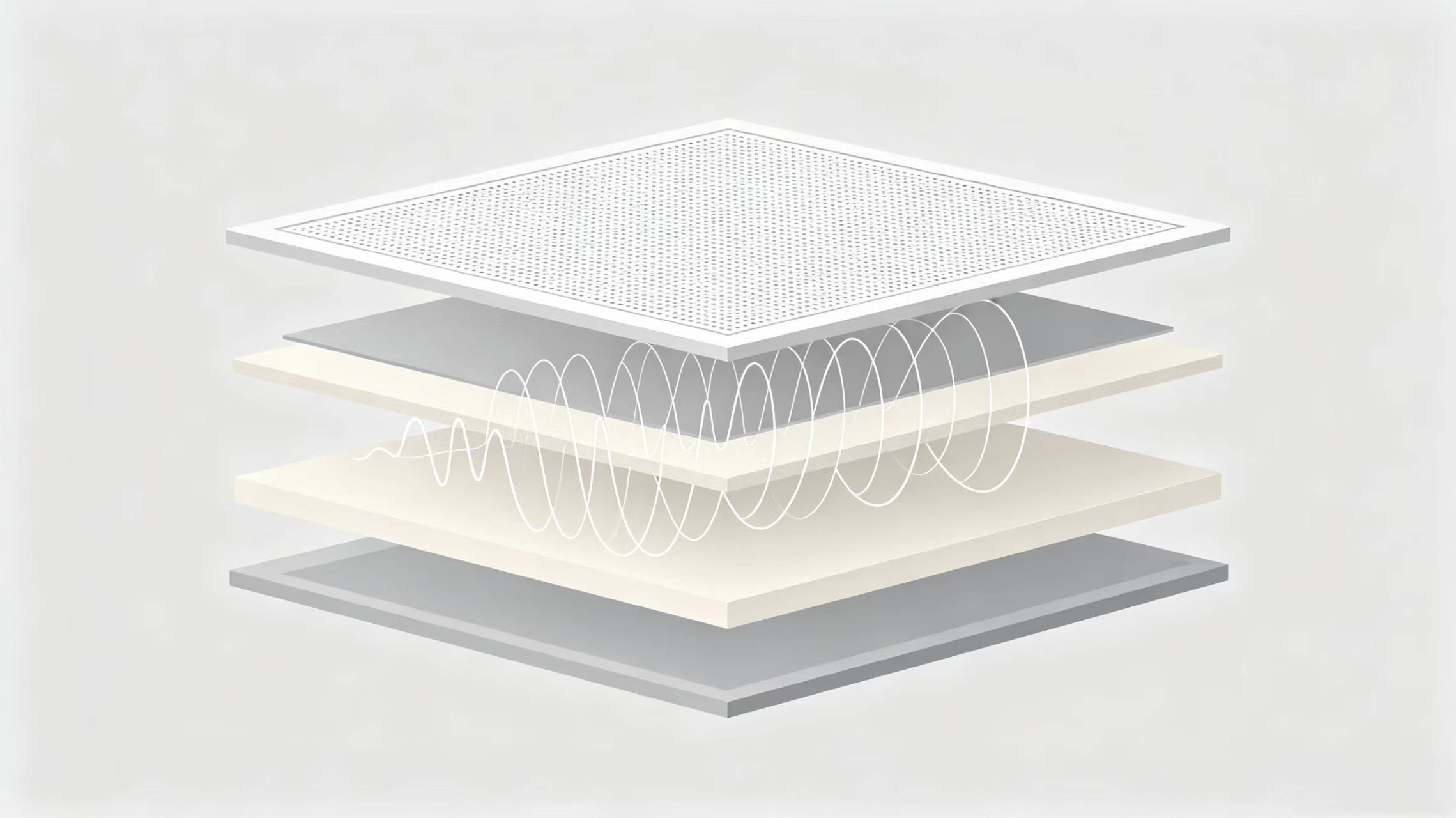
Traditional gypsum board and latex paint ceilings have no sound-absorbing ability at all, and sound waves are directly reflected when they come into contact with them, which can easily lead to echoes and reverberation problems in the classroom. Long-term use will continue to deteriorate the classroom sound field, affecting normal teaching and communication.Ordinary mineral wool boards only have a basic sound-absorbing effect, the performance is very limited, and there are moisture deformation, dust damage and other problems. The acoustic performance of perforated mineral wool panels continues to deteriorate over the life cycle, making them unsuitable for long-term high-frequency campus use.

The Acoustic Advantages of Perforated Aluminum Ceilings

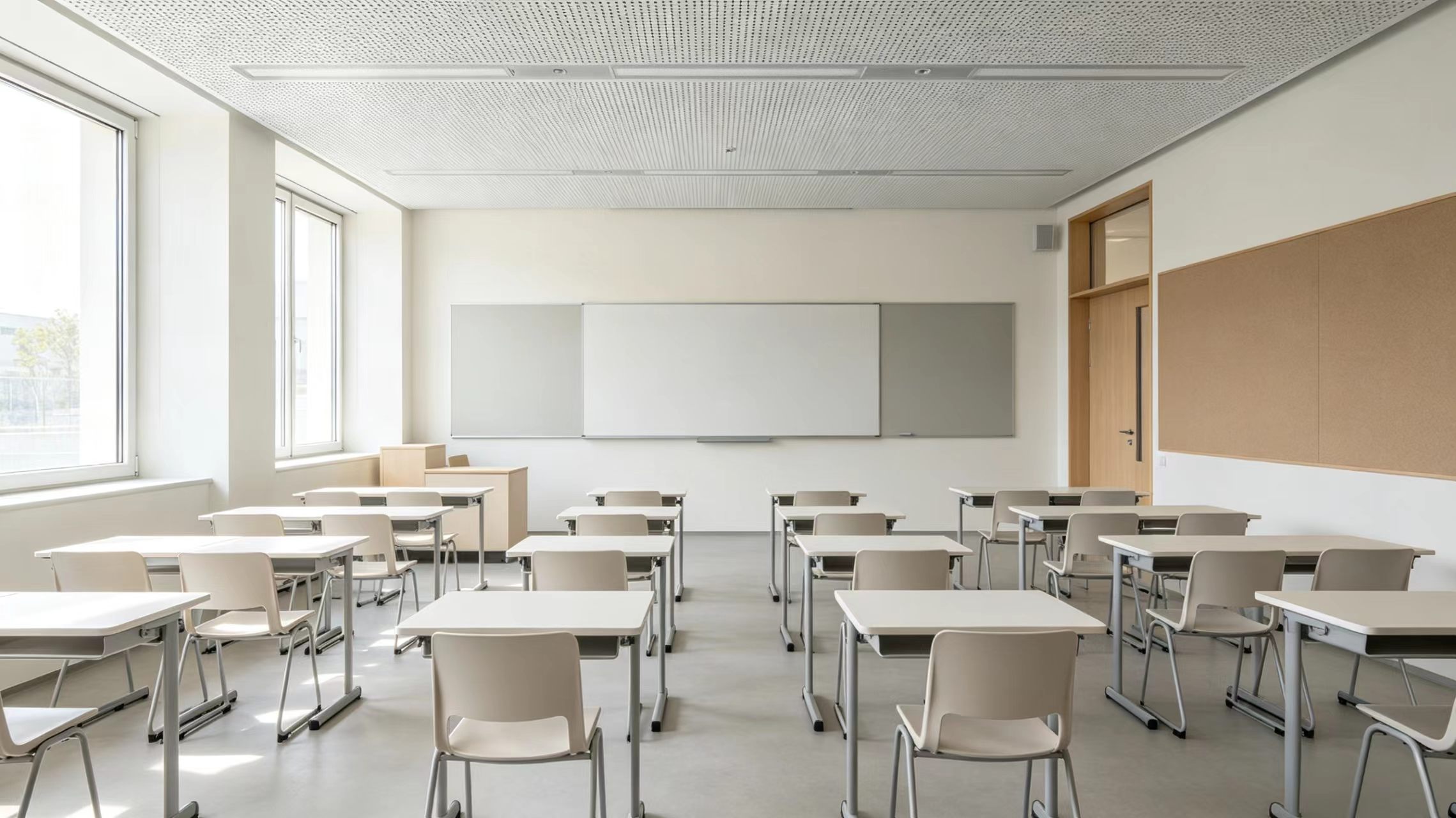
The acoustic advantages of perforated aluminum ceilings rely on the physical structure to achieve non-destructive noise reduction. The perforated aluminum ceilings are evenly distributed on the surface of the panels, with high-density rock wool and sound-absorbing felts on the back, which form a composite three-dimensional sound-absorbing system. Relying on the Helmholtz resonance principle, it can efficiently dissolve indoor low and medium frequency noise.At the same time, the porous structure can quickly adsorb high-frequency noises and achieve a stable NRC of 0.7 to 0.95. It has a balanced noise reduction effect in all frequency bands, and is able to meet the acoustic noise reduction needs of various classrooms in an all-round way.

Comparison of Comprehensive Performance of Different Materials

Compared with traditional ceiling materials such as gypsum and mineral wool, aluminum acoustic ceiling has outstanding advantages in comprehensive application. It not only has stable and long-lasting sound-absorbing effect in all frequency bands, but also has the practical characteristics of moisture-proof, fire-proof and impact-resistant.The material is lightweight and easy to install, which is suitable for the school's high traffic, high loss of complex use of the scene. At the same time, post-cleaning and low maintenance difficulties, a perfect balance of acoustic performance, durability and operation and maintenance costs.

Why Aluminum Acoustic Ceilings Are Gaining Popularity

Exceptional Acoustic Performance

Aluminum acoustic ceilings can be customized according to the acoustic needs of the classroom by adjusting the perforation rate and aperture specifications of the panel surface, with a special high-density sound-absorbing backing material. The reverberation time can be precisely adjusted to meet the acoustic standards of campus buildings.
Unlike traditional materials that are prone to aging, failure and deformation, aluminum ceiling is moisture and corrosion resistant, and its acoustic performance can remain stable for decades. Continuously optimize the clarity of classroom speech and provide a stable sound field for teaching communication.

Superior Durability and Low Maintenance

Campus classrooms are complex and prone to collision and abrasion, humidity and dust accumulation, mold growth and other problems, so the durability of suspended ceilings is highly required. Aluminum suspended ceilings have excellent anti-corrosion, moisture-proof and impact-resistant properties, which are suitable for the harsh campus environment.
The coating on the panel surface is firm and not easy to fade or peel off, and can be cleaned by simple wiping in daily life. No need for frequent maintenance, renovation and replacement, significantly reducing the pressure on school logistics operation and maintenance, saving long-term operation and maintenance funds.

Lightweight, Flexible, and Easy Installation

Aluminum ceiling is a lightweight material that will not cause additional load on the roof and walls of the building, which is especially suitable for renovation projects in old school districts. Standardized modular components can be assembled quickly, significantly compressing the construction period.
Efficient installation mode can minimize construction dust and noise and reduce the impact on the normal teaching order on campus. At the same time, it can be flexibly adapted to lamps, air outlets and fire-fighting facilities, which makes it highly adaptable.

Sustainability and Green Building Compliance

Aluminum acoustic ceiling supports various surface processes such as powder coating, wood grain transfer printing, frosted, etc., with a variety of perforation styles. It can be customized according to the campus decoration style, creating a clean, bright, simple and high-class teaching space.
Aluminum is 100% recyclable, with no release of hazardous substances and low VOC emissions during production and use. With its excellent green attributes, it can help the campus successfully obtain LEED, WELL and other green building certifications.

Cost-Effectiveness Over the Lifecycle

The initial purchase cost of aluminum acoustic ceiling is slightly higher than ordinary mineral wool board, but the service life can reach 30 to 40 years, far exceeding the traditional ceiling materials. The extremely low probability of failure basically eliminates the high cost of frequent maintenance and overall replacement.
At the same time, its excellent light adaptability and heat insulation performance can save campus lighting and air conditioning energy consumption in the long term. From the building life cycle accounting, the overall return on investment is much higher than all kinds of traditional classroom ceiling.

The Cost Factors Behind Classroom Ceiling Systems
Initial Material and Installation Costs

The initial material and installation costs of different classroom ceiling systems vary significantly. Concrete and gypsum rigid ceiling materials are inexpensive, but they have no sound absorption ability and require additional noise reduction equipment, which results in high landed costs.
Ordinary mineral wool board initial installation cost is the lowest, but acoustic performance, durability short board prominent, late hidden cost is high. Aluminum acoustic ceiling relying on modular construction advantages, labor costs can be controlled, the overall cost is in the moderate quality range.

Lifecycle and Maintenance Costs

Lifecycle cost is the core basis for judging the cost-effectiveness of classroom ceiling. The service life of ordinary mineral wool board and plaster ceiling is only 8 to 15 years, and it needs to be dismantled and replaced as a whole at the expiration date, which costs a lot of money and manpower for repeated renovation.
Aluminum acoustic ceiling performance is stable, low failure rate, without frequent maintenance and renovation. The long service life of aluminum ceiling can reduce the long-term hidden expenses such as material replacement and labor maintenance.

Acoustic Performance and Hidden Costs

Low-cost, poor-quality suspended ceilings do not meet classroom acoustic standards and create a consistently poor acoustic environment. A noisy classroom environment will reduce students' learning efficiency, lower the quality of teaching, and cause a waste of educational resources.
At the same time, long-term noise disturbance will aggravate teachers' occupational diseases and enhance the rate of absenteeism and turnover. High-quality aluminum acoustic ceiling solves the acoustic hazards from the source, effectively avoiding all kinds of hidden economic loss of teaching and manpower.

Energy Efficiency and Operational Savings

Aluminum ceiling panels are highly reflective and can fully refract natural light and indoor lighting to enhance the overall brightness of the space. This effectively reduces the use of artificial lighting, and continues to reduce the campus' energy consumption.
At the same time, the ceiling has excellent sealing structure and outstanding heat insulation effect, which can stabilize the indoor temperature and reduce the operating load of air-conditioning equipment. The long-term use of the ceiling can accumulate considerable energy savings for the school.

Balancing Acoustic Performance and Budget

The Cost vs. Performance Trade-off

Most campus renovations prioritize the use of low-cost common ceiling materials in order to reduce the initial budget. This may seem to save money upfront, but the acoustic performance is not up to par and does not meet the needs of normal teaching and learning.
Put into use often need to second remodeling, retrofitting sound-absorbing equipment, resulting in substantial additional costs. Blindly compressed upfront costs, will ultimately reduce the overall cost-effectiveness of the project, resulting in a waste of funds.

How Aluminum Acoustic Ceilings Achieve Better Balance

Aluminum acoustic ceilings are the optimal solution for balancing acoustic performance and budget in current campus renovations. The product parameters can accurately match the national campus acoustic norms, and are suitable for various teaching scenarios in primary and secondary schools and colleges.
Relying on the modular customization and flexible mode of partition installation, the project cost can be adjusted according to the needs. It will not waste money by over-performance, but also can completely avoid acoustic defects and fit the limited budget of the campus.

Practical Strategies for Budget-Friendly Acoustic Upgrades

The campus ceiling project can adopt the low-cost landing mode of phased landing and zoning mix and match, prioritizing the upgrading of core teaching spaces such as podiums and lecture areas to ensure the quality of the core acoustic field. Corridors, storage rooms and other secondary spaces can be used for economic programs.
Abandon the single initial cost comparison when selecting materials for accounting, relying on the advantages of ultra-long life and low operation and maintenance of aluminum, to carry out a full life cycle costing. It can maximize the utilization of funds and achieve cost-effective landing.

Proven Return on Investment

Scientific investment in aluminum acoustic ceiling can optimize the classroom teaching environment in all aspects, effectively reduce the absence rate of teachers' occupational diseases, and significantly improve students' concentration and learning effectiveness in the classroom. This directly improves the overall quality of teaching and learning on campus.
At the same time, the high quality ceiling system can help the campus to obtain green building certification and enhance the overall quality and value of the campus. The long-term benefits of teaching, energy saving, operation and maintenance can quickly cover the difference in initial investment.

Best Practices for Designing Cost-Effective Acoustic Classroom Ceilings
Start with Acoustic Planning Early in the Design Phase

Classroom acoustic ceiling design needs to be synchronized with planning in the early stage of the project, combining classroom area, functional positioning, and use scenarios to formulate an exclusive program. In advance, we should standardize the campus acoustic norms, and define the ceiling structure and sound absorption configuration standards.
Coordinate all kinds of parameters and supporting needs in advance, can effectively avoid the later acoustic parameters do not meet the standards, facilities to adapt to conflict and other issues. Reduce the additional economic and time costs brought by rectification and reworking from the source.

Choose Materials Based on Lifecycle Value, Not Just Initial Price

Choose Materials Based on Lifecycle Value, Not Just Initial Price, Not Just Initial Price Low-price, low-quality materials save money in the short term, but there are many hidden dangers in the later period, and the loss is large.
Priority is given to the use of NRC parameters up to standard, long life aluminum perforated acoustic ceiling, relying on stable and long-lasting acoustic performance, reducing the frequency of maintenance and replacement in the later stages. Realize real cost reduction and efficiency increase from the perspective of the whole cycle.

Optimize Integration with Building Systems

Classroom ceilings do not need to be uniformly designed for the whole house, but can be customized and lightweight in different zones. High-performance aluminum sound-absorbing ceilings are installed in the core sound field areas such as podiums and student study areas to ensure the core teaching acoustic experience.
Corridors, storage areas, equipment rooms and other non-core areas, can simplify the ceiling configuration, the choice of economical materials.
Differentiated design can significantly reduce material costs, balancing acoustic effect and budget control.

Focus on Installation Efficiency and Future Flexibility

During the ceiling design stage, it is necessary to integrate lighting, air-conditioning, fire-fighting, intelligent sensing and other building support systems in advance. Using the modularity of aluminum ceiling, openings can be made, easy to adapt to the characteristics of the integrated integration of various types of equipment.
There is no need to remodel the ceiling structure for the second time, which can effectively save the construction cost and construction period. At the same time, with the advantage of high reflective surface, it can optimize the indoor lighting and temperature control effect, and continuously reduce the energy consumption of the building.

Conduct Thorough Value Engineering and Cost Analysis

Standardized aluminum ceiling components are mature and simple to assemble, which can greatly accelerate construction progress, shorten project duration and effectively reduce labor costs. It is suitable for all kinds of projects of new campus and old campus renovation.
The modularized disassembly structure does not require extensive dismantling, which facilitates later equipment maintenance, space layout adjustment and campus renovation. Continuously reduces the hidden costs of subsequent remodeling and maintenance.

Ensure Proper Installation and Post-Occupancy Verification

At the project design stage, we can work with suppliers to optimize the specification of panels, perforation patterns and installation schemes, so as to compress material costs without compromising acoustic performance. Batch purchasing and standardized construction can further reduce the cost of each product.
After the completion of construction, the core acoustic parameters such as reverberation time and noise reduction coefficient should be strictly verified. Ensure that the effect of the ceiling landing fully meets the standard, and ensure that every investment can reap the corresponding use value.

Conclusion

Classroom ceiling design is directly related to the physical and mental health of teachers and students, the efficiency of classroom teaching and the operating cost of the whole cycle of the building, which is a very easy to be neglected but crucial part of the campus infrastructure. A reasonable ceiling solution can simultaneously optimize the sound field and control the budget.
Aluminum acoustical ceilings are perfectly suited to the needs of modern classroom construction due to their excellent noise reduction performance, durability and cost-effectiveness. It is the optimal solution to balance the acoustic experience and capital cost, and has high promotion value.


Henan Retop Industrial Co., Ltd. Will Be There Whenever Wherever Whatever You Need
You Are Welcome to : phone call, Message, Wechat, Email& Seaching us, etc.
Email: sales@retop-industry.com
Whatsapp/Phone: 0086-15537183797
Share us:
Related products

The Sliding Folding Door

The Sliding Folding Door Aluminium Profile

Material:6063/6082/6061 Aluminium
Temper:T5/T6
Thickness:0.4mm-1.5mm/Customized
Sliding Garage Door Series

Sliding Garage Door Series Aluminium Profile

Material:6063/6082/6061 Aluminium
Temper:T5/T6
Thickness:0.4mm-1.5mm/Customized
900 Series Sliding Window Profile

900 Series Sliding Window Profile

Material:6063/6082/6061 Aluminium
Temper:T5/T6
Thickness:0.4mm-1.5mm/Customized