How to Choose the Right Aluminum Solar Panel Frame for Rooftop PV Projects
Date:2026-07-23
View: 3983 Point
With the advantages of low land occupation, low energy consumption and high cost performance, distributed rooftop photovoltaic has become the mainstream choice for new energy transformation of industry, commerce and residential buildings.Solar aluminum frame as the core structural parts of the module, directly determine the photovoltaic system for more than 25 years of operation safety and stability, scientific selection is the key to the landing of photovoltaic projects.
Why Aluminum Solar Panel Frames Are Essential for Rooftop PV Projects
The Functional Value of Solar Frames
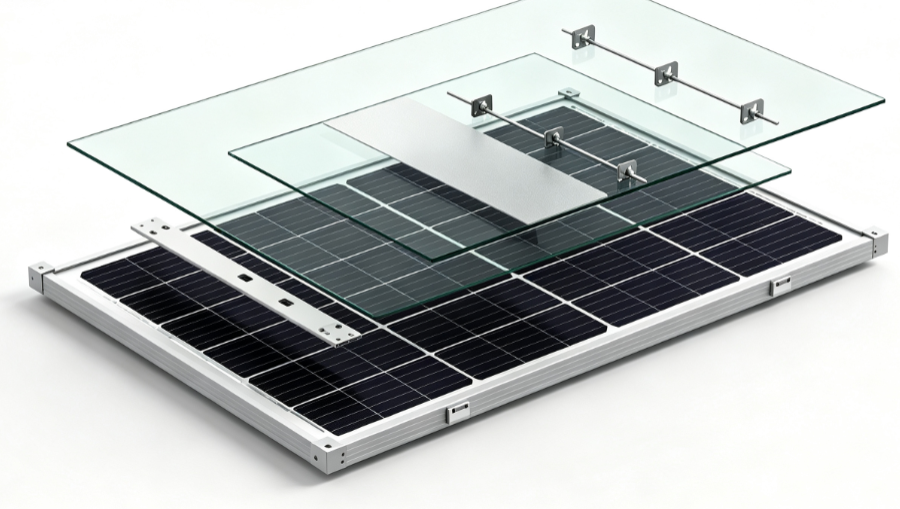
Solar aluminum frame is the core protection and load-bearing structure of photovoltaic modules, which can fully wrap and protect core components such as battery cells, tempered glass and backplane, effectively resisting deformation and damage caused by external mechanical stress.It can continuously maintain the overall structural integrity of photovoltaic modules and avoid failures such as deformation and cracking that affect power generation efficiency in daily use. At the same time, the aluminum frame has standardized installation interfaces, which can perfectly adapt to various roof support systems, making the fixed installation of photovoltaic modules more stable and standardized.Its excellent insulation and conductive performance, but also can build a safe grounding path, avoid leakage, lightning and other safety hazards, to ensure the stable operation of the roof photovoltaic system.
Why Aluminum has Become Mainstream
Compared with steel, plastic and other materials, 6000 series aluminum alloy has the ultimate lightweight and high strength characteristics, weighing only one-third of steel, which can greatly reduce the roof bearing pressure.This feature allows older buildings and lightweight roofs to be adapted to PV installations without the need for additional complex roof reinforcement. Aluminum alloy surface can form a dense oxidation protection layer, with anodizing process, can resist long-term rain, salt spray, ultraviolet corrosion aging.At the same time, aluminum has strong plasticity, can be processed into various precision profiles, adapts to different installation scenarios, and can be 100% recycled, which is in line with the concept of green development of new energy.
Select the Right Aluminum Alloy for Solar Panel Frames
Aluminum Alloy Models Commonly Used in Photovoltaic Frames
6063-T5 aluminum alloy is a general type of civil roof photovoltaic, excellent extrusion performance, smooth surface, excellent anodization effect.The material has outstanding cost performance, balanced corrosion resistance and molding performance, and can meet the long-term use requirements of conventional residential buildings and ordinary industrial and commercial roofs. 6005-T5, 6005A-T6 aluminum alloy is a high-performance material, bending resistance and load-bearing capacity is better than 6063 material, can cope with strong wind, blizzard and other severe weather conditions.This type of material can improve the load resistance of the module without significantly increasing the weight of the profile, and is suitable for rooftop photovoltaic projects in high-altitude and snow-prone areas. 6061-T6 aluminum alloy has stronger comprehensive structural properties, excellent tensile and yield strength, excellent welding and processing properties, and full structural stability.This material is suitable for coastal strong wind areas and large-scale industrial rooftop photovoltaic projects, which can cope with structural stress caused by extreme environments and ensure system safety.
Elements of Aluminum Alloy Selection
The selection of materials should first refer to the environmental conditions and load standards of the project location. It should be combined with local building codes such as wind pressure, snow pressure, and earthquake level to match the aluminum alloy material with corresponding strength.In coastal areas with high salt fog and high humidity, priority should be given to the model with stronger corrosion resistance and thicker oxide layer. At the same time, consideration must be given to roof load-bearing restrictions, project budget and production technology. Lightweight materials are suitable for old roofs with limited loads, and high-strength materials are suitable for heavy-duty scenarios.Large-scale photovoltaic projects can give consideration to cost performance and performance, and small-scale customized projects can be targeted to select special aluminum alloy materials.
Evaluate the Structural Design of Aluminum Solar Panel Frames
The Central Role of Border Design
Scientific structural design is the core guarantee for aluminum frame to resist external loads, which can effectively disperse static and dynamic external forces such as snow, vibration, etc., and strictly control the deformation amplitude of the frame.Avoid problems such as component glass cracking and cell cracking, and stably maintain the power generation performance and structural integrity of photovoltaic modules. Reasonable structural design can also optimize installation adaptability, standardized frame interface, drainage structure and corner design, can improve installation efficiency, reduce installation error.At the same time, optimize the section ratio of the profile, guarantee the strength while reducing the weight, and reduce the roof load and the transportation and installation cost of the project.
Parameters for Border Design
High-quality photovoltaic frames mostly adopt hollow reinforced composite section design, optimize section modulus and moment of inertia through internal stiffeners, and improve bending stiffness while reducing raw material consumption.With precise corner riveting structure, it can avoid frame distortion and ensure overall squareness and structural stability. Professional frame will reserve dedicated drainage slots and drainage holes to quickly drain surface water, prevent accumulated water corrosion and water pressure extrusion damage components.The design phase simulates various working conditions through finite element simulation, accurately optimizes structural details, and ensures compliance with IEC international photovoltaic module safety testing standards.
Scientific Evaluation Criteria for Structural Performance;
To evaluate the frame structure, it is necessary to focus on the strength-to-weight ratio, which is the core index of roof photovoltaic selection, balance lightweight and load resistance, and avoid roof overload pressure.At the same time, the deformation threshold of the frame is detected to ensure that the deformation amplitude under the limit load is in a safe range and the core structure of the component is not damaged. It is also necessary to verify the structural adaptability and compliance, confirm that the profile structure can adapt to thermal expansion and contraction deformation, and avoid cracking of the sealing layer of the component.All structural designs must pass authoritative tests such as static load, dynamic impact, hail impact, etc., and comply with industry safety codes.
Consider the Compatibility Between Frames and Rooftop Mounting Systems
The Importance of the Frame to Fit the Mounting System
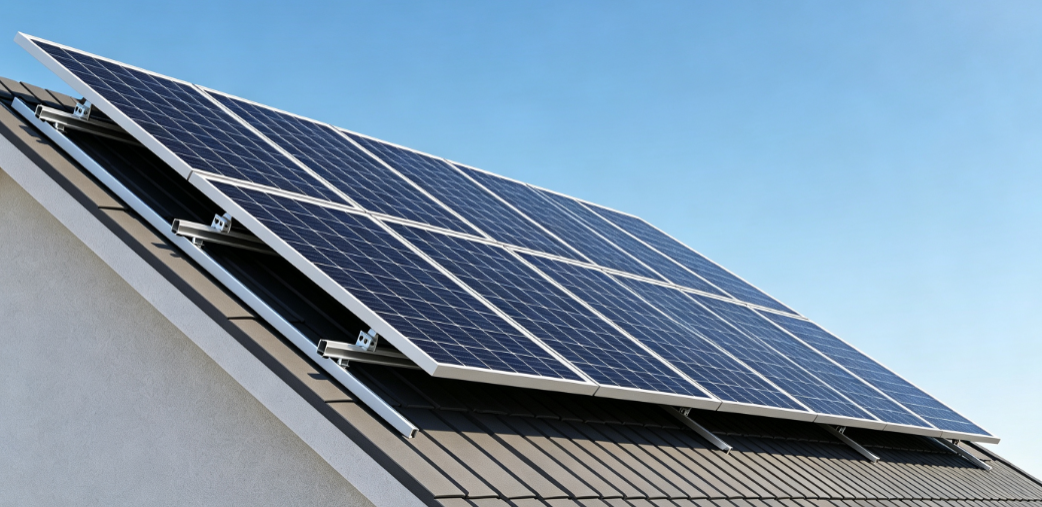
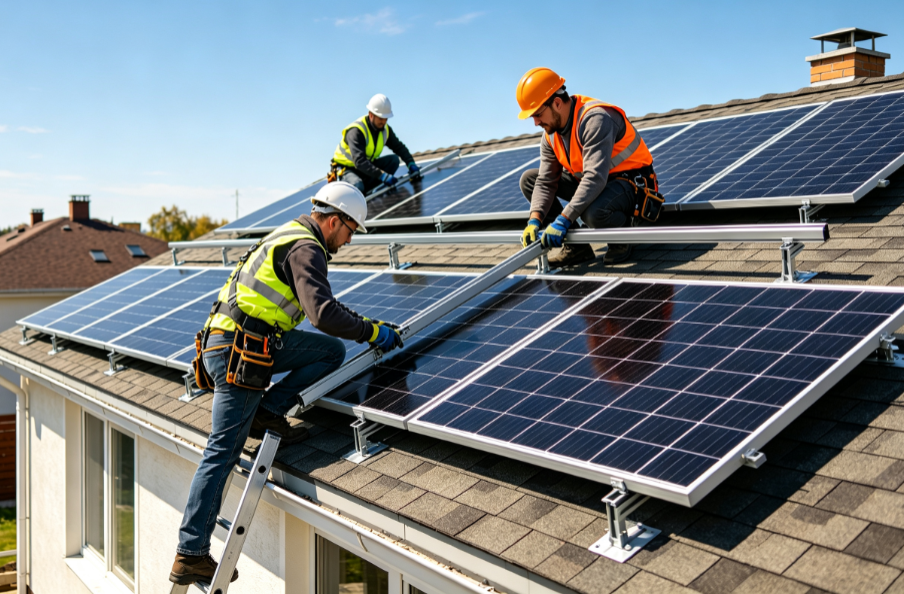
The height matching between aluminum frame and roof bracket system is the foundation for stable operation of photovoltaic system. Insufficient matching degree of accessories will cause local stress concentration, resulting in frame deformation, glass damage and other failures.It directly affects the installation accuracy and overall structural stability of photovoltaic modules. Poor adaptability will also increase the construction difficulty and labor cost, resulting in problems such as installation dislocation and weak fixation, and even lead to equipment warranty failure.Long-term operation is prone to component loosening, leakage and other safety hazards, greatly shortening the service life of photovoltaic systems.
Core Dimensions of Fitness Verification
First of all, it is necessary to check the frame profile size, flange width and slot specification to ensure accurate matching with fixture, guide rail and other installation accessories.The thickness of the mainstream photovoltaic frame is concentrated in 30-50mm, and it is necessary to strictly correspond to the clamping interval of the installation accessories to avoid unstable clamping or extrusion damage to the profiles. Secondly, it is necessary to match the installation system type, guide rail type and non-guide rail direct-mounted bracket have different requirements for frame stiffness and interface accuracy.At the same time, the material coating of the frame and the bracket is unified to avoid electrochemical corrosion caused by contact with dissimilar metals and ensure grounding safety and long-term stability.
Practical Operation Scheme to Improve Overall Adaptability
In the project selection stage, carefully consult the product parameter manual of the frame and bracket manufacturer, and give priority to the supporting products that have been jointly tested by the third party.Confirm that the accessory combination has passed authoritative certifications such as UL and IEC to avoid adaptation risks and safety hazards caused by non-standard accessories. According to the roof material, inclination angle and component specification adjustment selection scheme, the installation mode of color steel tile and glazed tile roof is different, so it is necessary to match the corresponding frame structure.For large-scale photovoltaic projects, prefabricated adaptation packages are preferred to simplify the procurement process and improve the standardization of installation.
Choose Aluminum Frames with Excellent Corrosion Resistance
The Core Anti-corrosion Process of Photovoltaic Aluminum Frame
Anodic oxidation is the mainstream anti-corrosion process of photovoltaic frame. The oxide film thickness of high-quality products in the industry can reach 15-25 microns, far exceeding the basic standard.The dense oxide film can isolate air and moisture, avoid oxidation corrosion of aluminum from the root, and adapt to various outdoor complex conditions. After oxidation treatment, hole sealing process will be carried out to seal the microporous structure on the surface of the profile and prevent the penetration of corrosive medium.With reasonable profile drainage structure, avoid surface water retention, while matching compatible mounting fasteners, reduce the risk of electrochemical corrosion.
Anti-corrosion Selection Standards for Different Scenarios
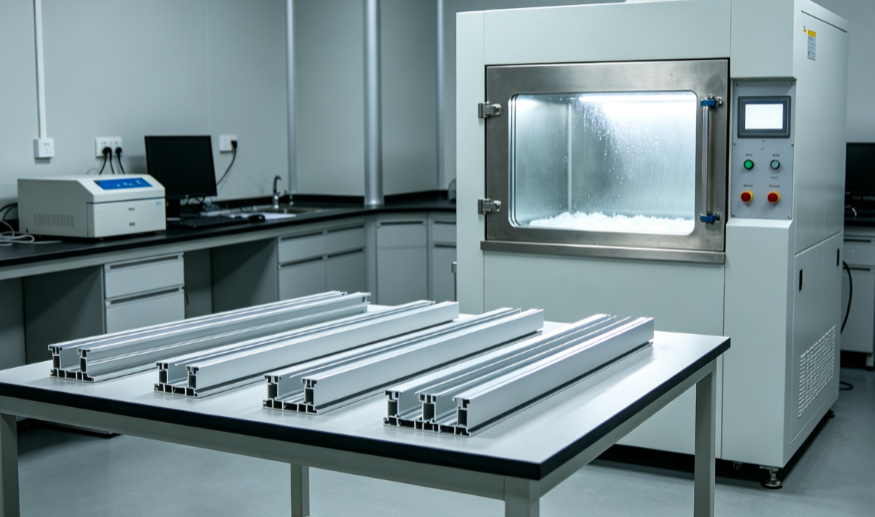
In high-risk corrosion scenarios such as coastal areas and industrial parks, thick anodized frames are required to withstand long-term corrosion by high salt fog and acid and alkali pollutants to prevent rapid aging of profiles.High temperature and drought, strong ultraviolet areas, priority should be given to anti-ultraviolet, anti-aging corrosion technology. Ordinary residential areas, inland dry areas, the use of conventional 15 microns or more oxide film frame can meet the long-term use needs.All frames shall pass salt spray, warm circulation and damp heat acceleration tests to ensure corrosion resistance meets industry long-term operation standards.
Balance Lightweight Design and Mechanical Strength
The Value of Lightweight Design for Rooftop PV
Roof PV has strict restrictions on roof load, and the lightweight design of the frame can effectively reduce the overall weight of a single module and avoid roof overload pressure.There is no need to reinforce and transform the building structure, which greatly reduces the construction cost and transformation difficulty in the early stage of the project. Lightweight aluminum frames can also simplify transportation and manual installation processes, reduce the difficulty of construction personnel, and improve the efficiency of photovoltaic array laying.At the same time, it reduces raw material consumption and carbon footprint of products, which is in line with the concept of low-carbon development of new energy.
Mechanical Strength Standards Necessary for Photovoltaic Frames
Even with a lightweight design, the frame must meet stringent mechanical load requirements, withstand static snow loads of 2400-5400Pa, and adapt to the climatic conditions of conventional regions.At the same time, it can withstand dynamic stress such as gust vibration and temperature difference cycle, and eliminate long-term fatigue deformation. The frame shall also have excellent impact resistance, which can resist external force damage such as hail impact and operation and maintenance, and protect the component glass and battery sheet.Keep the structure stable in long-term operation, without distortion, loosening, cracking and other faults, and ensure the long-term operation of the system.
Balance Design Scheme of Light Weight and Strength
Through precise selection of aluminum alloy material to achieve performance balance, conventional scenarios choose 6063-T5 material to consider lightweight and cost-effective, harsh conditions choose 6005, 6061 series of high-strength materials, in the premise of very little weight gain to improve load capacity. Based on finite element analysis, the section of profile is optimized, and the structural stress is accurately distributed through internal reinforcement, hollow weight reduction, wall thickness fine adjustment and other processes.While reducing raw materials by 10%-20%, maintain or even improve the overall mechanical strength of the frame to achieve optimal ratio.
Check the Manufacturing Quality of Aluminum Solar Panel Frames
Effect of Production Process on Quality
High-quality production technology is the core guarantee for stable frame performance. The accuracy of raw material control, extrusion molding, heat treatment and other processes directly determines the frame size accuracy and structural strength.Process defects can cause deformation, delamination, corrosion resistance decline and many other problems. The production process is not up to standard will lead to frame size deviation, corner splicing is not tight, resulting in poor installation adaptability, uneven stress problems.It is easy to occur local damage, corrosion acceleration and other faults in long-term outdoor operation, which seriously affects the service life and safety of photovoltaic systems.
Production Process Standards
High-quality manufacturers use compliant 6000 series aluminum rod raw materials, the whole process can be traced, strictly control the purity of material components.The profile is processed by high-precision extrusion equipment, and the size deviation is controlled within 0.2mm to ensure that the wall thickness and rib position of the profile are uniform and regular. Standardized T5 and T6 heat treatment is carried out after forming to stabilize the mechanical properties of aluminum and eliminate internal stress in processing.Uniform anodizing and sealing process ensures consistent thickness of surface corrosion protection layer without scratches, pinholes and other process defects. Finally, the assembly is completed through precision riveting, chamfering and deburring, and fine machining to ensure that the corner structure is firm and the interface is regular.The whole process of fine control, eliminate sharp corners, drainage blockage, splicing cracks and other problems, improve the overall quality of products.
Choose Customized Aluminum Frame Solutions for Different PV Applications
The Necessity of Photovoltaic Frame Customization
The roof structure, climate environment and component specifications of different roof photovoltaic projects vary greatly, and standardized frames are difficult to adapt to all scenarios.The general frame is easy to have problems such as poor adaptability, redundant performance or insufficient performance, which affects the landing effect of the project. Customized aluminum frames can be accurately optimized for project pain points, conforming to roof conditions, load requirements and installation methods.Effectively solve the adaptation problems of non-standard roofing, high-power components, harsh environment and other scenarios, and improve the overall cost performance and operation stability of the project.
Customized Solutions for Mainstream PV Scenarios
Residential small roof photovoltaics can be customized with lightweight narrow frames to optimize the appearance to adapt to architectural aesthetics and reduce roof loads.High-power double-sided photovoltaic module, customized reinforced thickened frame, improve edge support, eliminate the problem of cell cracking. For projects in harsh areas such as snow and coastal areas, custom high-strength alloy and thickened anti-corrosion layer frame to strengthen load resistance and corrosion resistance.In special scenes such as photovoltaic shed, agricultural light complementary, etc., the exclusive frame of integrated wiring and quick installation structure can be customized.
Core Considerations for Customized Selection
The customized scheme shall be comprehensively considered in combination with the project scale, construction period and budget. The customized commissioning of large-scale projects has higher cost performance and can accurately match the working conditions.Confirm mold opening cycle and minimum order quantity with manufacturers in advance to avoid affecting project construction progress. Preference is given to manufacturers with PV profile R & D and simulation testing capabilities to ensure that customized products meet IEC, UL and other industry standards.Take into account the early customization cost, late operation and maintenance, service life, to maximize the full cycle benefits.
Compare Cost Performance and Long-Term Benefits of Aluminum Frames
Comparative Analysis of Initial Procurement Costs
Compared with the purchase unit price alone, the aluminum frame is slightly higher than the ordinary steel frame, but the overall cost of the comprehensive project is more advantageous.The lightweight characteristics of aluminum do not require additional reinforcement of the roof, greatly saving the cost of structural transformation and reducing the initial construction investment. At the same time, the aluminum frame is convenient to install and has strong adaptability, which can shorten the construction cycle and reduce the labor cost.Comprehensive transportation, construction, accessories adaptation and other hidden costs, the initial overall investment can be equal to or even lower than other materials.
Comparison of Long-term Full Life Cycle Benefits
The core advantage of aluminum frames is reflected in their long-term use value. High-quality anodized aluminum frames can operate stably for 25-30 years without anti-corrosion maintenance, renovation and repair.Greatly reduce the operation and maintenance cost of photovoltaic system in the later stage and reduce the loss of fault shutdown. Steel frames are prone to rust and corrosion, requiring regular rust removal and paint maintenance, long-term operation and maintenance costs are high, and structural aging problems are prone to occur.The aluminum frame structure is stable and the power generation loss is low, which can continuously guarantee the power generation income of the photovoltaic system and improve the return rate of the project.
Comprehensive Cost Performance Core Logic
Roof photovoltaic selection needs to abandon the misunderstanding of only looking at the unit price and focus on the cost performance of the whole life cycle.With the advantages of high stability, maintenance-free and long service life, aluminum frame effectively reduces the cost of electricity consumption of photovoltaic projects and improves the overall investment value. Combined with the project scene matching corresponding materials, processes, custom solutions, can further optimize the cost performance.Taking into account structural safety, anti-corrosion performance, adaptability and economy, it is the best choice for long-term and stable operation of rooftop photovoltaic projects.
Conclusion
The selection of roof photovoltaic aluminum frame needs to integrate multiple dimensions such as material, structure, adaptability, corrosion resistance and process quality, balance lightweight and structural strength, and select standardized or customized solutions as needed.High-quality aluminum frame can ensure the long-term safe operation of photovoltaic system, reduce the full-cycle cost and improve the overall investment value of the project.
Henan Retop Industrial Co., Ltd. Will Be There Whenever Wherever Whatever You Need

.jpg)