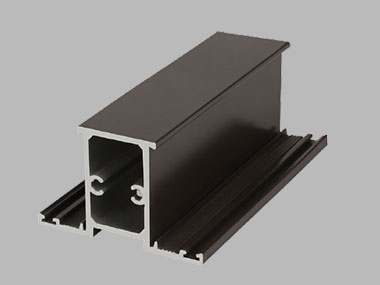
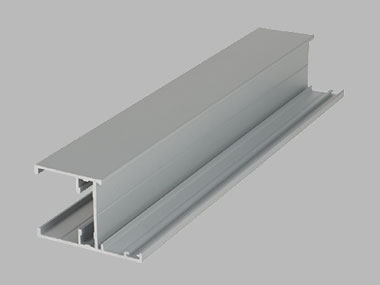
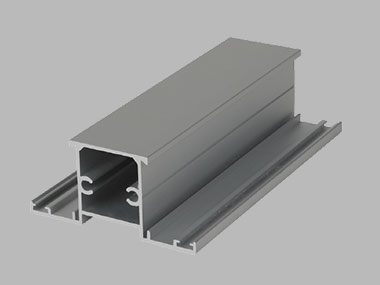
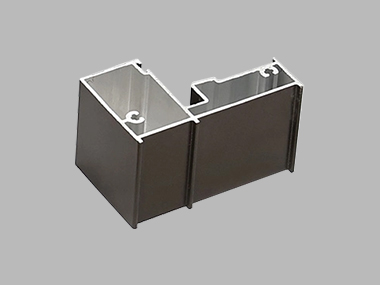
In 2026, solar bracket aluminum profiles are steadily developing in the direction of lightweight, modularization, low carbon and high weather resistance, which is the core guarantee for the stable operation of photovoltaic systems.Reasonable selection of alloy, process and profile categories, strict compliance with industry standards, can effectively improve the cost performance and service life of photovoltaic projects, to meet the long-term development needs of the industry.
What Are Heat Sink Aluminium Profiles?
Definition and Structure
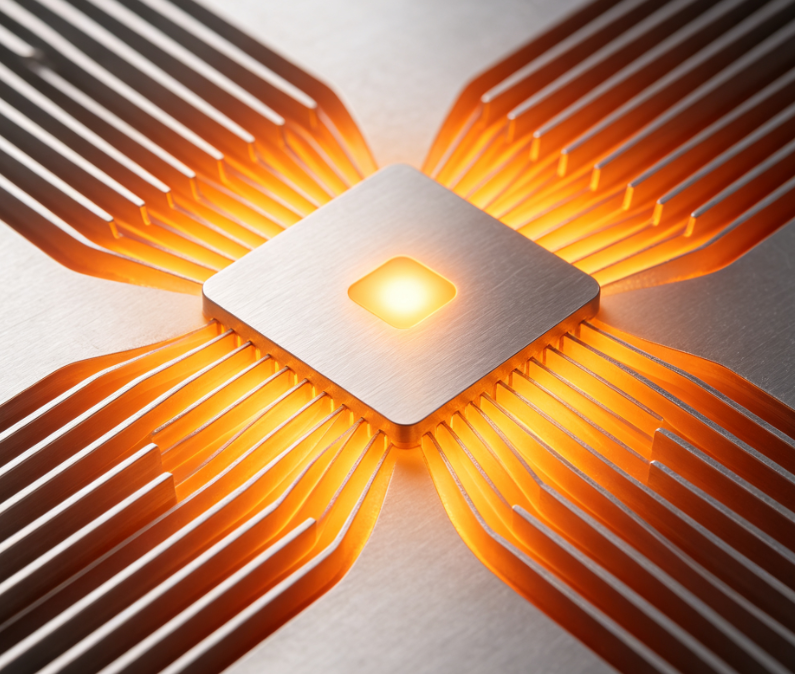
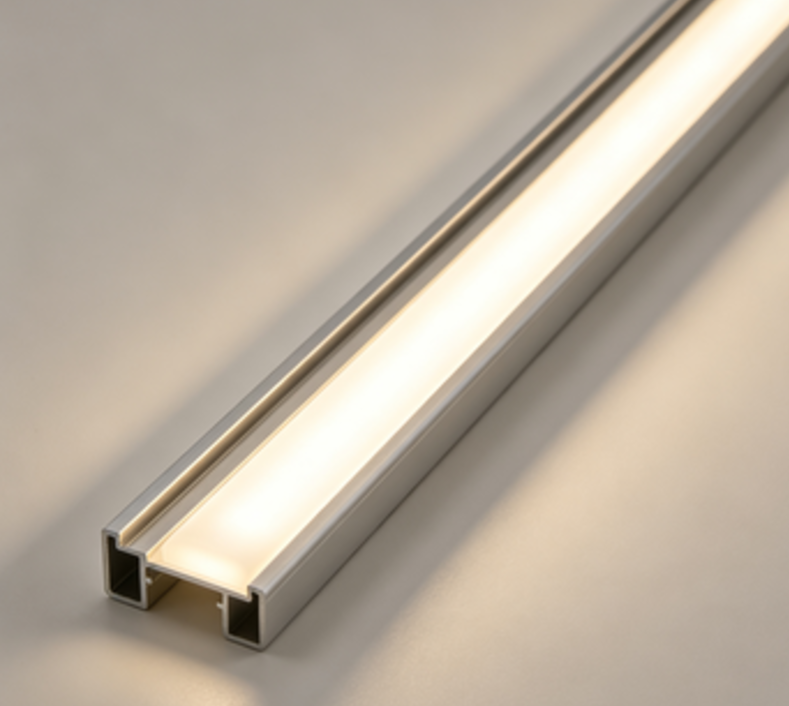
Heat dissipation aluminum profile is a special aluminum alloy structural part processed by high-precision hot extrusion process, which is mainly used for heat conduction and dissipation of various lighting and electronic equipment.It belongs to passive heat dissipation component, without electric drive can continue to channel the accumulation of high temperature generated by equipment operation. The profile body consists of a flat base and dense fins, and the special expansion structure can greatly expand the contact area with the air.It can quickly absorb the heat source temperature of lamps and distribute it to the external environment through air convection, realizing all-weather stable heat dissipation effect.
Manufacturing Process
The mainstream production process of heat dissipation aluminum profiles is high temperature hot extrusion molding, which is a one-time extrusion molding of aluminum rods softened at high temperature through customized molds.The integrated heat dissipation profile with regular structure, uniform fins, accurate size and high consistency can be mass produced. After the profile is formed, the overall performance can be optimized by secondary processes such as precision cutting, drilling and tapping, CNC finishing, and anodizing.Effectively improve the profile heat dissipation efficiency, structural hardness, wear resistance and outdoor corrosion resistance.
Why Do LED Lights Need Effective Heat Dissipation?
LED Lamp Heating Principle
The photoelectric conversion efficiency of LED lamps is limited, only 30% of the electrical energy is converted into visible light, and most of the rest is converted into heat and accumulated at the PN junction of the chip. Heat accumulated in a narrow chip area for a long time, easy to form local high temperature. At present, the lighting industry continues to upgrade high-power, high-lumen, integrated LED light sources, the overall power density of lamps continues to rise, and the calorific value per unit area increases significantly. The equipment cooling load continues to upgrade, and the adaptation performance requirements for the whole cooling system become more and more stringent.
Various Problems Caused by Poor Heat Dissipation
LED lamps and lanterns are in a high temperature operation state for a long time, which will directly accelerate the process of chip light decay, resulting in continuous attenuation of lamp brightness and deterioration of luminous effect. At the same time, there will be color temperature shift, color rendering index distortion, light stroboscopic and other lighting quality problems. The continuous increase of the junction temperature of the chip will directly damage the service life of the lamp. The higher the temperature, the faster the aging speed of the equipment. In extreme high temperature environment, it will also burn down the driving power supply and light-emitting chip, causing equipment shutdown failure and even potential safety hazard.
The Advantages of Aluminum Profile Heat Dissipation Scheme
Aluminum alloy material has fast thermal response speed, which can instantly absorb and channel the accumulated heat generated by LED chips and driving power supplies to avoid local high temperature continuous accumulation. The whole set of cooling structure is passive cooling mode, which has no noise, zero energy consumption and no daily maintenance. Heat dissipation aluminum profile can be integrated into the interior of the lamp body, which can effectively simplify the overall structure of the lamp and reduce the weight and volume of the equipment. It can flexibly adapt to various LED lighting scenarios such as indoor home improvement, commercial tooling, outdoor engineering, etc.
How Do Aluminium Heat Sink Profiles Work?
Heat Conduction
Relying on the excellent thermal conductivity of aluminum alloy, the smooth profile base can closely fit the LED light source and the driving heat source position.It can quickly absorb the high temperature heat generated by the work of the equipment, and eliminate the problems of local heat accumulation and local overheating. Profile base with thermal grease, thermal gasket and other auxiliary heat dissipation materials, can minimize the contact gap between heat source and profile, reduce contact thermal resistance. Allow heat to be conducted evenly and quickly to the entire profile body and fin area.
Heat Convection
The heat dissipation fins densely arranged on the surface of the profile can multiply the contact and heat dissipation area between the aluminum and the outside air, providing sufficient space for heat exchange. The high temperature profile heats the surrounding cold air and forms a continuous circulation of natural air convection. By scientifically designing the spacing, height and arrangement of fins, bad problems such as airflow blockage and heat dissipation dead angle can be effectively avoided. Maximize the natural convection heat dissipation efficiency and adapt to the normal working conditions of most LED lamps.
thermal radiation
After anodizing, blackening, fine spraying and other professional processes, the surface thermal radiation coefficient of aluminum profiles will be significantly improved. It can actively emit excess heat through infrared radiation, which plays an auxiliary role in cooling. Although thermal radiation is not the core way of LED aluminum profile heat dissipation, it can effectively compensate for the performance shortcomings of natural convection heat dissipation. Further stabilize the working temperature of lamps and improve the overall temperature control accuracy and heat dissipation stability.
Core Factors Affecting Heat Dissipation
The aluminum alloy grade, fin density structure, base thickness and overall size specifications selected for the profile will directly determine the final heat dissipation effect of the equipment. At the same time, the ambient temperature and air circulation speed will also affect the heat dissipation efficiency in real time. The installation and fixing method of profiles, surface anti-corrosion treatment process and close degree of heat source fit are all key parameters affecting heat dissipation performance. Fluid simulation technology is widely used in the industry to optimize the structure and maximize the heat dissipation performance.
What Makes Aluminium an Ideal Material for LED Heat Sinks?
Heat Conduction and Dissipation Performance
LED special heat dissipation aluminum alloy has a very high thermal conductivity, fast heat conduction speed, good heat dissipation uniformity, and can quickly channel the high temperature heat accumulated inside the lamp.It can fully adapt to the temperature control requirements of low power, medium power and high power LED lamps. Aluminum heat dissipation has no local temperature difference and no heat retention, which can quickly eliminate high temperature hot spots generated by chip work. Stabilize the working junction temperature of LED chips and effectively avoid various quality problems such as light attenuation, color temperature shift, and brightness attenuation caused by high temperatures.
Lightweight Construction
Aluminum alloy material density is extremely low, the overall weight is only one-third of copper, compared to steel heat dissipation structure is also lighter. Will not cause excessive load-bearing pressure to suspended ceiling, wall, street lamp pole and other installation carriers. Lightweight material characteristics can effectively reduce the overall cost of product transportation, handling and field installation.At the same time, it can support the lightweight and simplified appearance design of lamps and lanterns, and improve the product appearance and market competitiveness.
Design Flexibility
Aluminum hot extrusion molding process mature stability, plasticity is very strong, can be processed ultra-thin, high density, irregular curved surface and other complex precision fins.It effectively breaks through the design limitation of traditional heat dissipation structure with single shape and limited heat dissipation area. The manufacturer can customize the profile specification according to the internal space size of the lamp, the power of the light source and the characteristics of the installation environment.It can accurately adapt to the heat dissipation requirements of various complex working conditions such as closed indoor, semi-open space and outdoor.
Corrosion and Durability
The aluminum surface can naturally generate a dense and stable oxidation protective film, which has basic rust prevention, corrosion prevention and oxidation resistance. After anodizing deep processing, the weather resistance and corrosion resistance of the profile will be upgraded in all directions. The upgraded heat dissipation aluminum profile can adapt to the harsh outdoor environment such as wet and rainy, salt fog and coastal, strong ultraviolet exposure for a long time. Ensure the stable operation of LED lamps all year round, and greatly reduce the operation and maintenance costs of later maintenance and replacement.
Great Value for Money
Aluminum alloy raw materials are abundant in reserves, and the purchase price is close to the people. Compared with copper and other high-end heat dissipation materials, the cost performance advantage is outstanding.With mature batch extrusion process, it can effectively control the mass production cost of radiator. Aluminum alloy supports unlimited recycling, low energy consumption, no performance loss and no pollutant emission. It fully fits the green attributes of LED energy-saving products and helps the low-carbon development of the lighting industry.
Which Aluminium Alloys Are Commonly Used for LED Heat Sink Profiles?
6063 Alloy
6063-T5/T6 alloy is currently the most widely used general material for LED heat dissipation profiles, with balanced and stable thermal conductivity and fine and uniform extrusion molding effect.Thin-walled, high-density and high-precision fin structures can be processed. The material anodized color uniformity, high surface finish, corrosion resistance, weather resistance, comprehensive adaptability is very strong. Widely used in most indoor and outdoor conventional power commercial, household LED lamps.
6061 Alloy
The mechanical structure strength of 6061-T6 alloy is much higher than that of ordinary aluminum, and its impact resistance, deformation resistance and compression resistance are outstanding, and its structural stability is extremely strong. Suitable for heat dissipation profile products requiring deep machining and large span installation. Its thermal conductivity is slightly lower than 6063 alloy, but the overall comprehensive performance is stable, bearing capacity is strong, and it is not easy to deform. Mainly used for industrial high-power LED lights, outdoor high-brightness floodlights, vehicle lighting and other heavy load scenes.
Other Niche Compatible Alloys
6060 alloy has higher surface precision, fine and smooth texture, extremely high appearance flatness after molding, and excellent decorative performance.Mainly used for high-end decorative LED lamps, while taking into account heat dissipation performance and product appearance. 1 series pure aluminum material has the best thermal conductivity and high heat conduction efficiency, but its mechanical strength is low and it is easy to deform under force. Only small LED auxiliary cooling accessories with no load and simple structure are suitable.
What Design Features Improve Heat Dissipation?
Optimization of Fin Structure Design
The industry generally adopts thin and high fin optimization design, which maximizes the overall heat dissipation contact area without greatly increasing the weight and volume of the profile. Effectively improve the efficiency of heat and air exchange. By accurately controlling the fin spacing, height and density, the problem of wind blocking and space wasting due to too small spacing can be avoided.Sawtooth, beveled fins can also enhance airflow turbulence effect, further enhance the heat dissipation capacity.
Thickened Flat Thermal Base Design
The heat dissipation profile base is reserved with sufficient thickness to quickly and evenly diffuse the concentrated hot spot heat generated by the light source and avoid local accumulation of heat.Effectively solve the problem of fast temperature rise and slow heat dissipation caused by too thin base. The base is processed by high-precision milling, the surface is smooth without concavo-convex and burr, and can be closely attached to the LED light source without gap.Minimize thermal contact resistance and greatly improve thermal conduction efficiency.
Scientific Airflow Optimization Design
According to the actual installation mode of lamps, the fin orientation is scientifically planned, and the vertical arrangement conforms to the natural convection airflow movement law. Let the hot and cold air circulate efficiently and continuously carry away the accumulated heat of the equipment. Cross and needle-like fins support multi-directional airflow circulation, adapting to multi-angle and multi-scene installation conditions.Effectively solve all kinds of problems of insufficient heat dissipation in closed space and windless environment.
Efficient Surface Treatment Process
Dark anodizing process can significantly improve the thermal emissivity of profile surface and enhance the radiation heat dissipation effect. At the same time, a dense protective layer is formed on the surface of aluminum to improve corrosion resistance, waterproof and aging resistance. Fine extrusion and grinding processes can eliminate burrs and airflow resistance on the profile surface, making air circulation smoother. From the airflow level to assist in improving the overall heat dissipation performance and stability.
Reasonable Overall Size Ratio
According to the actual power of the lamp, the length, width and thickness of the profile are accurately matched, and the high-power lamp is matched with a large size and large-area heat dissipation structure.Ensure sufficient heat dissipation area to cope with high load heating conditions. Scientifically optimize the aluminum distribution structure and centrally arrange aluminum in high heat flux areas to enhance heat dissipation.Eliminate redundant materials, balance equipment heat dissipation performance and lightweight design requirements.
Where Are Heat Sink Aluminium Profiles Used?
All Categories LED Lighting Field
Heat dissipation aluminum profiles are widely used in indoor panel lamps, downlights, spotlights, ceiling lamps, commercial mining lamps and other conventional lighting products to ensure the stable operation of daily lighting equipment.Adapt to home decoration, tooling, shopping malls, office and other indoor scenes. At the same time, it is suitable for outdoor street lamps, high-brightness floodlights, plant growth lamps, stage lights, car LED lights and other special lighting equipment. All-round to meet the high and low power, indoor and outdoor all categories of LED lighting cooling needs.
Power Electronics Field
It can be used for heat dissipation of various power equipment such as photovoltaic inverter, industrial inverter, switching power supply, adapter, etc., and quickly channel the high temperature heat generated by the work of power components. Ensure stable output of electrical equipment. Adapt to new energy vehicle charging equipment, battery management system, industrial power supply and other new power equipment.For all kinds of power electronic equipment to provide stable, long-term, maintenance-free passive heat dissipation protection.
Consumer Electronics and Smart Devices
Commonly used in notebook computers, audio and video equipment, routers, network communication equipment built-in cooling structure, to achieve fan-free silent cooling.Greatly improve the use experience and stability of precision consumer electronics devices. It is suitable for small precision electronic products such as smart display screen, Internet of Things terminal, smart home equipment, etc.It takes into account the design requirements of efficient heat dissipation and thin, refined and high-value equipment.
Industrial Automation and Communication Equipment
For industrial robots, CNC equipment, servo drivers, industrial control host to provide stable heat dissipation support, adapt to industrial equipment for a long time continuous work of high thermal load conditions. Effectively avoid high temperature shutdown of equipment. Widely used in 5G base stations, outdoor communication cabinets, signal transmission equipment and other outdoor facilities.With excellent weather resistance and heat dissipation, outdoor equipment is guaranteed to operate stably in all weather conditions.
New Energy Industry Field
It can meet the heat dissipation requirements of solar photovoltaic and wind power generation supporting power equipment, and can work stably in outdoor high temperature, sand storm, large temperature difference and other complex and harsh environments for a long time. Adapt to new energy outdoor conditions. It is widely used in the heat dissipation structure of energy storage battery system to effectively channel the waste heat of battery work and ensure the safe and stable operation of energy storage equipment.It perfectly fits the overall trend of rapid development of new energy industry.
How to Choose the Right Heat Sink Aluminium Profile for Your Project?
Matching Project Cooling Power Requirements
Accurately calculate the actual heating power and heat flux density of LED equipment, clarify the overall heat dissipation load of the equipment, and set reasonable chip junction temperature control standards. Accurate locking of the heat dissipation performance range. Combined with the ambient temperature, air circulation conditions and installation sealing degree of the equipment, the profiles corresponding to the thermal resistance parameters are selected.Avoid all kinds of equipment failures caused by insufficient heat dissipation and excessive temperature from the source.
Balance Structure and Installation Constraints
According to the product internal installation space size, strictly limit the profile length, width and height size and overall volume specifications.Combined with installation mode and load-bearing requirements, reasonably control the structural strength and self-weight of profiles. Plan the deep machining requirements of products in advance, confirm whether drilling, grooving, cutting, tapping and other processing are needed.Preference should be given to standard profiles with suitable structure, convenient processing and strong versatility.
Scientific Selection of Suitable Alloy Materials
Conventional civilian, commercial ordinary power LED lamps, preferably 6063 series alloy, heat dissipation performance balance, high cost performance, good appearance effect.It can meet the requirements of most conventional cooling scenarios. Industrial high-power, high-vibration, high-load, long-span lighting equipment, high-strength 6061 series alloy. Ensure that the equipment structure does not deform, heat dissipation is stable, and the service life is longer.
Preferred Adaptation Profile Structure
According to the field airflow environment, the fin structure should be selected. The natural convection scene should be designed with large spacing, high fins and large area. Maximize natural cooling efficiency without fan assistance. Outdoor, high salt fog, high humidity, strong corrosion environment, preferably thick anodizing, high-end spraying process profiles. Greatly improve corrosion resistance and weather resistance, effectively extend the outdoor service life of products.
Adapt to Environment and Compliance Requirements
Strictly distinguish indoor and outdoor use scenarios, outdoor products must have UV anti-aging, anti-salt fog, waterproof and moisture-proof protection capabilities. Match the surface treatment process with the corresponding protection level. Export, commercial engineering lamps and lanterns must comply with UL, CE, RoHS and other industry standards. Select compliant profile products to ensure product market access qualifications and project acceptance standards.
Conclusion
Heat dissipation aluminum profiles have become the mainstream heat dissipation scheme in the LED lighting industry by virtue of their multiple advantages of high thermal conductivity, light texture, good formability, weather resistance and durability, and outstanding cost performance. In-depth understanding of its heat dissipation principle, material characteristics, structural design and selection points can help enterprises accurately match the heat dissipation requirements of lamps, effectively control the working temperature of equipment, delay light decay, extend the life of lamps, and comprehensively improve the quality and market competitiveness of LED products.
Henan Retop Industrial Co., Ltd. Will Be There Whenever Wherever Whatever You Need

 What Makes Aluminium an Ideal Material for LED Heat Sinks?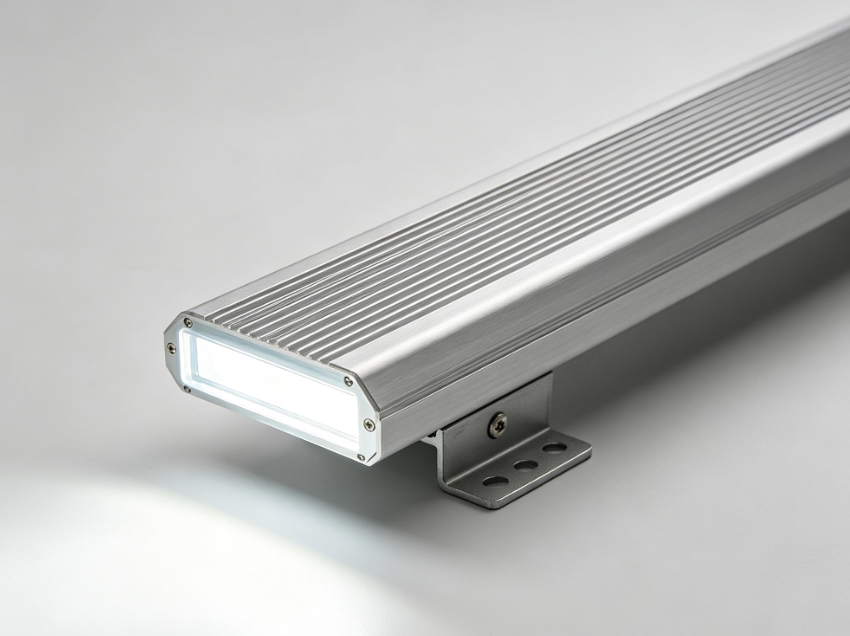
 How to Choose the Right Heat Sink Aluminium Profile for Your Project?